
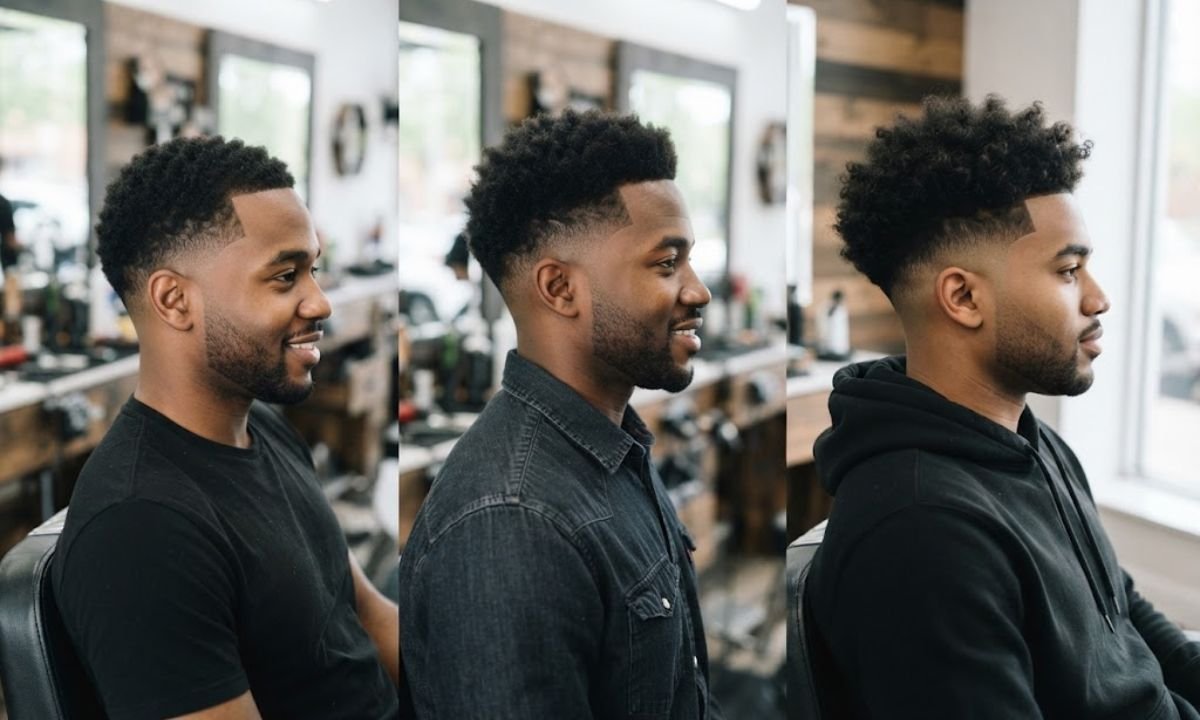
The short answer: the only real difference is where the fade starts. A low taper starts just above the ear and the neckline, so it stays subtle. A mid taper starts around the temple, so it sits in the middle. A high taper starts up near the top of the sides, so it’s the boldest.
You’re probably here because you’re sitting in a barber chair, or about to be, and the question “low, mid or high?” just landed in your lap. Maybe you’re worried you’ll pick the wrong one and live with it for three weeks. Maybe you saw a middle part fade for men online and you don’t know which height makes it work.
This guide breaks it all down in plain talk. You’ll learn what each taper looks like, which clipper guards barbers usually reach for, and how face shape and hair texture change the answer. You’ll also learn how to ask for it so you walk out happy.
What’s the Difference Between a Low Taper, Mid Taper, and High Taper?
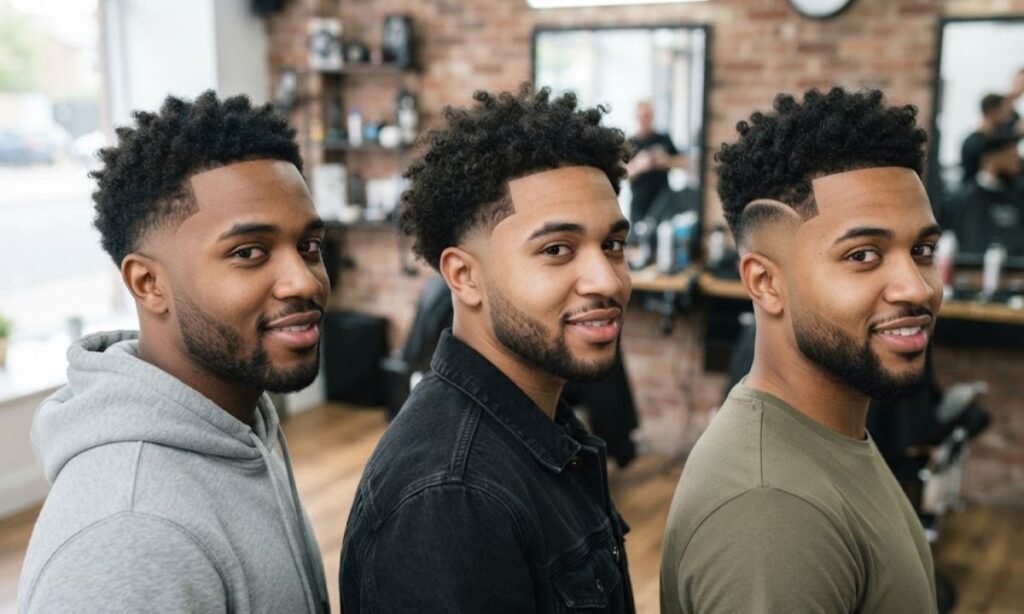
Think of a taper like a dimmer switch on a lamp. The hair gets shorter as it moves down toward your ears and neck, and the “height” is just where that dimming begins. Start low and the change is gentle. Start high and the change is hard to miss.
Here’s a quick example. Two friends sit down for a haircut with the same top length. One gets a low taper, so people barely notice the sides. The other gets a high taper, and suddenly everyone asks if he got a new look.
That’s why this choice matters more than most guys expect. The taper height changes how your whole head reads, from the shape of your skull to how much attention your top gets. It also decides how fast the cut looks messy as it grows out.
What Is a Taper Fade? (Understanding the Foundation)
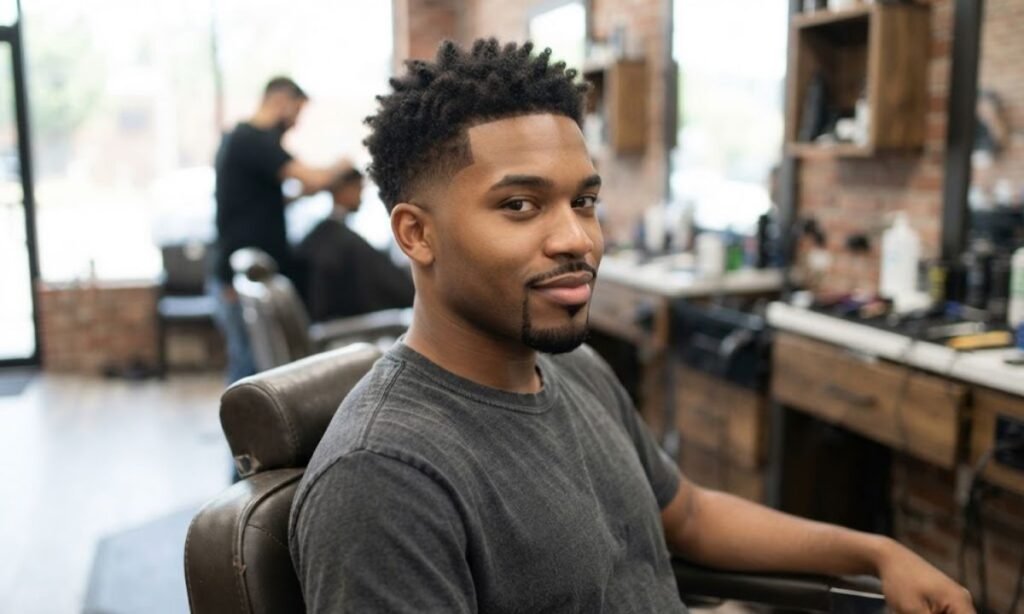
A taper fade is a haircut where the hair gets gradually shorter around the sides and back, usually fading toward the neckline and around the ears. Unlike a skin fade that can drop all the way to bare skin high on the head, a taper keeps the change gentle. It’s clean without being aggressive.
You’ll often hear people say “taper” and “fade” like they’re twins. They’re cousins. A taper is usually softer and stays near the edges, while a fade can travel much higher and go shorter.
If you’ve ever worn a classic businessman’s cut, you’ve probably had a taper already. It’s the quiet workhorse behind most neat haircuts. Once you understand it, every other style gets easier to choose.
What Makes a Taper “Low,” “Mid,” or “High”?
The label comes from where the shortest section begins. On a low taper, that line hugs the area right above your ear and curves around the back. On a mid taper, it starts about at your temple. On a high taper, it starts well up the side of your head, near the parietal ridge.
Barbers also look at the temple and sideburn area. The higher the starting point, the more skin or very short stubble you’ll see on the sides. That’s what creates the contrast.
Don’t worry about memorizing the anatomy. Just picture three lines on the side of your head: one low, one in the middle, and one high. Your barber will do the rest.
Why Does the Starting Point Matter?
The starting point controls contrast. A high start means a big gap between the short sides and the longer top, which makes your top look fuller. A low start blends everything together and feels natural.
It also controls how much your head shape shows. A higher taper exposes more of the skull, which can sharpen a soft jaw or emphasize a flat back. A lower taper hides a lot of that.
And yes, it changes your maintenance. The more visible the fade, the sooner it looks tired. We’ll get to the schedule in a minute.
What Is a Low Taper Fade?
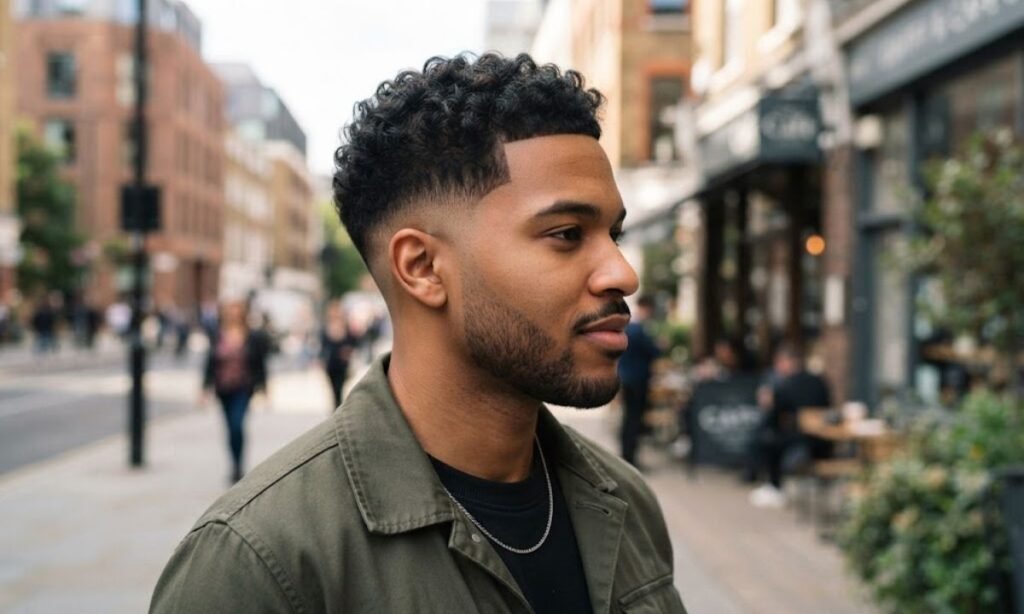
A low taper fade is the gentlest option on the menu. It trims the hair around the ears and the nape while leaving most of the side hair intact. If you want a clean cut that doesn’t scream “fresh from the barber,” this is your pick.
Plenty of guys love it because it works in nearly every setting. Offices, weddings, gym sessions, first dates. Nobody questions it.
It’s also the easiest way to try a taper for the first time. If you’re nervous about going bold, start here. You can always go higher on the next visit.
What Does It Look Like?
From the front, a low taper barely shows. You’ll see slightly tighter edges around the ears and a clean line along the back of the neck. The sides look neat, almost as if your hair just happens to grow that way.
From the side, you’ll notice a soft arc that follows your ear. The fade is short and subtle, usually only an inch or so tall. Your hair length on the sides stays close to the top, which keeps the overall shape rounded.
Picture a guy with a textured fringe on top and a low taper below. He looks put together, yet nobody can say exactly what the barber did. That’s the whole charm.
Key Characteristics of a Low Taper Fade
Here’s what defines a low taper:
- Starting point: just above the ear and around the neckline
- Contrast: soft, with a gradual blend
- Skin visibility: minimal, often none
- Grow-out: slow and forgiving
- Vibe: classic, clean, low-key
The beauty is in how little work it demands from you. You don’t have to style your sides at all.
It pairs well with almost any top length. That flexibility is why barbers recommend it so often to first-timers.
Why Choose a Low Taper?
Choose a low taper if you want a polished look without a big commitment. It grows out gracefully, so you can stretch the time between visits. If your schedule is packed, that’s a real win.
It also suits workplaces with conservative dress codes. A low fade or low taper looks tidy under any lighting. You’ll never feel overdressed or underdressed.
And if you’re growing your hair out, a low taper keeps the sides from looking shaggy. It acts like a seatbelt for the awkward in-between stage.
Clipper Guard Info
Barbers vary, but a typical low taper starts with a #1 or #1.5 guard at the very bottom, near the neckline and above the ear. They then blend upward through a #2 and #3, finishing around a #4 or longer where it meets your natural side length.
Some barbers go with a zero guard (no guard) for a sharper edge right at the line. If you want it softer, tell them to stay at a #2 or #3 for the shortest part. A few extra millimeters changes the feel a lot.
Don’t obsess over exact numbers. Show a photo and let the barber adjust to your hair density and growth patterns.
Who Should Get a Low Taper?
A low taper suits guys who want a clean cut and a quiet look. It’s great for professionals, students, and anyone who dislikes frequent haircuts. It’s also friendly to guys with fine hair, because it doesn’t expose too much scalp.
If you have a cowlick near the temples or the nape, a low taper hides the awkward growth better than a high one. Higher cuts can make a cowlick stand out like a flag. A lower start keeps things calm.
It also works for guys who wear hats often. The sides don’t look chopped when a cap comes off.
Popular Styles That Pair with a Low Taper
A low taper plays well with almost every top. Try these:
- Classic side part for a clean, office-ready look
- Textured crop with matte clay for casual weekends
- Quiff for height and a bit of drama
- Short curtain bangs for men with a soft curtain fringe
- Curly top with plenty of curl cream
A middle part haircut for men also sits nicely here. The low taper keeps the sides soft so the center part becomes the star. That’s a go-to combo for a modern middle part hairstyle.
What Is a Mid Taper Fade?

A mid taper starts at about the temple, right between the low and high versions. It brings more contrast than a low taper without going full statement. Most barbers will tell you it’s the safest crowd-pleaser.
You get cleaner sides, a visible fade, and enough length left to look natural. It’s flexible enough to dress up or down. If you can’t decide, this is usually where people land.
It also gives your top some lift. The gap between the sides and the longer crown volume becomes noticeable, which makes thin hair look thicker.
What Does It Look Like?
From the front, a mid taper shows a clear shift around the temple. The sides look shorter and tidier, and the fade line curves toward the ear. You’ll spot it in photos, but it won’t dominate.
From the side, the fade begins about halfway up and travels down to the neckline. The change is smooth and even. Your head shape reads cleaner without feeling stripped down.
Imagine a guy in a navy sweater with a textured middle part for men on top. The mid taper frames his face, and the part looks intentional instead of messy. That’s the sweet spot.
The “Goldilocks” Taper
Some people call the mid taper the Goldilocks cut because it’s not too soft and not too bold. It lands right in the middle and works for most faces. That’s why barbers cut it more than any other height.
It’s also easy to adjust later. If you love it, keep it. If it feels too tame, go higher next time. If it feels too sharp, go lower.
Think of it as the test drive. You learn what you like without risking a cut you regret.
Key Characteristics of a Mid Taper Fade
Here’s what defines a mid taper:
- Starting point: around the temple
- Contrast: medium, clearly visible but balanced
- Skin visibility: low to moderate
- Grow-out: decent, with a clean look for around two to three weeks
- Vibe: modern, sharp, versatile
Barbers like it because it’s friendly to different hair textures. It doesn’t need a lot of fuss to look sharp.
It also pairs well with almost any facial hair, from stubble to a full beard.
Why Choose a Mid Taper?
Choose a mid taper when you want to look fresh without drawing a crowd. It shows effort in a quiet way. You’ll get compliments like “your hair looks good” rather than “wow, that’s a bold fade.”
It’s also better than a low taper at framing the face. The extra contrast cleans up the temples and sideburns. That helps if you want your jawline to look a little sharper.
And it handles natural movement well. Waves and loose curls on top look intentional against the neat sides.
Clipper Guard Info
A mid taper commonly starts with a #0.5 or #1 guard at the lowest point near the temple and neckline. From there, the barber blends upward through a #2, #3, and #4, finishing into the longer hair on top. Many barbers use a zero guard for a clean edge at the bottom.
If you want a bit more skin showing, ask for the first section to be taken down to a #0.5. If you’d rather stay safe, a #1 gives a soft shadow without any bare skin.
Again, every head grows differently. Dense hair often needs an extra blending pass, so bring a photo and be ready to tweak.
Who Should Get a Mid Taper?
Almost anyone can wear a mid taper. It’s perfect for guys who want a modern look but still need to look professional. It’s also great for anyone with an oval face, since that shape handles almost every cut.
If your hair is thick, a mid taper removes bulk from the sides so your top looks more controlled. If your hair is wavy, it keeps the sides from puffing out. In both cases, the shape holds up well.
It’s also a good fit if you’re torn between a low and high taper. It sits right between, and you’ll know quickly whether you want to move either way.
Popular Styles That Pair with a Mid Taper
A mid taper gives you plenty of choices. Try these:
- Textured quiff using texture powder for volume
- Messy curtains for men with a loose, lived-in feel
- Middle part with taper for a clean, modern frame
- Slick back hairstyle with a bit of pomade
- Curly top with a defined curl pattern
- Korean middle part for men with soft, feathered ends
The K-pop hairstyle look often leans on a mid taper. It keeps the sides neat while the fringe stays soft and airy. That contrast is what makes it feel so polished.
What Is a High Taper Fade?
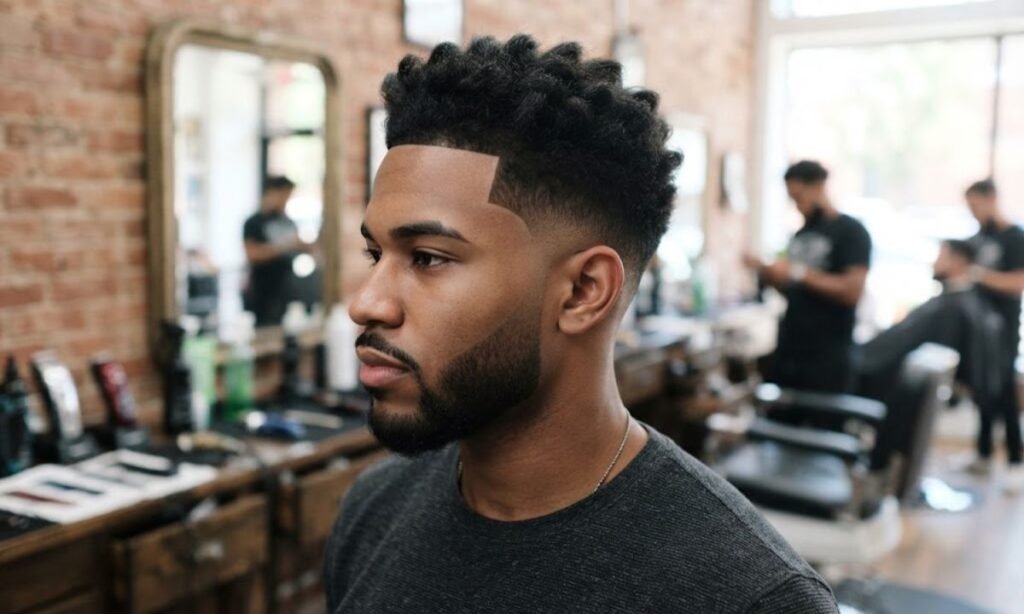
A high taper fade starts near the top of the sides, usually above the temple. It creates a strong contrast between the short sides and the longer top. If you want a bold, sharp cut, this is it.
It’s the style you’ll see on guys who want their hair to look deliberate. The clean sides pull attention straight to the top. Everything feels sharper.
But it’s also the least forgiving. Skip a barber visit and the fade softens fast. We’ll cover how to handle that later.
What Does It Look Like?
From the front, a high taper shows a clear, crisp shift high on the head. The sides look very short, often close to skin, and the top rises above them like a crown. The contrast is hard to miss.
From the side, the fade starts well above the ear and sweeps down toward the neckline. You’ll see more of your skull shape than with any other taper. That can look great, or it can expose bumps you didn’t know you had.
Picture a guy with a two block haircut on top and a high taper below. His look is confident and a little edgy. People notice.
The Statement Maker
A high taper isn’t shy. It’s the cut you pick when you want your hair to say something. It pairs well with bold tops like a disconnected undercut or a dramatic slick back hairstyle.
It also fits trend-forward looks like the E-boy hairstyle. The tight sides and longer, face-framing top create that signature contrast. It’s a cut that gets attention in photos.
If you’re a first-timer, this is where you’ll want to slow down. Make sure you actually like a bold look before you commit.
Key Characteristics of a High Taper Fade
Here’s what defines a high taper:
- Starting point: high on the sides, above the temple
- Contrast: strong and obvious
- Skin visibility: moderate to high
- Grow-out: fast, with a visible change after about a week or two
- Vibe: bold, sharp, fashion-forward
It also needs a skilled barber. The blending takes time, and a rushed high taper can look patchy. Pick someone who does fades all day.
On the plus side, nothing looks cleaner on day one. A fresh high taper is hard to beat.
Why Choose a High Taper?
Choose a high taper if you want maximum contrast and a crisp look. It makes the top of your hair look longer and fuller. That helps if you’re growing out your hair length and want it to look intentional.
It also suits guys with strong features. A high taper accentuates the jawline and cheekbones. If you have a defined face, it’ll show.
And it keeps you cool in summer. Less hair on the sides means less heat. That’s a practical bonus nobody mentions.
Clipper Guard Info
A high taper often starts with a zero guard or even a foil shaver for the lowest section, then blends up through a #0.5, #1, #2, and #3. The fade begins high and works its way into the top length, often with a #4 or longer at the join.
Some guys want the bottom section as close to skin as possible, and that’s where a shaver comes in. Others prefer a #0.5 for a softer look. Tell your barber which finish you want.
Because the fade is tall, more blending is needed. A good barber will take their time to keep the transition smooth.
Who Should Get a High Taper?
A high taper suits guys who want a statement cut and don’t mind frequent barber visits. It works well for anyone with a nicely shaped head and a bit of confidence. If you love your hair looking sharp, you’ll enjoy it.
It’s also great for thick hair that needs serious weight removed from the sides. The short sides keep your top from looking like a helmet. That’s a lifesaver for dense hair.
But think twice if you have a very uneven skull or visible scars. A high taper shows more of the head, so those spots can stand out.
Popular Styles That Pair with a High Taper
A high taper makes bold styles pop. Try these:
- Two block middle part with a heavy fringe
- Slick back middle part with strong hold
- Middle part undercut for men with a disconnected look
- Wolf cut middle part for a shaggy top and tight sides
- Curly middle part for men with defined curls on top
- Middle part mullet for a trend-forward cut
The middle part fade for men looks especially striking at this height. The tight sides frame the center part, and the top flows with clean natural movement. It’s a look that reads as modern and a little daring.
Low Taper vs Mid Taper vs High Taper: Side-by-Side Comparison
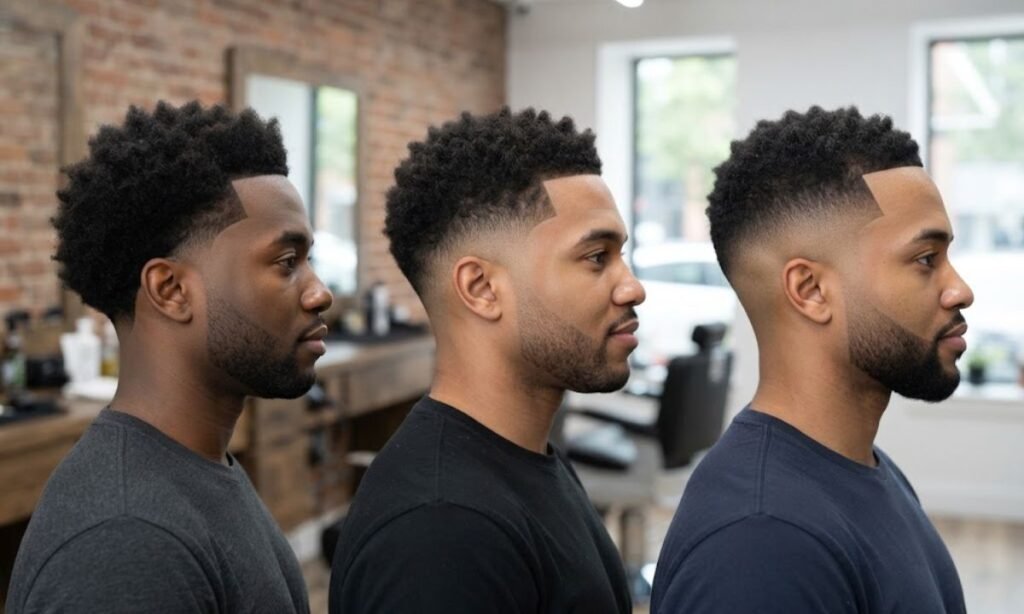
Here’s the whole picture in one place. Use it as a cheat sheet before your next appointment.
| Feature | Low Taper | Mid Taper | High Taper |
|---|---|---|---|
| Starts at | Just above the ear and neckline | Around the temple | High on the sides, above the temple |
| Contrast | Subtle | Medium | Strong |
| Skin shown | Little to none | Low to moderate | Moderate to high |
| Typical guards | #1 to #3 | #0.5 to #4 | #0 to #3 |
| Grow-out speed | Slow | Medium | Fast |
| Barber visits | Every 4 to 5 weeks | Every 3 to 4 weeks | Every 2 to 3 weeks |
| Best for | Conservative or low-key looks | All-round, modern looks | Bold, trend-forward looks |
The table won’t replace a conversation with your barber, but it gives you vocabulary. That alone makes the appointment smoother.
Remember that these numbers shift with your hair type. Fast-growing hair needs more visits no matter which height you pick.
Quick Decision Guide
Not sure which one fits? Use this shortcut:
- Want subtle and easy? Go low.
- Want modern and balanced? Go mid.
- Want sharp and bold? Go high.
- Have a dress code? Start low or mid.
- Hate frequent barber visits? Stay low.
If you’re still stuck, ask yourself one question. How much attention do you want your haircut to get? The answer usually settles it.
Low Taper vs Mid Taper: Which Should You Choose?
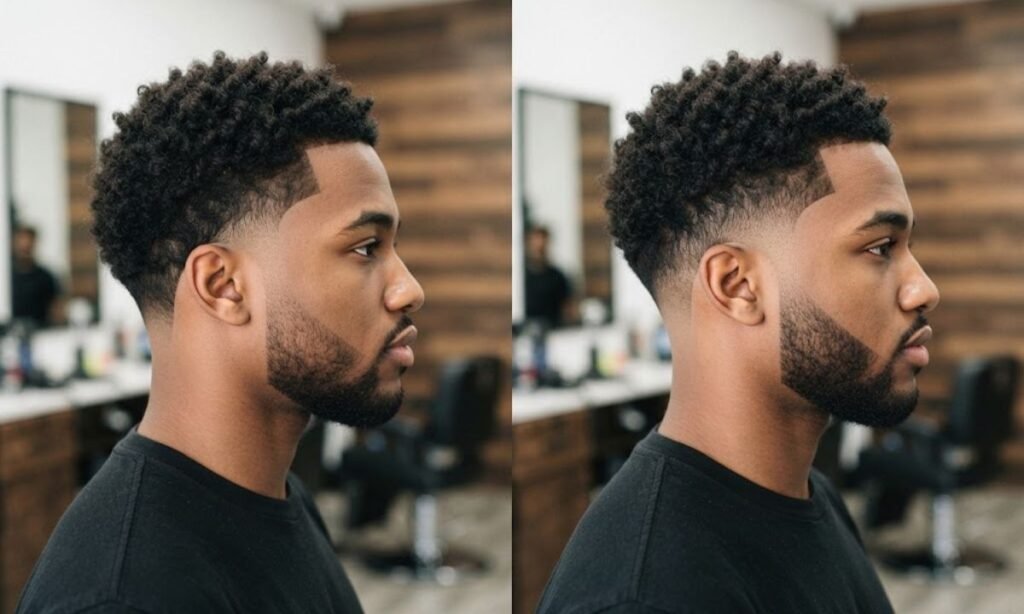
These two are close neighbors, and the choice often comes down to personality. A low taper whispers, while a mid taper speaks at a normal volume. Neither one is wrong.
Think about your day-to-day. If you wear suits, a low taper keeps everything quiet. If you dress casually and like clean lines, a mid taper adds a little more definition.
Let’s dig into the actual differences so you can decide with confidence.
The Core Difference
The core difference is the starting point and the contrast. A low taper begins near the ear and neckline, so the fade is short and soft. A mid taper begins at the temple, so the fade is taller and more visible.
That extra height makes a mid taper look cleaner on the sides. It also removes more bulk, which helps if your hair is thick. A low taper leaves more hair, so it feels softer and more natural.
You’ll also notice a difference in how the top looks. The mid taper makes it appear a bit fuller thanks to the contrast.
When Low Taper Wins
A low taper wins when you want a cut that looks good for weeks. Because it starts low, it grows out slowly and stays neat longer. If you hate rebooking, this is a gift.
It also wins in formal or conservative workplaces. Nobody blinks at a low taper, even in a boardroom. It looks like a good haircut and nothing more.
And it wins if you have fine hair or a thinning crown. A low taper keeps more density on the sides, so your head looks balanced.
When Mid Taper Wins
A mid taper wins when you want visible polish. It gives you that crisp, just-cut look without going extreme. If you take selfies or work in a creative field, this is a great pick.
It also wins for guys with thick or wavy hair. The extra removal on the sides keeps the shape under control. You won’t fight puffiness by week three.
And it wins with most trendy tops. A Korean middle part or textured middle part for men pops against a mid taper. The balance feels deliberate.
Real-World Scenarios
Take Dan, a project manager who meets clients every day. He picks a low taper because he wants zero drama. His haircut stays neat for five weeks and he never thinks about it.
Now take Sam, a graphic designer who likes a modern middle part hairstyle. He picks a mid taper because it shows off the part and frames his face. He books every three weeks and loves it.
Both made the right call. They just had different priorities, and that’s the point.
Low Taper vs High Taper: The Two Extremes
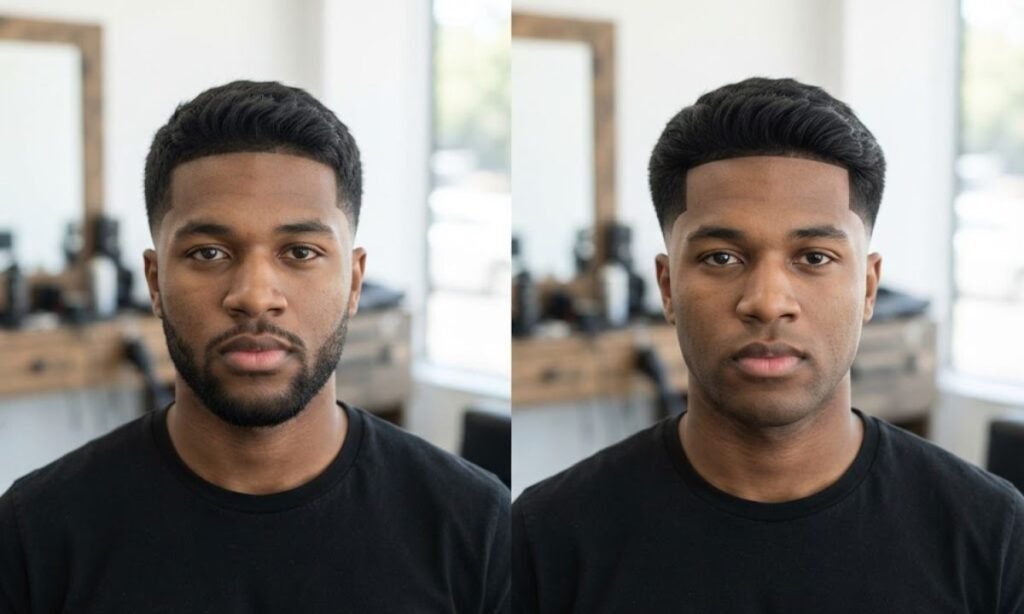
Now we’re comparing the quiet cut with the loud one. These two sit at opposite ends of the spectrum, and they look nothing alike on the same head. Picking between them is really about how much attention you want.
A low taper is the sports coat. A high taper is the leather jacket. Both look great, but they send different signals.
Let’s see how they stack up.
The Core Difference
The low taper begins just above the ear and neckline, while the high taper starts way up the side of the head. That gap changes everything. One keeps most of your side hair, and the other removes a lot of it.
The high taper shows more skin and more skull shape. The low taper hides both. That makes the high taper a bolder, sharper choice.
It also changes how your top hair looks. With a high taper, the top seems much longer and fuller by comparison.
The Contrast Factor
Contrast is the star of this comparison. A high taper creates a dramatic gap between the short sides and the longer top. That gap makes textured styles look more dynamic.
A low taper has almost no contrast, so the whole head reads as one soft shape. That’s calming and classic, but it’s less eye-catching.
Neither is better. It depends on whether you want your top hair to take center stage or blend in.
When Low Taper Wins Over High
A low taper wins when you need a cut that’s easy to live with. You can skip a week or two and nobody notices. That makes it perfect for busy people.
It also wins if you’re self-conscious about your head shape. Because it shows less skin, it hides flat spots and bumps. You’ll feel more relaxed.
And it wins in conservative settings. Teachers, bankers and lawyers often prefer it. It looks tidy but not trendy.
When High Taper Wins Over Low
A high taper wins when you want to make a statement. It looks sharp, modern and deliberate. If you love a bold haircut, it’s hard to beat.
It also wins for thick or curly hair that needs serious weight removal. The tight sides give your curls room to shine on top. That’s a clean, balanced look.
And it wins in hot climates. Less hair on the sides keeps you cooler, which matters if you live somewhere warm.
The Middle Ground
If you can’t choose between the extremes, the mid taper is your answer. It borrows the polish of the high taper and the ease of the low one. Plenty of guys end up here for exactly that reason.
You can also nudge a mid taper in either direction. Ask for it “slightly low” or “slightly high” and your barber will adjust. That small tweak gives you a custom feel.
It’s a smart way to explore without a big risk.
Mid Taper vs High Taper: Finding Your Bold Level
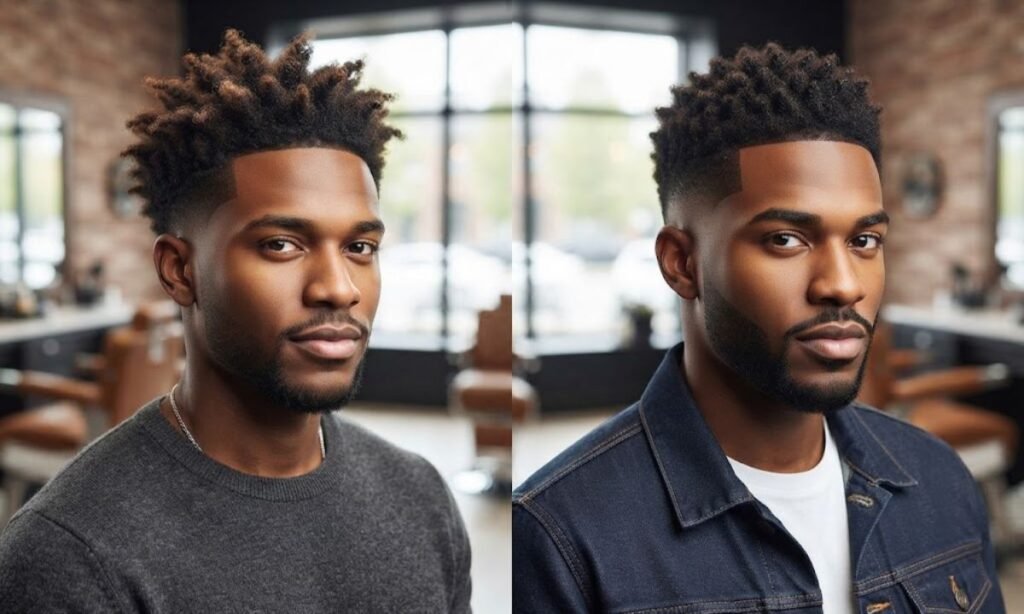
Both of these cuts are visible and stylish, so the question is how bold you want to go. The mid taper is confident. The high taper is loud.
Think of it like turning up the volume. Mid sits at a comfortable level, and high cranks it up. You decide how much you want people to notice.
Here’s how they differ in practice.
The Core Difference
The mid taper begins at the temple, and the high taper begins above it. That sounds like a small shift, but it changes the look quite a bit. The high taper reveals much more of the side and back of your head.
It also changes the shape of your top. A high taper makes the top look taller, while a mid taper keeps things more balanced. If you want drama, go high.
And the grow-out speed differs. The higher you go, the faster it looks overgrown.
When Mid Taper Wins
A mid taper wins when you want stylish without extreme upkeep. You’ll look sharp for around three weeks, which is manageable for most people. It’s also easier to explain to a new barber.
It also wins for guys with a long face. A mid taper doesn’t add extra height, so your face doesn’t look stretched. That’s a quiet advantage.
And it wins for people who switch up styles. A mid taper works with everything from a quiff to a layered haircut. You won’t feel locked in.
When High Taper Wins
A high taper wins when you want maximum impact. It makes a two block haircut, wolf cut, or disconnected undercut look incredibly crisp. If your goal is to stand out, this is the tool.
It also wins when you have a fuller face. A high taper slims the sides and adds visual height. That makes round faces look longer and sharper.
And it wins for guys who love a barber chair. If you enjoy the ritual and visit often, a high taper rewards that habit.
The Professional Divide
In many offices, a mid taper is fine and a high taper raises eyebrows. That’s changing, but it’s still true in traditional fields like law and finance. A mid taper keeps you safe.
In creative or casual workplaces, a high taper often fits right in. Designers, musicians and tech teams tend to be more relaxed. You’ll probably get compliments there.
When in doubt, check the dress code or ask a coworker. A quick question beats an awkward Monday.
Which Taper Fade Is Best for Your Face Shape?
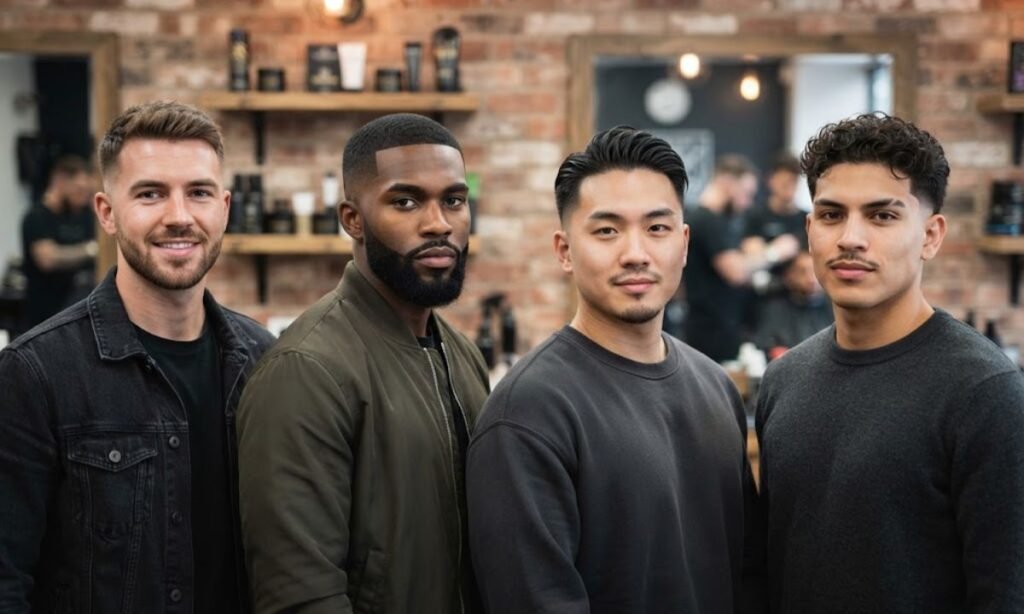
Face shape is the quiet decision-maker in any haircut. The right taper can balance your features, and the wrong one can exaggerate them. A little planning goes a long way.
You don’t need to be a geometry expert. A quick look in the mirror gives you most of what you need. Pull your hair back and trace the outline of your face.
Here’s how each shape plays with taper height.
The Face Shape Principle
The golden rule is balance. If your face is wide, you want to add height and slim the sides. If your face is long, you want to keep the sides fuller and avoid extra height.
Taper height controls that balance. Higher tapers slim the sides and add visual height, while lower tapers keep width. Match the cut to the shape, and you’ll look more proportional.
A middle part for oval face shapes is the easiest case, while other shapes need a bit of tuning.
Round Face Shape
A round face has soft curves and similar width and length. The goal is to add length and angles. A high taper or mid taper works best because it slims the sides and lifts the top.
Pair it with crown volume and a side-swept or textured style. A middle part for round face guys works when the top has height and the sides stay tight. Avoid flat, heavy fringes that widen the face.
Try a textured quiff, a middle part fade for men, or a short curtain haircut with plenty of lift.
Oval Face Shape
An oval face is balanced, so you can wear nearly any taper. A low taper, mid or high all work. Choose based on your style rather than your shape.
This is the ideal shape for a middle part hairstyle of any length. A medium middle part hairstyle or long middle part hairstyle both look natural. You can experiment freely.
If you’re an oval, ask yourself what vibe you want. The face won’t hold you back.
Square Face Shape
A square face has a strong jaw and a broad forehead. You want to keep the look strong without making it too boxy. A mid taper or low taper with some softness on top works well.
A textured fringe or curtain fringe softens the angles. A middle part for square face guys looks great with a bit of natural movement. Avoid super flat tops that feel rigid.
A high taper works too if you want a sharp, masculine edge, but it can emphasize the box shape.
Long/Oblong Face Shape
A long face needs width, not height. A low taper or mid taper keeps the sides fuller so the face doesn’t stretch. Avoid very tall tops that add more length.
A middle part for oblong face shapes works well with curtain bangs that cover part of the forehead. That shortens the face visually. Keep the fringe soft and the top moderate.
Skip the high taper, which can make a long face look even longer.
Heart-Shaped Face
A heart-shaped face has a wider forehead and a narrower chin. You want to balance the top and keep attention off the forehead. A low taper or mid taper with a side-swept or textured fringe works well.
A middle part for heart-shaped face guys looks great when the fringe falls softly across the forehead. Curtain bangs are a smart pick. They soften the forehead and draw the eye downward.
Avoid very high tops that emphasize the wide forehead.
Diamond Face Shape
A diamond face has wide cheekbones and a narrower forehead and chin. You want to add width at the forehead and jaw. A mid taper or low taper with some fringe works nicely.
A middle part for diamond face shapes looks good with textured, side-swept strands. A textured fringe adds width at the forehead. That balances the cheekbones.
A high taper can make the cheekbones look sharper, so use it only if you want that effect.
Which Taper Fade Is Best for Your Hair Type?
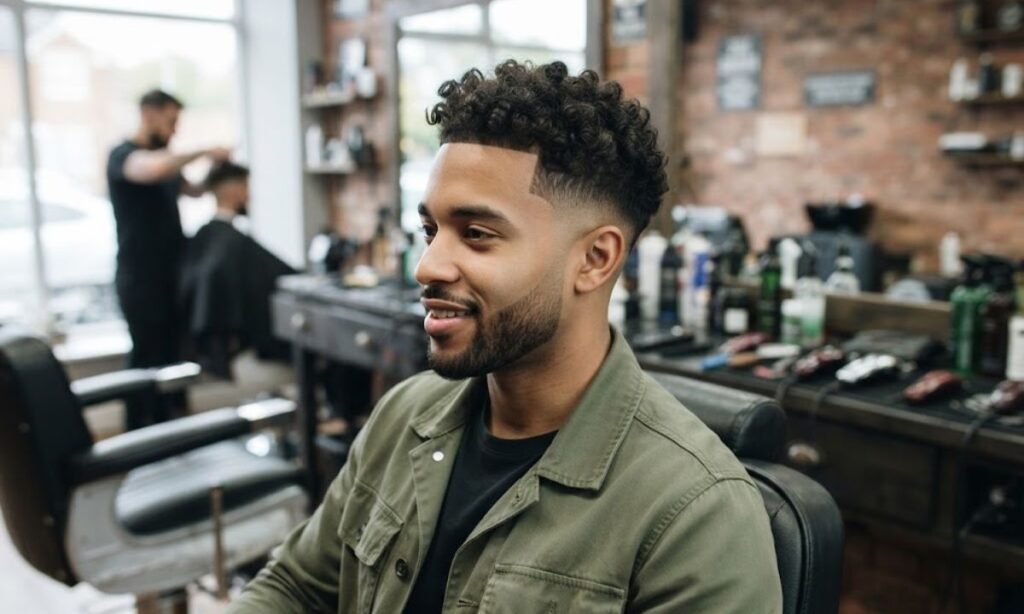
Hair type changes how a taper looks and behaves. The same cut can look completely different on straight and coily hair. Knowing your texture saves you from disappointment.
Think about how your hair grows, how thick it is, and how it reacts to moisture. Those factors guide the best height and styling. Your barber will appreciate that you know it.
Let’s go through the main types.
The Hair Type Principle
The principle is simple. Work with your hair, not against it. If your hair puffs out, go with a cleaner taper. If your hair lies flat, add contrast for volume.
Density matters too. Thick hair benefits from taller tapers that remove weight. Fine hair benefits from lower tapers that keep coverage.
A best middle part for hair type is the one that works with your natural growth pattern.
Straight Hair
Straight hair shows every line, so a taper looks very clean and crisp. A mid taper or high taper gives you sharp contrast. A low taper gives you a softer, more classic look.
A middle part for straight hair can fall flat, so add texture powder or sea salt spray. That gives you body and movement. Without it, the part can look limp.
Straight hair also shows grow-out quickly. Plan on regular trims.
Wavy Hair (2A-2C Curl Pattern)
Wavy hair loves a mid taper. It keeps the sides neat while letting the top show off its natural movement. A middle part for wavy hair looks effortless and relaxed.
Use sea salt spray or a lightweight mousse to boost the wave. Scrunch it, then let it air dry or use a diffuser. That keeps frizz in check.
Waves can puff out on the sides, so a taper helps control the shape.
Curly Hair (3A-3C Curl Pattern)
Curly hair loves contrast. A mid taper or high taper lets your curls shine on top. The tight sides keep the shape defined and prevent the dreaded triangle look.
A curly middle part works beautifully with a bit of curl cream. Keep your curls moisturized and avoid brushing them dry. That keeps them springy and defined.
If you’re after a middle part perm for men, a taper keeps the look sharp and balanced.
Coily Hair (4A-4C Curl Pattern)
Coiled hair looks incredible with a clean taper. A low taper gives a classic shape, while a high taper adds drama. The contrast makes the coils on top stand out.
A middle part for curly hair that’s tightly coiled can be shaped with a sharp line or a natural parting. Middle part braids also work well on top of a clean taper. Keep the scalp moisturized to avoid dryness.
Ask your barber about shape-ups and clean edges. They elevate the whole look.
Thick Hair
Thick hair needs weight removal. A mid taper or high taper takes bulk off the sides so your top looks controlled. A middle part haircut for thick hair works great with layers.
A layered haircut or shag haircut adds movement. It also stops the cut from looking heavy. Ask for thinning shears or texturizing on top.
If you skip the taper, thick hair can look like a helmet.
Thin/Fine Hair
Fine hair needs help with volume. A low taper or mid taper keeps coverage on the sides, which makes the top look fuller. A middle part haircut for thin hair works well with a lightweight mousse.
Blow drying at the roots adds lift. Use a texture powder to build thickness. Avoid heavy products that weigh the hair down.
A middle part for fine hair looks best when it’s kept short or medium. Long fine hair can look stringy.
Thinning Hair or Receding Hairline
A taper can make thinning hair look intentional. A mid taper or high taper with short sides draws attention away from the hairline. A shorter top also looks denser.
A middle part for receding hairline works only if the recession is mild. Otherwise, try a textured crop or short fringe. Ask your barber what suits your pattern.
Skip very long tops, which can highlight thinning. Short and textured is usually the safest bet.
Taper Fade Maintenance: How Often Do You Need a Barber Visit?
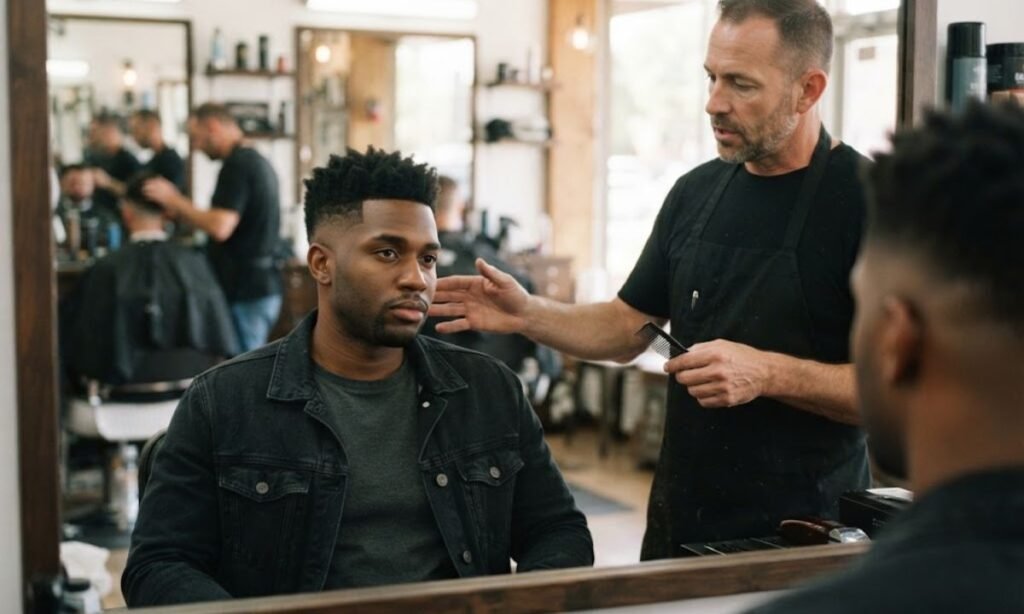
A taper looks best when it’s fresh, and every taper has a shelf life. The higher it starts, the sooner it fades into a messy outline. Planning your visits keeps you looking sharp.
If you hate frequent trips, pick a lower taper. If you enjoy the barber chair, go higher. Either way, know what to expect.
Here’s how the schedule breaks down.
Maintenance Frequency Breakdown
Here’s a rough guide:
- Low taper: every 4 to 5 weeks
- Mid taper: every 3 to 4 weeks
- High taper: every 2 to 3 weeks
These are estimates, since hair growth varies. If you grow hair fast, shorten each window by a week. A neckline cleanup between full cuts can stretch things.
Hair maintenance also includes your top. A middle part haircut maintenance routine means trimming the fringe and checking the part line every month.
Why Higher Tapers Need More Maintenance
A higher taper exposes more skin or very short hair, so any regrowth shows quickly. The contrast also fades faster as hair grows. Within a week or two, the sharp line starts to blur.
A low taper hides this because the fade is short and subtle. Regrowth blends in naturally. That’s why it lasts longer.
If you love a high taper, accept the schedule. Book your next visit before you leave the chair.
How a Low Taper Grows Out
A low taper grows out gracefully. After a few weeks, the fade softens and the neckline gets fuzzy, but the overall shape stays neat. Most people don’t notice until week four or five.
It may look a bit shaggy around the ears. A quick cleanup fixes that. You can often skip a full cut.
That makes it ideal for lazy scheduling, and there’s no shame in that.
How a Mid Taper Grows Out
A mid taper grows out in a clear, steady way. Around week two, the line begins to soften. By week four, it looks more like a regular haircut.
It still looks decent at that point, just less crisp. You can stretch it with a styling cream to keep the top looking tidy. A quick trim keeps the sides in check.
It’s a good balance between style and effort.
How a High Taper Grows Out
A high taper grows out fast. By week two, the contrast softens and the fade loses its edge. By week three, it can look uneven.
The top may also start to feel heavy as the sides catch up. That’s when a middle part fade for men or two block middle part loses its sharpness.
If you want it to stay crisp, book often. It’s the price of a bold cut.
Best Hairstyles to Pair with Each Taper Height
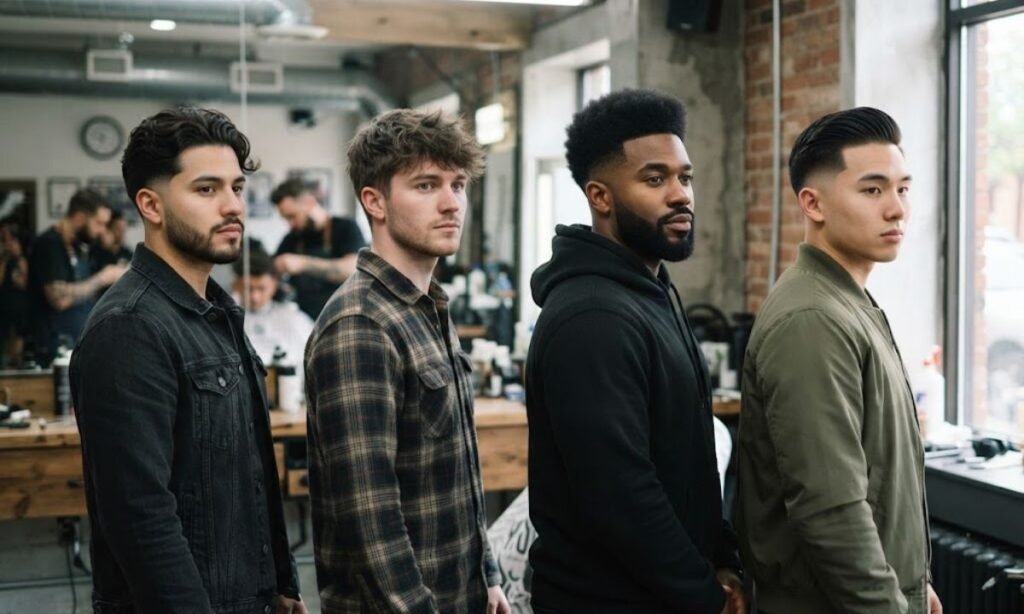
The taper is only half the haircut. The top decides the personality, so choose them together. A good pairing makes both parts look better.
Think of the taper as the frame and the top as the picture. A bold frame suits a bold picture. A soft frame suits a gentle one.
Here are the best pairings.
Best Hairstyles for Low Taper Fade
Low tapers work with classic, soft styles. Try a classic curtains for men look, a side part, or a short textured crop. These keep things neat and natural.
A short middle part hairstyle pairs well, too. The low taper keeps the sides subtle so the part stays the focus. Add a bit of matte clay for hold without shine.
For longer hair, a medium middle part hairstyle with soft layers looks relaxed and easy.
Best Hairstyles for Mid Taper Fade
Mid tapers handle nearly anything. A textured middle part for men, messy curtains for men, or a Korean middle part for men all look great. The balanced contrast keeps the style clean.
A slick back hairstyle with a medium-hold pomade looks sharp and professional. A quiff gives lift and movement. A layered haircut adds depth.
Try a middle part hairstyle with layers for a polished, modern feel.
Best Hairstyles for High Taper Fade
High tapers suit bold styles. A two block middle part, wolf cut middle part, or middle part undercut for men looks striking. The contrast makes the top pop.
A blunt cut middle part or E-boy middle part works well, too. The tight sides emphasize the heavy fringe. It’s a strong, fashion-forward look.
A middle part mullet with a high taper is the daring choice. It’s not for everyone, but it turns heads.
How to Communicate Your Taper Choice to Your Barber
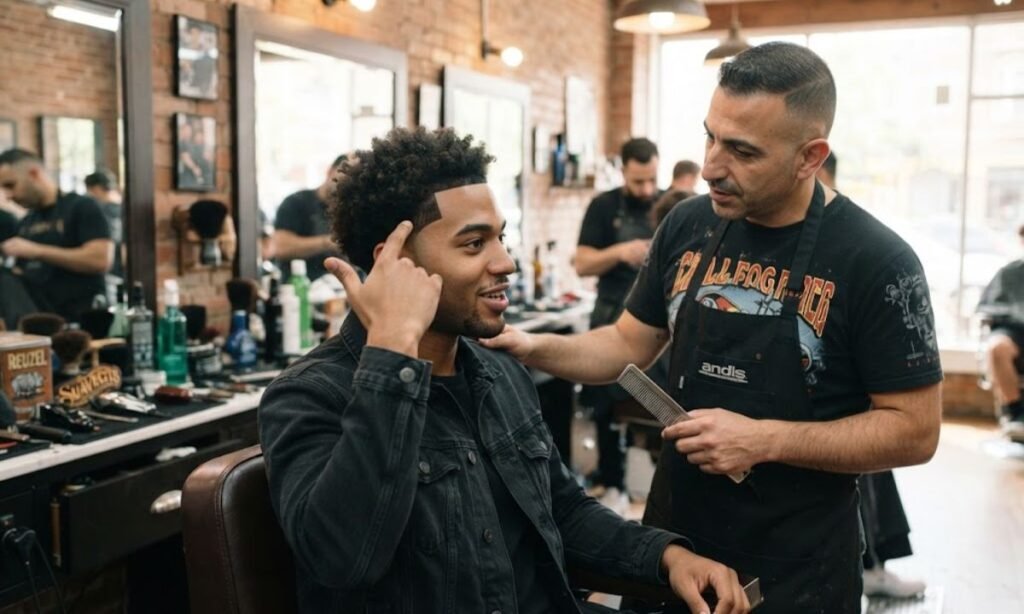
Even the best haircut idea fails if you can’t explain it. Barbers aren’t mind readers, and “just a taper” can mean anything. A little clarity saves you from a surprise.
Bring photos, ideally from the front, side and back. Photos beat words every time. Make sure the hair texture in the photo is similar to yours.
Here’s how to make the conversation smooth.
Start with the height. Say “low taper,” “mid taper,” or “high taper,” then add details like “start at the temple” or “keep it soft above the ear.” Mention whether you want skin showing or a shadow.
Next, talk about the top. Tell them how much length to leave and whether you want a middle part haircut for men, curtain bangs, or a textured fringe. Mention how you plan to style it, such as with a blow dryer or just air dry.
Finally, ask questions. “How often should I come back?” and “What product do you recommend?” show you care about the result. Barbers love informed clients.
How to Style a Middle Part With Any Taper
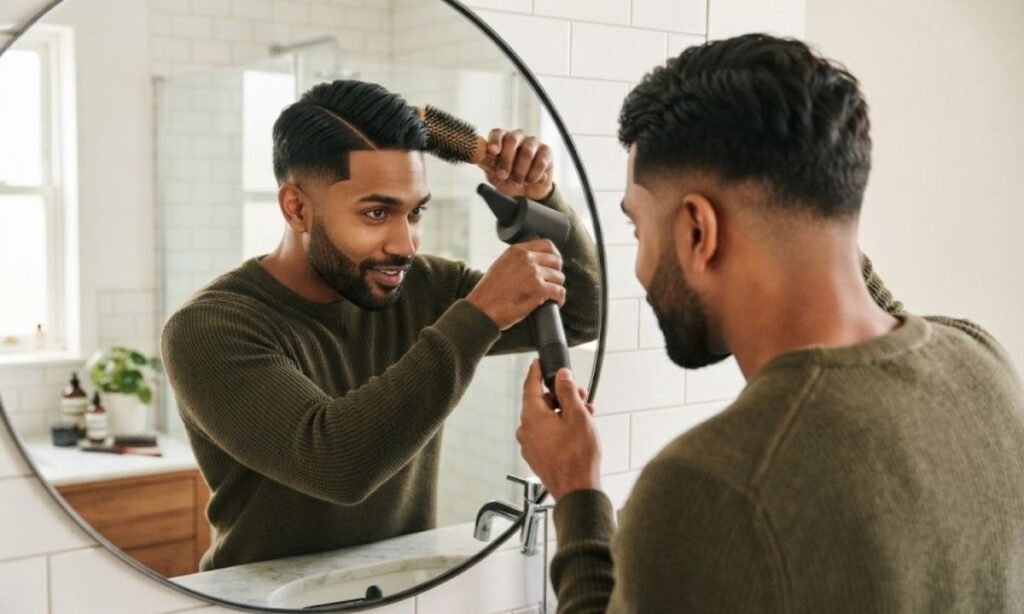
A middle part looks effortless, but it takes a little technique. Start with damp hair, split it down the center, and set it with a blow dryer. A quick blow drying session trains the hair to fall evenly.
Next, add product. Sea salt spray gives texture, matte clay gives hold, and a styling cream keeps things soft. Use a pea-sized amount and work it through with your fingers.
Finish with a quick check in the mirror. If one side flips, redirect it with the dryer. Small tweaks make the part look intentional.
How to Train Hair for a Middle Part
Not everyone’s hair cooperates on day one. Hair training takes patience, but it works. Comb your hair into a center part every morning, then use a blow dryer to set it.
Wear a snug beanie or hat for a few minutes if your hair resists. That helps the strands settle. Repeat daily for two or three weeks.
If you have a cowlick, work with it rather than fighting it. A middle part with a cowlick may need a slightly off-center line or a bit of extra product. Ask your barber to cut around the growth pattern.
Best Products for Taper Fades and Middle Parts
The right product makes your haircut easier to live with. Here’s a quick guide:
- Sea salt spray: adds grit and natural movement for wavy or straight hair
- Matte clay: gives strong hold without shine
- Styling cream: offers light control for soft, natural looks
- Texture powder: boosts volume for fine hair
- Curl cream: defines curls and fights frizz
- Lightweight mousse: adds lift without weight
- Pomade: creates a slick, polished finish
Start with one or two products rather than a full shelf. You’ll learn what works for your hair faster. Less is usually more.
Common Taper Fade Mistakes to Avoid
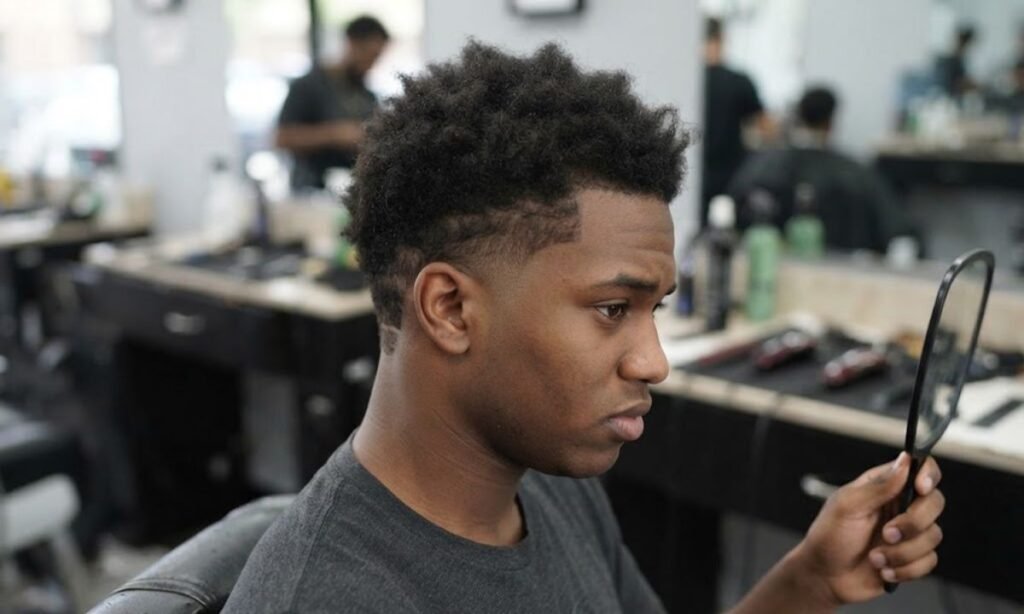
The biggest mistake is picking a height without thinking about upkeep. A high taper looks great for a week and annoying for three. Be honest about how often you’ll visit.
Another mistake is ignoring hair texture. A cut that works on straight hair may not work on coily hair. Show your barber photos of people with hair like yours.
Finally, don’t skip aftercare. Wash, moisturize and style properly. A great cut looks average without good hair maintenance.
Taper Fade Trends to Watch in 2026
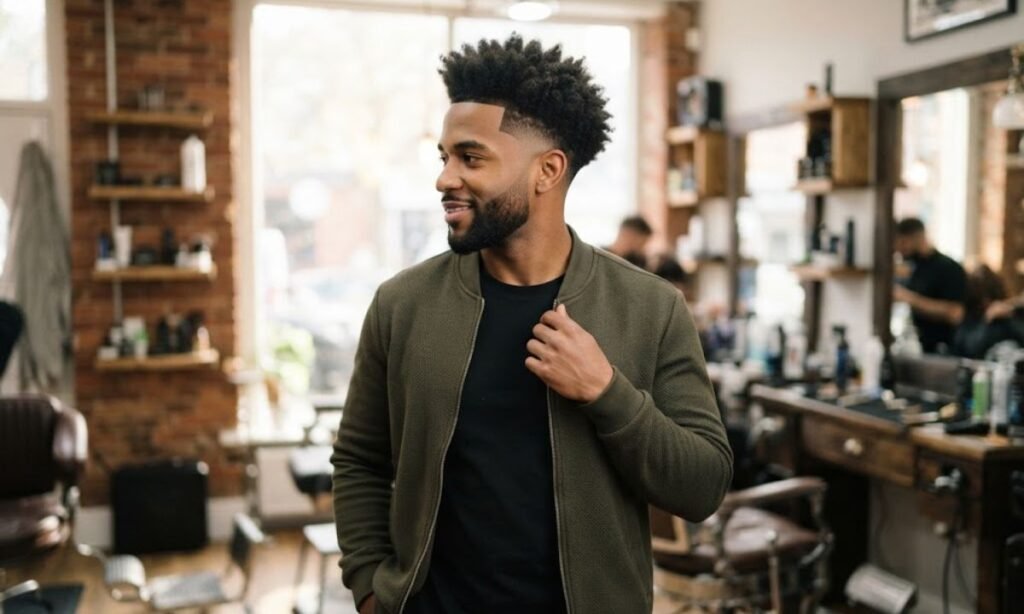
The trend this year is softer, more natural tapers with textured tops. Middle part hairstyles 2026 lean toward relaxed, flowy looks with a clean base. Think middle part flow with a low or mid taper.
The wolf cut, shag haircut, and curtain hairstyle are still popular. Many guys now pair them with subtle tapers to keep things tidy. That mix of shaggy and clean feels fresh.
Korean-inspired styles and K-pop hairstyle influences continue to grow. Soft fringes, light layers and gentle tapers dominate. Expect to see more of them everywhere.
Frequently Asked Questions
What’s the difference between a low taper and a low fade? A low taper is softer and usually keeps some length at the shortest point. A low fade typically goes shorter, sometimes down to skin. Both start low, but the fade is more dramatic.
Which taper is best for beginners?
A low or mid taper. They’re forgiving and easy to maintain. You can go higher later.
How long does a taper last?
Low tapers last four to five weeks, mid tapers three to four, and high tapers two to three. Fast-growing hair shortens those windows.
Can I get a taper with long hair?
Yes. A taper works well with a long middle part hairstyle or middle part haircut for long hair. The clean sides keep long tops from looking shaggy.
Does a taper work for a receding hairline?
Often, yes. A mid or high taper with a shorter top can make a receding hairline look deliberate. Ask your barber for advice based on your pattern.
Is a mid taper better than a high taper?
Neither is better. A mid taper is more balanced and lower maintenance, while a high taper is bolder.
You can also checkout this article as well High Taper Fade for Black Men: 33 Styles by Hair Texture + Barber Script
Final Thoughts
Choosing between a low, mid and high taper comes down to three things: how bold you want to look, how often you’ll visit the barber, and what your face and hair need. Low is quiet, mid is balanced, and high is loud. There’s no wrong answer, only the one that fits you.
If you’re still unsure, start with a mid taper. It gives you a clear sense of what a taper does without a big risk. From there, adjust up or down.
Now it’s your turn. Which taper are you leaning toward, and what style are you pairing it with? Drop a comment, share this with a friend who’s stuck on the same decision, and check back, because we’ll keep updating this guide as trends change.
