

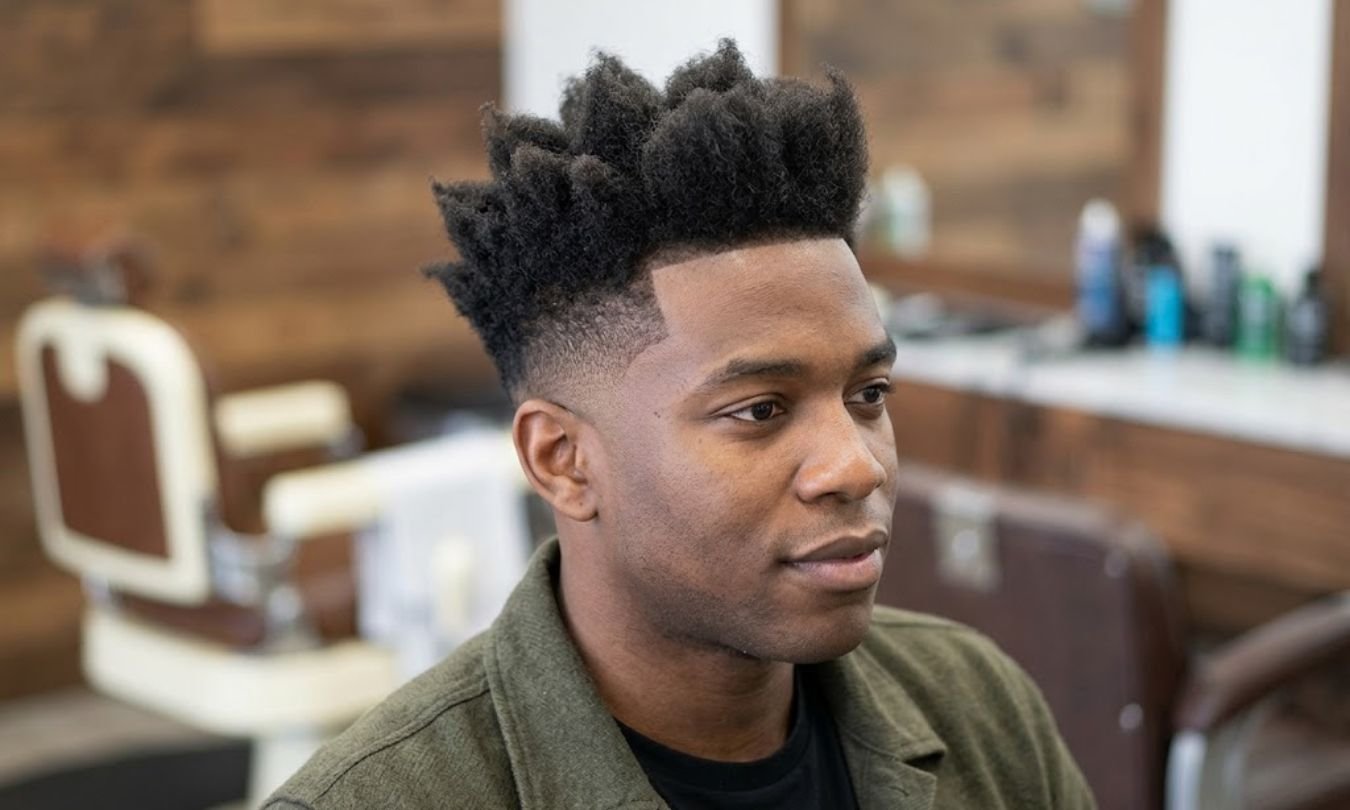
What is a blowout taper fade?
A blowout taper fade is a haircut with short, neatly faded sides and a longer, voluminous top that gets dried upward and back.
The sides shrink gradually toward the neckline, while the top stays full and lifted.
You’ll hear it called a blowout taper haircut too. Same cut, different label.
The magic comes from contrast: tight sides, big top.
So what do you tell your barber? Say this: “Low taper on the sides, leave length on top, and I’ll blow-dry it for volume.”
We’ll break down the exact scripts later, so keep reading.
Key Points
- Best for: guys with at least 3 to 4 inches on top who want shape without daily effort.
- Works on: straight, wavy, curly, and afro-textured hair, with small tweaks for each.
- Taper height: low is subtle, mid is balanced, high is bold.
- Styling time: about 5 to 10 minutes with a dryer, a round brush blowout technique, and a little product.
- Trim schedule: every 2 to 4 weeks keeps the taper fade crisp.
Have you ever left a barbershop thinking, “That’s not what I asked for”?
This guide exists to stop that from happening again.
What Is a Blowout Taper Fade?
Think of it as two haircuts working together.
The taper handles the sides and back, and the blowout handles the top.
A taper fade haircut trims the hair shorter as it moves down toward your ears and neck.
The blowout part means you dry the top with heat and a brush so it stands up and sweeps back with hair volume and lift.
Picture a guy named Dan who walks in with flat, side-swept hair.
He leaves with a mid taper and a lifted top, and suddenly his whole face looks sharper.
That’s why this cut caught on with so many voluminous hairstyles for men.
It looks styled even when you barely tried.
37 Blowout Taper Fade Variations
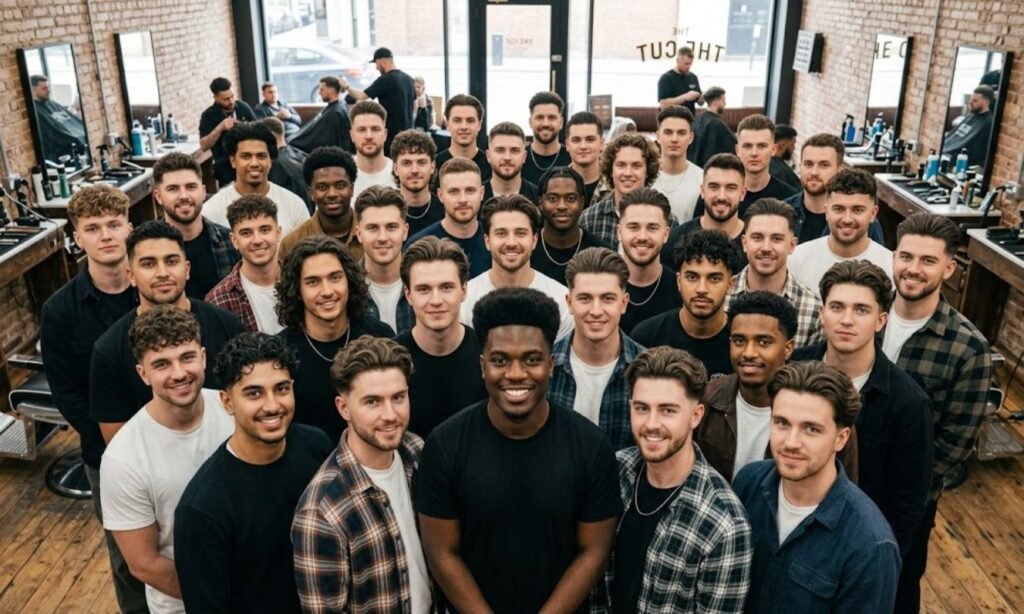
Here’s the fun part. The blowout taper fade styles below are grouped by taper height, then by special add-ons.
Use the names when you show your barber reference photos, because shared barber haircut terminology saves you from awkward guessing.
(Quick note: your outline says 37 here but the H1 says 35. Pick one number before publishing so the title and the heading match.)
Low Taper Blowout Variations
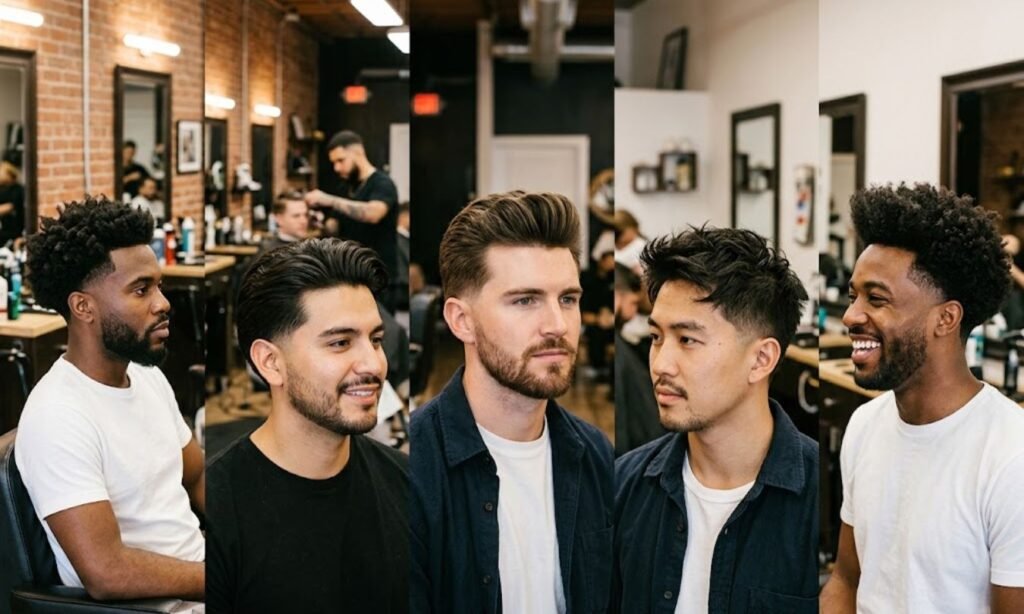
A low taper blowout starts the fade just above the ear and around the neckline.
It’s the safest pick if you work in an office or you’re new to fades.
- Classic low taper blowout: soft sides, full top, zero drama.
- Low taper with a side part: a clean part line adds a polished edge.
- Low taper with a fringe: hair falls forward and softens a strong forehead.
- Low taper with a beard fade: the sideburn blends into your beard.
- Low taper with a line-up: a sharp hairline frames the face.
- Low taper with curls: curls bounce on top while the sides stay neat.
- Low taper with a center part: an easy, relaxed look that suits wavy hair.
- Low taper with a textured fringe: a choppy front you style with matte paste for hair.
- Low taper with a quiff: the front lifts up and slightly back.
Mid Taper Blowout Variations
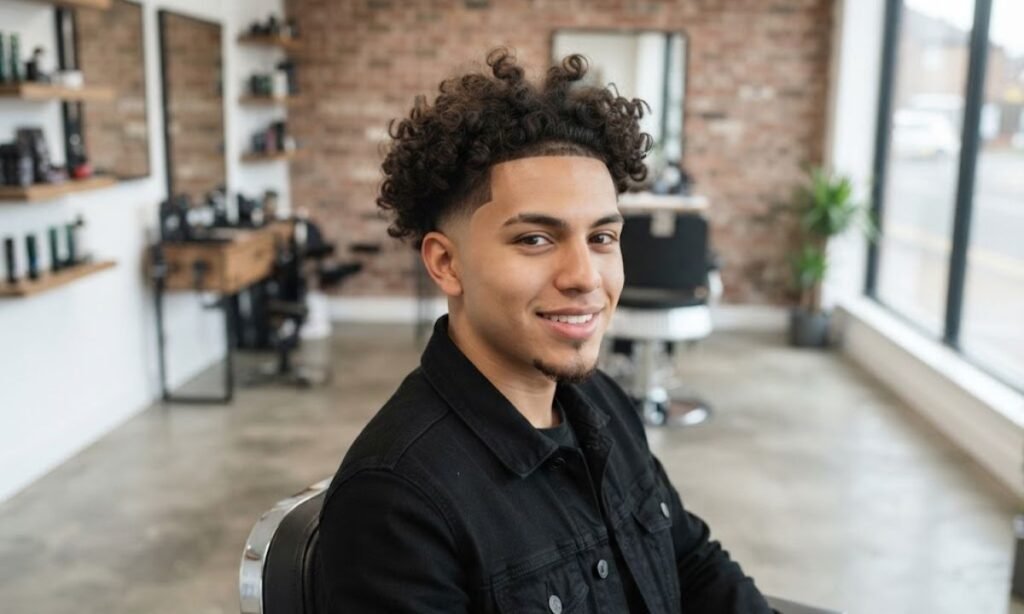
A mid taper blowout begins around the temple.
It’s the crowd favorite because it balances clean and bold.
- Classic mid taper blowout: the all-rounder most barbers start with.
- Mid taper with a pompadour: height at the front with a swept-back shape.
- Mid taper with a slick back: wet-look hair combed straight back.
- Mid taper with a quiff: more volume up front than a low version.
- Mid taper with a side part: works for work and weekends.
- Mid taper with a beard: gives your blowout with beard fade real definition.
- Mid taper with a design: a razor line or small pattern in the side.
- Mid taper with a perm: a blowout perm taper fade adds curl to straight hair.
- Mid taper with waves: a blowout with waves shows off natural movement.
- Mid taper with a fringe: casual and youthful.
High Taper Blowout Variations
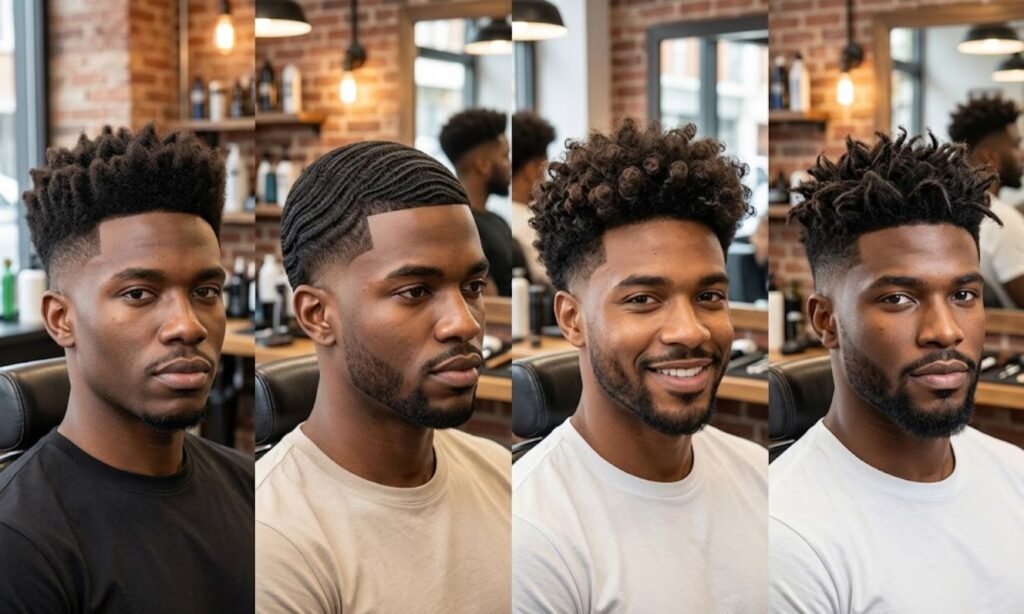
A high taper blowout starts the fade up near the temple or above.
Expect a strong contrast, and plan for more frequent visits.
- Classic high taper blowout: bold sides, maximum top volume.
- High taper with a pompadour: the dramatic version of the pomp.
- High taper with a slick back: a slick back blowout taper with a sharp edge.
- High taper with a quiff: height on top, almost bare sides.
- High taper with curls: curls pop against the tight sides.
- High taper with a line-up: crisp edges that need regular touch ups.
- High taper with a beard: the fade connects into a full beard.
- High taper with a design: a design fade blowout taper with carved lines.
- High taper with a side part: a hard part adds structure.
Specialty Blowout Taper Variations
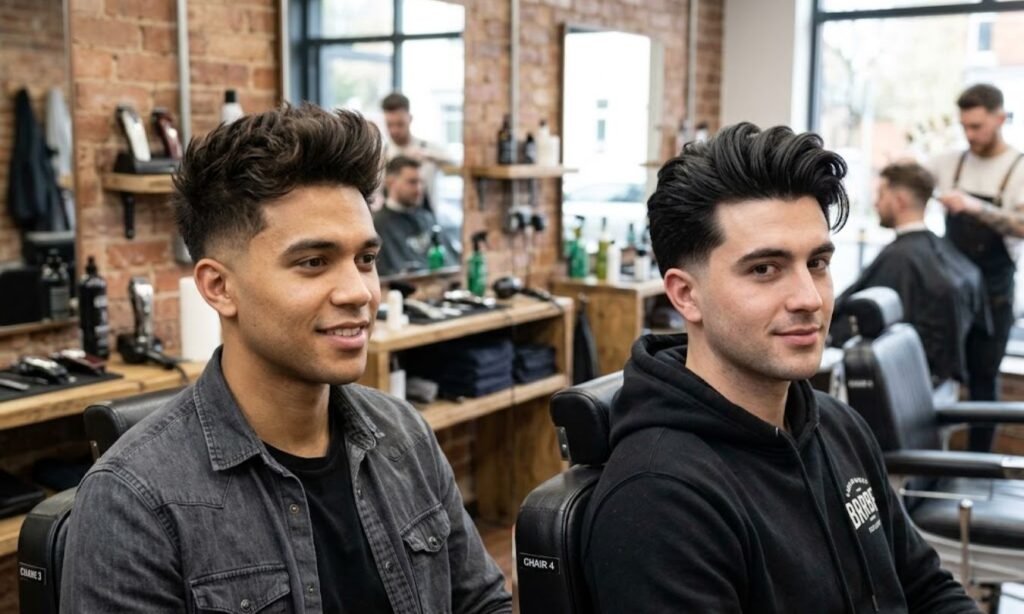
These are the cuts people send screenshots of.
They mix a blowout with other fade styles, so be clear about what you want.
- Skin fade blowout: the sides go down to bare skin.
- Shadow fade blowout: a softer fade that stops just short of skin.
- Edgar blowout taper: a boxy, flat top with a sharp fringe and tight sides.
- Ninja taper blowout: a tapered neckline and fuller sides, popular with curly textures.
- Disconnected undercut blowout: a clear gap between the top and the sides.
- Textured fringe blowout taper: choppy bangs with a loose, messy finish.
- Center part blowout taper: a middle part with length swept to each side.
- Afro blowout taper: a rounded coily hair blowout shaped with a pick.
- Blowout with line-up and beard: a clean hairline and a faded beard in one look.
Which one caught your eye?
Drop your favorite in the comments, and tell us your hair type so others can learn from it.
Which Blowout Taper Fade Suits Your Hair?
Your hair type matters more than most guys think.
A cut that looks great on straight hair can look flat or frizzy on something else.
Let’s go type by type.
Find yours, and note the small adjustments.
Straight Hair

Straight hair taper fade cuts hold shape well, but they can fall flat by lunchtime.
The fix is a good blow-dry and a light product with grip.
Ask your barber to leave 3 to 4 inches on top.
Use a round brush blowout and finish with a volumizing hair product such as a texture spray.
Curly Hair

A curly hair taper fade is one of the easiest ways to look put together.
The tight sides keep the shape clean, while the curls do the talking on top.
Try a blowout with curly hair for stretched, fluffy curls.
Dry with a diffuser on low heat, and don’t brush when it’s fully dry or you’ll get frizz.
Wavy Hair

Wavy hair taper fade styles look effortless because the texture does half the work.
A mid taper with a center part or side part usually flatters waves best.
Blow-dry it slightly upward and scrunch in a bit of pomade for styling or sea salt spray.
Then leave it alone, because waves hate being fussed with.
Afro-Textured or Coily Hair

Afro-textured hair gets some of the best results with a taper, because the shape holds so well.
A coily hair blowout works with a pick, a comb attachment, and patience.
Moisture is key here.
Use a leave-in conditioner first, then stretch the hair with a dryer on a comb before shaping.
Fine or Thin Hair

A taper fade for thin hair can make a thinner top look fuller.
The short sides create contrast, which tricks the eye into seeing more volume.
Here’s how to prevent fine hair from falling flat: dry it in sections, lift at the roots, and use a matte paste for hair or light powder.
Skip heavy gels, because they weigh fine hair down fast.
Thick or Dense Hair

A taper fade for thick hair gives you a lot to play with, but thick hair can feel heavy.
Ask for some thinning on top so it moves instead of sitting like a helmet.
You’ll need a stronger pomade for styling to hold the shape.
A high taper also removes bulk from the sides, which keeps your head looking balanced.
Medium Texture Hair

If your hair isn’t clearly thick or fine, you’ve got the easiest job.
Most blowout taper haircut styles will work, and you can try different taper heights.
Start with a mid taper.
See how it behaves over two weeks, then adjust.
Choosing by Hair Density
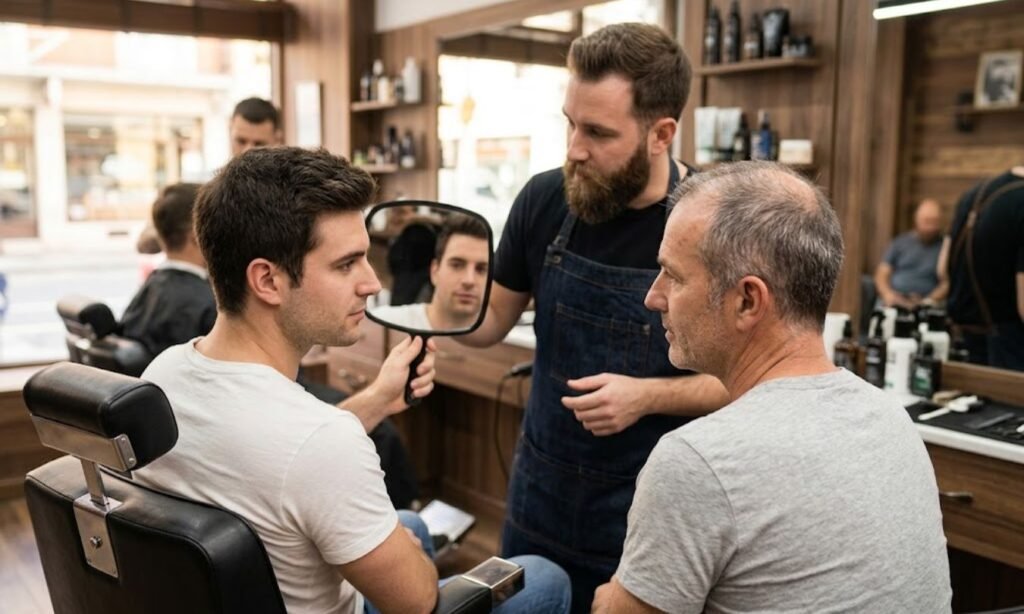
Hair density and taper height go hand in hand.
Density means how many strands grow per square inch, not how thick each strand feels.
| Hair density | Best taper height | Why it works |
|---|---|---|
| Low density | Low to mid | Keeps more hair on the sides so nothing looks bare |
| Medium density | Any height | Handles both subtle and bold looks |
| High density | Mid to high | Removes bulk and sharpens the shape |
Not sure which one you’ve got?
Part your hair in the mirror. If you can see lots of scalp, it’s low density.
What Face Shape Suits This Cut?
Good haircut face shape guide advice comes down to balance.
You want the cut to add what your face lacks and soften what it has too much of.
- Oval face haircut: you can wear almost anything, so go ahead and experiment with a pompadour or a quiff.
- Round face haircut: pick a mid or high taper with extra height on top to add length.
- Square face haircut: a low taper with a side part or a fringe softens strong jawlines.
- Heart-shaped face haircut: keep the top a bit softer and try a fringe to balance a wider forehead.
- Oblong face haircut: keep the top shorter and add fullness at the sides, so avoid very tall quiffs.
The best taper height for face shape isn’t a strict rule.
It’s a starting point you can test with your barber.
Want proof? Take three photos of the same cut at different heights.
The difference on a round face is obvious.
How Long Does Your Hair Need to Be?
This is the question most guys skip, and then they wonder why the blowout looks flat.
How much hair length is needed for a blowout depends on your texture.
The best hair length for a blowout taper fade is about 3 to 5 inches on top for straight and wavy hair.
Curly and coily hair can work with 2 to 3 inches, because curls look longer when stretched.
If your hair is shorter than that, don’t panic.
You can still get the cut once it grows out a bit, or ask for a shorter version with a textured crop.
A quick test: pinch the hair on top between two fingers.
If you can’t hold at least an inch, you’ll struggle to get hair volume and lift.
How Do You Ask Your Barber?
Here’s a truth nobody tells you.
Most bad haircuts happen because of vague words, not bad barbers.
So walk in with a plan.
Bring photos, know your numbers, and speak up while the clippers are still on the table.
The 4-Part Barber Script
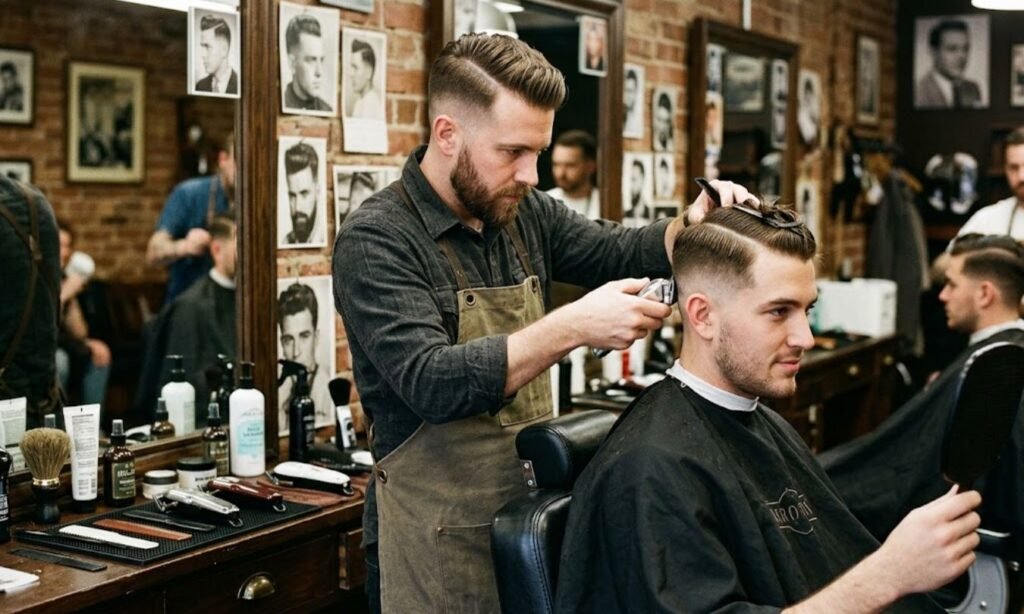
This is the blowout taper fade barber script that works for almost everyone.
Use it as a template and swap in your details.
- Taper height: “I’d like a low (or mid, or high) taper.”
- Fade type: “Keep it a taper, no skin” or “take it down to skin.”
- Top length: “Leave about 4 inches on top so I can blow-dry it.”
- Finish: “Add a line-up, and blend my beard in.”
That’s it.
Four sentences, and you’ve covered what a barber needs.
Need help on how to explain taper height to a barber?
Point to your temple for high, your ear for mid, and your sideburn for low.
Scripts for Each Variation

For a low taper blowout: “Low taper, keep the sides soft, and leave length on top.”
For a mid taper blowout: “Mid taper starting at the temple, with a textured top.”
For a high taper blowout: “High taper with a clean contrast. Keep the top long for a quiff.”
For a skin fade blowout: “Skin fade to the skin with a blowout on top.”
For a shadow fade blowout: “Shadow fade, so not fully bare, with a longer top.”
For a disconnected undercut: “Disconnect the top from the sides, with a crisp gap.”
Common Client Mistakes to Avoid

These are the common blowout taper fade mistakes that cause regret.
Avoid them and you’ll love the result.
- Showing no photo. Words can mean different things to different people.
- Mixing up taper and fade. Know the difference, which we’ll cover below.
- Asking for too short on top. You can’t add length back.
- Forgetting your hair type. Tell the barber if your hair is curly, fine, or thick.
- Staying silent mid cut. Say “A bit longer, please” before it’s too late.
How Do You Style It at Home?
Styling at home isn’t hard, but it does need a routine.
The daily styling routine for a blowout taper fade takes about 5 to 10 minutes.
Here’s the simple routine:
- Towel dry gently. Leave the hair about 70 percent dry.
- Apply heat protectant. Heat protection when blow-drying hair keeps strands from getting brittle.
- Blow-dry for volume. Use a round brush and lift at the roots, directing the air up and back.
- Add product. A pea-size amount of matte paste for hair or pomade for styling is plenty.
- Cool shot. Finish with cold air to lock the shape.
That last step matters most when you want how to keep a blowout hairstyle in place.
Cool air sets the style, and it lasts hours longer.
For styling products for a blowout taper fade, pick by finish.
Matte paste gives texture, pomade gives shine and hold, and sea salt spray gives grit for fine hair.
Want best products for hair volume and lift?
Look for volumizing hair products like a mousse or a powder that goes on at the roots.
How Often Do You Need a Trim?
Expect a trim every 2 to 4 weeks.
Haircut trim frequency depends on your taper height and how fast you grow hair.
High tapers and skin fades go stale fast, sometimes in two weeks.
Low tapers and shadow fades can stretch to four or even five.
To maintain a blowout taper fade, tidy the neckline between cuts and keep your hair moisturized.
A small trimmer helps, but leave the fade to your barber.
Think of it like a car.
Regular tune ups cost less than a full repair.
What Does Grow-Out Look Like?

The taper fade grow-out goes through a few stages.
In week one, it looks perfect, and by week three the sides start to fuzz.
Around week five or six, the shape rounds out and the top gets heavy.
The good news: a tapered cut grows out more gracefully than a hard fade.
If you’re skipping a few cuts, ask for a low taper next time.
It grows out cleaner and hides the gap between visits.
How Is It Different From a Taper Fade?
People mix these up all the time.
A taper fade haircut is about the sides and back, while a blowout is about the top.
So what’s the difference between blowout and taper fade?
The taper fade is the base, and the blowout is a styling technique that gets added.
And the difference between taper and fade?
A taper stays more conservative, leaving some length at the bottom, while a fade goes down to very short or skin.
Here’s an easy way to remember it.
Taper equals gentle slope, fade equals steep drop, and a blowout equals the volume on top.
And low vs mid vs high taper blowout?
Low is subtle, mid is balanced, and high is bold.
Is It Still Trending in 2026?
Short answer: yes, though it keeps evolving.
The blowout taper fade trends in 2026 lean toward softer fades, textured fringes, and natural movement.
Skin fades remain popular, but many guys now choose shadow fades or low tapers.
They look cleaner and need fewer trips to the barber.
(Editor’s note: this section reflects general style direction. Before publishing, check current search trends and your own client data so the claims stay accurate.)
What do you think, will it last?
Share your take below, we’d love to hear it.
Frequently Asked Questions
What is a blowout taper fade?
It’s a taper fade on the sides with a longer, blow-dried top. It gives you short, clean sides and big volume.
How do I ask a barber for a blowout taper fade?
Bring a photo and use the four-part script: taper height, fade type, top length, and finish.
Does it work on straight hair?
Yes, but straight hair needs a good blow-dry and a product with grip to avoid falling flat.
Can I get this with curly or coily hair?
Absolutely. Curly and coily hair actually hold the shape beautifully.
What’s the best taper height for a round face?
A mid or high taper with extra height on top helps lengthen the face.
How long does hair need to be?
About 3 to 5 inches on top for straight or wavy, and 2 to 3 inches for curls.
How often should I trim it?
Every 2 to 4 weeks, depending on your taper height.
Do I need to blow-dry every day?
Not always. You can air dry some days and use a quick blow-dry for events.
You can also checkout this artile as well Mid Taper Fade for Long Hair: 30 Best Styles + Expert Barber Guide (2026)
Key Takeaways
- The blowout taper fade pairs tapered sides with a voluminous top.
- Pick your taper height by face shape and hair density, not just by trend.
- Match your cut to your hair type: straight, wavy, curly, or afro-textured.
- Use the 4-part barber script and bring barber reference photos.
- Keep a daily routine with heat protectant, a round brush, and a cool shot.
- Plan trims every 2 to 4 weeks to keep the fade fresh.
Got a favorite style from the list?
Leave a comment, share this with a friend who needs a new cut, and tell us what worked for your hair.
Author box suggestion: add the writer’s name, barbering credentials or experience, and a “last updated” date here to strengthen E-E-A-T.
