

What Is a High Blowout Taper and Who Should Get One?
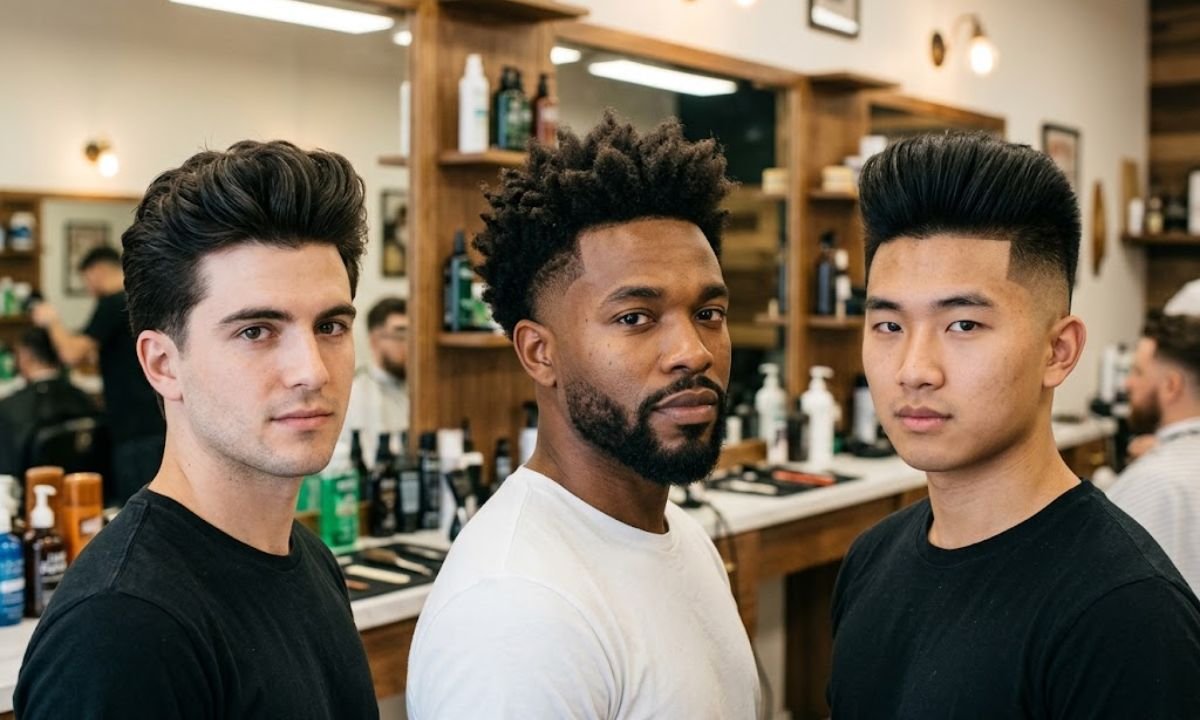
A high blowout taper is a men’s taper haircut with short, tapered sides and a full, blow-dried hair top. The sides start shrinking high on the head, near the temple. The top stays long, soft, and lifted.
So who should get one? Anyone who wants a clean outline without losing hair volume. You’ll need a few inches on top and about five minutes with a dryer each morning. That’s the whole deal.
Maybe you’re wondering, “Will this look too sharp on me?” or “Will my curls survive the clippers?” Fair worries. This guide covers low vs mid vs high, every hair type, and exactly what to say in the chair.
What Is a High Blowout Taper?
The high blowout taper haircut mixes two ideas. The first is the high taper, where the sides get shorter in a smooth slope that starts near the parietal ridge. The second is the blowout, a voluminous top dried up and slightly forward.
Think of it as a disconnected silhouette softened by a seamless blend. The sides look neat. The top looks full. That contrast gives the cut its punch, and it’s why many barbers call it a textured top haircut with attitude.
You’ll also hear the name blowout taper fade, which causes plenty of confusion. A taper keeps some length at the edges. A fade drops closer to skin. Let’s sort that out right now.
Taper vs. Fade: What’s the Difference?

In the taper vs fade debate, the difference is how far the hair drops. A taper shortens gradually and leaves a little length around the sideburns and neckline. A fade usually runs down to bare skin.
Picture a wine glass. A taper is the gentle curve of the bowl. A sharp fade is the spot where the glass narrows fast toward the stem. Both look clean, but they feel very different on your head.
Here’s a quick comparison:
| Feature | Taper | Fade |
|---|---|---|
| Shortest point | Short, but not bare | Skin or close to it |
| Look | Soft and classic | Crisp and high contrast |
| Grow out | Easy and forgiving | Shows sooner |
Plenty of guys mix both. A high taper with skin fade on the sides is a popular middle road.
Where Does the “High” in High Taper Start?
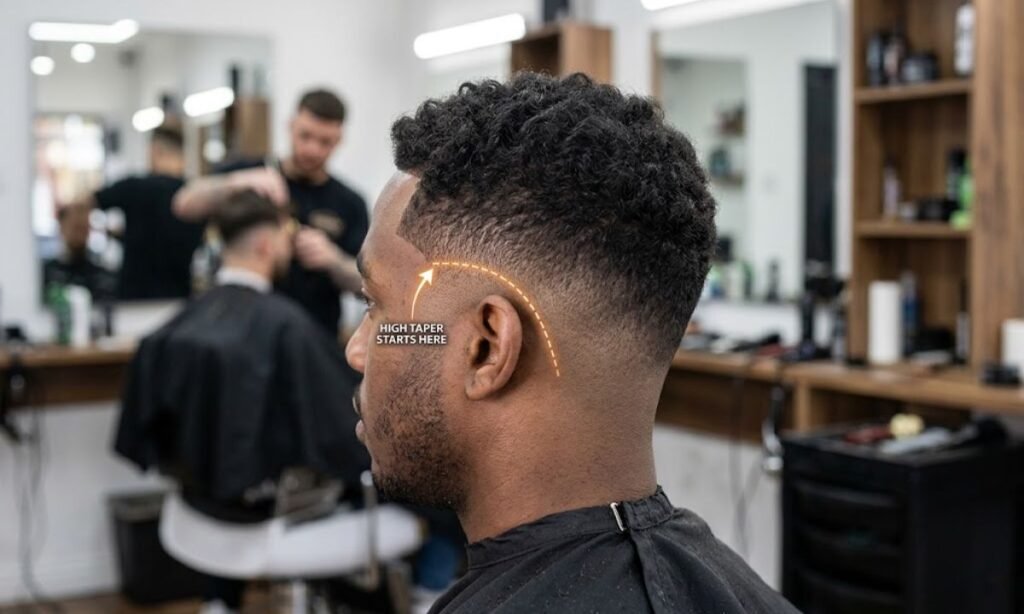
The “high” in high taper refers to taper height. The fade line sits above the ear, around the temple or the parietal ridge. A low taper starts near the ear, and a mid taper sits somewhere between.
Here’s an easy test. Slide your fingers up from your ear until your head curves inward. That bend is the ridge. A high taper begins around there, so the shortened section covers more of the sides.
The transition zone, the stretch where length changes, is tighter on a high version. That makes the blend look sharper. Ask your barber to point out the line in the mirror before the clippers come out.
Is a High Fade the Same Cut?
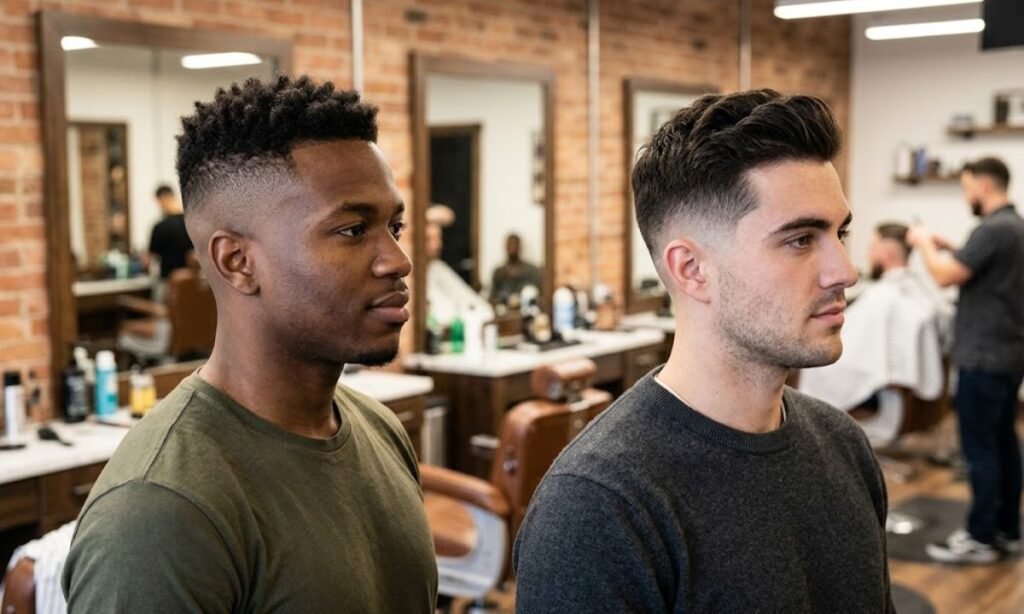
Not quite. A high fade haircut runs the sides to skin fast, so there’s very little length left to see. A high taper fade keeps a touch more hair, which reads softer and a bit more grown up.
With a blowout haircut, this matters a lot. A skin fade makes the top look bigger and more graphic. A taper makes the sides and top feel like one connected shape.
Pick the fade if you like crisp edges and don’t mind more upkeep. Pick the taper if you want something that still looks good in week four. Many people with Afro-textured hair like both, depending on the day.
Low vs Mid vs High Blowout Taper: Which Height Wins?
A low blowout taper starts near the ear and keeps most of the side length. It’s subtle, office friendly, and easy to grow out. If you’re nervous about your first taper, start here.
A mid blowout taper begins around the middle of the side of your head. It’s the safe bet for most guys. It balances volume on top with clean sides, and it won’t surprise your boss.
The high version is the boldest. It exposes the temples and pushes the eye upward. That’s why it pairs so well with a voluminous top. The table below sums it up.
| Height | Starts at | Best for | Upkeep |
|---|---|---|---|
| Low | Just above the ear | Subtle, conservative looks | Every 4 weeks |
| Mid | Around the middle of the sides | Most hair types and faces | Every 3 to 4 weeks |
| High | Temple or parietal ridge | Bold volume, strong contrast | Every 2 to 3 weeks |
What Does a High Blowout Taper Look Like?
From the side, you’ll see short sides climbing toward a fuller crown. From the front, you’ll see a lifted, tousled textured fringe or a top pushed back. From behind, the neckline tapers into a clean curve or a squared edge.
Most guys keep the top length between three and five inches. That’s enough to dry upward and hold shape. Shorter than that, and the volume looks more like fuzz than a style.
Here’s an example. Picture Danish, 27, with thick dark hair that always looked like a flat helmet. His barber kept four inches on top, took the sides down with a high taper, and showed him a round brush technique. Same hair, completely different head.
What Beard Pairs Best with a High Taper?
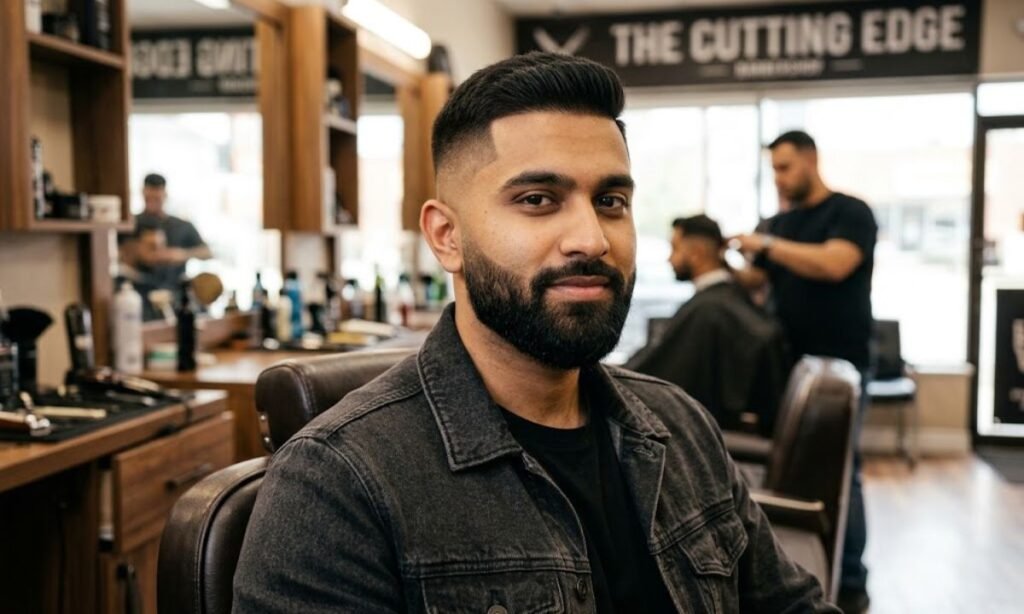
A high taper with beard works best when the beard fade echoes the taper. If the hair sides shrink fast, the beard should too. That keeps everything looking like one planned design instead of two separate cuts.
Here’s what usually pairs well:
- Stubble: Matches skin fade sides and keeps the face clean.
- Short boxed beard: Gives structure, especially for a round face shape.
- Full beard: Ask for the sideburns to blend straight into the beard.
Patchy beard? Keep it short and tight. A well edged stubble look can beat a thin full beard every time. If your jaw is your best feature, let the beard show it off.
Does a High Blowout Taper Suit All Hair Types?
Mostly yes, with a few tweaks. The Andre Walker Hair Typing System sorts hair into four groups: straight (Type 1), wavy (Type 2), curly (Type 3), and coily (Type 4). Each one handles volume differently, and your barber should plan around yours.
Straight hair is easy to lift but can fall flat by lunch. Wavy hair gives natural movement with little effort. Curly hair brings built in volume but needs moisture so it doesn’t puff out. Coily hair holds shape beautifully, though it shrinks when dry.
Whatever your curl pattern, hair density matters just as much. Thick hair holds a big shape. Fine hair needs more help. Here’s how each type usually plays out:
- Blowout taper for straight hair: Use a volumizing mousse and dry in sections for root lift.
- Blowout taper for wavy hair: Use a light cream and keep the natural texture.
- Blowout taper for curly hair: Go with a diffuser attachment and a curl cream. Hands off once it’s dry.
- Afro high blowout taper: Pick the Afro-textured hair shape you want first, then let your barber shape the sides to match Type 4 coils.
How Long Does Hair Need to Grow First?
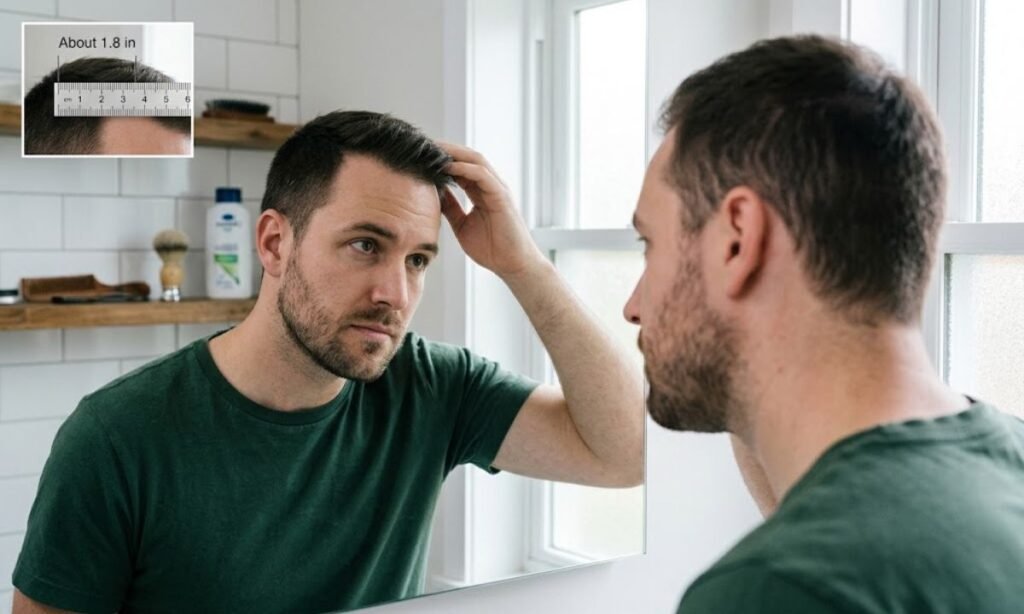
Hair grows about half an inch a month, which is a helpful number to remember. For a proper blowout, you want roughly three to five inches of top length. That might mean two to four months of patience if you’re starting from a buzz.
Curly and coily hair needs more planning. Type 3 curls and Type 4 coils shrink a lot when dry, so four inches of stretched hair might look like two. Measure your length when it’s wet and stretched, not when it springs back.
During hair regrowth, book a quick trim every six to eight weeks. Keep the sides neat while the top grows. You’ll avoid that awkward in between stage where nothing looks planned.
Does Your Face Shape Fit a High Taper?
Short sides draw attention to facial proportions, so face shape matters. A high taper adds height and takes away side bulk. That can slim or elongate your face, which helps some shapes and challenges others.
Use these as a starting point:
- Oval face shape: Almost anything works. Go with your favorite height. This is the easiest high blowout taper for oval face setup.
- Round face shape: The height adds face elongation. A high blowout taper for round face with a textured top is a strong move.
- Diamond face shape: Choose a textured fringe to balance wide cheekbones. That works well for a high blowout taper for diamond face.
- Square face shape: Soft texture on top softens a strong jaw width. Use a high blowout taper for square face with a bit of movement.
- Long face shape and oblong face shape: Keep volume moderate and use a fringe. That avoids stretching the face further. A high blowout taper for long face works with less height.
The goal is visual balance. Hold up a few photos next to your own face and ask your barber for an honest opinion. Good barbers love that question.
Popular High Blowout Taper Variations to Try
Once you know the base cut, you can change the top, the sides, or the part. Barbers use these names a lot, so it helps to know them before you sit down.
- Classic high blowout taper: The standard version with a soft top and neat sides.
- High blowout taper Edgar: A blunt, straight across fringe over a high taper. Many people call it the high taper Edgar haircut.
- High blowout taper with fringe: Longer front hair brushed forward over the forehead.
- High blowout taper mullet: Short sides, voluminous top, and extra length at the back. You’ll also hear high taper mullet.
- Temple blowout taper: Focuses the taper around the temples for a tight outline.
- High blowout taper wolf cut: Shaggy layers on top over short sides. Also called high taper wolf cut.
- Blowout perm taper fade: A permed top for guys with straight hair who want curls.
- High blowout taper with skin fade sides: The sharpest of the bunch.
- High blowout taper with hard part: A razor thin line cut into the hair for structure.
If you want something personal, ask about a high taper with design. A small line or pattern near the temple can add character without looking loud.
What Do You Tell Your Barber?
Walking in with a clear barber script saves time and awkward corrections. Start with the height, then the sides, then the top. Add a reference photo and you’re golden.
Try something like this: “I’d like a high blowout taper. Start the fade line at the temple, keep a soft transition zone, and leave about four inches on top for blow-drying.” Short, specific, and easy to follow.
Save two or three reference photos from a source you trust, such as Taper Empire, before you sit down. Pictures remove guesswork. Mention your hair type, too, since a barber will cut curls and straight hair differently.
Which Clipper Guard Should You Ask For?
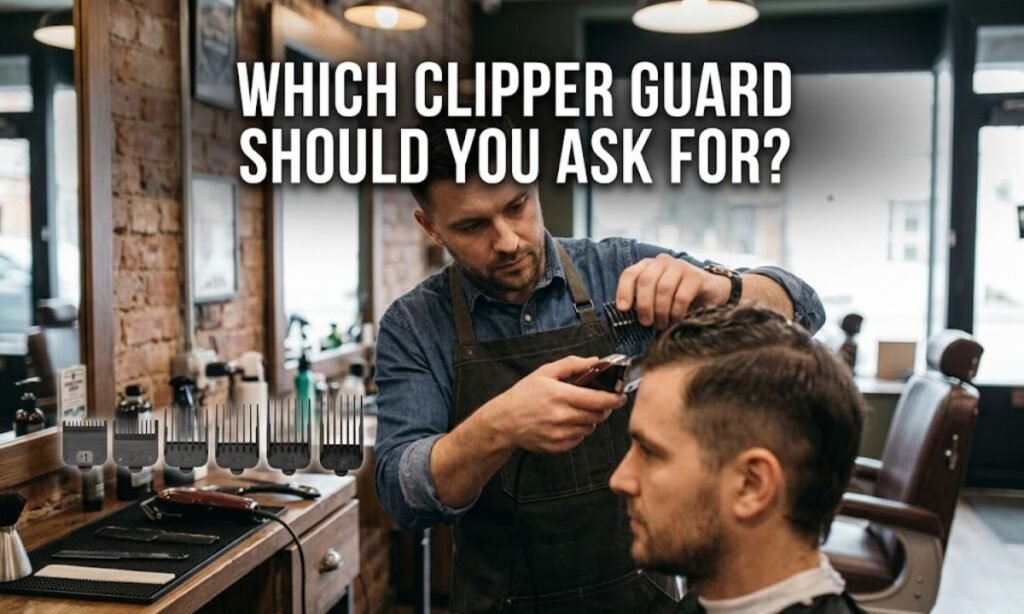
Most barbers work from a clipper guard set. Guard 0 means no guard at all, which gives you the shortest cut. Guard 1 leaves about an eighth of an inch. Guard 2 to 3 leaves a quarter to three eighths of an inch.
For a classic high taper, many barbers start at the temple with Guard 1, then step up to Guard 2 to 3 toward the top of the sides. Skin fades start at Guard 0, or even a foil shaver at the base. That’s your taper progression.
Techniques matter too. Clipper-over-comb and scissor-over-comb both help blend the lines for a seamless blend. You don’t need to know the exact steps, but it’s good to ask which method your barber prefers for your hair type.
What Should You Never Say to Your Barber?
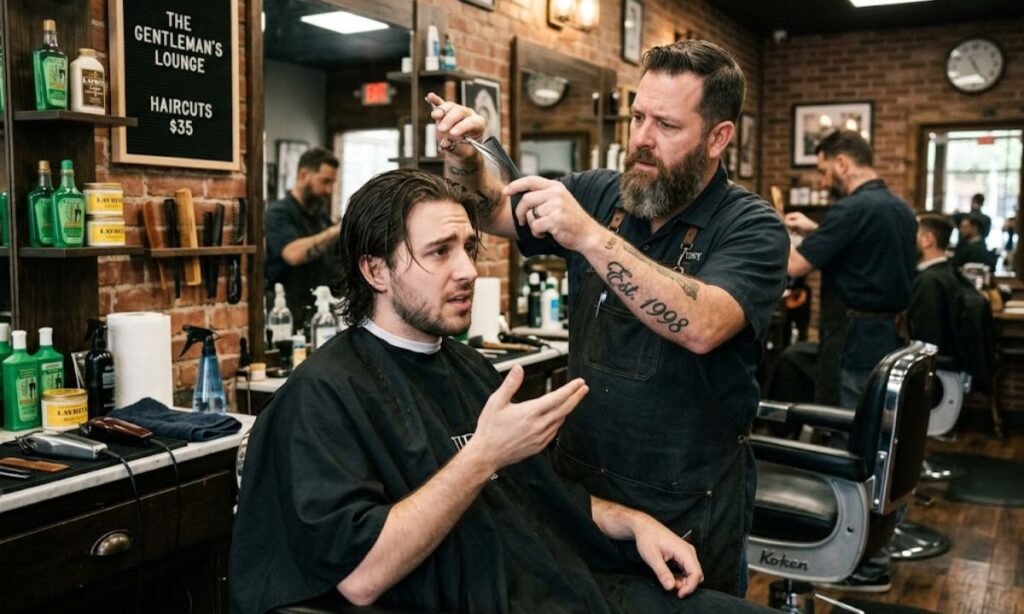
Some phrases cause trouble. “Just a little off the sides” means different things to different people. “Make it even” isn’t clear either. Be specific, or you’ll get something safe and forgettable.
Here are a few things to avoid:
- “Just give me a fade.” There are low, mid, high, taper, and skin versions. Name the one you want.
- “Like the photo,” with no context. Say which part you like, such as the top or the sides.
- “Take it short.” Short means two inches to one person and a buzz to another.
- “Do whatever you think.” You might love it. You might not.
The better move is to name the height, the guard, and the length on top. Then ask questions. Good barbers like clients who care.
How Do You Style a High Blowout Taper?
Styling is where the cut comes alive. Here’s a simple routine you can do in about five minutes:
- Towel dry your hair until it’s damp, not dripping.
- Apply a heat protectant, then a bit of volumizing mousse for root lift.
- Use hair sectioning to split the top into two or three parts.
- Blow-dry each section with a round brush, pulling up and slightly forward. Follow your preferred airflow direction.
- Finish with the cool-air setting to lock the shape.
- Add texture powder, pomade, or light-hold gel based on your hair type.
This is root-focused styling. You want lift at the base, not just stiffness at the ends. The American Academy of Dermatology recommends using the lowest heat setting that works and keeping the dryer moving, so you protect your hair from damage.
Which Product Matches Your Hair Type?

Every hair type asks for different product application. Too much product on fine hair turns it greasy. Too little on thick hair lets it collapse. Here’s a guide:
| Hair Type | Best Pick | Why It Works |
|---|---|---|
| Straight hair, fine hair | Volumizing mousse, texture powder | Adds hair hold without weight |
| Wavy hair | Leave-in cream, light-hold gel | Keeps hair definition |
| Curly hair | Curl cream, diffuser | Boosts texture retention |
| Coily hair | Leave-in cream, moisturizer | Keeps moisture in and shape soft |
| Thick hair | Pomade | Controls bulk and shape |
Start with a pea sized amount. You can always add more. If you’ve got a long day or a night out, a light hair hold spray can keep the shape from sagging.
Does Humidity Affect the Style?

Absolutely. Humidity makes hair swell, frizz, and lose shape. If you live somewhere sticky, the volume you built at 8 a.m. can collapse by noon.
Fight back with a cool-air setting at the end of drying and a light-hold product. For curly or coily hair, use a leave-in cream before styling to seal moisture. Avoid heavy waxes that attract humidity.
A short hair definition routine in the morning can save the whole day. If you’re in a muggy climate, ask your barber about a slightly shorter top. It’s easier to manage.
What Mistakes Ruin a High Blowout Taper?
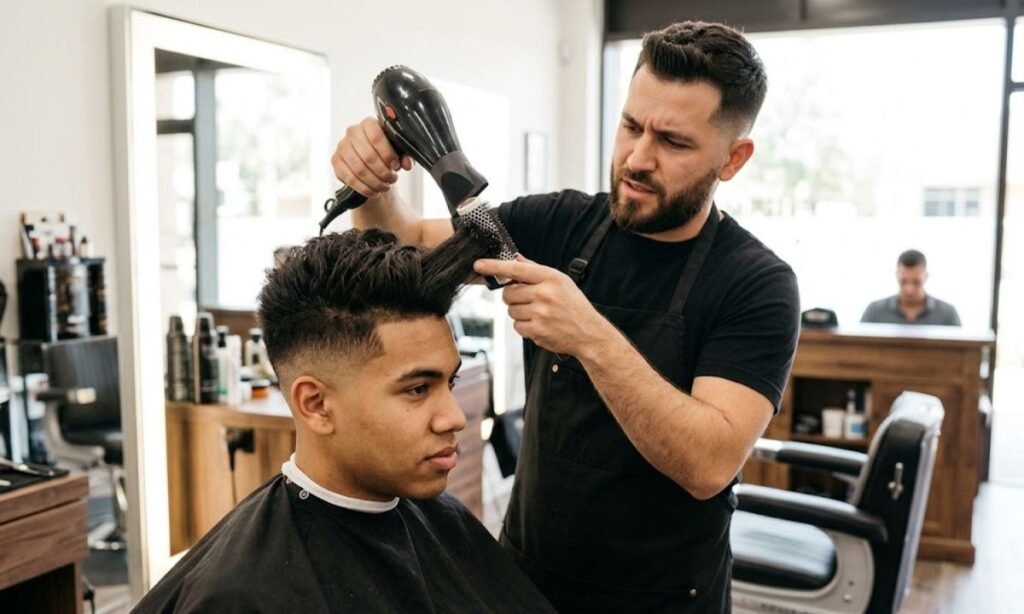
A few common slip-ups can wreck a good cut. Most of them are easy to fix once you know about them.
- Styling soaking wet hair: It takes forever and ruins the shape. Towel dry first.
- Skipping heat protectant: Repeated heat damages hair, especially fine strands.
- Using too much product: It weighs the hair down and kills volume retention.
- Brushing curls dry: It causes frizz. Style them wet or damp.
- Waiting too long between cuts: The disconnected silhouette blurs fast.
Fix those and your style will look sharper. It’s less about talent and more about habits.
Fine and Thinning Hair: Can You Still Pull Off a High Blowout Taper?
Yes, and often it works well. A high taper makes the top look thicker by contrast, since the sides are so short. Lift at the roots does the rest. That’s a good trick for fine hair and thinning hair.
Keep your hair density in mind. Choose lightweight products, like a mousse or texture powder. Skip heavy pomades that can make thin strands clump and show scalp.
If you’re noticing sudden thinning or patchy loss, see a board certified dermatologist rather than guessing. The American Academy of Dermatology suggests getting hair loss checked early, since some causes can be treated. A haircut can help your look, but it can’t diagnose anything.
How Often Does a High Taper Need a Trim?
For a sharp look, plan a barber appointment every two to three weeks. High tapers and skin fade sides show growth fast, since the contrast is so strong. After three weeks, the fade line starts to blur.
If you like a softer look, you can stretch it to four weeks. That’s the realistic limit for most people. After that, the taper progression loses its shape and the neckline gets messy.
Think of this as haircut maintenance, like an oil change. Short, regular visits keep everything in shape. Some barbers also offer quick cleanups for just the neckline and sideburns, which can extend your cut by a week or so.
Daily Maintenance and Styling Effort: What to Expect
Let’s be honest about the styling effort. You’ll spend about five to ten minutes each morning on a good styling routine. If you hate the dryer, a high blowout taper might frustrate you.
Make it easier with a few habits. Keep your tools within reach. Use the same product application order every day. Wash your hair only as often as your scalp needs, since over washing can strip natural oils.
Your natural texture also helps you. Work with it, not against it. If you’ve got waves, let them do part of the job. That keeps daily maintenance simple and your hair healthier.
Frequently Asked Questions
What is a high blowout taper? It’s a high taper haircut with short sides that start near the temple and a full, blow-dried top. The look is clean on the sides and voluminous above.
Is a high blowout taper the same as a high fade? No. A taper keeps some length at the edges. A high fade usually runs down to skin. Many guys blend both for a high taper with skin fade.
How long should my hair be on top? Aim for three to five inches. Curly and coily hair may need extra length, since it shrinks when it dries.
Can I get a blowout taper with curly hair? Yes. Use a diffuser attachment and curl cream to keep the curl pattern defined. Let it dry without touching.
How often should I get a trim? Every two to four weeks, depending on how sharp you like the fade. Skin fades need more frequent visits than soft tapers.
Does a high taper suit thick hair? Yes. A high blowout taper for thick hair helps remove side bulk and highlights the volume on top. It’s a great match.
You can also checkout this article as well High Taper Fade for Straight Hair: Styling Guide for Volume & Contrast
Key Takeaways
Here’s everything you need in one place:
- A high blowout taper pairs short, tapered sides with a voluminous top.
- A taper keeps some length. A fade drops closer to skin. Know which one you want.
- Low, mid, and high refer to taper height. High starts near the temple.
- Plan on three to five inches of top length for a good blowout.
- Match products to your hair type, and use heat protectant every time.
- Book a trim every two to four weeks to keep the fade line sharp.
- Bring reference photos and a clear barber script to your appointment.
Have a question about your own taper, or a style you’d like covered next? Drop it in the comments, and share this guide with a friend who’s overdue for a cut.
Written by Manahil Khan
