
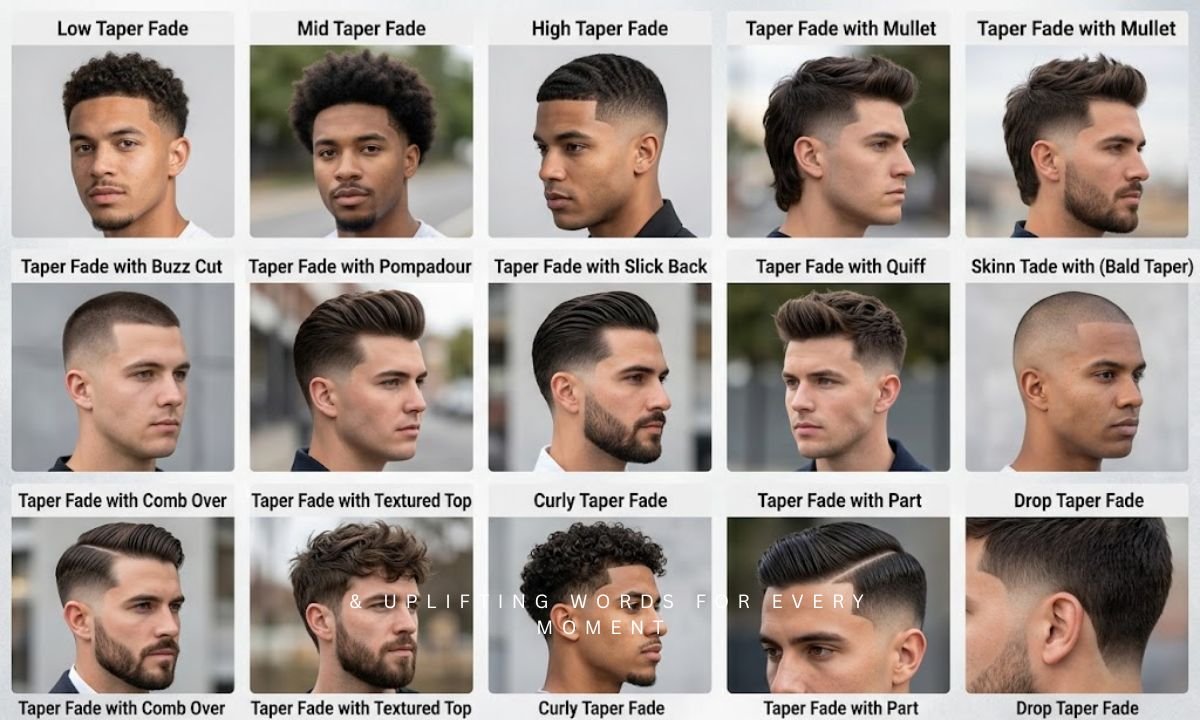
The types of taper fade come down to three heights (low taper fade, mid taper fade, and high taper fade) plus a handful of technique variants like the skin fade taper, burst taper fade, drop fade taper, shadow taper fade, and temple fade. Add the versions built for curly, straight, afro, and Asian hair, and you land on 14 styles worth knowing.
You’ve probably stared at a barber’s wall of photos and thought, “They all look kind of the same.” Fair. The differences are small, but they change how your haircut grows out, how it frames your face, and how much money you spend keeping it sharp.
This guide breaks each taper fade haircut down in plain language. You’ll see where the fade starts, who it suits, and what to say in the chair. Got a question we missed? Drop it in the comments and we’ll add it.
What Are the Main Types of Taper Fade?
Let’s answer the big question first. The three main types of taper fade are the low taper fade, the mid taper fade, and the high taper fade. The only real difference is how high up the head the shortening begins.
A low taper keeps things subtle around the ears and neckline. A mid taper starts around the temple. A high taper climbs near the crown of the head and gives the boldest contrast.
Everything else, like the burst taper fade or the drop fade taper, is a technique layered on top of those three heights. Think of height as the base recipe and technique as the seasoning. Once you see it that way, picking a style gets way easier.
Quick Navigation: Types of Taper Fade at a Glance
Short on time? Use this quick guide to taper fade types to find your match, then read the sections below for the full story.
| Style | Where the fade starts | Best for | Upkeep |
|---|---|---|---|
| Low taper fade | Just above the ears and neckline | Offices, first-timers, longer top | Every 3 to 4 weeks |
| Mid taper fade | Around the temples | Most men, most face shapes | Every 2 to 3 weeks |
| High taper fade | Near the crown | Bold looks, sharp contrast | Every 2 weeks |
| Skin fade taper | Down to bare skin | Clean, modern edge | Every 2 weeks |
| Burst taper fade | Curves around the ear | Mohawks, mullets, textured tops | Every 2 to 3 weeks |
| Drop fade taper | Dips behind the ear | Curved head shapes, longer tops | Every 2 to 3 weeks |
| Shadow taper fade | Soft gradient, hardly any skin | Conservative workplaces | Every 3 weeks |
| Temple fade | Tight around the temple only | Sharp lineups, beards | Every 2 weeks |
The hair type versions, plus the classic and textured styles, get their own sections further down.
What Is a Taper Fade?
A taper fade is a haircut where the hair gets gradually shorter from the top down to the neckline and sideburns. The change is smooth, so you never see a harsh line between long and short. That gentle blend is the whole point.
Most barbers use clippers with guard attachments to step the length down. Then they finish with a lever or a blade to smooth any steps. The result is a blended haircut that looks clean from every angle.
Why do guys love it? Because it works almost anywhere. You can wear it to a job interview on Monday and a concert on Saturday. It also grows out gracefully, which saves you from the awkward “I need a trim now” panic.
Taper vs. Fade: What’s the Difference?
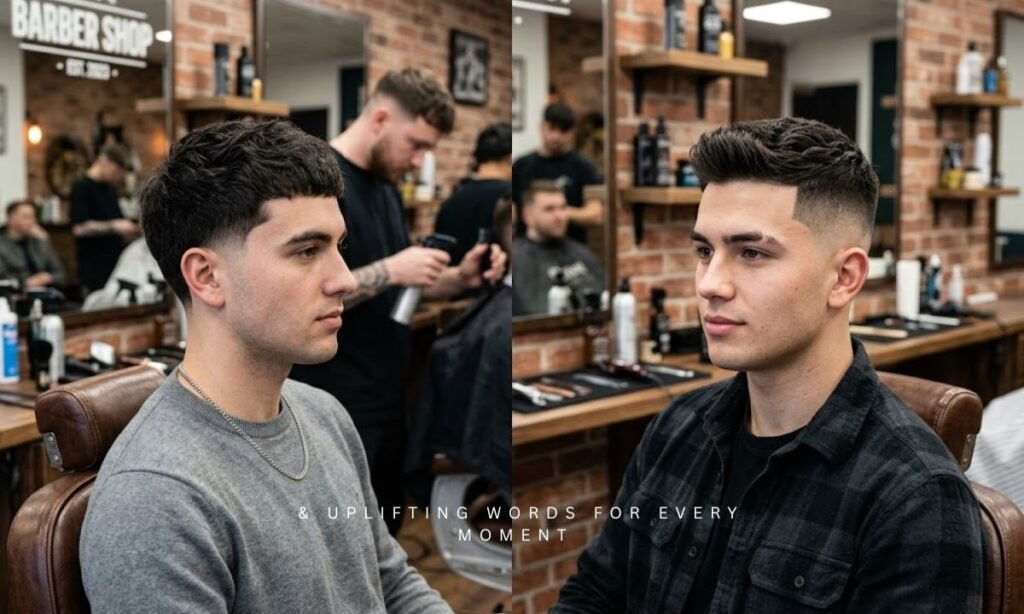
Here’s the difference between taper and fade in one line. A taper shortens the hair only at the edges, mainly the neckline and tapered sideburns. A fade runs higher up the sides and back, often down to the skin.
So what’s the difference between taper and taper fade? A plain taper is conservative and leaves visible length at the bottom. A taper fade borrows the fade’s smoother, shorter finish but keeps the softer feel of a taper.
Picture two friends. Sam gets a classic taper because his office is strict. Leo gets a taper fade because he wants something sharper. Same family, different volume. When you see taper vs fade debates online, that’s usually all they’re arguing about.
The 3 Foundation Types of Taper Fade
Every taper fade style starts with one decision: how high do you want the fade to begin? Get this right and the rest feels easy. Get it wrong and you’ll spend six weeks wishing you’d said something different.
The next three sections cover the low taper vs mid taper vs high taper choice. We’ll cover how each looks, who wears it well, and what it asks of your schedule.
Low Taper Fade
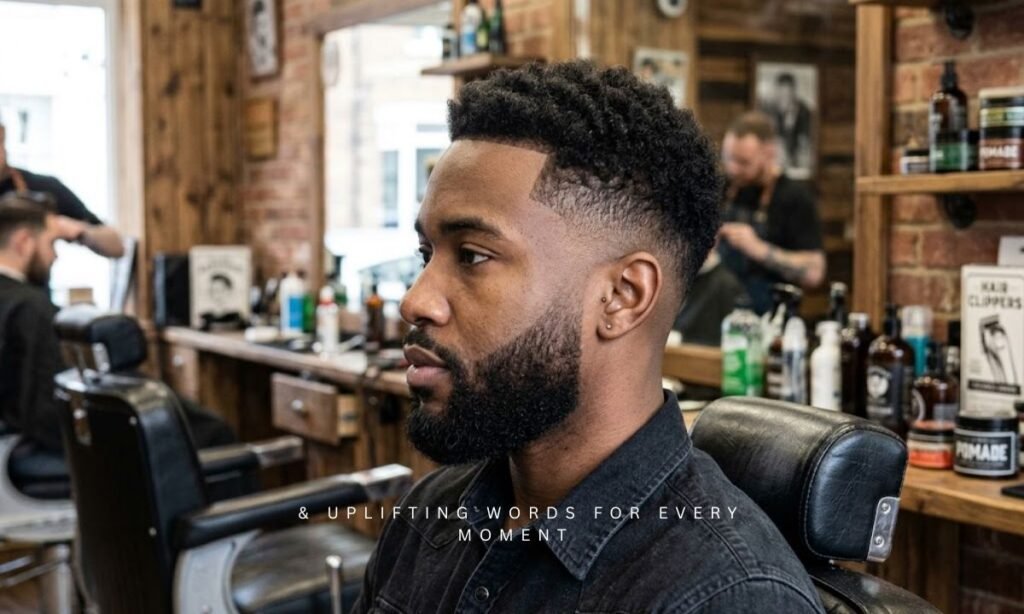
The low taper fade haircut is the gentlest of the group. The shortening starts low, just above the ears and around the tapered neckline. Everything above stays full, so the look reads as natural and easy.
It’s also the best taper fade for beginners. If you’ve never tried a fade, this one barely changes your silhouette. Your barber isn’t removing much, which means mistakes are rare and growth-out is painless.
A friend of mine, let’s call him Raj, wore the same side part for ten years. His first low fade haircut took five minutes to explain and changed nothing dramatic. He just looked tidier. That’s the low taper’s superpower.
Mid Taper Fade

The mid taper fade haircut starts around the temple line, roughly in the middle of the side of your head. It gives a clear, visible fade without going extreme. If you want a safe bet with real style, this is it.
The mid fade haircut flatters round, oval, and square faces alike. It adds a little structure and keeps the top flexible, so you can slick it back, comb it over, or push it up.
Ask most barbers what they cut most often and they’ll say mid. That tells you something. It’s the best taper fade style for men who don’t want to overthink it, and it looks sharp at the gym or in a boardroom.
High Taper Fade
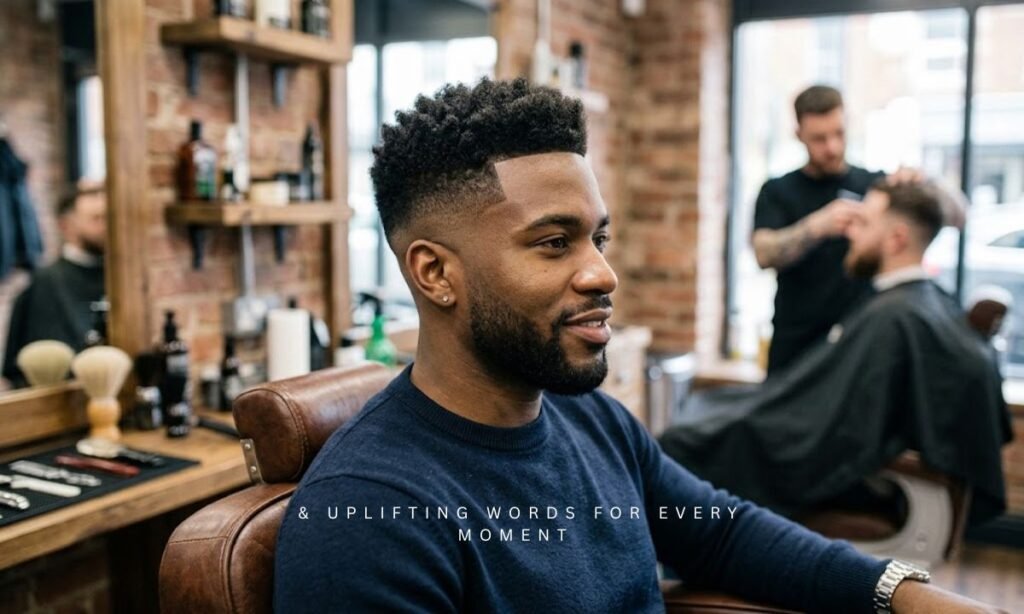
The high taper fade haircut starts near the top of the head, close to where the head curves. That creates strong contrast between a short side and a longer top. It’s bold, clean, and impossible to miss.
The high fade haircut works best when you have a defined head shape and want to show it off. It also helps when your top is thick, because the contrast makes the volume look intentional.
One warning: this one shows grow-out faster. After ten days the sharp line softens, and by week three it’s fuzzy. If you love the crisp look, book your next visit before you leave the shop.
Advanced Technique Variants: Beyond Basic Height
Once you know your height, you can add a technique. These barber fade techniques change the shape of the fade, not just its position. Think of them as filters on the same photo.
Here are five popular taper fade variations and what each one does. Pick one, show your barber a reference photo, and you’re set.
Skin Fade / Bald Fade Taper
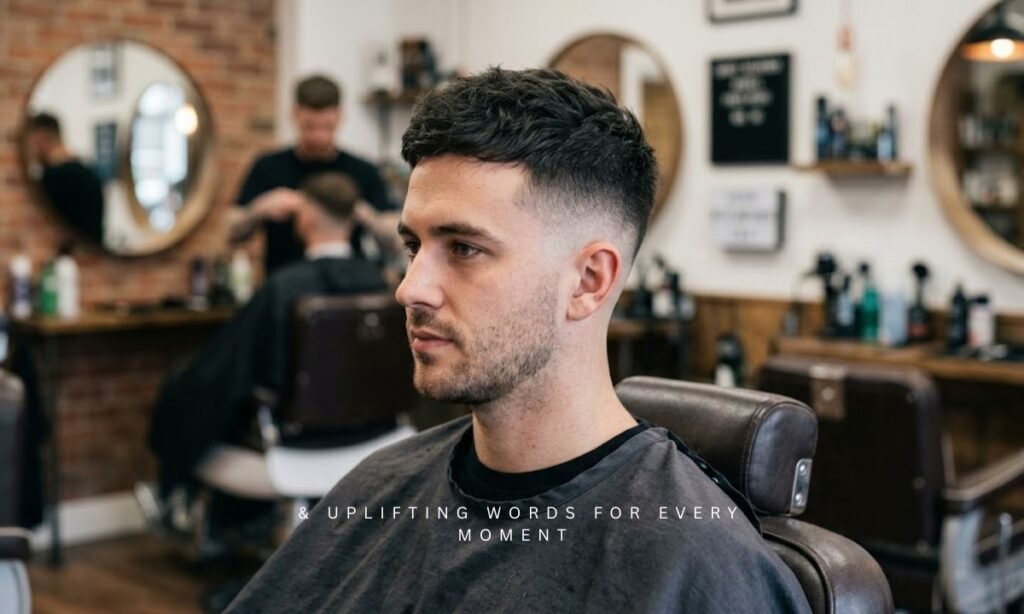
The skin fade taper, also called the bald fade taper, takes the shortest part of the fade all the way down to bare skin. The hair vanishes into the scalp, and you get the sharpest gradient possible.
A skin fade haircut looks clean and modern, but it asks for commitment. Because the skin shows, any regrowth is obvious within a week. Expect to visit every two weeks to keep it crisp.
If your scalp burns easily, remember sunscreen. Fresh skin fades are surprisingly sun sensitive. A quick dab of SPF on the sides saves you from a strange two tone tan.
Burst Taper Fade
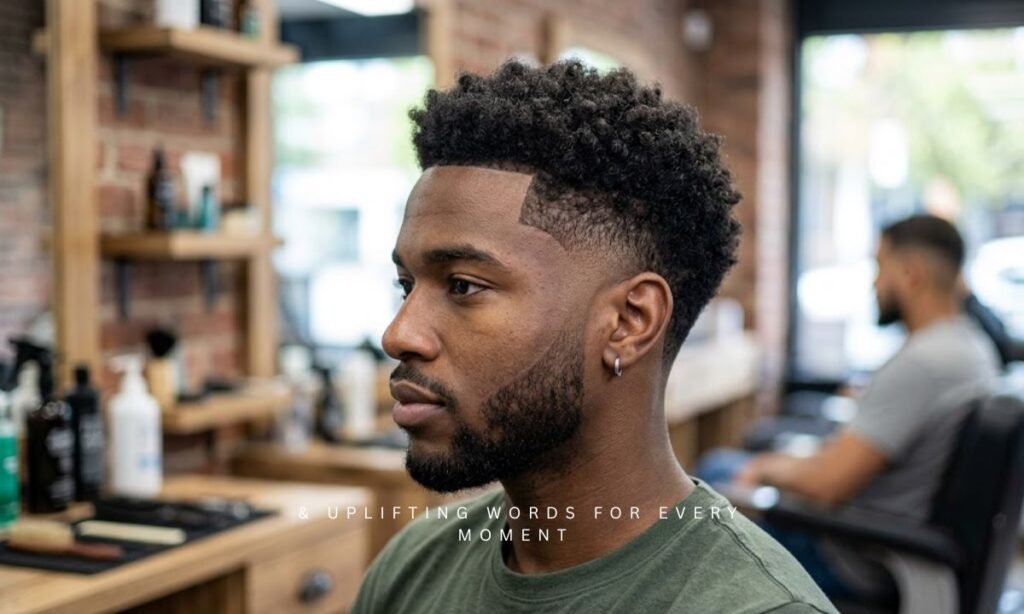
The burst taper fade haircut curves around the ear in a semicircle, like a small burst of short hair. It leaves more length at the back, which makes it a perfect partner for mullets and mohawks.
This style grew popular with guys who wear longer, textured tops. The curved fade frames the ear and keeps the nape full, so you get contrast without losing the rugged back.
It’s trickier to cut than a straight fade, so choose your barber with care. Ask to see their burst work before you sit. A good one can do it in their sleep.
Drop Fade Taper
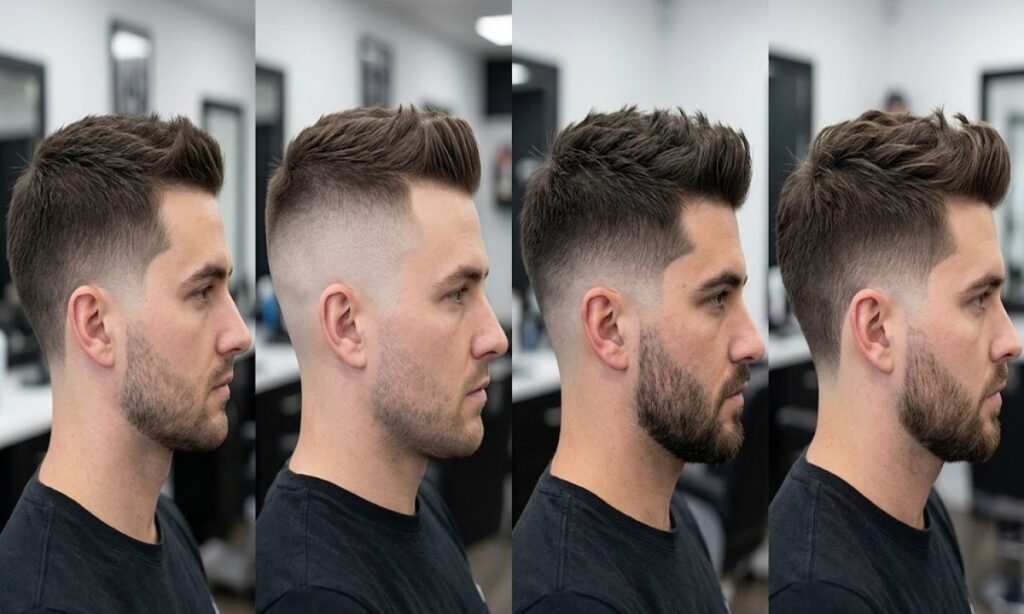
The drop fade taper haircut follows the curve of your head and “drops” behind the ear. The line sits higher at the front and dips lower toward the back, which creates a smooth arc.
That arc flatters most head shapes and works well with a textured taper fade on top. It adds movement, so even a short cut feels designed rather than default.
Barbers like the drop fade because it mirrors natural anatomy. If you’ve tried a straight fade and felt it looked boxy, this one will feel softer and more balanced.
Shadow Taper Fade
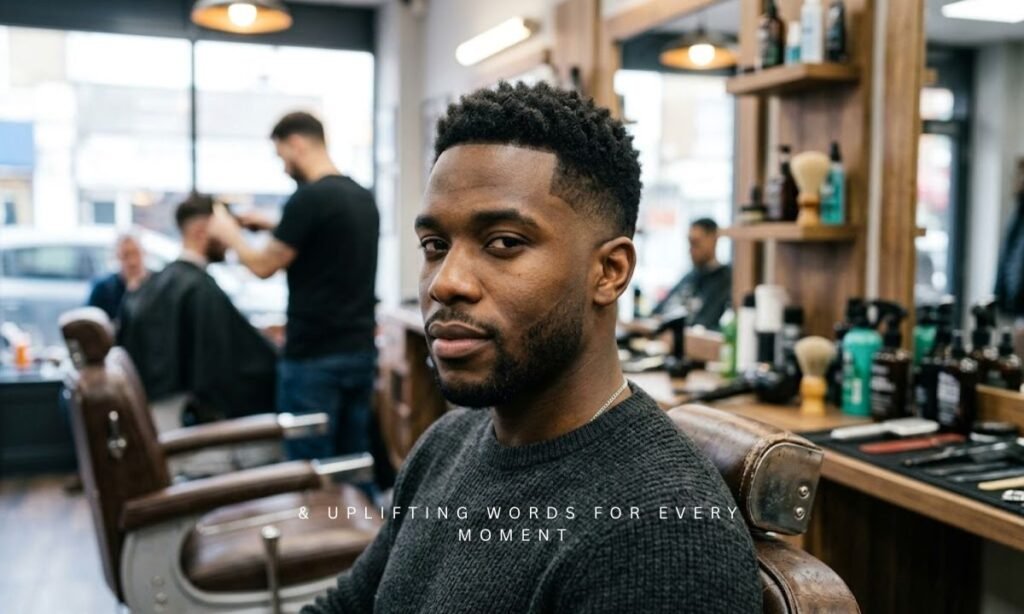
The shadow taper fade haircut leaves a hint of stubble at the bottom instead of going to skin. You get the blended look without the stark bald edge. It’s subtle, polished, and very office friendly.
This is the taper fade haircut for professional settings when a skin fade feels too edgy. Colleagues will notice you look sharp, though they won’t be able to say why.
It’s also forgiving on grow-out. Because the bottom already carries some length, you won’t see a dramatic line crawling up after a week. Three weeks between cuts is realistic.
Temple Fade (Brooklyn Fade)
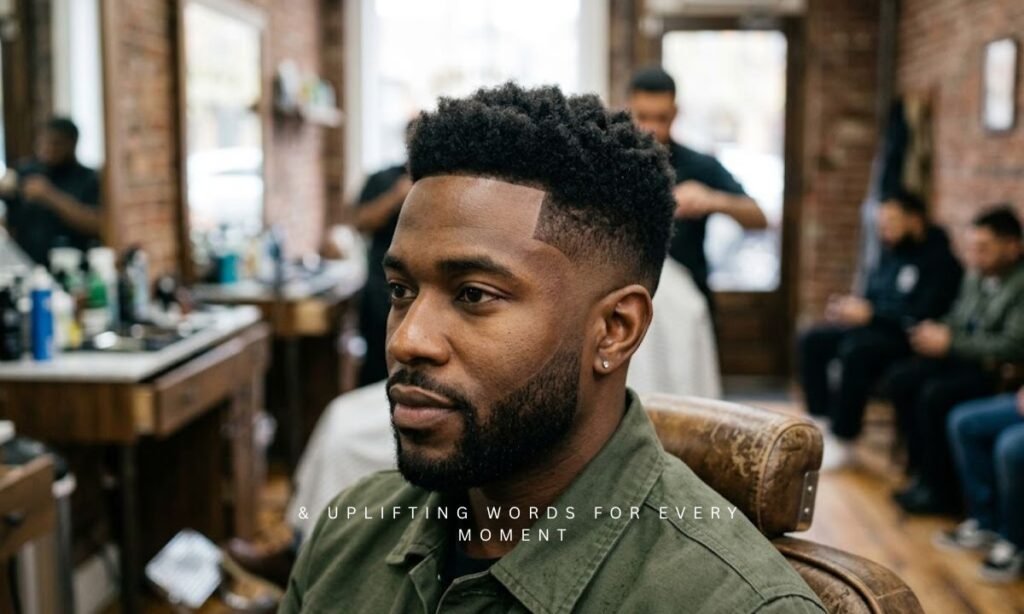
The temple fade, often called the Brooklyn fade, concentrates the shortening around the temples and sideburn area. The sides and back stay slightly fuller, so the cut feels compact and deliberate.
It pairs beautifully with a sharp lineup and a beard. The short temple area connects to your facial hair, which gives you that clean, framed look barbers love to show off.
Because the fade is tight, small flaws show up fast. A crooked edge near the temple is hard to hide. Pick a barber with a steady hand, and keep your appointments close together.
Taper Fade Styles by Hair Type & Texture
Does hair type matter? Honestly, yes. The same clipper guard behaves differently on tight curls than it does on fine straight strands. A great taper fade for different hair textures respects how your hair grows, bends, and holds shape.
Here’s how each texture changes the game, and what to ask for. We’ll cover the best taper fade for different hair types so you don’t walk out with a haircut built for someone else’s head.
Taper Fade for Curly Hair
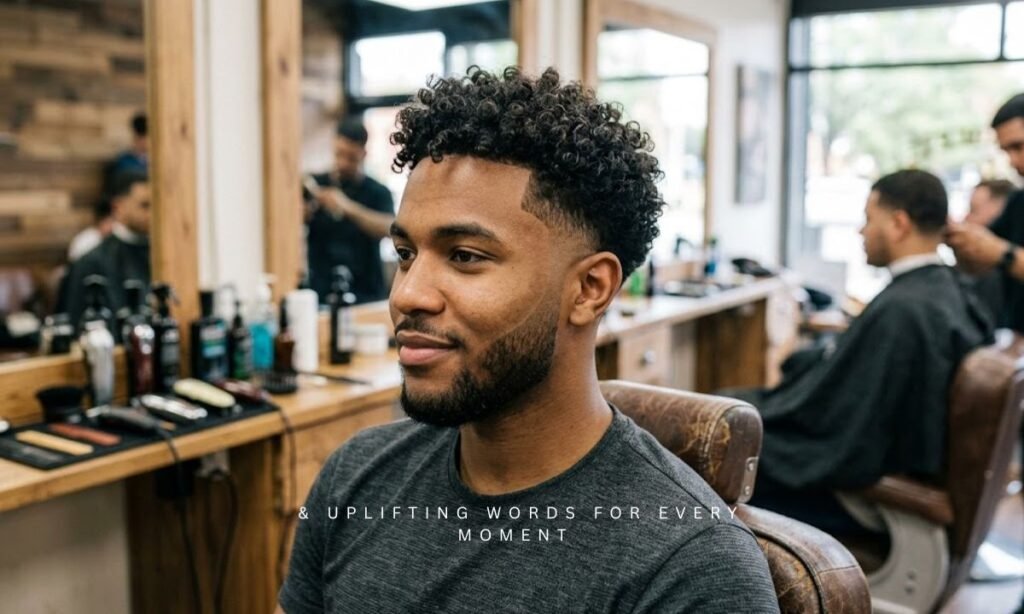
Yes, you can get a taper fade with curly hair, and it looks fantastic. The curly hair taper fade keeps your curls full on top while the sides shrink into a neat, blended edge. The contrast makes the curls pop.
Leave at least three to four inches on top so the curls can form. Cut too short and you lose the pattern. Ask your barber to taper the sides and the tapered neckline but protect the curl clumps up top.
Use a curl cream on damp hair and let it air dry when you can. Skip heavy brushing. A diffuser on low heat helps if you’re in a hurry. Your curls will thank you.
Taper Fade for Straight Hair
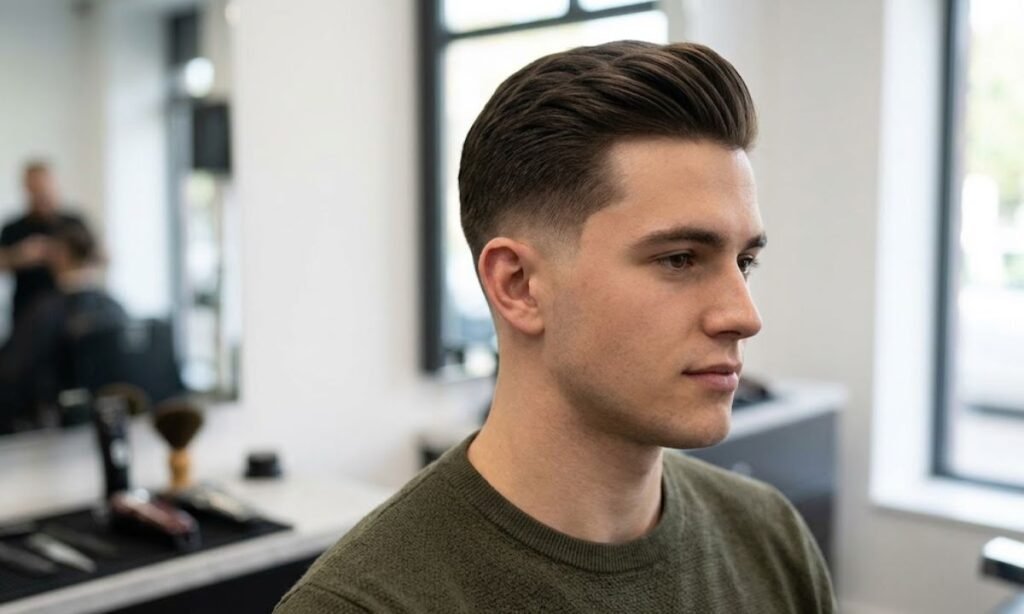
The straight hair taper fade is the easiest to blend, because straight strands lie flat and show every line clearly. That’s both good and bad. The fade looks crisp, but a bad blend has nowhere to hide.
Fine, straight hair can look flat on top, so ask for some texture or layering to add lift. A textured taper fade gives straight hair body without needing a pile of product.
For styling, a matte clay or light paste works best. Greasy pomades can weigh straight hair down by lunch. If your hair is thick, a bit of blow drying gives it that fresh barbershop finish.
Taper Fade for Afro Hair
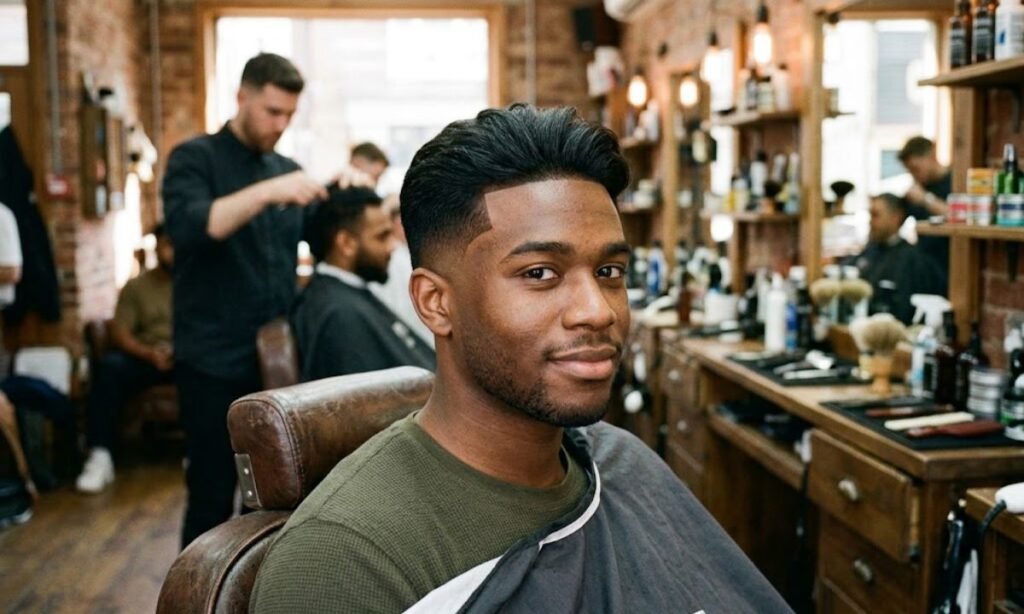
The afro taper fade is a classic for a reason. Afro textured hair holds a fade beautifully, so the lines come out razor sharp. You can keep the top natural, shape it into a rounded natural taper fade, or add a design.
Tell your barber how much length you want to keep. Many men pick a mid or low taper that follows the natural hairline. A neat faded hairline with a clean lineup frames the face and looks polished.
Moisture matters here. Dry afro hair breaks easily, so use a leave in conditioner and a light oil on the top. Sleep on a satin pillowcase or wear a durag. It protects the shape between cuts.
Taper Fade for Asian Hair
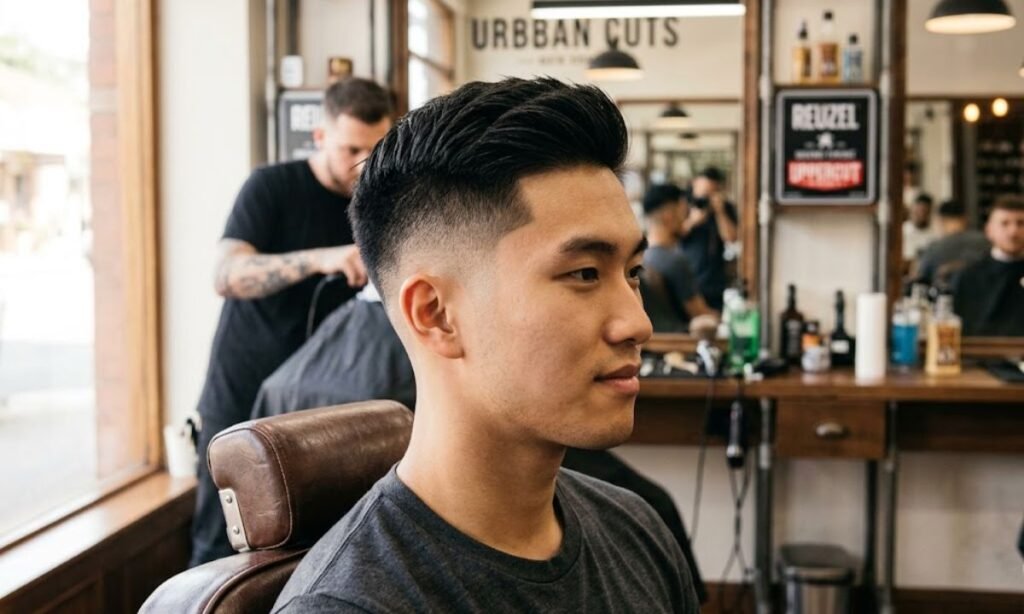
The Asian hair taper fade works especially well because the hair is typically thick, straight, and strong. That means it stands up on its own, and the fade stays sharp. Many men go for a mid taper with a longer, messy top.
Thick Asian hair can puff out at the sides if it’s not thinned. Ask your barber to use a lower guard and a bit of texturizing around the edges. That keeps the silhouette slim rather than bulky.
For styling, a strong hold clay or wax works well. Because the hair is heavy, lightweight sprays rarely do much. A blast of cool air from a dryer helps lock the shape in place.
Two More Styles Worth Knowing: Classic and Textured
We’ve covered twelve styles so far. Two more complete the list of 14 and show how flexible this haircut really is. Both can be built on top of any height or technique above.
The classic taper fade is timeless and clean, with a side part or a neat comb over. The textured taper fade is its looser, messier cousin. Which one fits you depends on how much effort you want in the morning.
Classic Taper Fade
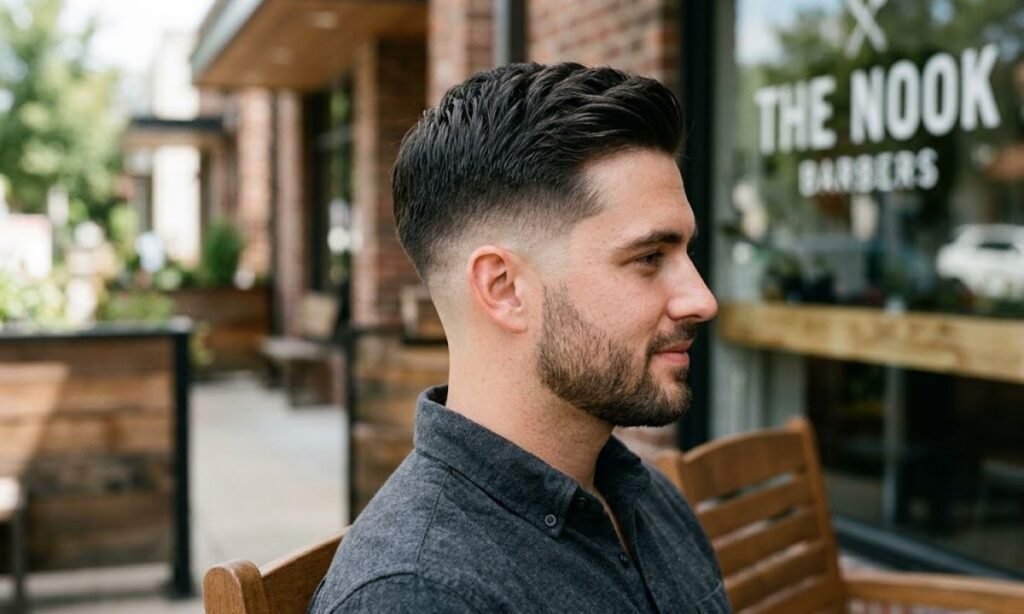
The classic taper fade is what your grandfather would recognize, only sharper. The sides taper neatly, the top stays tidy, and a side part gives it that old school confidence. It’s the safest pick for formal events.
This taper fade for men suits weddings, interviews, and any room where you want to look reliable. It takes about two minutes to style with a bit of pomade and a comb.
If you want a modern taper fade, simply keep the structure and add a little length on top. That small change makes the same cut feel current instead of retro.
Textured Taper Fade

The textured taper fade adds choppy, uneven layers on top. It looks relaxed, a little rebellious, and takes almost no styling. Run some clay through your hair and you’re done.
It works best for guys with some natural wave or thickness. Fine hair can look sparse when it’s chopped up, so ask your barber to leave a bit more weight if yours is thin.
People often pair it with a skin fade or a drop fade taper for extra edge. Show your barber a photo of the top you want. Texture is easy to describe wrong and hard to fix later.
How to Choose the Right Taper Fade
So how do you pick? Start with three questions. How formal is your daily life? How much time do you spend on your hair each morning? And how often will you really visit a barber?
If you want low effort, go low or shadow. If you want a statement, go high or skin. If you’re not sure, a mid taper fade is the safest bet. It’s the Goldilocks option, not too bold and not too quiet.
Take a screenshot of two or three cuts you like before your appointment. Photos beat words every time. Barbers can tell exactly what you mean, and you avoid the “that’s not what I pictured” moment.
Taper Fade Haircut for Different Face Shapes
Face shape changes how a fade looks on you. A taper fade haircut for different face shapes isn’t about rules. It’s about balance, so the cut flatters your natural lines rather than fighting them.
Round faces look sharper with a high taper fade because the height adds length. Square faces suit a mid taper fade that keeps the jaw strong. Oval faces can wear nearly anything, so you’re lucky.
Long or narrow faces do better with a low taper fade and some volume on the sides. Heart shaped faces pair well with a mid fade and a fuller fringe. Try different options, and trust your barber’s eye.
Face Shape for High Taper Fade
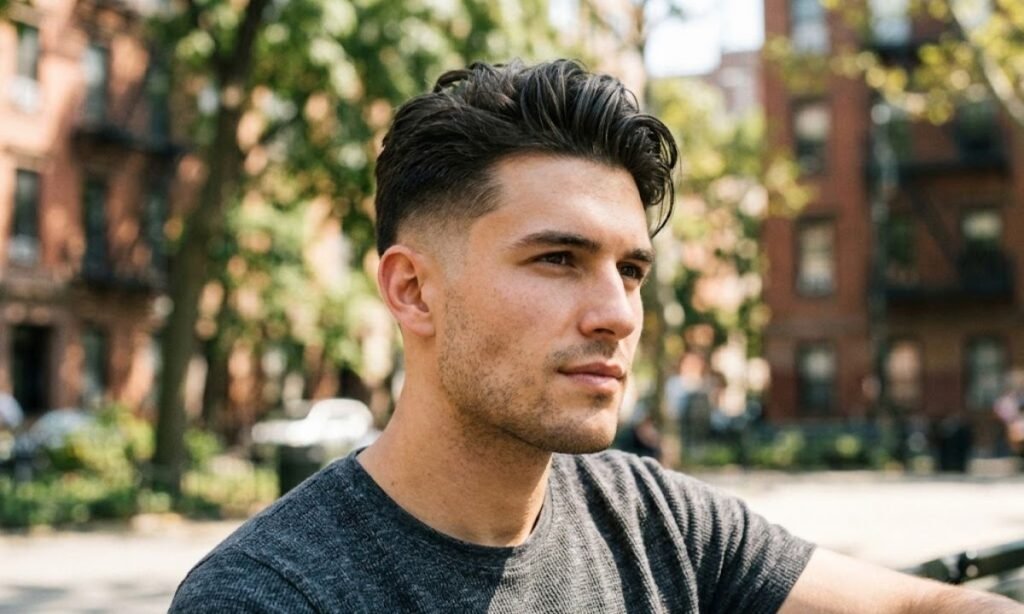
Wondering about the face shape for high taper fade? It works best on round, square, and oval faces. The high contrast creates vertical lines, which makes round faces look longer and more defined.
It’s less ideal for very long or narrow faces. A high fade removes width at the sides, which can make the head look even narrower. If that’s you, go mid or low instead.
Strong jawlines also look excellent with a high taper fade face shape match. The short sides highlight the jaw and cheekbones. Add a short beard, and the whole look comes together.
What to Tell Your Barber for a Taper Fade
The best barber instructions for taper fade are simple and specific. Barbers can’t read your mind, and “just a fade” can mean five different things. A little clarity saves you a lot of regret.
Here’s a quick script you can steal:
- Height: “I’d like a low, mid, or high taper fade.”
- Bottom: “Take it down to skin” or “leave a shadow.”
- Top: “Keep about two inches on top” or “leave it longer.”
- Neckline: “Tapered neckline, not blocked.”
- Sideburns: “Tapered sideburns, please.”
Bring a photo and mention your styling routine. If you only spend a minute on your hair, say so. A good barber adjusts the cut to match your real life, not an idealized version of it.
How to Style a Taper Fade
A great fade is half the battle, and styling is the other half. Start with towel dried hair. Add a pea sized amount of product, then work it through from the back to the front.
Matte clay suits textured looks. Pomade suits classic slick backs. Sea salt spray adds grit to straight hair taper fade cuts. Choose your product based on the finish you want, not what the bottle claims.
Want to keep a taper fade looking fresh all day? Avoid touching it too much. Carry a small comb, and don’t overload on product. Less is almost always better.
How to Maintain a Taper Fade at Home
How do you handle taper fade maintenance between barber visits? Keep it simple. Wash with a gentle shampoo, moisturize your scalp, and brush or comb daily. Healthy hair holds the fade better.
For at-home taper fade maintenance, a small trimmer is useful for the neckline and ears. Go slowly, and never cut above the natural hairline. If you’re nervous, leave the fade to the pro and only clean up the edges.
A few quick habits help:
- Dry your sides with a towel instead of rubbing hard
- Apply sunscreen on skin fades
- Use a neck brush after trims
- Skip the razor unless you know the technique
Taper Fade Haircut Maintenance Schedule
How often should you go? The answer depends on the style. Short fades like the skin fade need a refresh every two weeks, while a shadow taper fade or low taper can stretch to three or four.
This taper fade haircut frequency guide helps you plan:
| Style | Visit every |
|---|---|
| Skin / bald fade | 10 to 14 days |
| High taper fade | 2 weeks |
| Mid taper fade | 2 to 3 weeks |
| Low taper fade | 3 to 4 weeks |
| Shadow taper fade | 3 weeks |
Some barbers offer a quick “cleanup” for the neckline between full cuts. It costs less and keeps the edge sharp. Ask about it next time. Taper fade upkeep gets cheaper when you plan ahead.
Common Taper Fade Mistakes to Avoid
Even a good haircut can go sideways. The most common mistake is asking for a fade without a height. Your barber guesses, and you end up with a cut you didn’t want. Always name the height.
Another slip is choosing a style that ignores your hair type. A skin fade on thick curly hair can look patchy if the barber isn’t experienced. Match the technique to your texture, not just a trend.
The third mistake is skipping maintenance. Even a beginner-friendly taper fade needs care. Don’t wait six weeks, then wonder why it looks scruffy. Plan your next visit before you pay.
Is a Taper Fade Professional Enough for Work?
Yes, in most workplaces it is. A professional taper fade is clean, neat, and well groomed, which is exactly what offices want. The low, mid, and shadow versions fit nearly every dress code.
If you work in a strict setting like law or banking, choose a low taper fade or a shadow taper fade with a side part. Skip high skin fades with dramatic contrast. They’re fine for creative jobs, though.
The key is grooming. A tidy neckline and sharp sideburns say you pay attention to details. That impression carries into meetings, interviews, and client lunches.
You can also checkout this article as well Blowout Taper Fade: 37 Styles, Hair Type Guide, and Exact Barber Scripts (2026)
Frequently Asked Questions
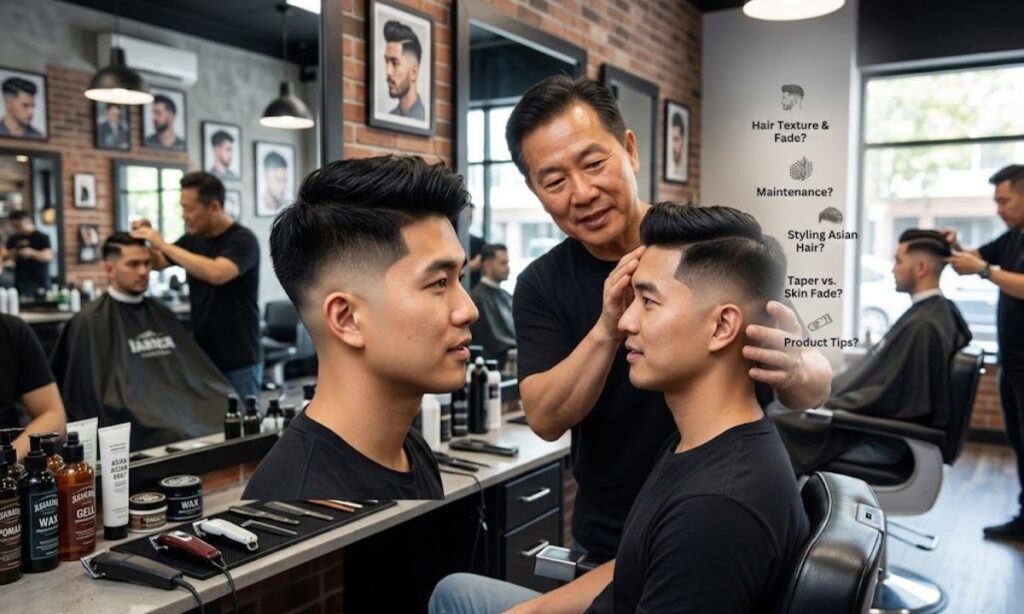
Still have questions? These are the ten that come up most. Skim the ones you need, and leave a comment if you want us to add another.
1. What are the 3 main types of taper fade?
The three main types of taper fade are the low, mid, and high. The only difference is where the fade begins. Low starts near the ears, mid starts at the temples, and high starts near the crown.
2. Which taper fade is best for beginners?
The low taper fade wins for beginners. It’s subtle, easy to wear, and forgiving as it grows out. A mid taper fade is a good second step once you feel confident.
3. How often do you need to cut a taper fade?
Plan on every two to four weeks, depending on the style. Skin and high fades need visits every two weeks. Low and shadow versions can wait three or four weeks.
4. What’s the difference between a taper and a taper fade?
A taper shortens only the neckline and sideburns and keeps visible length. A taper fade blends hair shorter and smoother, sometimes down to skin. It’s a bolder, cleaner version of the same idea.
5. Can you get a taper fade with curly hair?
Absolutely. Keep three to four inches on top so your curls form properly. A curly hair taper fade gives you neat sides and full, defined curls without fuss.
6. What face shape suits a high taper fade?
Round, square, and oval faces suit a high taper fade best. It adds height and highlights the jaw. Long or narrow faces usually look better with a mid or low fade.
7. Is a taper fade professional enough for work?
Mostly yes. Low, mid, and shadow versions are safe for offices. Stick to a neat top and a clean neckline, and you’ll look sharp in almost any workplace.
8. What should I tell my barber for a taper fade?
Name the height (low, mid, or high), the bottom (skin or shadow), and the top length. Add the neckline style, and bring a photo. Clear taper fade barber instructions save time and guesswork.
9. How do you maintain a taper fade at home?
Wash and moisturize regularly, comb daily, and use a trimmer for the neckline only. Wear sunscreen on skin fades. For anything beyond light cleanup, book your barber.
10. Does hair type matter for taper fades?
Yes. Curly, straight, afro, and Asian hair all behave differently under clippers. Telling your barber your texture helps them choose the right guard, length, and taper fade technique.
Final Thoughts: Pick Your Fade and Own It
So here’s the short version. Start with a height (low, mid, or high), add a technique if you want more edge, and match it to your hair type and face shape. That’s it. You’re ready for the chair.
Have a favorite style from the list? Tell us in the comments which one you’re trying next, or share this guide with a friend who keeps saying “just a fade, bro.” We’ll keep updating it as new styles and techniques show up.
