
Updated October 2026 | Written for men with straight hair who want a sharp, wearable cut
You’re sitting in the barber chair, scrolling through photos, and a few doubts creep in. Will my hair fall flat on top? Will my scalp glow through the sides? Will the barber hear “high taper” and give me a bald skin fade instead?
Those worries are fair. Straight hair doesn’t hide mistakes the way waves or curls do. Every harsh line and every limp section shows.
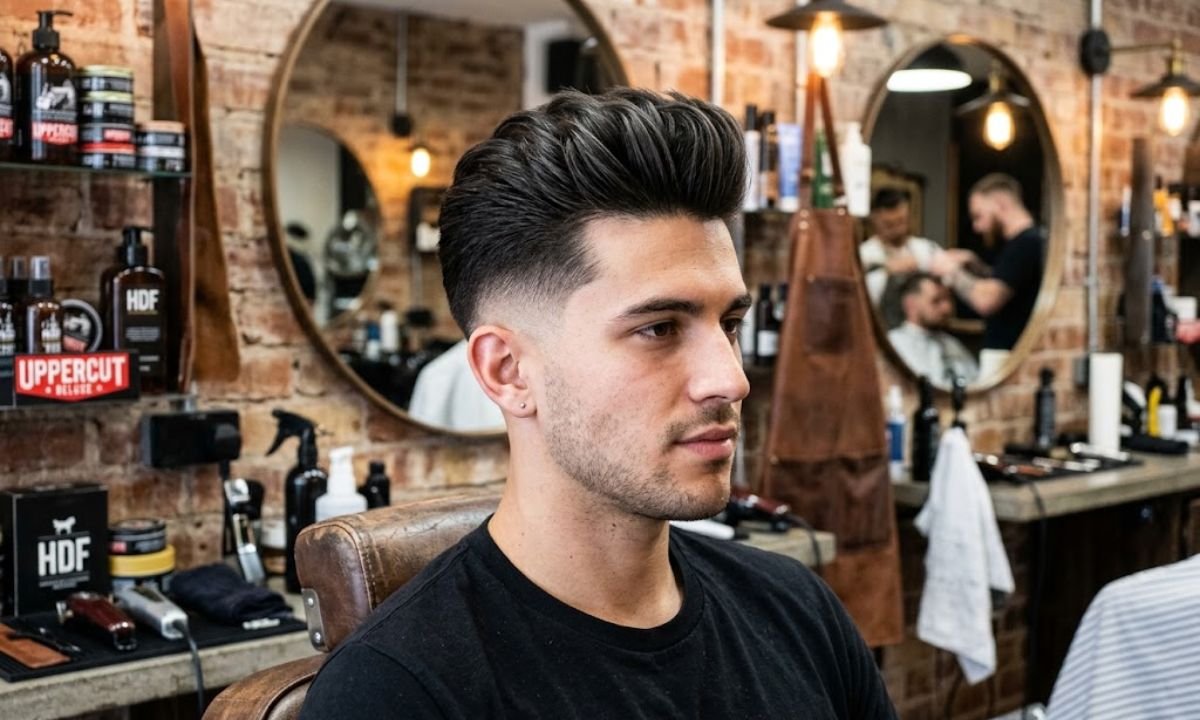
The short answer is yes, a high taper fade for straight hair works really well. You keep top length of about two to four inches, you taper the sides from the temple area down to the neckline, and you style the hair roots with a blow-dryer and a matte product. That combo gives you hair volume on top and clean visual contrast on the sides. The rest of this guide shows you exactly how to get there.
Does a high taper fade work with straight hair?
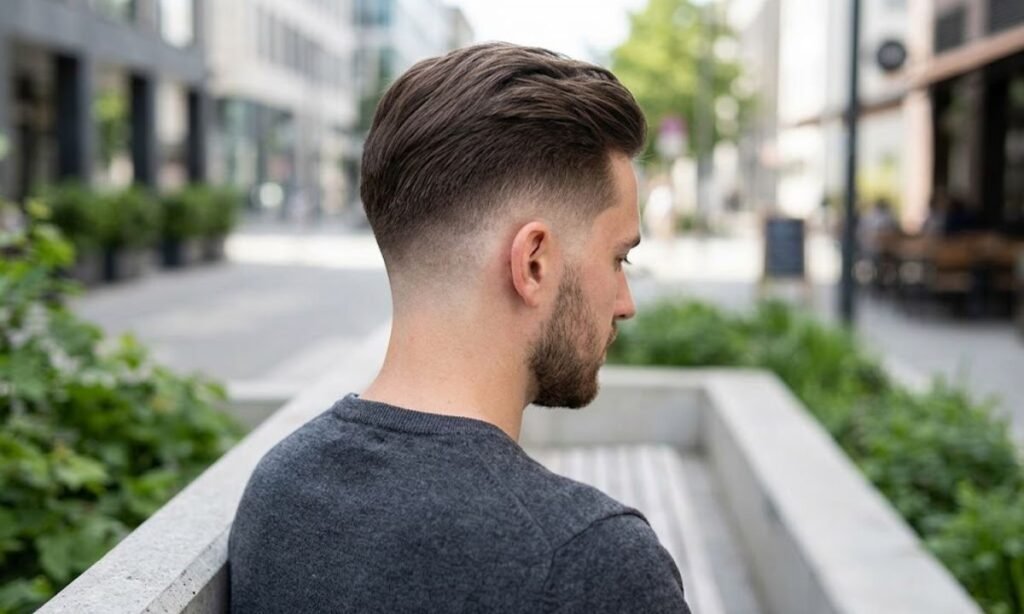
Yes, and often better than it works on other textures. Straight strands lie flat and catch light, so the gradual transition from short to long looks smooth and polished. You can see every step of the fade gradient, which is the whole point.
The catch is hair volume. Straight hair wants to collapse, so the textured top needs help from products and heat. Think of it like a tent: the taper is the frame, and your styling is the pole that holds the roof up.
A high taper fade haircut also suits men’s straight hair fade styles because it leaves more length than a skin fade. That length hides scalp exposure on the sides while still giving you a crisp, modern look. It’s a safe bet for work, weekends, and everything between.
What Is a High Taper Fade and Does It Work for Straight Hair?
A high taper starts the shortening high up on the sides, near the temple area and just above the ear. The hair gets shorter as it moves down, finishing at a tight neckline. Unlike a skin fade, the hair doesn’t always drop to bare skin.
The classic setup uses a clipper guard like a guard number 1 or 2 at the bottom, stepping up to a 3 or 4 near the top of the fade. Your barber then blends that into the longer top length with scissors or a clipper-over-comb move. The goal is a soft blend with no visible steps.
So does it work for straight hair? Absolutely. Straight strands show off clean lines and a smooth fade blending better than almost any other texture. If your hair density is medium or thick, you’re in great shape from day one. If it’s thin, you just need a few styling tricks, which we’ll cover.
Will a High Taper Fade Show Up on Light or Blonde Straight Hair?
This is the question people whisper to their barbers. Light blonde hair and platinum-blonde hair sit close to skin tone, so the visual contrast looks softer. The fade is there, but it reads as a gentle shadow rather than a bold stripe.
Here’s a quick picture. Imagine dark ink fading on white paper versus yellow highlighter fading on white paper. Both fade, but one pops and the other whispers. Dark brown hair is the ink. Light brown hair sits in the middle, and blonde is the highlighter.
The fix is simple. Ask for a slightly lower guard number at the bottom, such as a 0.5 or 1, so the shortest part gets closer to the scalp. Add a textured top with some matte clay to create contrast through shape instead of color. You’ll get depth even when hair color works against you.
Technique 1: The Hard Part
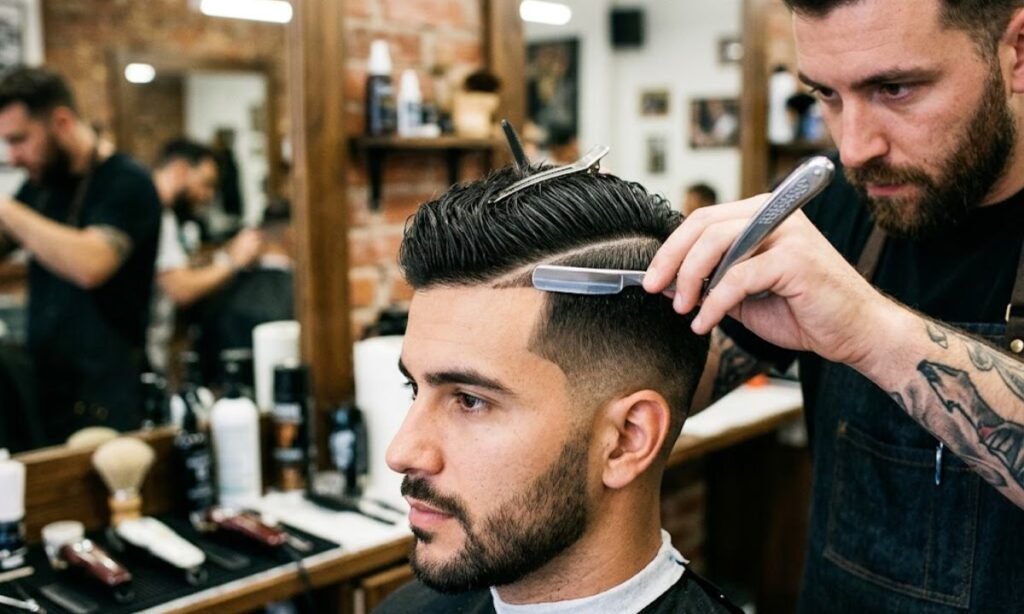
A hard part is a shaved line cut into the hair, usually on the left or right side of the hairline. It adds a sharp edge that catches the eye instantly. On blonde or light straight hair, this line creates the contrast that color can’t.
Your barber uses a trimmer or a foil shaver to carve a thin, clean line about an inch long. Then you comb the top over it for a side part effect. The line should look intentional, so ask your barber to follow your natural part.
One warning from experience: a hard part needs upkeep. It grows out in about a week, and a fuzzy line looks worse than no line. If you’re not into frequent visits, skip this one and pick a different technique.
Technique 2: Soft Gradient Over Skin Fade
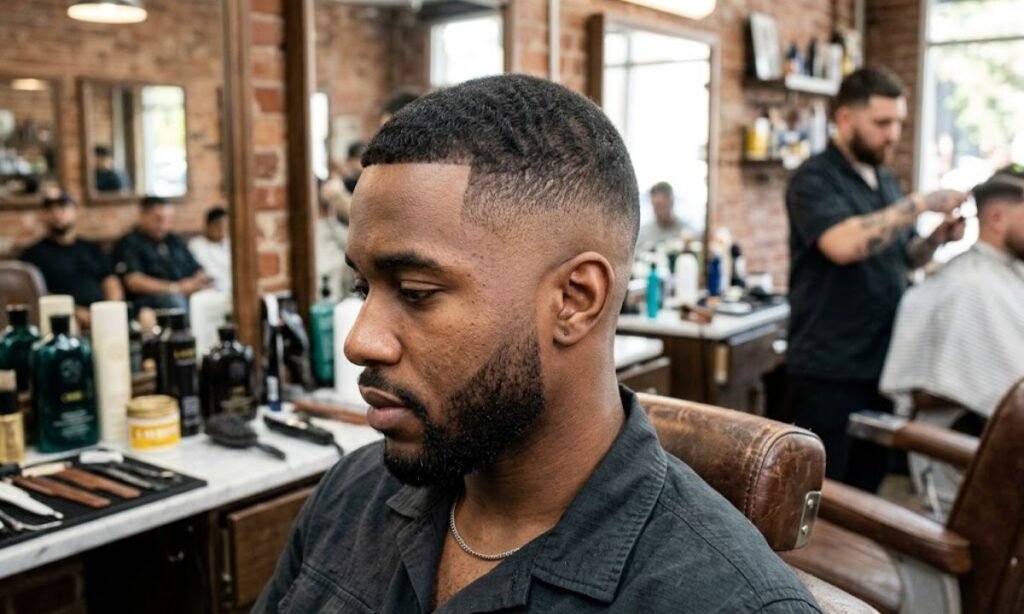
This is the middle path. You ask for a skin fade at the very bottom, then blend upward into a longer tapered sides section. The bottom half inch reaches skin, and everything above it glides smoothly into hair.
That tiny patch of skin gives the cut definition without turning it into a full bald fade. It works great on light brown hair and blonde shades. The fade height stays high, so the taper still reads as a taper.
Be careful if you have thin hair or visible scalp visibility concerns. A skin fade on the lowest section can make the sides look sheer. In that case, keep the bottom at a 1 instead of zero, and let the soft blend do the work.
Technique 3: Textured Top Styling
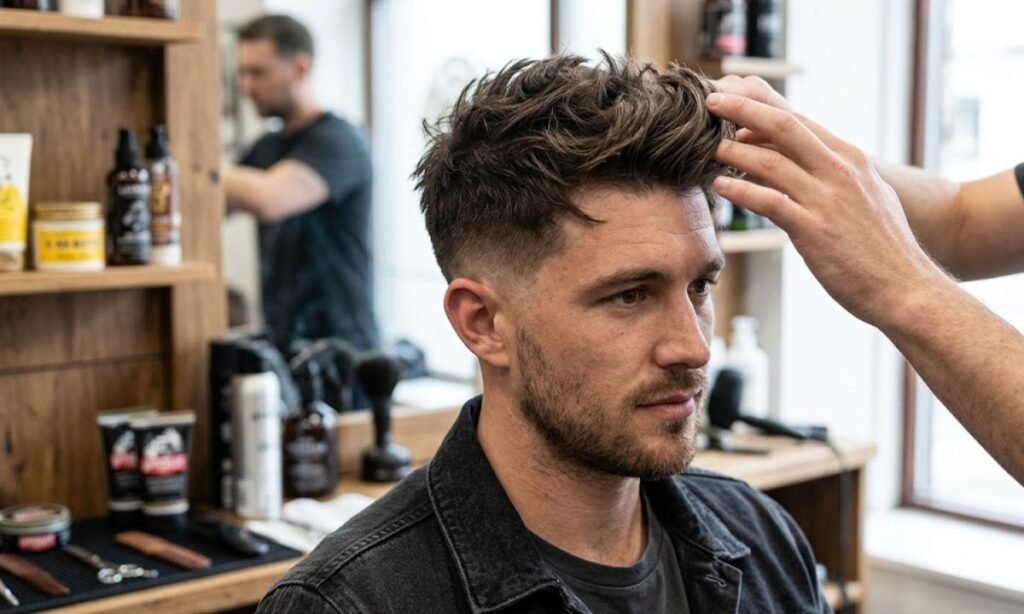
Sometimes the best contrast comes from the top, not the sides. A heavily textured top with chunky separation makes the neat sides look sharper by comparison. You’re basically creating rough against smooth.
Your barber can add this with point cutting, which snips little notches into the ends of your hair strands. At home, you finish it with texturizing paste or texture clay worked through dry hair. Rake your fingers forward, then back, and leave it a little messy.
This technique shines on fine hair and thin hair because it fakes thickness. It also forgives a bad hair day. Messy is the point, so nobody can tell when you slept in.
What Products Does Straight Hair Need for a High Taper Fade?
Straight hair is slippery, so the right product matters more than the right brand. You want lightweight products that grip without weighing the hair strands down. Heavy gels and greasy waxes flatten the top within an hour.
Here’s a quick breakdown of what each product does best:
| Product | Best For | Finish |
|---|---|---|
| Styling mousse | Fine, thin hair needing lift | Light, airy |
| Texture clay / matte clay | Thick or medium hair, textured crop | Dry, natural |
| Medium-hold pomade | Side part, comb-over | Soft shine |
| Strong-hold pomade | Pompadour, slick back | High shine |
| Texturizing paste | Messy, piecey looks | Matte, flexible |
| Styling cream | Dry hair, low hold | Natural, soft |
| Texturizing spray | Pre-styling grip, roots | Invisible |
If you only buy two things, pick a styling mousse for volume and a matte clay for hold. That pair covers about 80 percent of high taper fade styling products needs. Add a texturizing spray if your hair is very fine, because it gives the hair roots extra grip before you blow-dry.
One more tip: use less than you think. A pea-sized amount of matte clay is plenty for short hair. Warm it in your palms until it turns see-through, then work it from back to front. Too much product is the number one reason straight hair looks greasy by lunch.
How to Style a High Taper Fade on Straight Hair
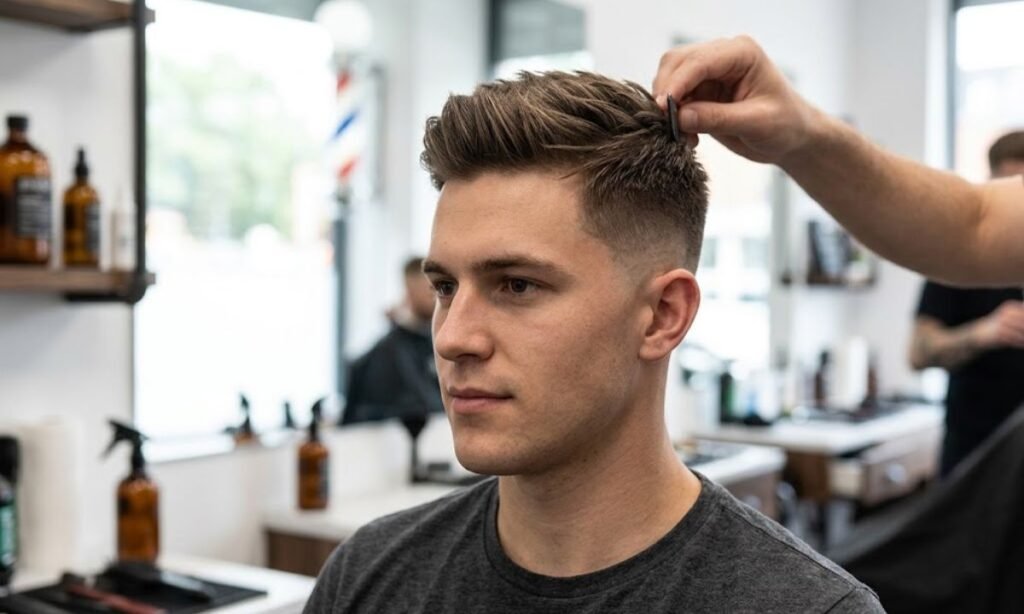
Start with towel-dried hair, not soaking wet and not bone dry. Damp hair takes shape easily and holds it once the heat hits. Work a small dab of styling mousse from the hair roots to the ends.
Next comes the blow-dry technique. Use a round brush or your fingers and point the dryer from the front hairline upward and back. This upward airflow lifts the roots and builds root volume. When the hair is almost dry, hit it with the cool-shot button for ten seconds to lock the shape.
Finally, apply your product application step. Rub a pea of matte clay between your palms and run it through the top. Shape the front, then stop. If you keep fiddling, you’ll lose the natural movement that makes a structured silhouette look effortless.
Which High Taper Fade Styles Work Best on Straight Hair?
There’s no single best style, because it depends on your hair density, your face shape, and how much time you’ll spend in front of the mirror. The good news is that high taper fade styles adapt to almost any goal. You can go sharp and polished or messy and relaxed.
Below are six proven pairings. Each one works with the same tapered base, so you can switch tops without changing your sides. That’s the secret weapon of the high taper fade haircut: it’s a flexible foundation.
Pick based on lifestyle first and looks second. A great style you can’t maintain becomes a bad style fast. Keep your morning routine honest, and choose accordingly.
Textured Crop: Best for Low-Maintenance Straight Hair
The high taper fade with textured crop is the go-to for busy guys. The top is cut short with a slight fringe, usually one to two inches. You push some texturizing paste through it and walk out the door.
Straight hair loves this cut because the textured crop hides flat spots. The choppy layers add movement even when the strands themselves are stubbornly sleek. It’s a low-maintenance haircut that takes two minutes to style.
My friend Danish switched to this after years of fighting his flat, fine strands. He told me his morning went from fifteen minutes to three. That’s the kind of payoff you should expect.
Pompadour: Best for Volume Goals
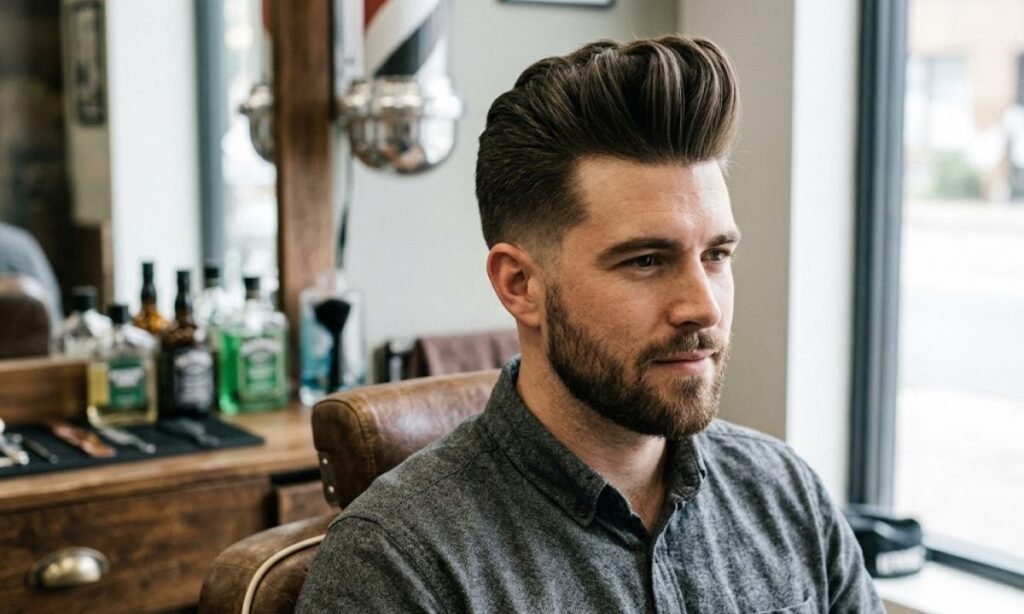
If hair volume is your main goal, the high taper fade with pompadour is your cut. The top stays long, around three to five inches, and sweeps up and back from the forehead. The tapered sides make the height look even more dramatic.
You’ll need the full blow-dry technique for this one. Use a round brush, upward airflow, and a strong-hold pomade to set the shape. Build root volume at the front first, then smooth the sides back.
Straight hair can handle a pompadour, but it takes practice. Expect a few ugly attempts in week one. By week three, you’ll do it half-asleep.
Side Part / Comb-Over: Best for Professional Settings

The high taper fade with side part is the cleanest choice for the office. The comb-over sweeps the top to one side with a neat line, and the taper keeps the sides tidy. It’s a professional hairstyle that never goes out of style.
Use a medium-hold pomade and a fine-tooth comb. Part your hair where it naturally falls, then comb it over. A high taper fade comb-over looks best when the top length is about three inches.
Heads up for thin hair: a heavy comb-over can expose the scalp. Use a light styling cream instead of pomade, and rough the top up with your fingers after combing.
Slick Back: Best for Thick Straight Hair
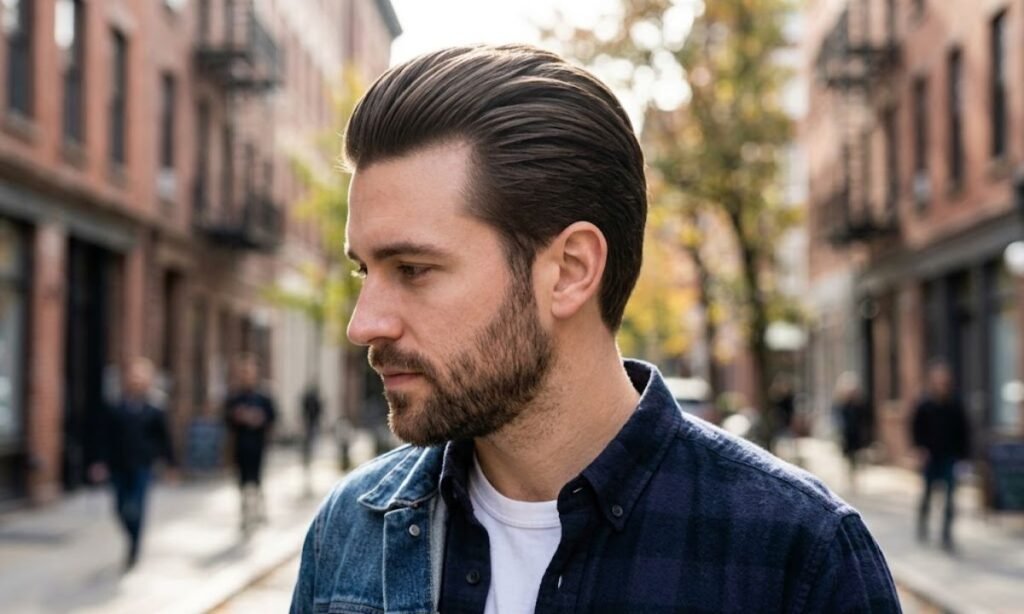
The high taper fade slick back needs density. Thick hair and coarse hair hold the swept-back shape without gaps, and the tapered sides frame it beautifully. On thin hair, the same style can look stringy.
Apply a strong-hold pomade to damp hair, then comb straight back with a wide-tooth comb. Let it dry naturally or blow-dry on low heat. The result is a glossy, controlled look that suits formal events.
One small detail: leave the natural hairline alone. Cutting it too sharp makes the slick back look harsh. Soft edges look more modern.
Quiff: Best for Round Faces with Straight Hair
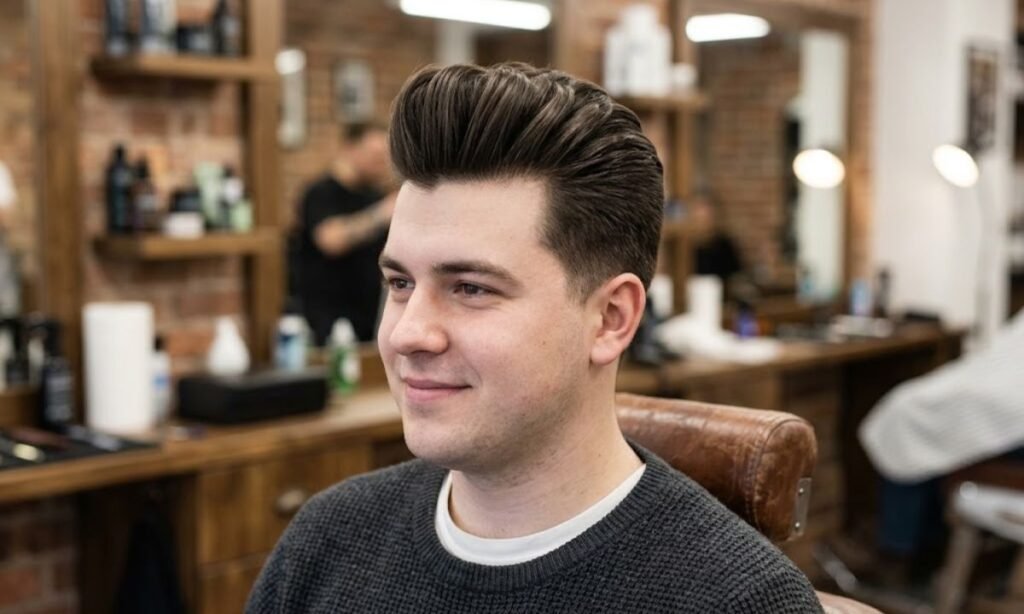
The high taper fade with quiff adds height at the front, which stretches a round face visually. The quiff rises from the hairline and curves back slightly. It’s like a smaller, more casual cousin of the pompadour.
Use matte clay and a quick blow-dry for lift. Brush the front up and slightly forward, then shape with your fingers. A quiff hairstyle looks best with medium-density hair or thicker.
The tapered sides slim the face further. Together, the height on top and the narrow sides create a longer, sharper outline. It’s one of the best high taper fade for round face options out there.
Buzz Cut Top: Best for Zero-Maintenance Straight Hair

Want zero styling? Go with the high taper fade buzz cut. The top gets clipped to a single guard number, usually a 4 or 5, and the sides taper down. You wash it and you’re done.
Straight hair suits a buzz cut because it lies evenly across the scalp. There’s no cowlick drama once it’s short. The fade gradient stays visible because the contrast between top and sides is subtle but clean.
One caution: a buzz shows your scalp visibility and head shape. If you’re unsure, grow the top out an extra week and test it first.
Which Face Shape Gets the Best Results from a High Taper Fade?
Most face shapes look great with a high taper fade for men, but the top matters. The taper narrows the sides, so the top style decides how balanced the whole head feels. Think of the fade as a frame and the top as the picture.
Here’s how each shape pairs up:
- Oval face: Almost anything works. Try a textured crop or a pompadour.
- Round face: Go for height. A quiff or pompadour adds length.
- Square face: Soften the angles with a textured crop or side part.
- Heart-shaped face: Keep the top shorter and fuller, like a textured crop.
- Rectangular face: Avoid too much height. Choose a side part or crop.
- Diamond face: Use a fringe or soft side part to balance wide cheekbones.
A high taper fade for long face shapes needs restraint on top. Too much height stretches the face further. A high taper fade for square face or oval face gives you the most freedom. If you’re not sure of your shape, take a front-facing selfie and trace the outline with a finger.
How Often Does a High Taper Fade Need to Be Trimmed?
Plan on a visit every two to three weeks for a crisp look. Hair growth averages about half an inch per month, and on a tight taper that’s enough to blur the clean lines. The neckline and the temple area go fuzzy first.
If you’re relaxed about it, you can stretch to four weeks. The cut won’t fall apart, but the fade gradient loses its sharpness and the tapered sides start looking like a regular short back and sides. It’s a trade between budget and polish.
A smart trim schedule is simple: book your next haircut appointment before you leave the chair. Most barbers hold slots for regulars. That way haircut maintenance never turns into a last-minute scramble before a big event.
How to Extend Your High Taper Fade at Home
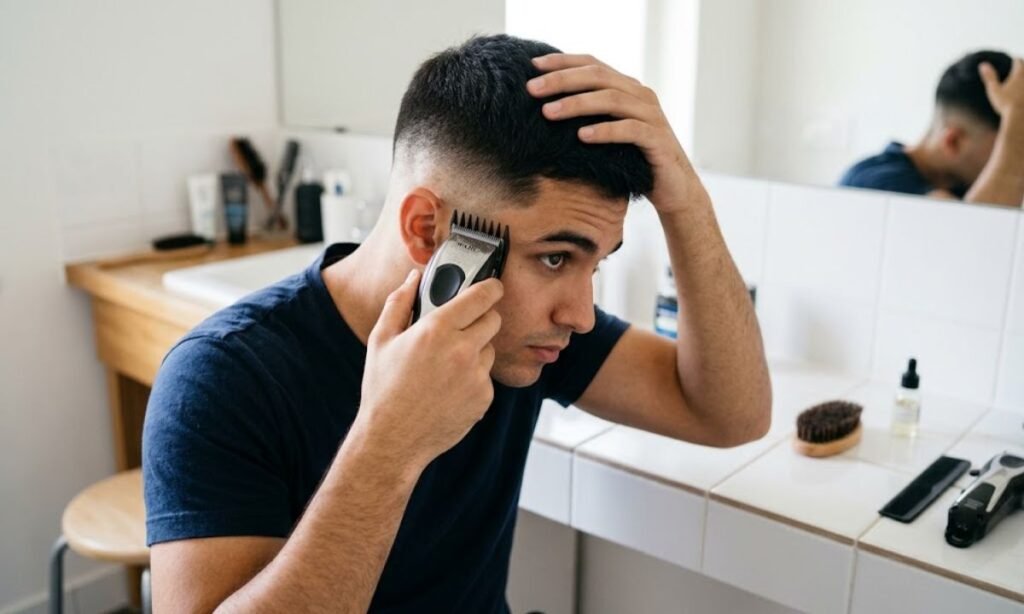
You can buy yourself an extra week with a few small habits. First, do a quick neckline cleanup with a trimmer every five to seven days. Tilt your head down, hold the trimmer flat, and clean only the fuzzy stray hairs below your natural line.
Second, leave the fade itself alone. Don’t try to re-blend the soft blend with a clipper unless you’ve practiced a lot. One slip at the temple area and you’re wearing a hat for a month.
Third, use a texturizing spray or matte clay to disguise growth on top. A slightly messier textured top hides the extra length well. Regular trims still matter, but these tricks stretch the gap between them.
How Do You Ask Your Barber for a High Taper Fade on Straight Hair?
A good barber consultation starts with clear words and a picture. Bring two or three reference photos that show the front, side, and back of the cut you want. Photos beat adjectives every single time, because “short on the sides” means something different to everyone.
Then give simple barber instructions. Here’s a script that works:
- “I’d like a high taper fade, starting around the temple.”
- “Please use a 1 at the bottom, blending up to a 3 or 4.”
- “Leave about three inches on top, with some texture.”
- “Keep my natural neckline, just clean it up.”
Those lines cover high taper fade guard lengths, fade height, top length, and the natural hairline. If you want a hard part or a skin fade at the base, say so now. Mention your hair density too, since a barber cuts thin hair differently from thick.
One more tip. Ask what the barber thinks before they start. A good one will adjust the fade blending to your hair texture and face shape. If the answer is a shrug, that tells you something about the shop.
High Taper vs. Mid Taper vs. Low Taper: Which Is Right for Your Straight Hair?
The difference is where the taper begins. A high taper starts near the temple, a mid taper starts around the middle of the sides, and a low taper starts just above the ear and neckline. Each one changes how much hair stays and how bold the cut looks.
Here’s a clean comparison:
| Feature | High Taper | Mid Taper | Low Taper |
|---|---|---|---|
| Fade height | Starts at the temple | Starts mid-side | Starts above the ear |
| Contrast | Strong | Moderate | Subtle |
| Maintenance | Every 2 to 3 weeks | Every 3 to 4 weeks | Every 4 to 5 weeks |
| Best for | Bold, modern looks | All-round balance | Conservative offices |
| Scalp exposure | Highest | Medium | Lowest |
The high taper fade vs mid taper question comes down to boldness. If you want people to notice the cut, go high. If you want it subtle, a mid taper fade for straight hair gives a softer look. Someone with thin hair who dislikes scalp visibility might lean mid.
The high taper fade vs low taper debate is about workplace rules and personal taste. A low taper fade for straight hair barely changes your silhouette, so it works in conservative offices. A high taper delivers sharper visual contrast and a more current look.
Which Straight Hair Type Works Best with a High Taper Fade?
Medium-density hair is the sweet spot. It has enough body to stand up when you style it, and enough give to blend smoothly on the sides. If that’s you, almost every high taper fade style in this guide will work.
Thick hair loves this cut, too. A high taper fade for thick hair removes bulk from the sides so the head doesn’t look heavy. Coarse hair holds shape well on top, which makes pompadours and slick backs a breeze.
Fine hair and thin hair need more strategy. A high taper fade for fine hair works when you keep the top short, use a styling mousse, and add texturizing paste for grip. A high taper fade for thin hair looks best with a textured crop, since the choppy layers fake density.
Here’s the short version by hair density:
- Fine or thin: Choose a textured crop or a short quiff. Keep the sides at a 1 or higher.
- Medium: Try anything. Pompadour, side part, or crop all work.
- Thick or coarse: Go slick back or pompadour. Ask for extra thinning on top.
In the end, hair texture and density shape your options, but they don’t close any doors. A good barber can adapt the same tapered base to nearly any head of straight hair.
Seasonal Styling Adaptations for a High Taper Fade on Straight Hair
Your cut stays the same all year, but your styling shouldn’t. Weather changes how straight hair behaves, and a routine that worked in April can fail in July. A few small swaps keep your styling routine reliable.
Think of it as seasonal wardrobe for your hair. You wouldn’t wear a puffer jacket to the beach. Likewise, you shouldn’t use heavy pomade in August heat.
Here’s how to adjust through the year.
Summer: Humidity and Sweat

Heat and sweat are the enemies of hair volume. Moisture in the air weighs strands down, and sweat breaks down oily products. Pick humidity-resistant styling products like a matte clay or a salt-based texturizing spray.
Skip heavy strong-hold pomade, which turns greasy and slides around. Use a small amount of clay and finish with a quick blast of the cool-shot button. The cold air sets the shape and helps it last through a hot commute.
Also consider shortening the top length by half an inch for summer. A lighter top is cooler and easier to manage. Your high taper fade will look sharper, too, because less hair means more visible contrast.
Winter: Static and Dryness

Cold air and indoor heating strip moisture from hair. You’ll notice static electricity when you pull off a beanie, with strands standing up like you touched a doorknob. Scalp dryness and flaking are common in this season.
Fight static with a drop of lightweight argan oil rubbed between your palms and smoothed over the top. Use a styling cream instead of dry clay for better hair hydration. Wash less often, and use a gentle shampoo.
Grab a cotton or silk-lined beanie, not a rough wool one. Rough fabric causes friction and ruins your structured silhouette. If you do wear a hat, finger-comb your hair afterward and re-apply a tiny bit of product.
Spring and Fall: Flexible Hold

These are the easiest seasons for hair. Temperatures swing, so you want flexible hold that works in both cool mornings and warm afternoons. A medium-hold pomade or a texturizing paste handles that range well.
Spring is also a good time to try a new style. Test a quiff hairstyle or a side part while the weather is forgiving. If it flops, you’ve got months before the harsh seasons to adjust.
In fall, start adding moisture back. A weekly conditioning treatment helps your hair strands recover from summer sun. Your hair will thank you when winter arrives.
How Much Does a High Taper Fade Haircut Cost?
Prices vary a lot by city and shop. In many US barbershops, a high taper fade haircut runs between $25 and $50, with premium shops charging more. In other countries, it can cost far less. Tipping, if customary where you live, adds to the total.
Let’s do the math on annual haircut cost. If you visit every three weeks, that’s about 17 visits a year. At $35 per cut, you’d spend roughly $600 annually. Stretch to four weeks and it drops to around $450.
There’s a smart way to save. Ask your barber if they offer a discounted neckline cleanup between full cuts. Many do, and it keeps the natural neckline neat for a fraction of the price.
Common Mistakes to Avoid with a High Taper Fade on Straight Hair
The most frequent mistake is going too short on top. Straight hair needs length to carry root volume. If your barber takes the top length under an inch, you’ll lose most styling options.
The second mistake is using too much product. A heavy hand makes straight hair look oily and flat within hours. Start small and add more only if you need it.
The third is ignoring hair color and skin tone when choosing fade height. Light blonde hair needs lower guard numbers for visible contrast. Dark hair can handle a softer fade.
A few more traps to watch:
- Skipping the blow-dry technique and wondering why the top stays flat
- Asking for a “fade” without saying “taper,” which can end up bald on the sides
- Letting the barber use clippers over the natural hairline without asking
- Forgetting to book the next appointment until the cut grows out
Quick Styling Cheat Sheet
Short on time? Here’s a fast reference for your high taper fade styling guide. Save it on your phone and check it before your next haircut appointment.
| Goal | Cut Top | Product | Time |
|---|---|---|---|
| Zero effort | Buzz cut top | None | 1 minute |
| Easy and messy | Textured crop | Texturizing paste | 3 minutes |
| Big volume | Pompadour | Strong-hold pomade | 10 minutes |
| Office ready | Side part | Medium-hold pomade | 5 minutes |
| Formal event | Slick back | Strong-hold pomade | 5 minutes |
| Round face lift | Quiff | Matte clay | 6 minutes |
Frequently Asked Questions
Does a high taper fade work for straight hair?
Yes. The gradual transition shows beautifully on straight strands, and the textured top can be styled for volume. Use a blow-dry technique and a matte product for the best result.
Is a high taper fade better than a skin fade?
It depends on your goals. A taper leaves more hair and hides scalp exposure, while a skin fade goes to bare skin for stronger contrast. Many men on straight hair prefer the taper for its softer, more wearable look.
How long should my hair be on top?
Two to four inches suits most styles. A textured crop needs about one to two inches, while a pompadour needs three to five. Shorter than an inch limits your options.
What guard numbers does a high taper fade use?
Barbers usually start at a 0.5 or 1 at the bottom and step up through a 2 and 3. The top of the fade often finishes at a 3 or 4. Your barber may adjust based on your hair density and hair color.
Will a high taper fade look good on thin straight hair?
Yes, with the right setup. Keep the sides at a 1 or higher to limit scalp visibility, and choose a textured crop. Add styling mousse for lift.
How often should I trim a high taper fade?
Every two to three weeks keeps it sharp. You can stretch to four weeks if you’re fine with a softer look. A quick neckline cleanup at home helps in between.
Can I get a high taper fade for a round face?
Absolutely. Pair it with a quiff or pompadour so the added height lengthens your face. The tapered sides narrow the outline too.
Is a high taper fade professional enough for the office?
Yes, especially with a side part or comb-over. Keep the product matte or low-shine and the neckline clean. Most workplaces see it as sharp and polished.
You can also checkout this article as well How to Ask for a Mid Taper Design: Barber-Approved Terminology & Back-View Gallery
Key Takeaways
A high taper fade for straight hair gives you clean sides and a top you can style many ways. Keep two to four inches on top, pick a style that fits your face shape, and tell your barber exactly what you want. Bring reference photos and use the right guard numbers.
Style with a blow-dry technique, a round brush, and a lightweight matte clay or styling mousse. Adjust your products by season, and book regular trims every two to three weeks. That routine keeps the fade gradient sharp and your hair volume high.
If you’re light-haired, go a bit lower on the bottom guard for contrast. If you’re fine-haired, lean on texture and short tops. And if you’re just starting out, a textured crop is the easiest first step.
Join the Conversation
What’s your go-to style with a high taper fade? Did a certain product save your flat hair, or did a barber nail the fade on the first try? Drop your story in the comments, because real tips from real heads beat any guide.
If this helped, share it with a friend who’s still stuck on straight hair struggles. Bookmark it for your next barber consultation, too. We’ll keep refreshing this guide with new styles and tricks as trends shift.
