
Quick Answer
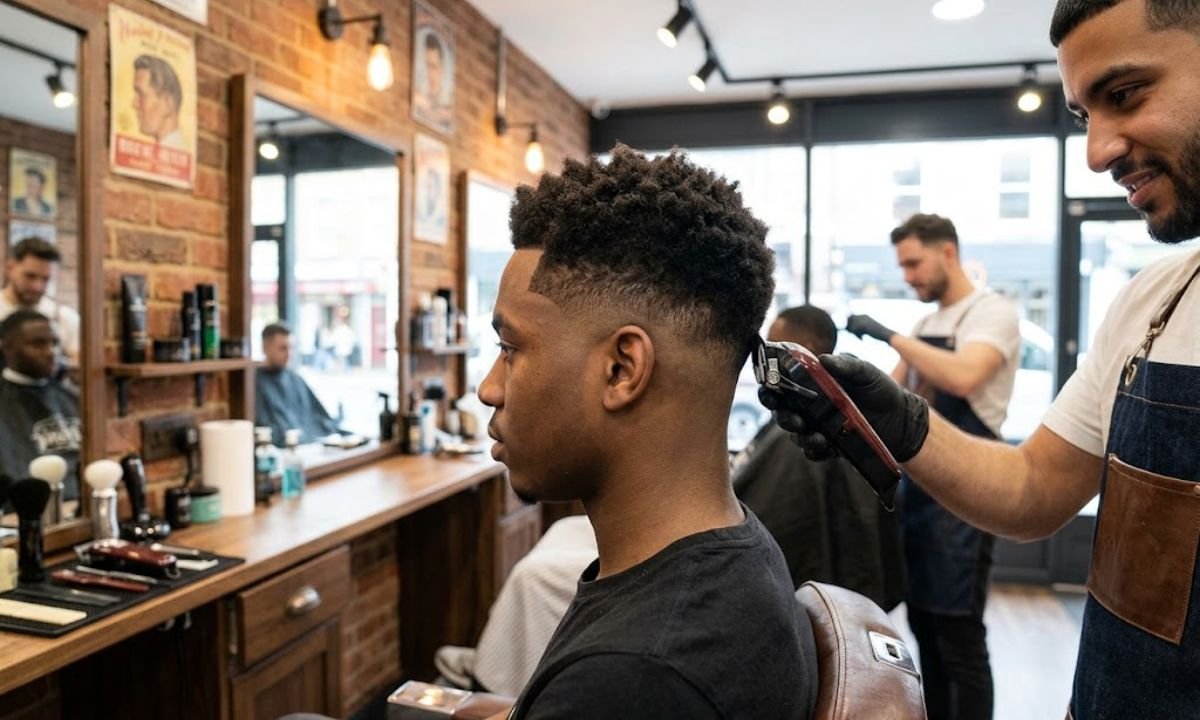
A burst fade haircut is a fade style where the hair curves around the ear instead of cutting straight across the back of the neck. This curved fade around the ears gives it a rounder, more circular shape than a normal fade.
It works for almost every face shape and hair type, from straight hair to coily hair. If you want a clean fade with a modern twist, this is your style.
Barbers love it because it’s flexible. You can pair it with a mullet, a mohawk, a beard, or even a bold design cut into the sides.
What is a Burst Fade Haircut?
A burst fade gets its name from the way the hair “bursts” outward around the ear. Instead of a straight fade line running across the nape, you get a rounded fade around the ear that curves like a half moon.
This curved fade guideline is what separates a burst fade from a taper fade or a drop fade. The burst shape wraps the ear on both sides, leaving longer hair on top and back while the sides stay short.
Most barbers use clippers with clipper guards to create the graduated look, then switch to a trimmer for the fine detail work near the ear. The result is a sharp fade with skin-close sides that fades smoothly upward.
Who Should Get a Burst Fade Haircut?
Anyone tired of the same old buzz cut or basic taper should try this one. It suits guys with thick hair, fine hair, wavy hair, and even afro-textured hair, since the fade height can be adjusted to match your hair density.
If your job calls for something sharp but not too flashy, a low or mid burst fade reads as an office-friendly haircut. If you want to stand out, go higher or add a design.
It also works well if you’re dealing with a receding hairline or a thinning crown, since the style can be adjusted to draw attention away from those spots.
Why Burst Fade Haircuts Are Trending in 2026
Search interest for burst fades has climbed steadily over the past few years, and 2026 is no different. Part of the reason is social media. Barbers post short clips of the burst fade tutorial process, and the curved lines photograph beautifully.
Another reason is versatility. A single haircut can be dressed up with a slick back, kept casual with natural texture, or paired with a beard for a fuller look. That kind of range keeps a style popular for years, not just one season.
There’s also a practical side. A burst fade needs regular trims but isn’t as high maintenance as some skin fades, which makes it appealing to guys who want a low-maintenance haircut that still looks intentional.
Where the Burst Fade Comes From
The burst fade isn’t brand new. It grew out of classic taper burst fade techniques used in barbershops for decades, where barbers rounded off the fade near the ear instead of squaring it off.
Hip hop culture in the 1990s pushed rounded fades into the mainstream, often paired with high tops or curly styles. Barbers kept refining the blending technique over the years, adding sharper fade lines and cleaner neckline finish work.
Today’s version borrows from that history but adds modern touches like fade contrast, bold designs, and pairing with beards or mullets. It’s a style that respects tradition while staying current.
37 Burst Fade Haircut Styles for Men
Here’s where things get fun. Below are 37 ways to wear a burst fade, organized so you can find one that fits your hair texture, your face shape, or just your mood.
1: Burst Fade Mullet
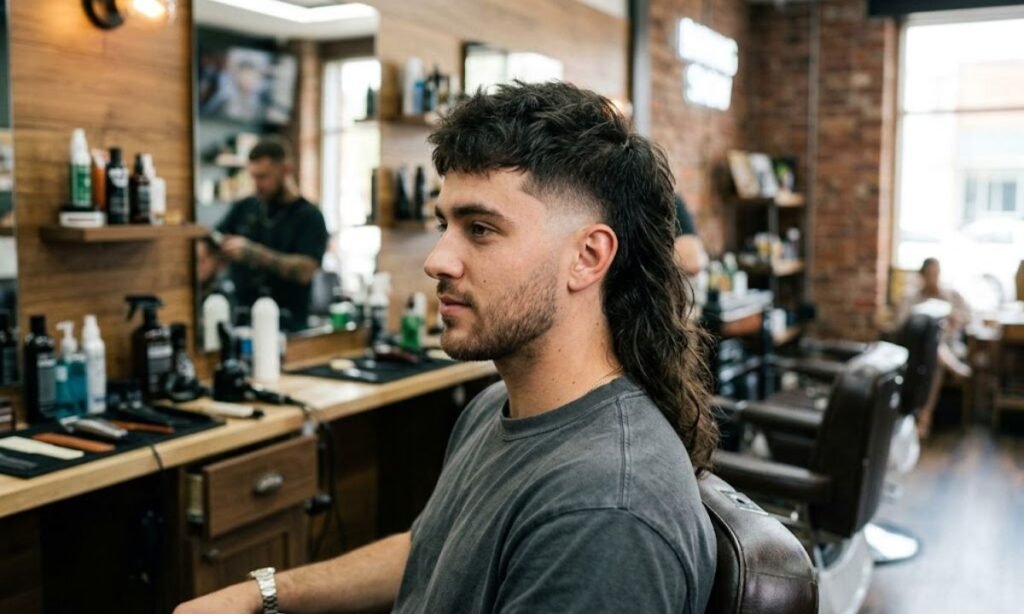
The burst fade mullet mixes a rounded fade with longer hair left at the back. It’s bold, a little rebellious, and works surprisingly well with almost any hair growth pattern.
Barbers usually keep the top textured and the back longer, letting the burst fade mullet flow into the neck without a hard line. It’s a favorite for guys who want something different from a standard cut.
Low Burst Fade Mullet
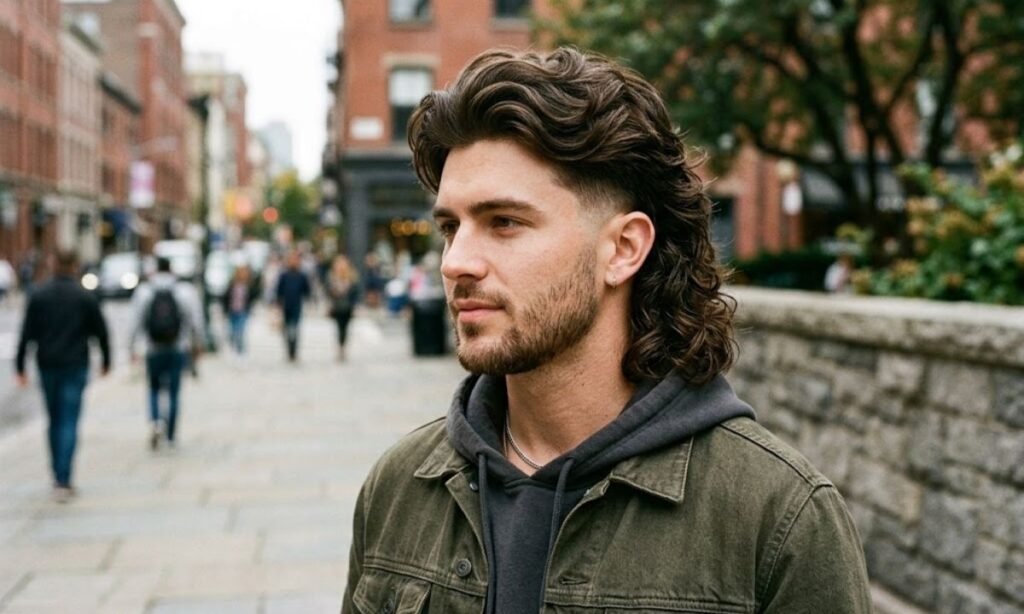
A low burst fade mullet keeps the fade starting just above the ear. This subtle version suits guys who want the mullet energy without going too extreme.
Mid Burst Fade Mullet
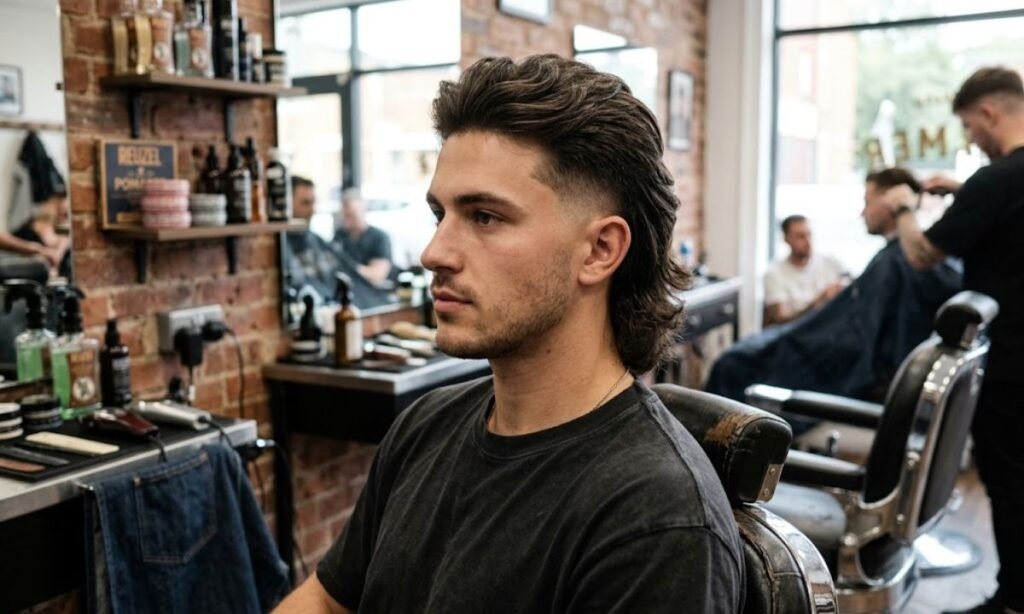
The mid version raises the fade a bit higher, creating more fade contrast between the short sides and the long back. It photographs well and blends cleanly.
High Burst Fade Mullet
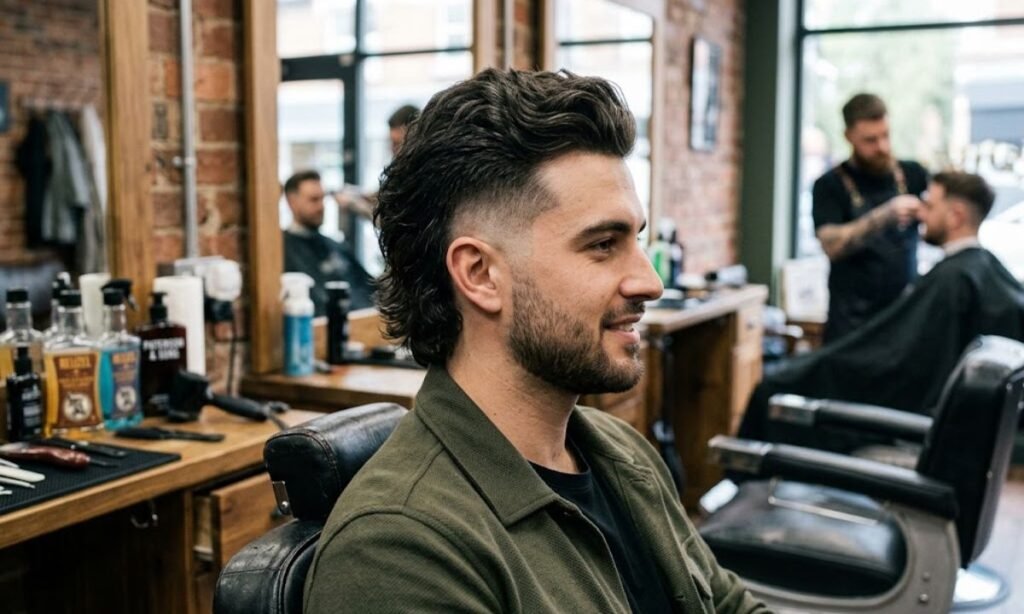
This one is loud. The high burst fade starts near the temple, leaving a dramatic gap between the short sides and the long, flowing back section.
Straight Hair Burst Fade Mullet
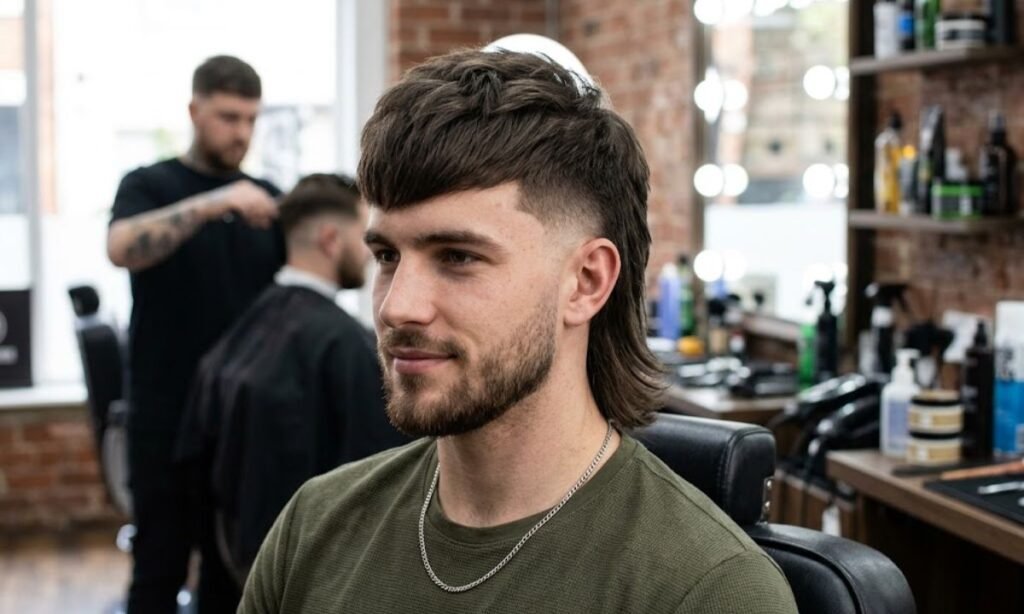
On straight hair, this mullet falls flat and sleek at the back, giving a rock star kind of edge. It needs minimal product to hold its shape.
Curly Hair Burst Fade Mullet
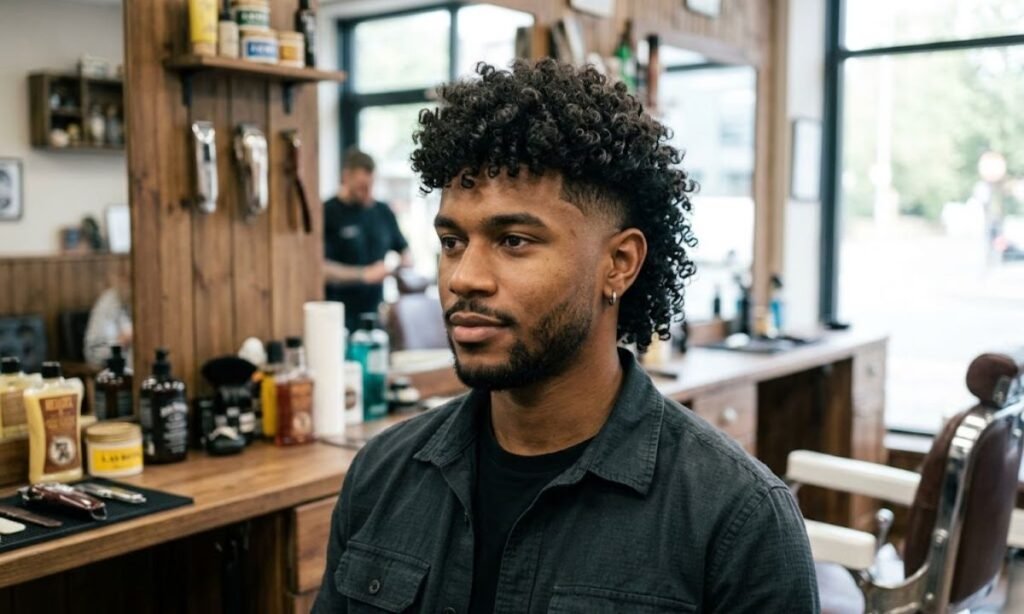
Curly hair adds volume and bounce to the mullet’s back section, making the contrast with the tight fade even more striking. A little curl cream keeps the curls defined.
2: Low Burst Fade
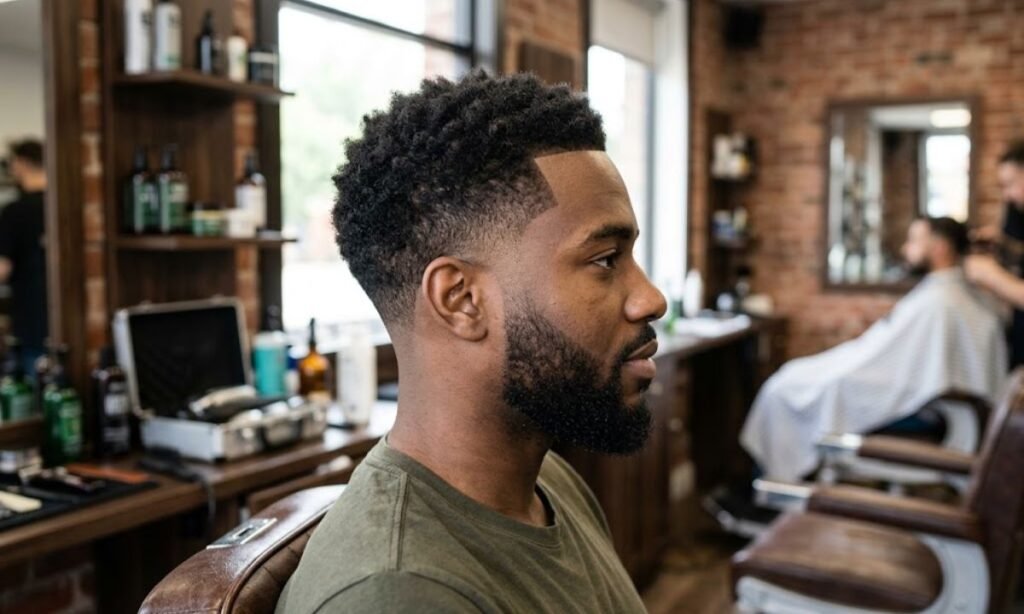
The low burst fade keeps things subtle. The fade starts just above the ear and blends into faded sides that never get too short, making it a safe pick for conservative workplaces.
It’s also a great starting point if you’ve never tried a burst fade before. The clean transition is gentle, so there’s less risk of an awkward grow-out phase.
3: Burst Fade Curly Hair
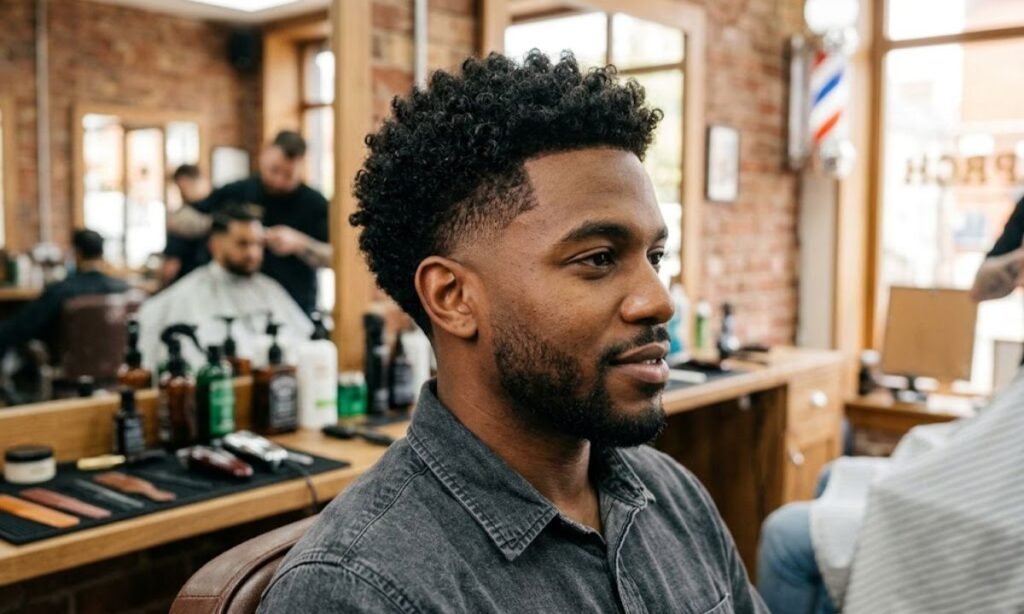
This pairing lets natural curls shine on top while the sides stay tight and rounded near the ear. The curls create natural volume that balances the sharpness of the fade below.
A lightweight curl cream or leave-in conditioner helps define each curl without weighing it down. Ask your barber to avoid over-thinning the curls so they keep their bounce.
4: Mid Burst Fade
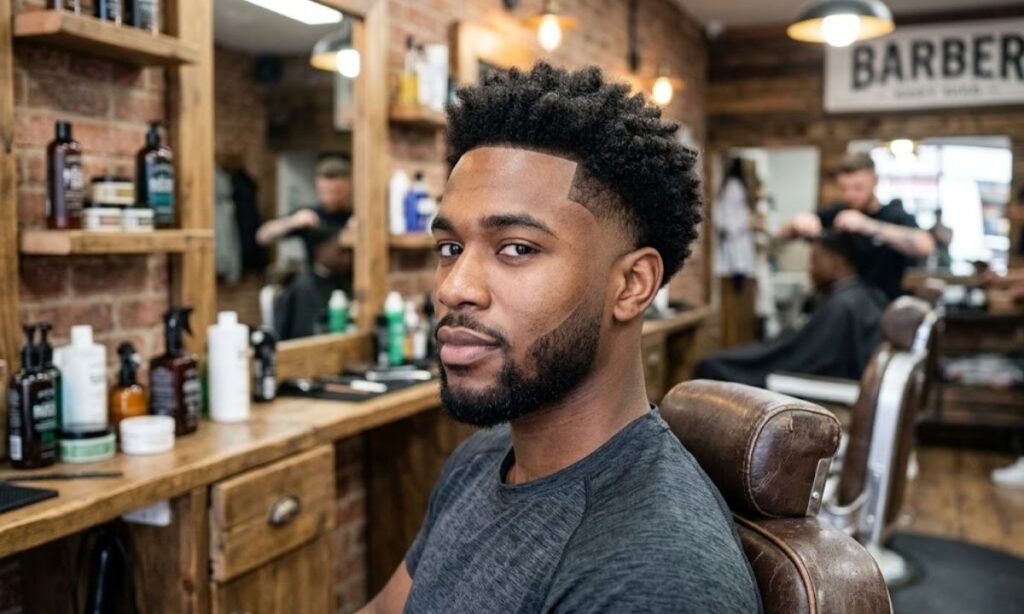
Sitting between low and high, the mid burst fade is the most requested version in most shops. It balances fade height nicely, giving enough fade contrast to look sharp without being too aggressive.
This is often the go-to recommendation for first-timers because it works across nearly every face shape and hair type.
5: Burst Fade with Design
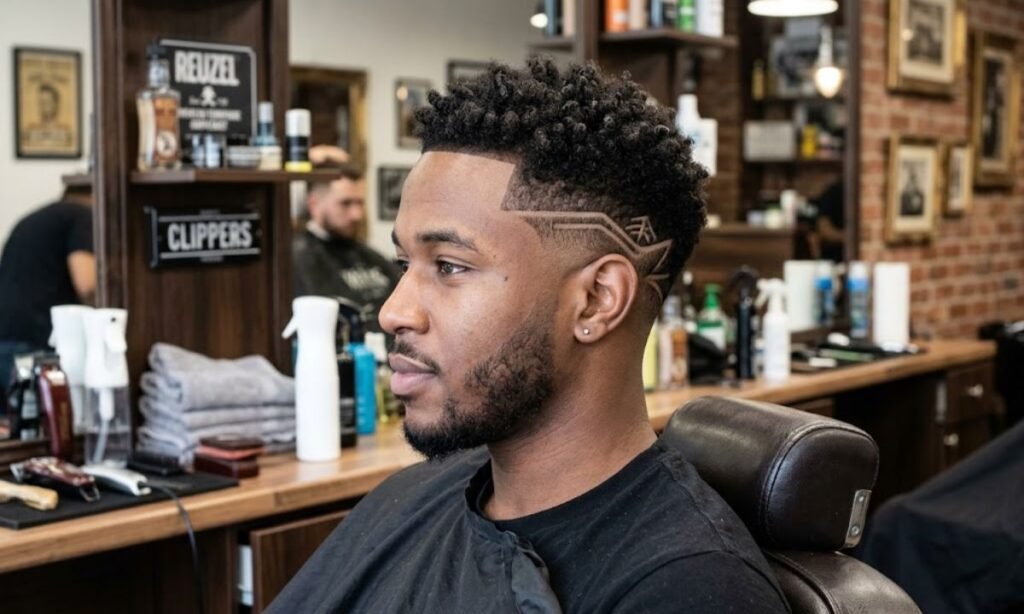
Want to make a statement? A burst fade with design adds shaved lines, patterns, or even small logos into the faded section. Barbers use texturizing shears and detail trimmers for precision work here.
Designs pair especially well with high burst fades since there’s more skin surface to work with. Just know that upkeep is higher, since the lines grow out fast.
6: Burst Fade Mohawk
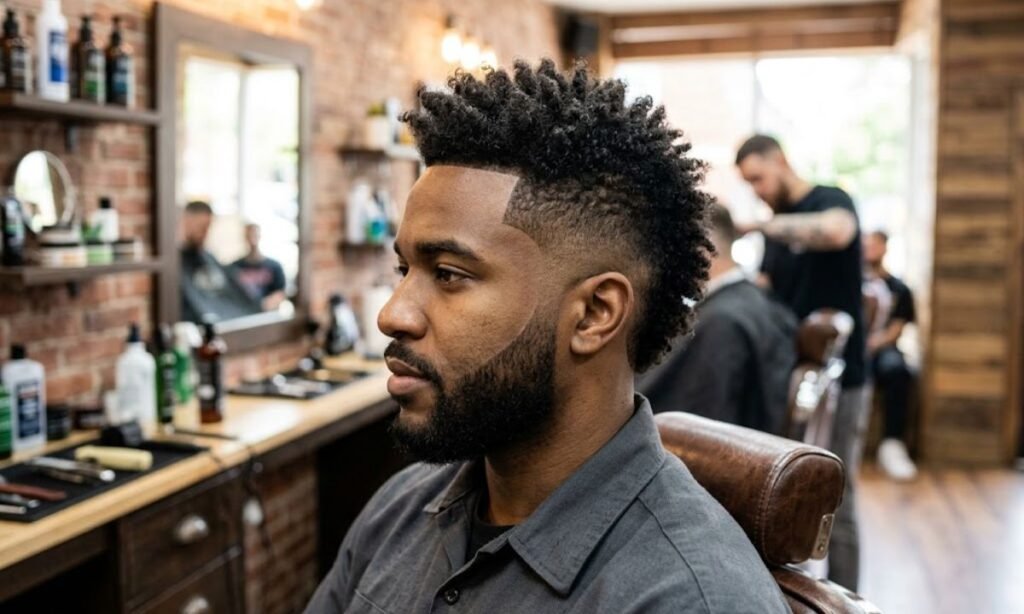
The burst fade mohawk combines a strip of longer hair down the center with rounded, faded sides. It’s dramatic, edgy, and works great for guys with thick hair who want serious volume up top.
Styling usually calls for hair gel or strong-hold hair mousse to keep the center strip standing tall throughout the day.
7: Burst Fade Straight Hair
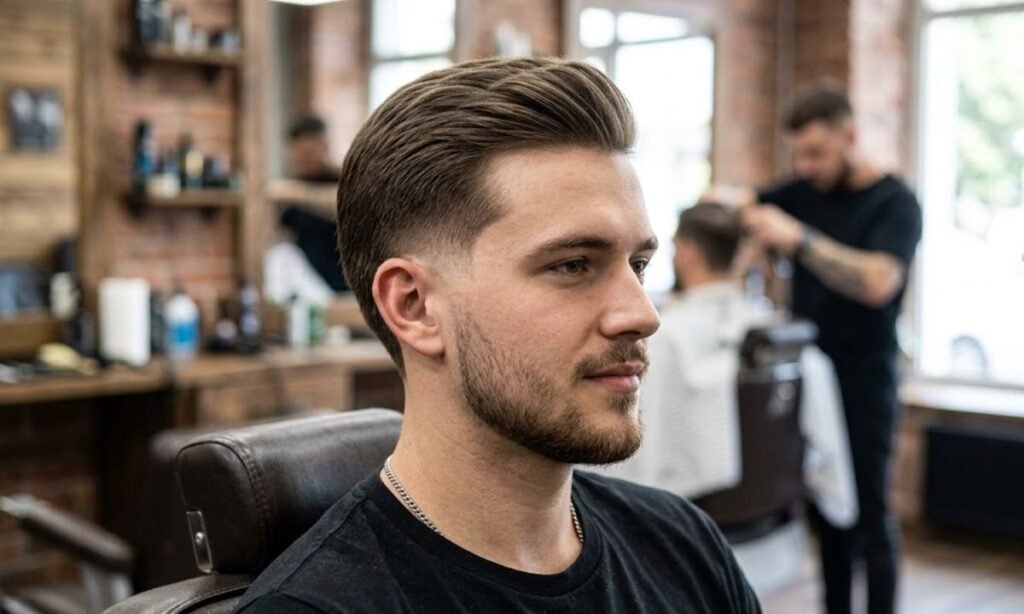
Straight hair gives this fade a crisp, almost architectural look. The lines stay defined, and the smooth blend between fade and top is easy to maintain with basic tools.
This combination is popular in casual hairstyle settings and formal ones alike, since straight hair naturally falls into a neat shape.
8: Taper Burst Fade
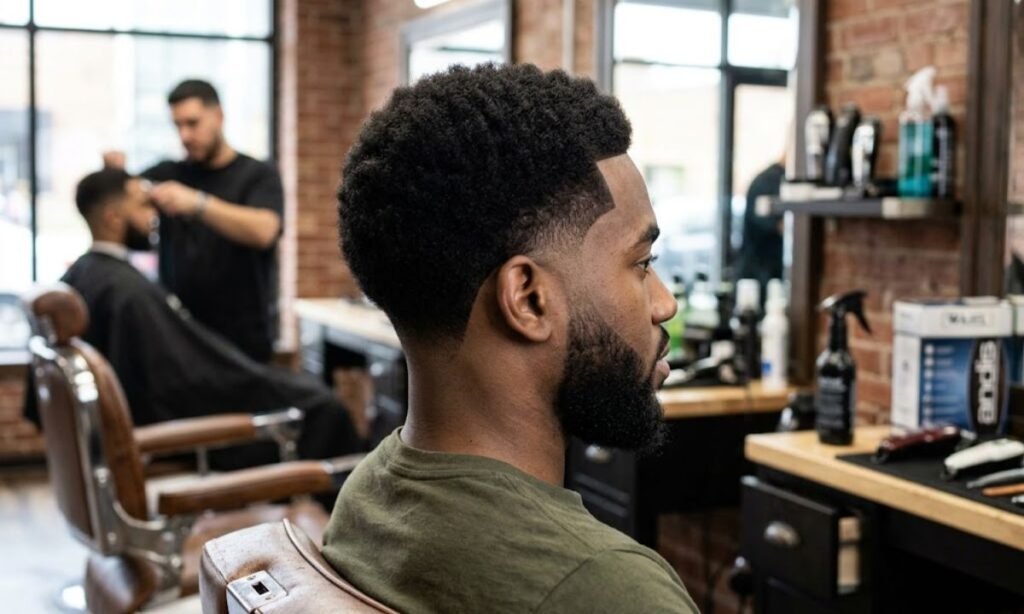
The taper burst fade blends the gradual fade of a taper with the rounded ear detail of a burst. It’s less dramatic than a full burst but still gives that curved shape around the ears.
Many guys who want a professional hairstyle choose this version because it reads as tidy from every angle.
9: High Burst Fade
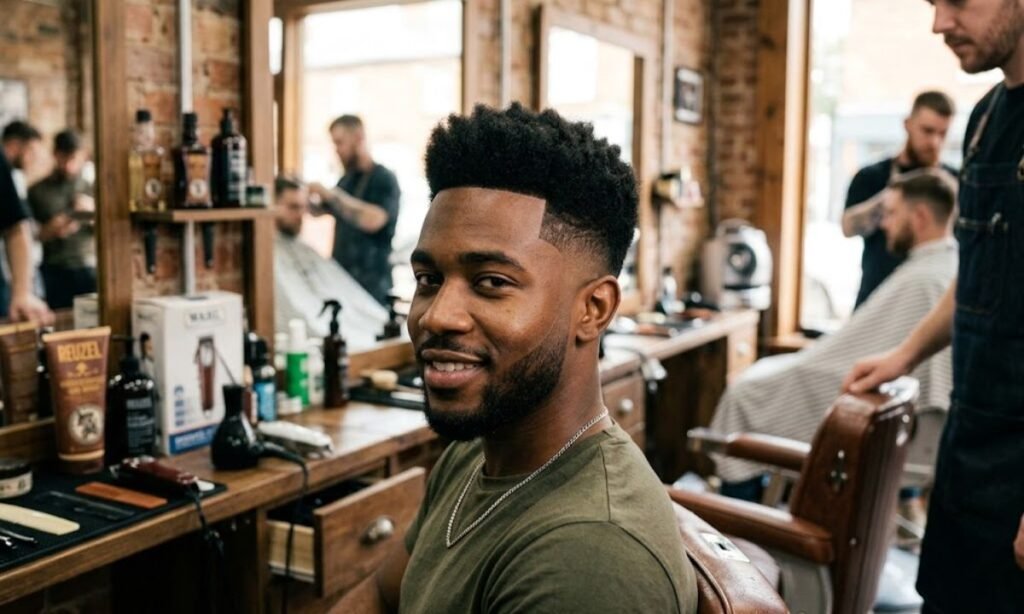
This is the boldest fade height on the list. The high burst fade starts near the top of the head, creating maximum fade contrast and a very modern appearance.
It suits guys with strong hairlines and confident personal style, since there’s nowhere to hide with this much skin showing.
10: Burst Fade Buzz Cut
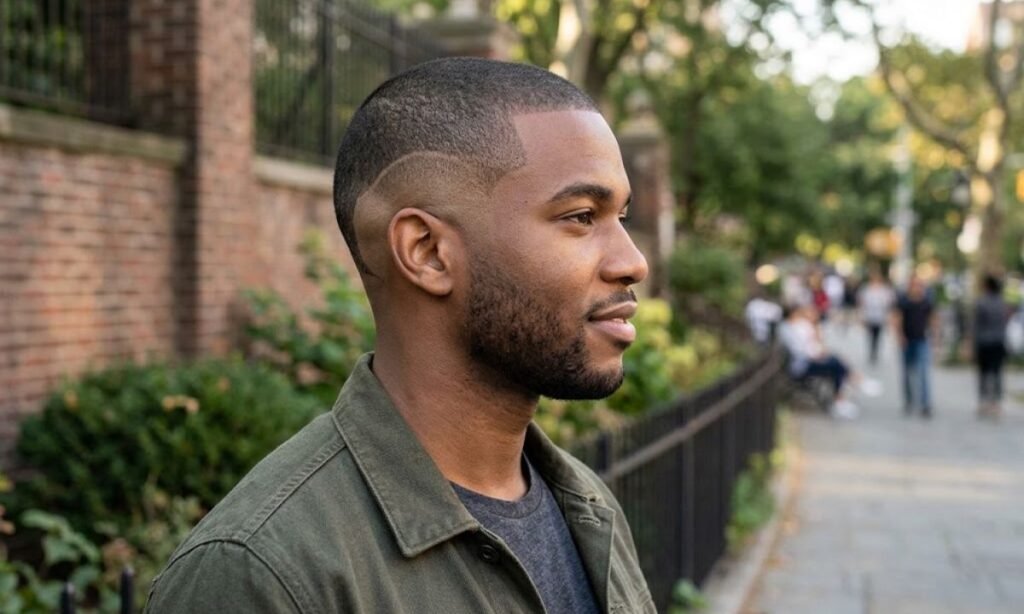
Pairing a burst fade buzz cut with short length on top keeps things extremely low maintenance. The skin-close sides curve around the ear while the top stays uniform and short.
This is one of the easiest styles to maintain between barber visits, since there’s minimal length to grow out unevenly.
11: Short Burst Fade
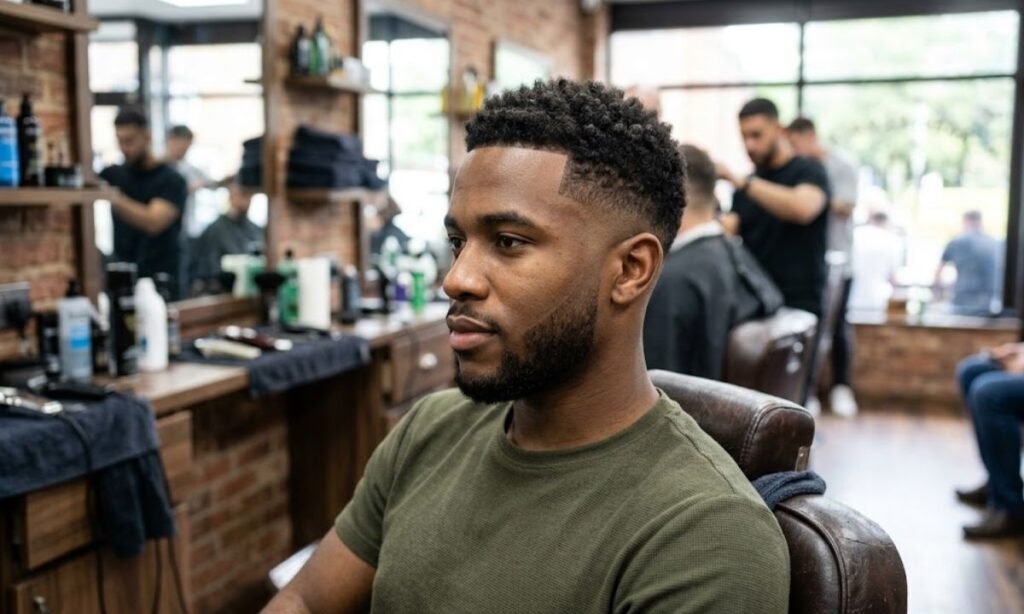
Similar to the buzz cut version but with slightly more length on top, the short burst fade gives a bit of texture without needing daily styling. It’s practical for active guys or anyone short on time in the morning.
12: Burst Fade Textured Fringe
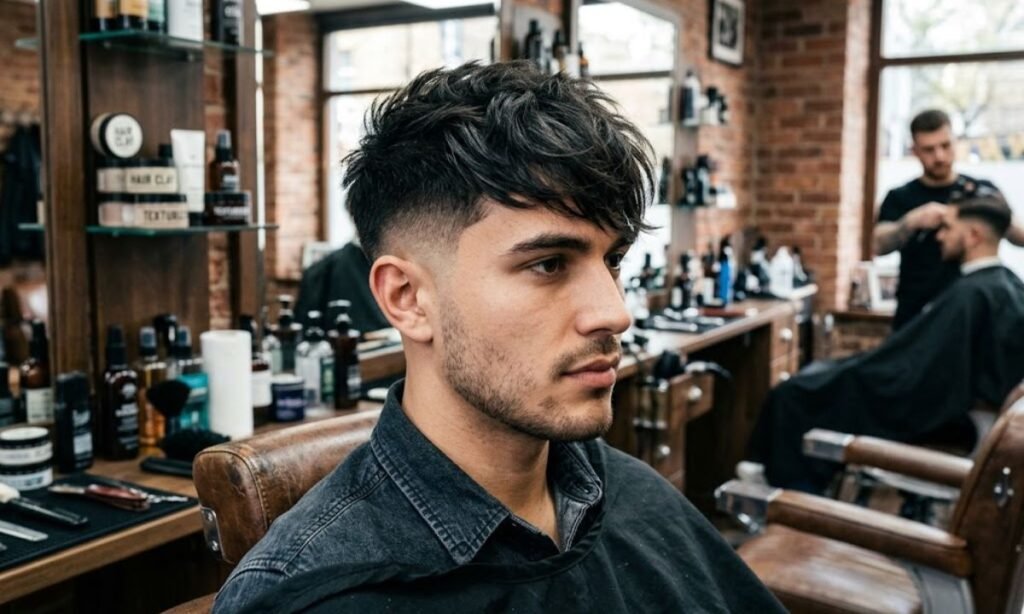
This style leaves a soft, textured fringe at the front while the sides curve into a tight burst fade. It works especially well for guys wanting a youthful, effortless look.
Point cutting on the fringe adds texture without bulk, letting the fringe fall naturally over the forehead.
13: V Shape Burst Fade
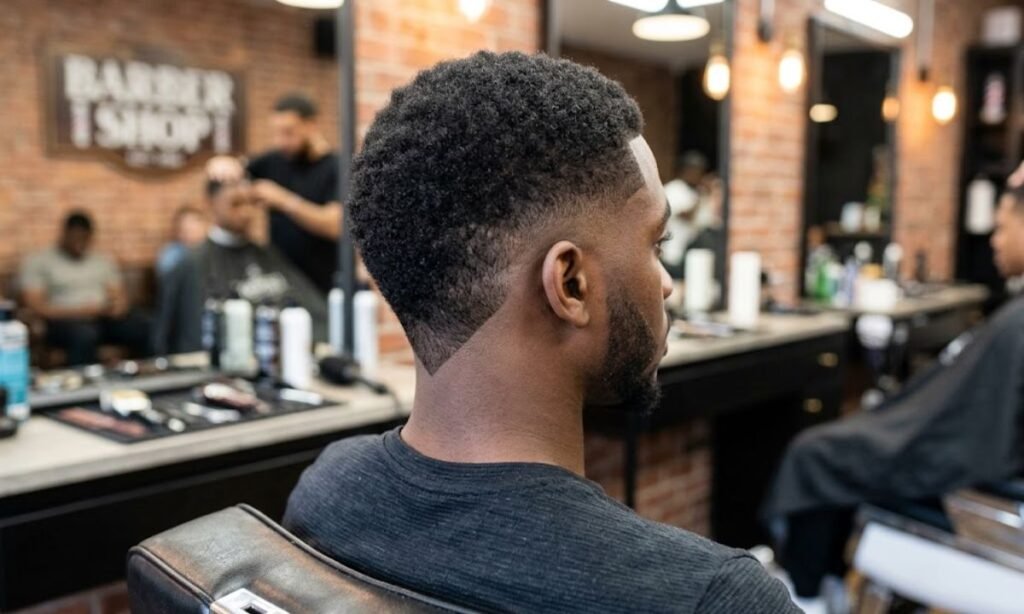
The V shape burst fade cuts the neckline into a sharp V instead of a rounded or straight line. Combined with the curved ear fade, it creates a striking geometric contrast at the back of the head.
Barbers usually finish this look with a straight razor for the cleanest possible neckline finish.
14: Burst Fade Long Hair
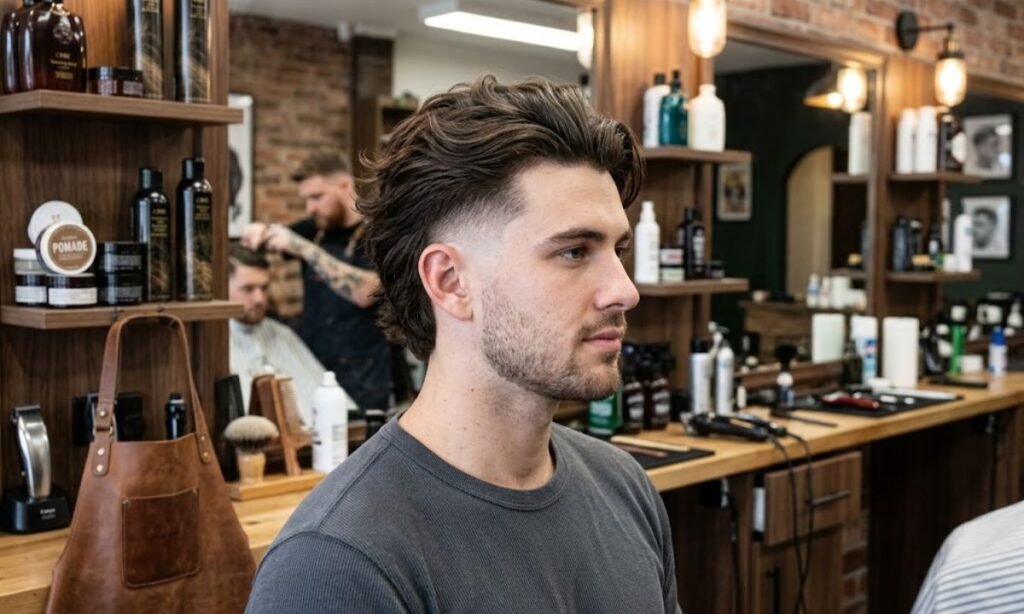
For guys who don’t want to sacrifice length, burst fade long hair keeps the top long and flowing while the sides fade tightly near the ears. It’s a strong contrast style that photographs well from every angle.
Regular conditioning matters here since longer hair needs more care to avoid looking flat or greasy.
15: Burst Fade Slick Back
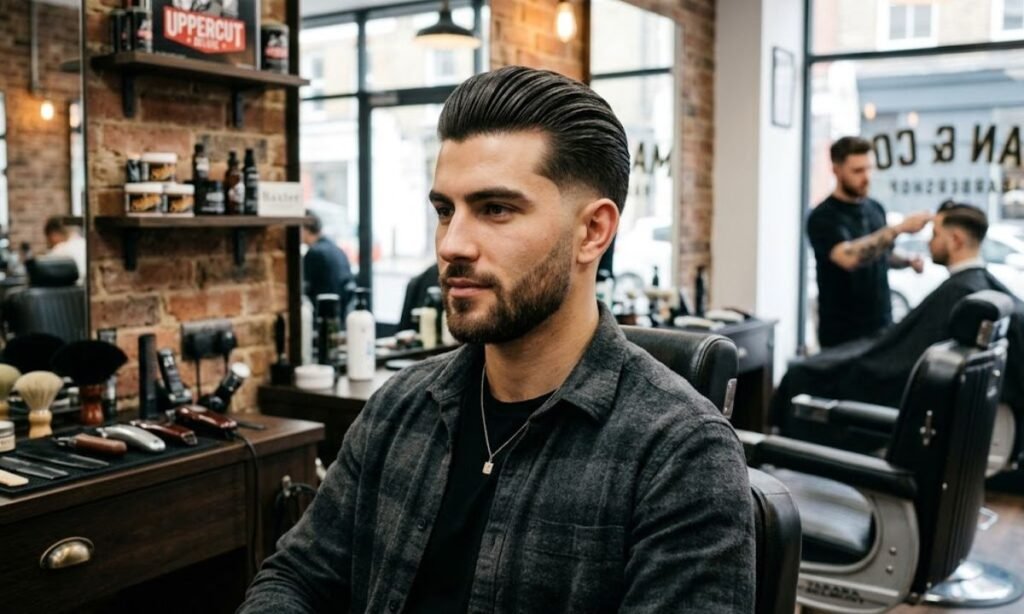
Slicking the top back with hair gel or pomade over a burst fade gives a polished, put-together appearance. It’s a favorite for weddings, interviews, or any event calling for a professional finish.
The rounded fade near the ear adds a subtle edge that keeps the slick back from looking too stiff.
16: Comb Over Burst Fade
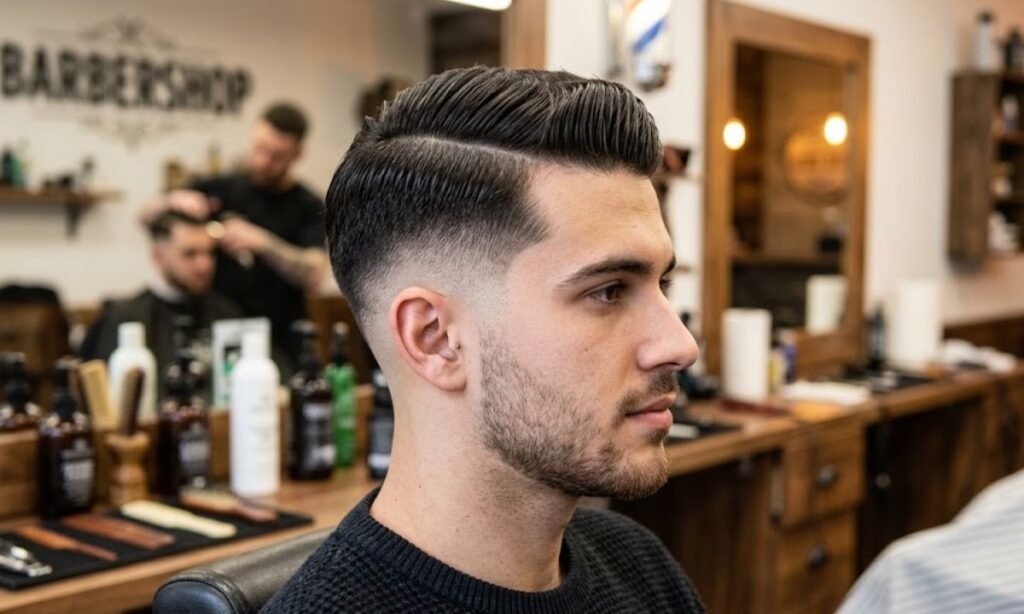
The burst fade comb over takes hair from one side and sweeps it across the top, landing above the curved fade line. It’s classic, versatile, and works with thin hair just as well as thick hair.
A light matte clay keeps the comb over in place without looking greasy or overly shiny.
17: Burst Fade Wavy Hair
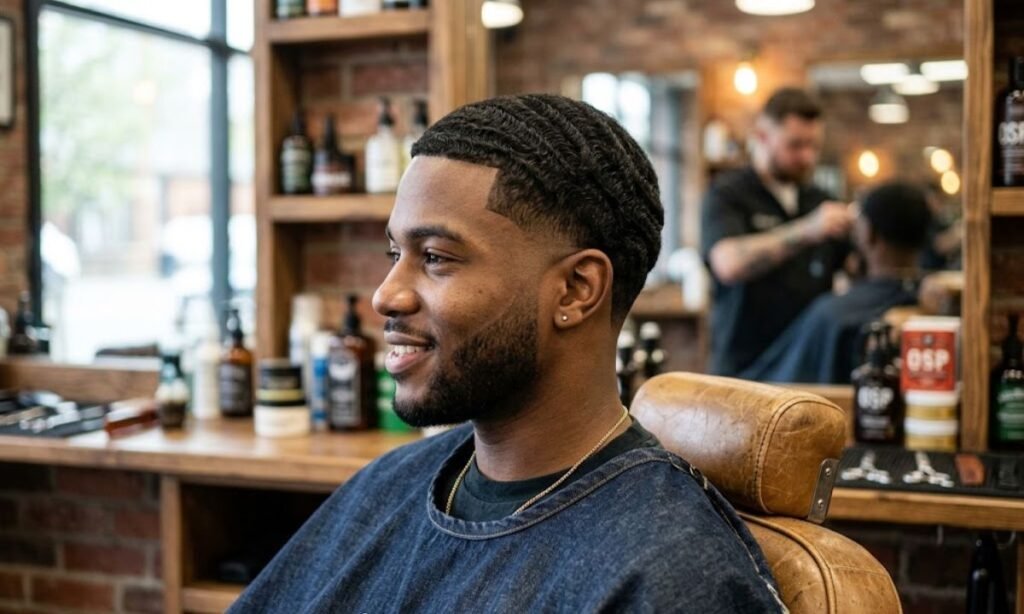
Wavy hair brings natural texture and movement to this fade, and the waves look even more defined against the tight, rounded sides. A sea salt spray enhances the wave pattern for a beachy, textured finish.
18: Textured Burst Fade
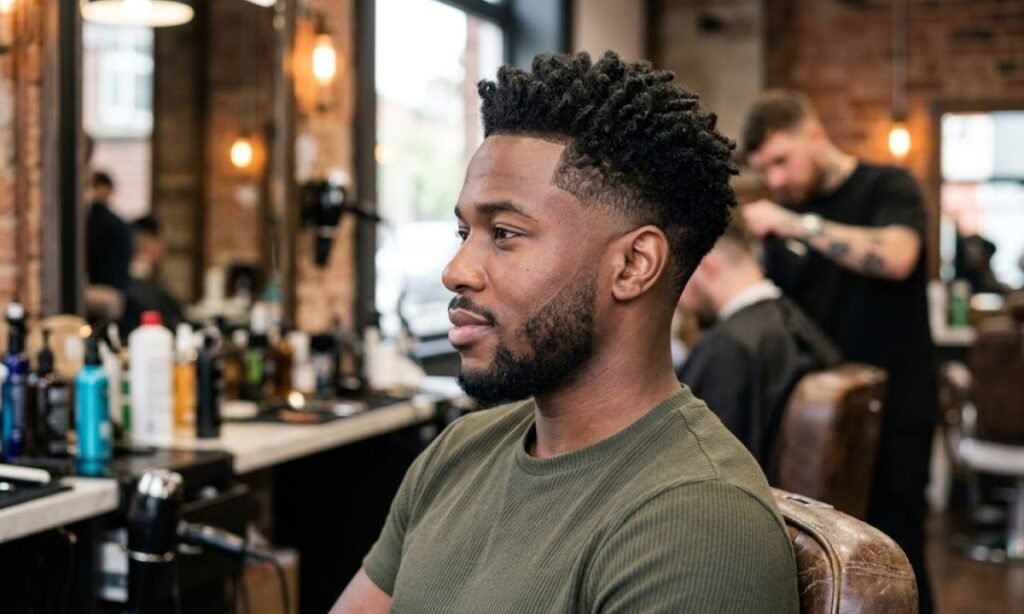
This version focuses on choppy, piece-y texture on top rather than a smooth finish. Barbers use texturizing shears to create movement, then finish with matte clay for a natural finish rather than a shiny one.
19: French Crop Burst Fade
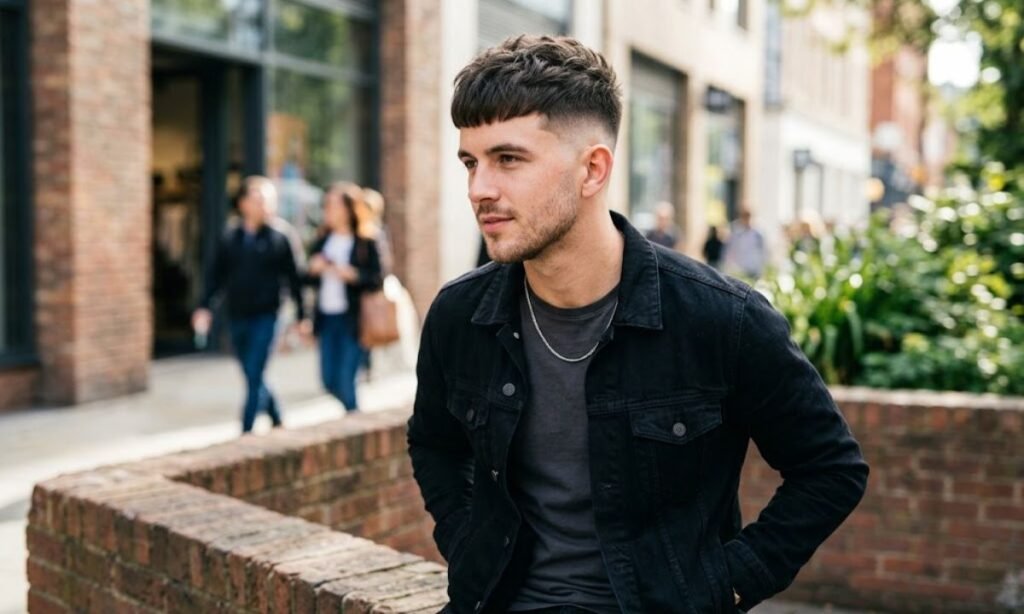
Combining the classic French crop with a burst fade gives short, textured fringe up front and rounded fade detail on the sides. It’s tidy, low maintenance, and suits nearly every face shape.
20: Burst Fade Back View
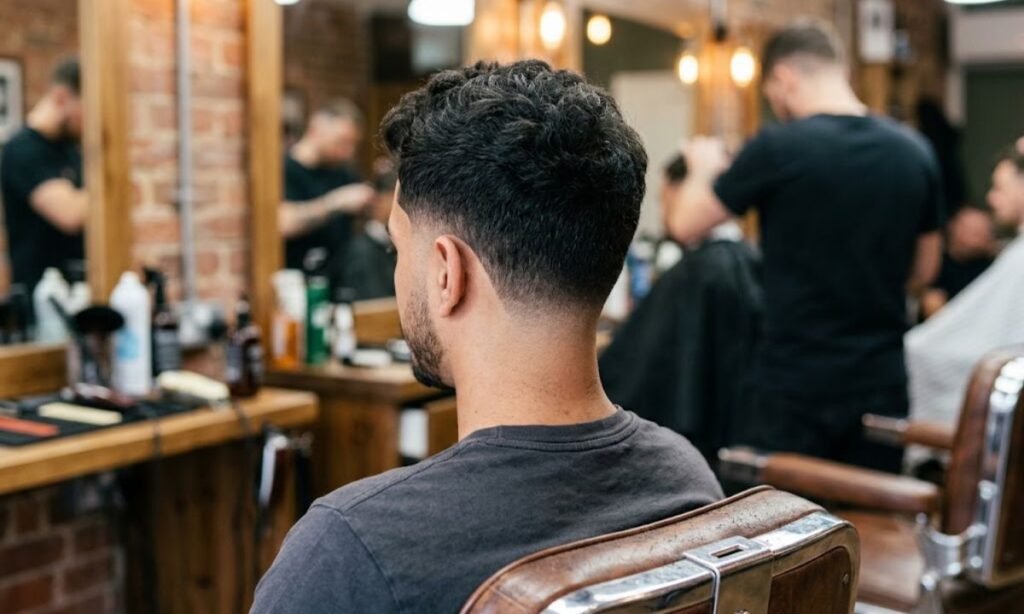
This entry isn’t a separate cut so much as a reminder. The burst fade back view is where the style really shows off, since the curved lines around the ear are most visible from behind.
Always ask your barber to check the back view in a mirror before you leave the chair.
21: Burst Fade Edgar
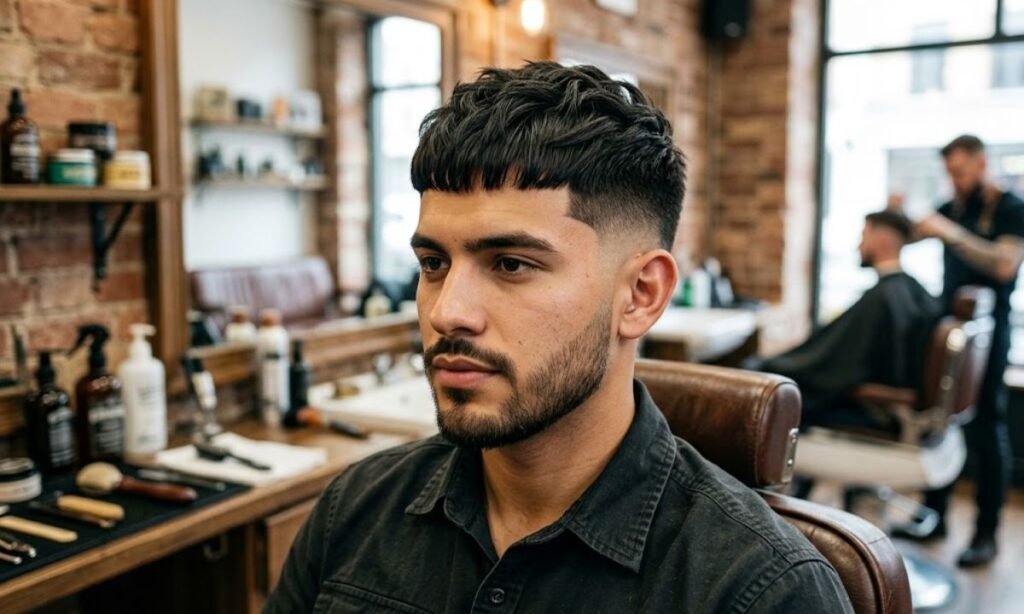
The Edgar cut features a straight fringe with rounded sides, and pairing it with a burst fade adds extra sharpness to the sides and back. It’s become especially popular among younger guys chasing a bold, structured look.
22: Burst Fade with Beard
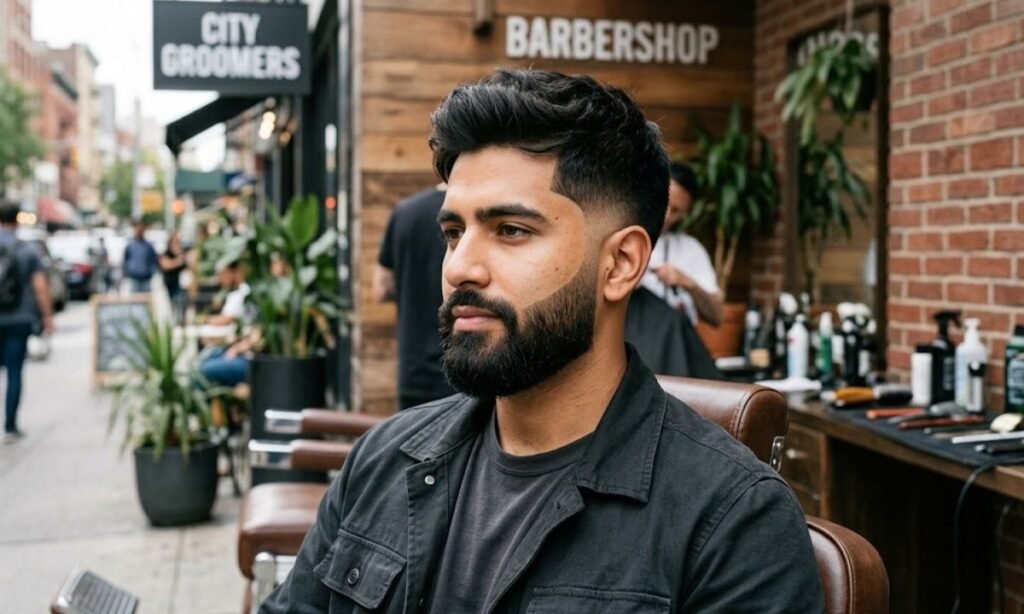
Pairing a burst fade with beard creates a cohesive, masculine silhouette. Beard blending connects the fade at the sideburns smoothly into the beard line, avoiding any awkward gaps.
Ask your barber specifically about beard blending if this is the combination you want, since it’s easy to overlook during a regular haircut appointment.
23: Blowout Burst Fade
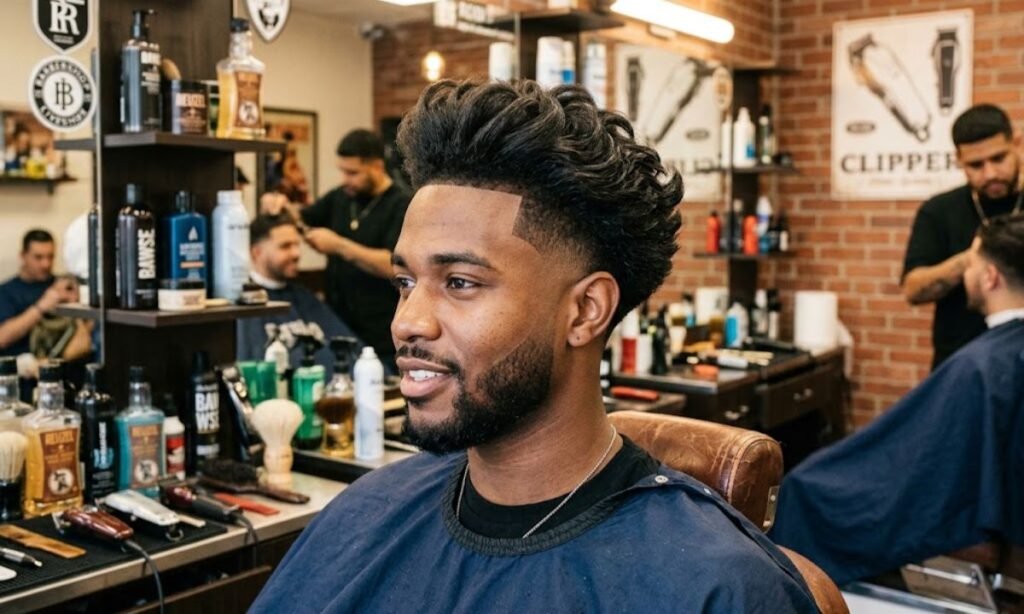
The blowout adds height and volume on top through targeted blow drying, while the burst fade keeps the sides tight and rounded. It’s a striking, high-contrast look that suits thick hair and curly hair especially well.
24: Burst Fade for Black Men
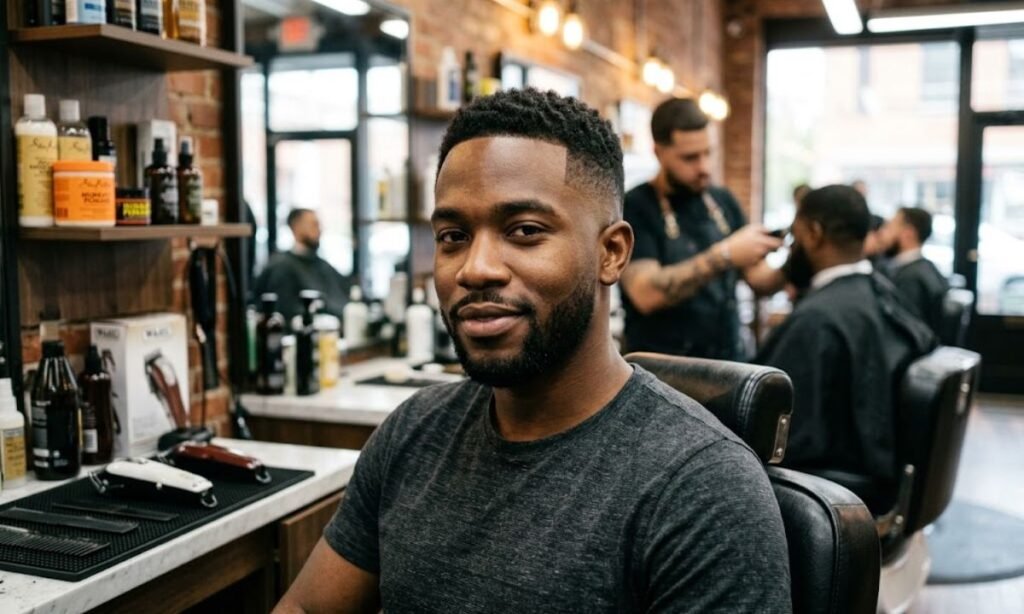
Burst fade for Black men often incorporates afro-textured hair, allowing natural volume and curl pattern to shine on top while the sides stay sharply faded near the ear. Barbers experienced with coily textures can create crisp lines without disrupting curl definition.
25: Asian Burst Fade
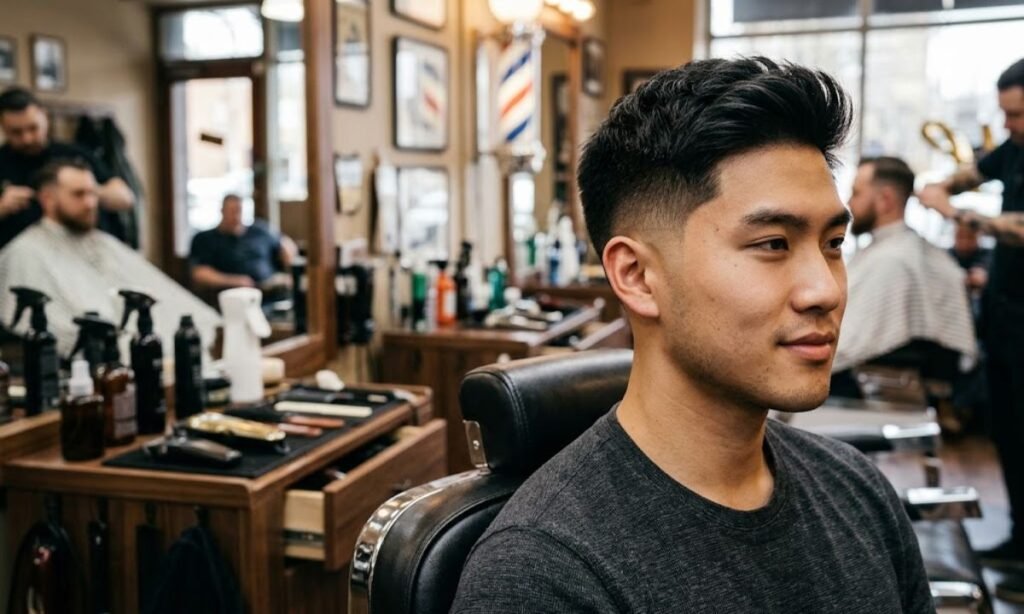
Asian burst fade styles typically work with straighter, denser hair, giving very clean, sharp fade lines. The crown swirl common in Asian hair textures is often factored into the cut for better lay and direction on top.
26: Burst Fade Blonde Hair
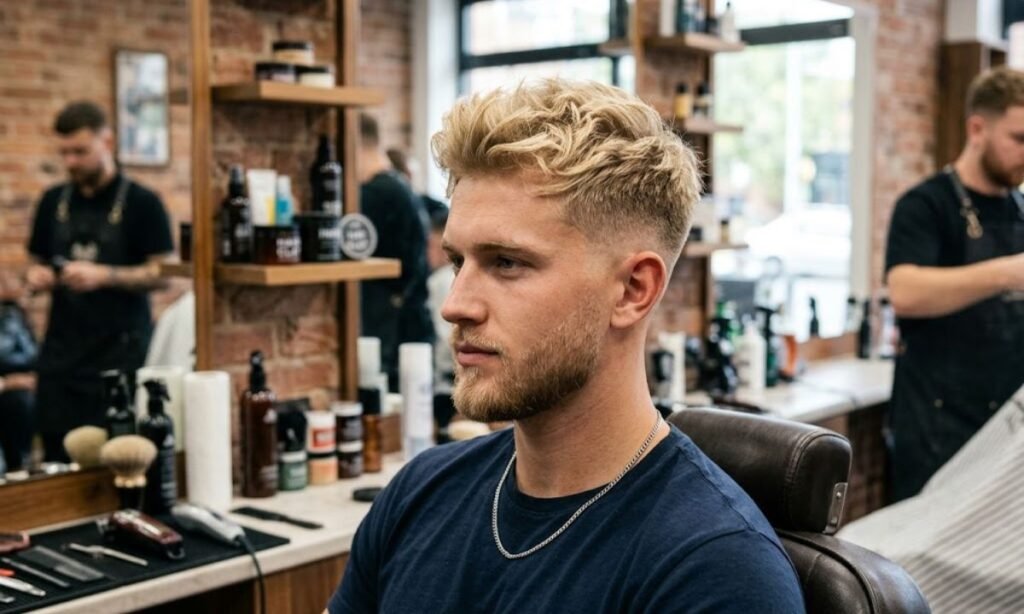
Lightened or blonde burst fade styles make the fade contrast pop even more, since the color difference between top and sides becomes more visible. It’s a bold choice that pairs well with textured or messy top styles.
27: Burst Fade Afro
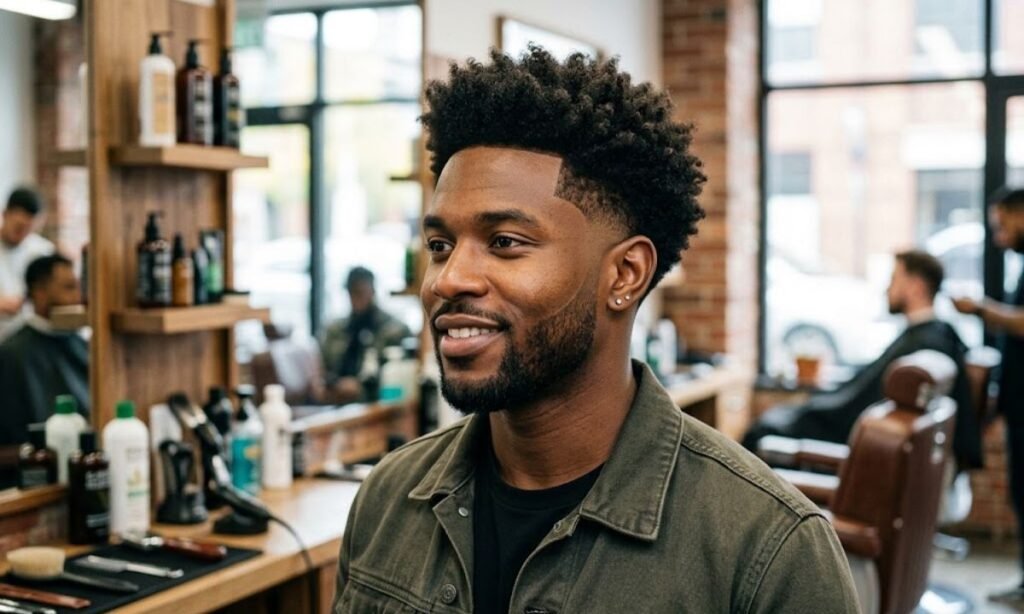
Keeping a fuller afro on top while fading the sides into a burst shape creates a striking silhouette. This combination celebrates natural hair texture while still offering a groomed, intentional look.
28: Undercut Burst Fade
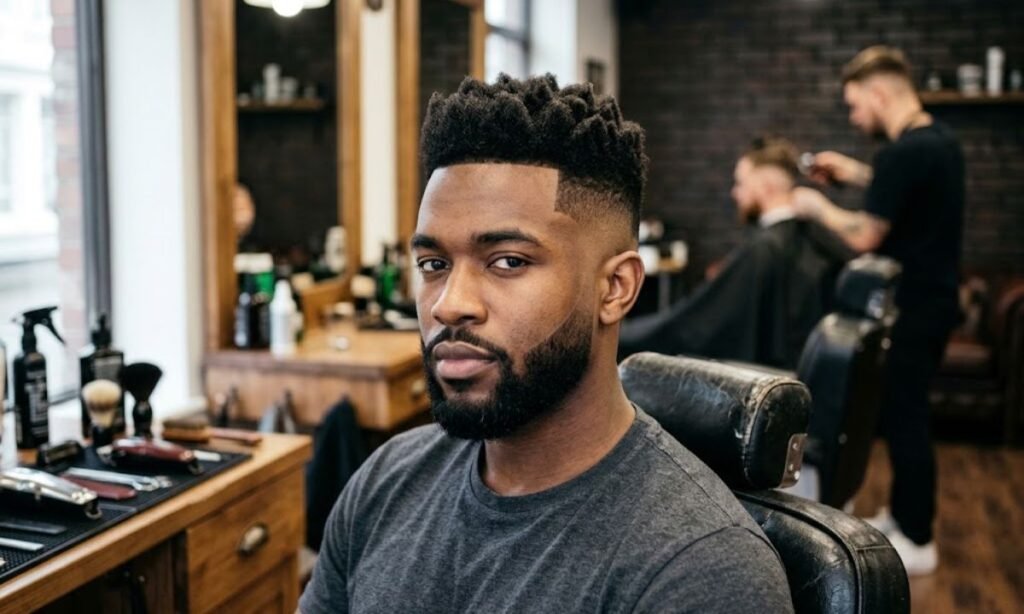
The undercut burst fade takes the sides down close to the skin, more dramatic than a standard fade, while curving that classic burst shape around the ear. It’s a strong choice for guys wanting serious contrast.
29: Grown Out Burst Fade
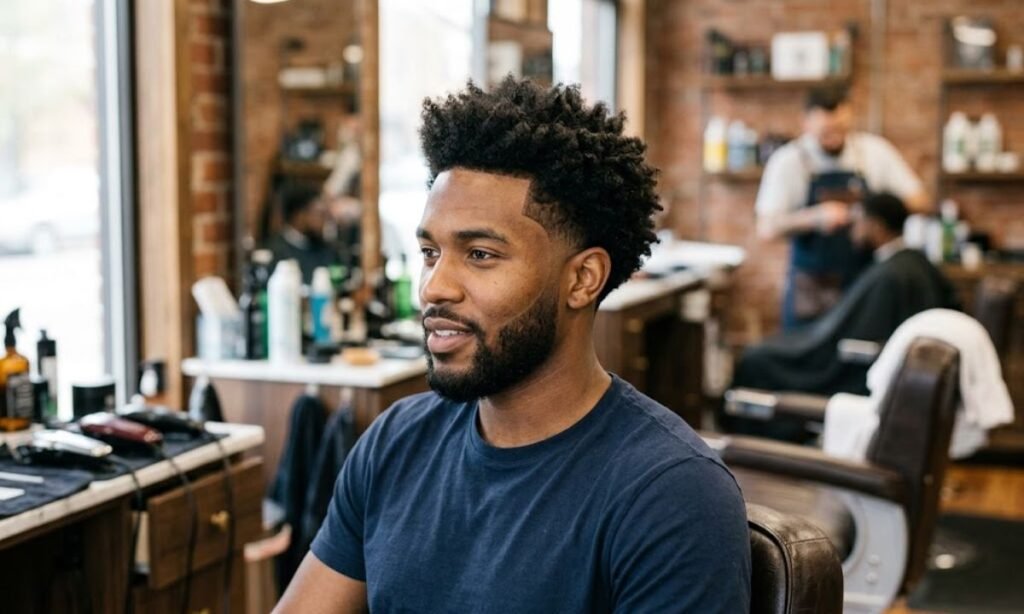
This is the in-between stage of a burst fade as it grows past its sharpest point. The fade grow-out period actually looks intentional if the original cut was done well, since the curved shape softens naturally over time.
30: Burst Fade Fluffy Hair
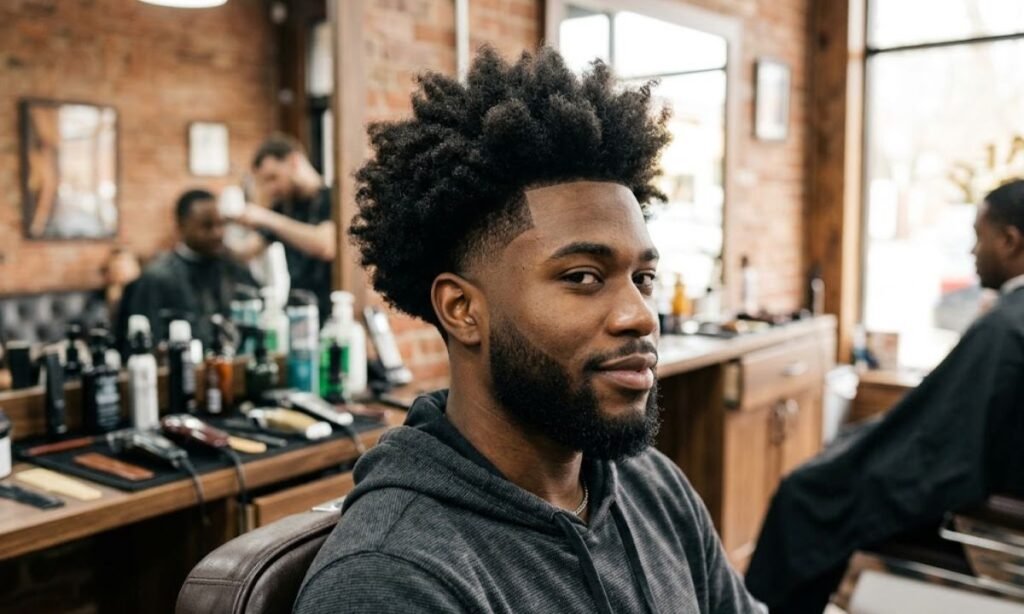
Fluffy, voluminous hair on top paired with a tight burst fade creates a soft yet structured combination. A little hair mousse at the roots helps maintain that fluffy lift throughout the day.
31: Skin Burst Fade
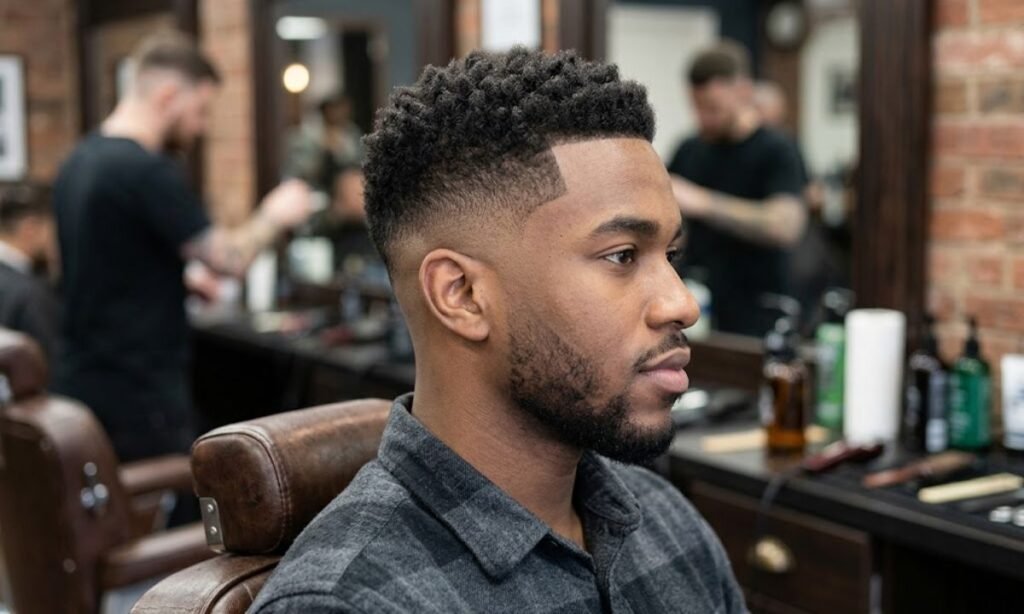
The skin burst fade takes the fade all the way down to bare skin near the ear, giving maximum fade contrast. This version needs the most frequent touch-ups since regrowth shows quickly against the skin.
32: Drop Burst Fade
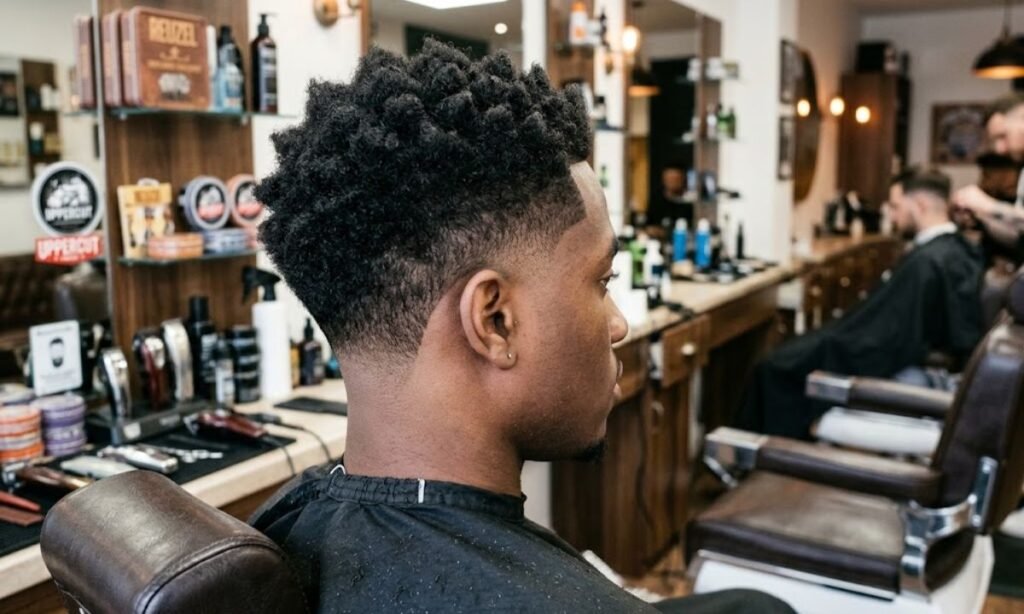
Combining features of a drop burst fade and a traditional burst, this style drops the fade line lower behind the ear before curving back up. It creates a unique silhouette that’s harder to replicate, so finding a skilled barber matters here.
33: Messy Burst Fade
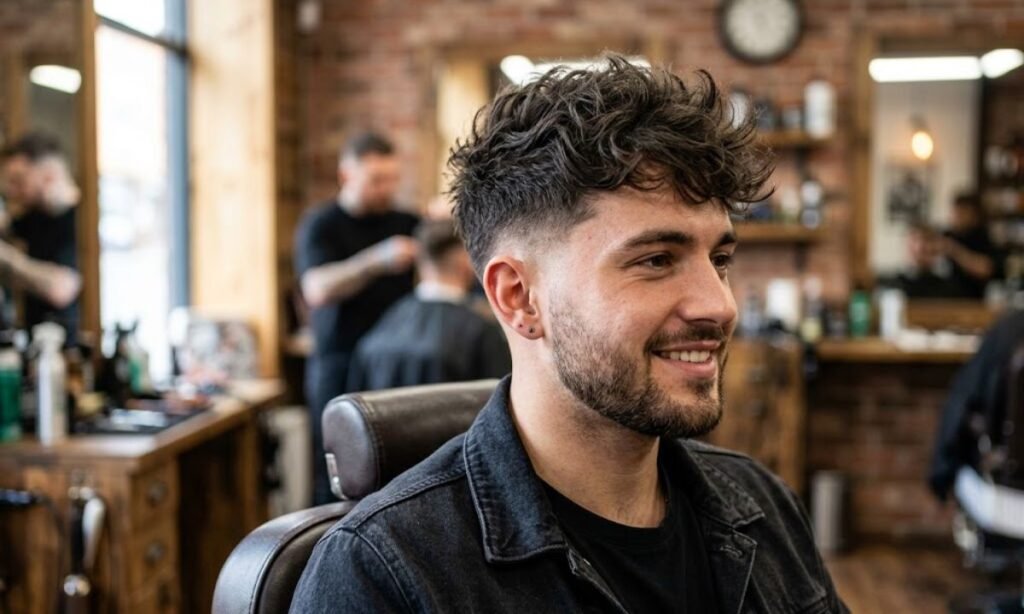
The messy burst fade keeps the top deliberately tousled and undone, contrasting against the crisp lines below. A matte clay or light wax gives texture without making it look overly styled.
34: Burst Fade Pompadour
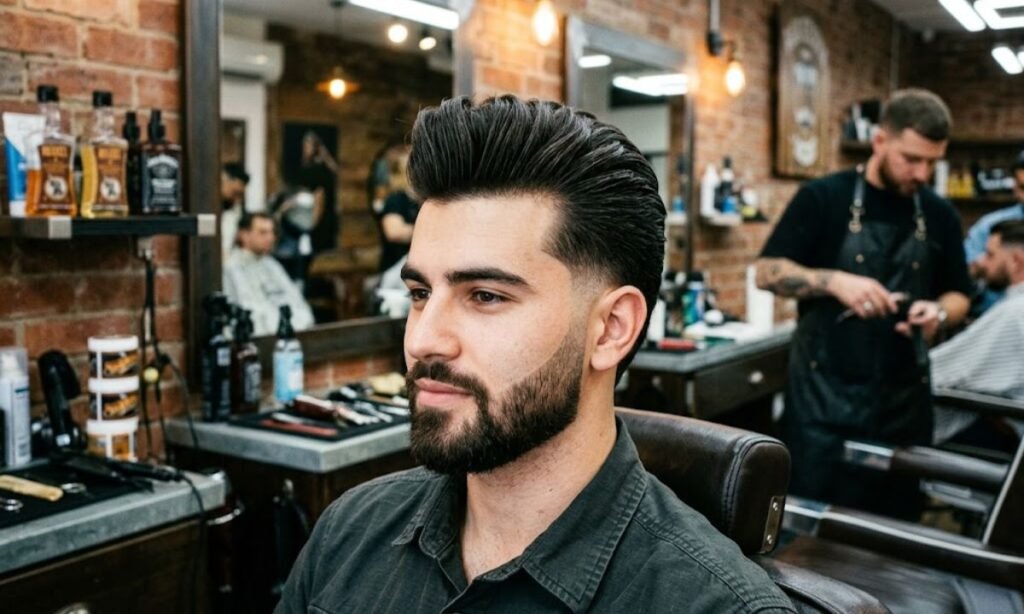
The burst fade pompadour lifts hair up and back at the front for height and volume, while the burst fade handles the sides. Strong-hold hair gel and sometimes a blow dryer are needed to keep the pompadour standing.
35: Burst Fade Quiff
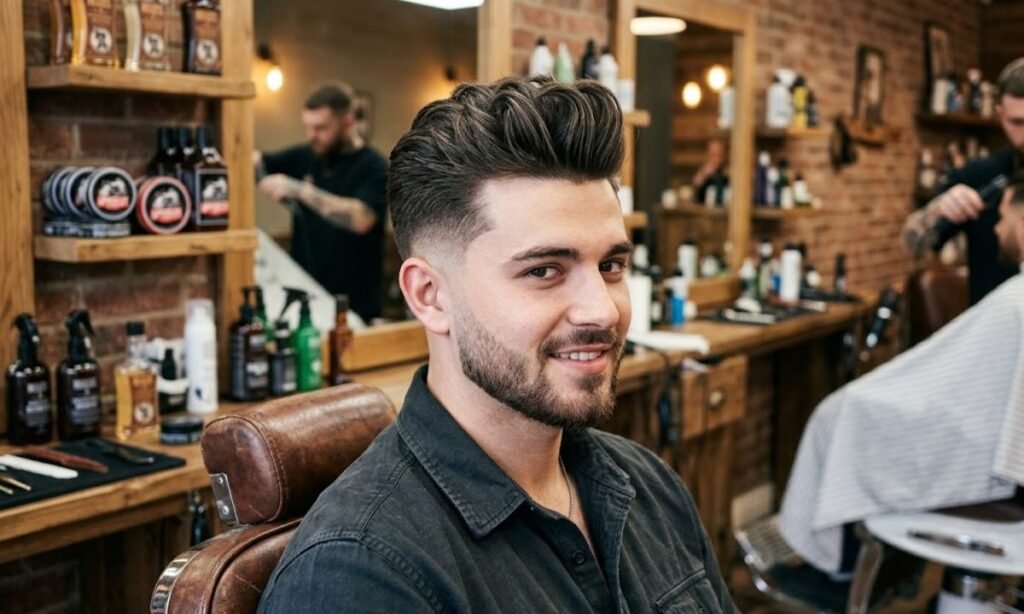
Similar to the pompadour but softer and more casual, the burst fade quiff pushes hair upward and slightly forward. It works great as a casual hairstyle for everyday wear.
36: Burst Fade Man Bun
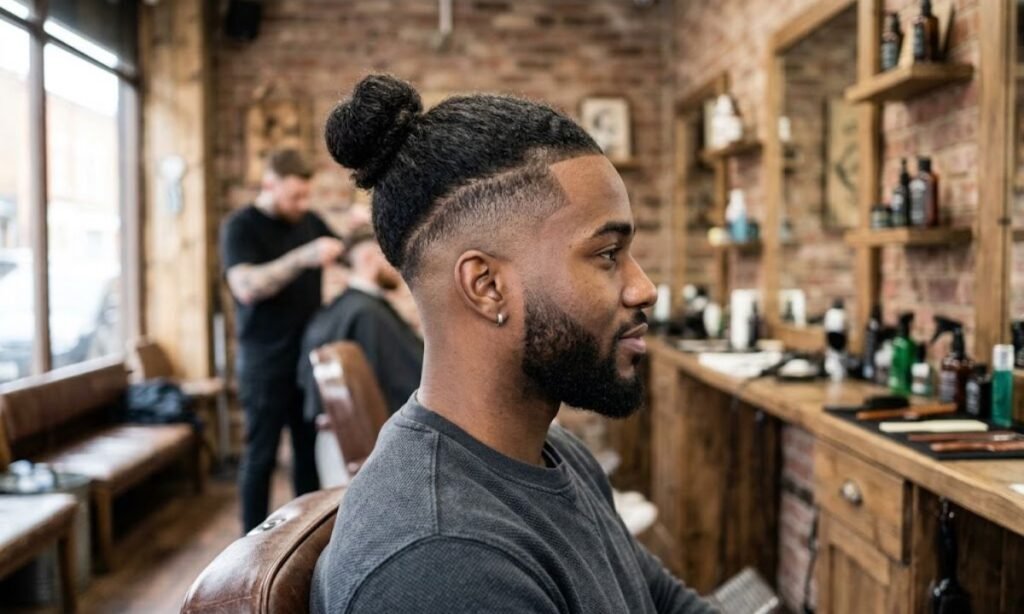
For guys with longer hair who still want sharp sides, tying the top into a small bun over a burst fade gives a modern, practical combination. It keeps hair out of the face while showing off the curved fade detail underneath.
37: Burst Fade with Line Up
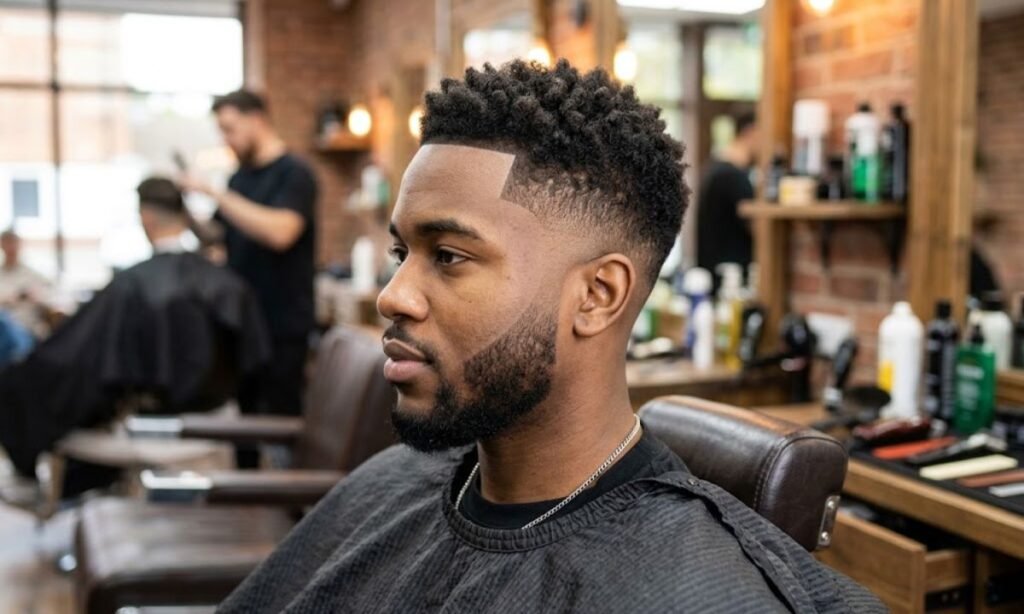
Adding a crisp line up along the hairline sharpens the entire look of a burst fade. This finishing touch, done with a trimmer or straight razor, gives extra definition to the front hairline and temples.
How to Choose the Right Barber for a Burst Fade
Not every barber can execute a clean burst fade, since the curved shape around the ear takes more skill than a straight fade line. Before booking, check a barber’s barber portfolio for examples of rounded fades specifically, not just standard tapers.
Reviews matter too. Look for comments mentioning barber skill with curved lines, blending, or beard blending, since those details tell you more than a generic five star rating.
If possible, book a short consultation first. A confident barber will happily explain their blending technique and ask questions about your hair growth pattern before ever picking up the clippers.
How to Ask Your Barber for a Burst Fade
Communication makes or breaks this haircut. Here’s exactly what to bring up during your appointment.
Bring Reference Photos
Photos remove guesswork. Bring two or three images showing the fade height and top length you like, ideally from different angles including a burst fade back view.
Choose Your Fade Height
Decide beforehand whether you want a low, mid, or high burst fade. This single decision affects how dramatic the fade contrast will look once finished.
Decide the Length on Top
Think about how much length you want left on top, whether that’s short and textured or longer for a slick back or quiff. This affects styling time each morning too.
Specify the Neckline
Ask specifically about the neckline finish you want, whether that’s rounded, squared, or a sharp V shape burst fade style. Small details here change the whole silhouette.
Mention Beard Blending
If you have a beard, always mention beard blending upfront so your barber can plan the sideburn connection from the very first clipper pass.
Ask About Your Maintenance Schedule
Every fade grows out differently based on your hair growth speed. Ask your barber what maintenance schedule they’d recommend for your specific hair.
Quick Barber Checklist
- Reference photos from multiple angles
- Preferred fade height (low, mid, high)
- Desired length on top
- Neckline style preference
- Beard blending instructions if applicable
- Recommended touch-up timeline
Best Burst Fade Haircut by Face Shape
Matching your fade to your face shape makes a bigger difference than most guys realize.
Round Face
Guys with a round face should aim for more height on top and avoid too much width at the sides. A high burst fade with volume up top helps elongate the overall look.
Oval Face
An oval face is the most flexible shape, working well with nearly any fade height or top style. Low, mid, or high burst fades all suit this shape comfortably.
Square Face
A square face benefits from softer, textured tops that reduce harsh angles. Pair a mid burst fade with a slightly messy or textured top for balance.
Diamond Face
For a diamond face, keep width at the temples minimal and add fullness at the crown. A textured or fluffy top over a low burst fade works nicely here.
Heart Face
A heart face looks great with a low burst fade paired with fuller sides, since it balances a wider forehead against a narrower jaw.
Oblong Face
An oblong face benefits from shorter top length and avoiding excessive height. A low or mid burst fade with minimal top volume keeps proportions balanced.
Quick Face Shape Guide
- Round: high fade, added height on top
- Oval: any fade height works
- Square: mid fade, textured or messy top
- Diamond: low fade, fuller crown
- Heart: low fade, fuller sides
- Oblong: low or mid fade, minimal top height
Expert Barber Advice
Most experienced barbers agree that face shape guides are helpful starting points, not strict rules. A good barber studies your actual bone structure, hairline, and hair growth pattern in person before making final recommendations.
Best Burst Fade Haircut by Hair Type
Your hair type determines how the fade will actually behave day to day.
Straight Hair
Straight hair creates crisp, defined lines and holds a smooth blend easily. It’s one of the lowest maintenance textures to pair with a burst fade.
Curly Hair
Curly hair adds natural volume and texture on top, though barbers need to account for shrinkage when cutting length. A curl cream keeps definition intact between washes.
Wavy Hair
Wavy hair sits nicely between straight and curly, offering natural texture without heavy shrinkage. A sea salt spray enhances the wave pattern beautifully.
Thick Hair
Thick hair holds volume well but needs proper thinning to avoid bulk. Barbers often use texturizing shears to manage weight while keeping shape.
Thin or Fine Hair
Thin hair and fine hair benefit from shorter top lengths since longer styles can look flat. A lightweight hair mousse adds lift without weighing hair down.
Coily or Afro Hair
Coily hair and afro-textured hair offer natural volume that pairs beautifully with tighter fades. Barbers experienced with these textures know how to fade against dense curl patterns without disrupting shape.
Quick Hair Type Guide
- Straight: crisp lines, low maintenance
- Curly: natural volume, use curl cream
- Wavy: natural texture, use sea salt spray
- Thick: needs thinning, texturizing shears help
- Thin/fine: shorter top, lightweight mousse
- Coily/afro: natural volume, needs experienced barber
Best Burst Fade Haircut by Age
Younger guys in their teens and twenties often go bolder, choosing high burst fade styles, designs, or mohawks that make a statement. Trends move fast at this age, so more dramatic choices feel natural.
Guys in their thirties and forties often lean toward mid burst fade or low burst fade options that stay professional but still feel current. A burst fade with beard is especially popular in this age range.
Older men frequently prefer subtle versions, using a low burst fade to add shape without looking like they’re chasing trends. It’s less about age itself and more about matching personal style and workplace expectations.
Burst Fade for Receding Hairlines and Thinning Hair
A receding hairline doesn’t rule out a burst fade. In fact, a well placed fade can actually draw attention away from thinning areas near the temples.
Barbers often recommend keeping the fade slightly higher near a receding hairline, softening the transition so it doesn’t emphasize the hairline shape too sharply. Texture on top also helps create the illusion of fuller density.
For a thinning crown, adding volume through hair mousse or a light blow dry technique helps mask sparse areas. Regular barber visits matter even more here, since small adjustments keep the style looking intentional as hair patterns shift.
Best Products for Burst Fade Styling
The right hair products make styling faster and results more consistent day to day.
- Lightweight pomade: adds shine and hold without heaviness
- Curl cream: defines curls and reduces frizz
- Leave-in conditioner: keeps hair manageable between washes
- Matte clay: creates texture with a natural, non-shiny finish
- Sea salt spray: enhances natural wave and texture
- Hair mousse: adds volume and lift for thin or fine hair
- Hair gel: strong hold for slick backs and pompadours
- Hair wax: flexible hold for messy or textured styles
Pro Tip
Apply product to damp, not soaking wet hair. Starting with the wrong amount of moisture is one of the most common reasons styling routine results turn out uneven or overly stiff.
How to Style a Burst Fade Haircut?
Good styling turns a solid haircut into a great one.
1. Choose the Right Styling Products for Your Hair Type
Match your product to your hair texture first. Curly hair needs different products than straight hair, and using the wrong one leads to frustration during your daily styling routine.
2. Blow Dry Technique for a Clean and Voluminous Look
Use a round brush while blow drying to lift roots and add shape. Direct airflow downward along the hair shaft for smoother results and less frizz.
3. How to Style a Burst Fade with Curly or Wavy Hair
Apply curl cream to damp hair, then let it air dry or diffuse on low heat. Avoid touching curls too much while drying, since this can disrupt natural curl pattern.
4. Creating Texture and Definition With Pomade or Wax
Rub a small amount of hair wax between your palms before applying, working it through mid lengths first. This creates definition without clumping product near the roots.
Barber Tools Used to Create a Burst Fade
Understanding the tools helps you appreciate why this blending technique takes real skill.
- Clipper: the main tool for fading, fitted with different clipper guards
- Adjustable lever: fine tunes blade length during fading
- Clipper comb: guides length while cutting top sections
- Trimmer: handles detail work near the ears and hairline
- Straight razor: creates the sharpest possible neckline finish
- Texturizing shears: thin out bulk without shortening length
Step-by-Step Burst Fade Tutorial
Here’s roughly how a skilled barber approaches this cut from start to finish.
Step 1 – Prep the Hair
The barber starts with clean, dry or slightly damp hair, checking natural hair growth pattern and identifying the crown swirl direction before cutting anything.
Step 2 – Create the Burst Shape
Using clippers, the barber begins shaping the curved fade guideline around the ear, establishing the basic burst shape early on.
Step 3 – Debulk the Hair
Texturizing shears remove excess bulk from the top section, making later blending easier and more precise.
Step 4 – Set the Fade Lines
The barber sets the main fade line, working from the guard size down toward the skin near the ear.
Step 5 – Blend the Fade
Working against the grain with clippers, the barber smooths transitions between guard lengths for that signature smooth blend.
Step 6 – Detail the Fade
A trimmer cleans up any dark spots or uneven patches missed during the main clipper work.
Step 7 – Clean the Edges
The barber uses a straight razor or trimmer for clean edges around the hairline and ears, creating a sharp hairline.
Step 8 – Final Touch
A light dusting with clippers checks for stray hairs, followed by a quick styling pass to show the finished shape.
Final Result
The end result should show a professional finish with a modern appearance, clean lines, and a natural finish on top that suits your face shape and hair type.
Burst Fade Haircut vs. Other Popular Fade Haircuts
Understanding the differences helps you request exactly what you want.
Burst Fade vs. Taper Fade
The burst fade vs taper fade debate comes down to shape. A taper fade cuts straight along the neckline, while a burst fade curves around the ear entirely.
Burst Fade vs. Drop Fade
Burst fade vs drop fade comparisons focus on direction. A drop fade dips lower behind the ear before curving up, while a burst fade stays consistently rounded around the ear itself.
Burst Fade vs. Skin Fade
Burst fade vs skin fade really refers to how close the fade goes to the skin. You can actually combine both, creating a skin burst fade for maximum contrast.
Why a Burst Fade Haircut Is Worth Trying
Few fade styles offer this much versatility paired with visual interest. Whether you want subtle and professional or bold and eye catching, the burst fade adapts to your goals.
How Much Does a Burst Fade Cost?
Prices vary widely depending on location and barber experience. Basic burst fades at local barbershops typically run between fifteen and thirty five dollars, while specialty shops or master barbers may charge fifty dollars or more.
Adding extras like a burst fade with design, beard trim, or beard blending usually adds another ten to twenty dollars to the total. Touch-ups between full cuts, often needed every two to three weeks, tend to cost less than the original appointment.
Burst Fade Haircut Glossary — Key Terms Explained
- Burst fade: a fade that curves around the ear rather than cutting straight
- Fade height: where the fade begins on the head (low, mid, high)
- Blending: smoothing transitions between different clipper guard lengths
- Neckline finish: how the hairline at the back of the neck is shaped
- Beard blending: connecting sideburns smoothly into beard hair
- Skin fade: a fade taken down to bare skin
- Drop fade: a fade that dips lower behind the ear
- Crown swirl: the natural direction hair grows from the crown
Common Mistakes to Avoid with a Burst Fade Haircut
Even a great haircut can go wrong with poor upkeep or the wrong choices.
Choosing the Wrong Burst Fade Variation
Picking a style that doesn’t match your face shape or hair density often leads to disappointment. Always discuss options with your barber rather than pointing at a random photo.
Skipping Regular Barber Visits
Waiting too long between regular trims lets the fade grow out unevenly, losing the crisp fade contrast that made it look sharp in the first place.
Using Too Much Hair Product
Overloading hair with hair gel or hair wax creates a greasy, weighed down look instead of the intended natural finish.
Ignoring Hair Texture
Requesting a style that fights your natural hair texture, like a slick back on very curly hair without proper prep, often leads to frustration during daily styling.
Forgetting Daily Hair Maintenance
Skipping basic care between washes lets natural oils build up, dulling the sharp hairline and clean look a burst fade is known for.
Quick Tip
Set a recurring reminder for touch-up appointments every two to three weeks. This single habit keeps a burst fade looking sharp far longer than sporadic visits ever will.
You can also checkout this aticle as well 27 Straight Burst Fade Haircuts Every Man Should Try in 2026
Conclusion
A burst fade haircut earns its popularity honestly. The curved fade around the ears gives it a distinct shape that regular tapers simply don’t offer, and the sheer number of variations means there’s a version for nearly every face shape, hair type, and personal style.
Whether you’re drawn to a subtle low burst fade for the office or a bold burst fade mohawk for weekends, the key is clear communication with a skilled barber and a realistic maintenance schedule afterward. Get those two things right, and this fade will keep looking sharp appointment after appointment.
