

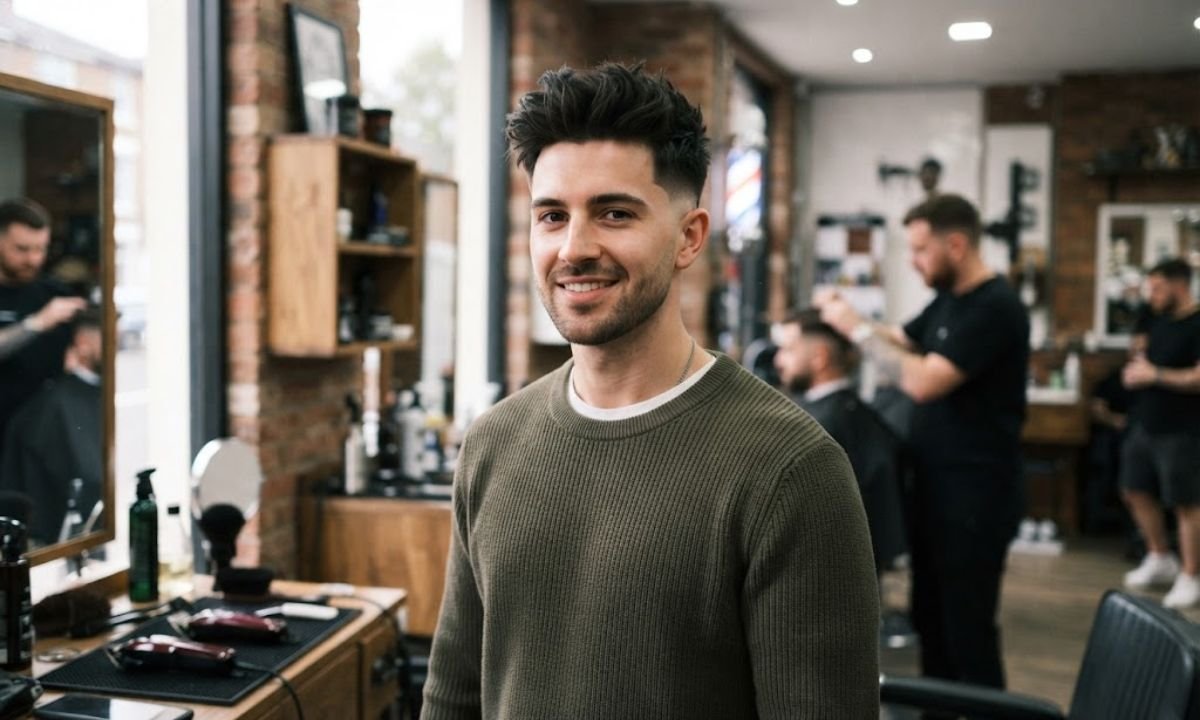
By the Editorial Team | Updated October 2026
Sitting in the barber chair and blanking on what to say is a real problem.
You want volume on top, but you don’t want to look like you walked out of a wind tunnel.
You might wonder if a low taper blowout works with your hair type.
You might also worry it needs a daily blow-dry session you don’t have time for.
This guide answers both worries, one step at a time.
By the end, you’ll know what to ask for, what to expect, and how to keep it looking sharp.
What is a low taper blowout?
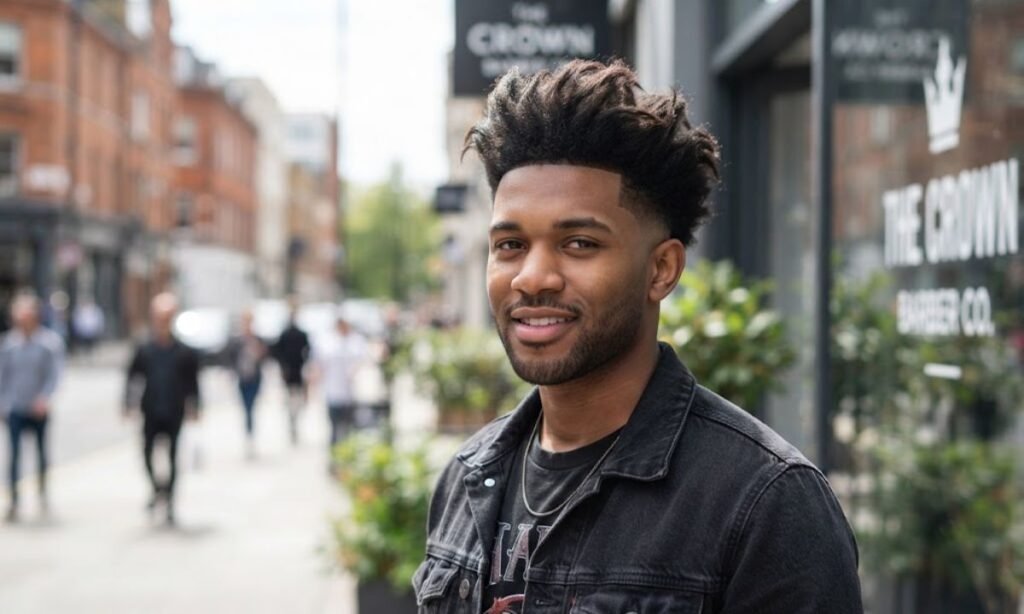
A low taper blowout is a soft, low-sitting taper paired with a blow-dried top that has lifted volume.
The sides get clipped close at the sideburns, above the ears, and at the neckline.
The top stays long enough to push upward and outward with a dryer and a round brush.
The result is full, lifted volume on top and a clean, quiet finish around the edges.
The taper stays below the temple line, so the sides stay mostly intact.
That makes it the most conservative height in the taper family and a work-friendly height for most offices.
What Is a Low Taper Blowout?
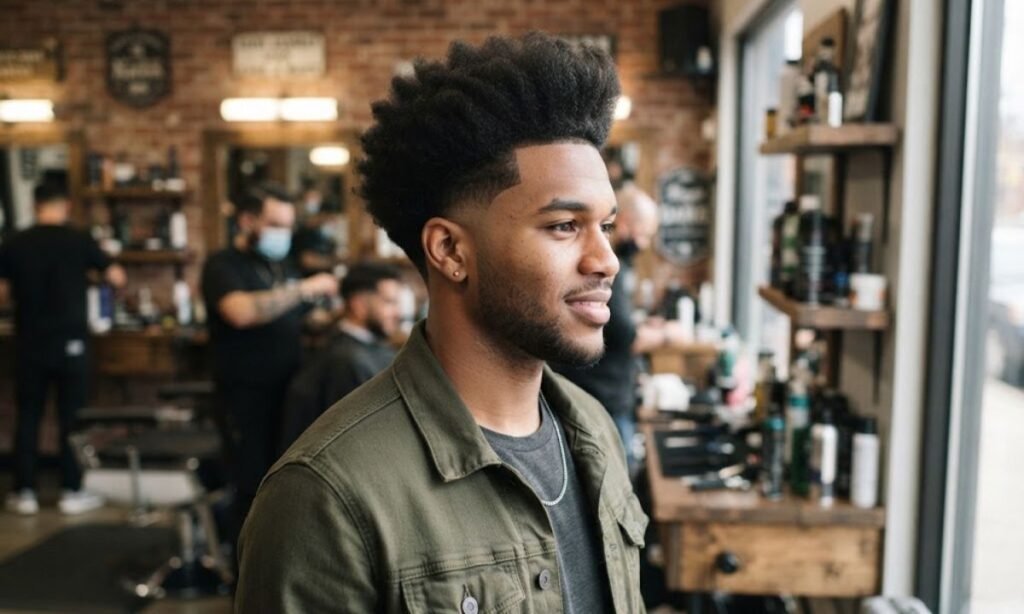
Think of it as two haircuts working together.
The first is the taper, a gradual length reduction that happens in a narrow band around the hairline.
The second is the blowout, a styling method that builds shape with heat, direction, and airflow.
Put them together and you get the taper blowout look that has shown up in barbershops everywhere.
Here’s the key part.
The taper sits below the temple line, usually about two finger widths wide, and it leaves the rest of the sides alone.
Your natural hair length matters here.
Most barbers want 3 to 5 inches on top so the blowout shape has something to lift.
Because the taper is so low, you get minimal to no skin exposure.
It’s a soft graduation, not a statement cut.
That’s why it feels clean and well-groomed without feeling edgy.
It’s professional enough for an office and expressive enough for a night out.
What Does a Low Taper Blowout Look Like?
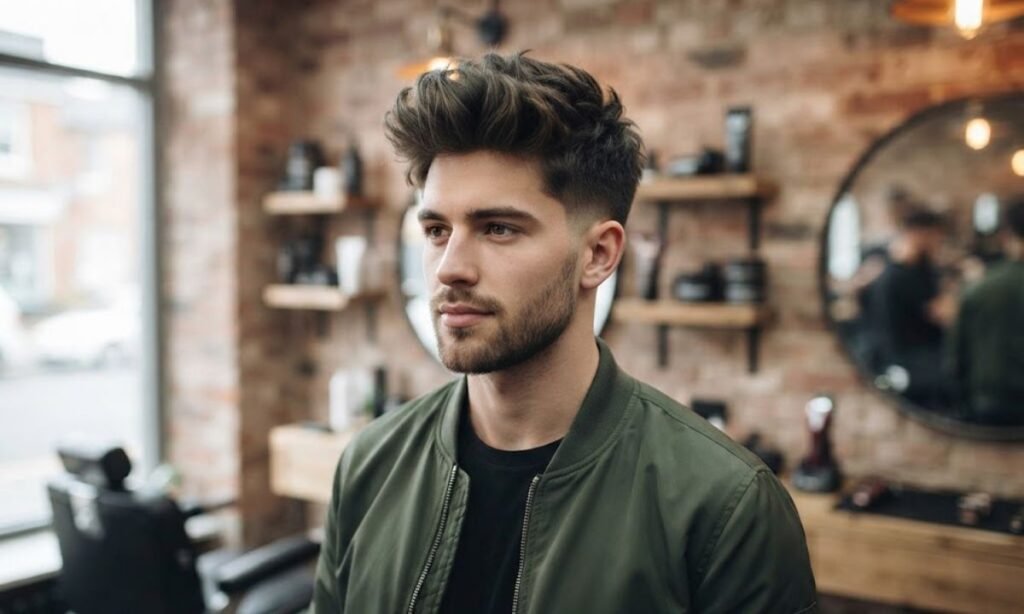
Picture a full, rounded top that sits slightly above the ears.
The sides transition almost seamlessly into the neck, with no dramatic contrast line.
Up close, the sideburns fade softly.
The clean tapered neckline finishes the back without any sharp demarcation.
From the front, you’ll usually see a natural part or a textured fringe.
From the side, you’ll notice a swept-back style with a slight backward flow in the front.
That shape comes from directional blow-drying.
The hair gets dried upward at the roots, then guided into a smooth lifted shape.
On some heads the result looks fuller, softer, and a little more relaxed.
On others it looks sculpted, depending on texture and the top length you keep.
The polished finish is what people notice.
Nobody sees a hard line, they just see hair that looks like it knows where it’s going.
Low Taper Blowout vs. Low Taper Fade: What Is the Real Difference?
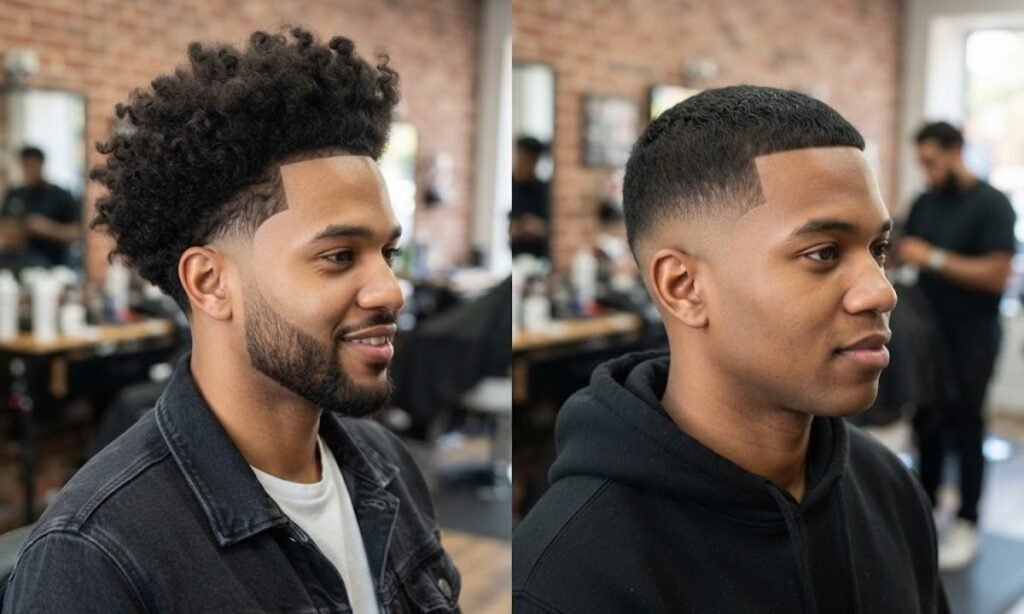
The two cuts share a base, but they don’t share a goal.
A low taper fade can go down to a zero guard or skin-level clipper pass, which creates a visible contrast line.
A low taper blowout stays on graduated guards only.
That gives you a softer, longer-lasting finish instead of a skin line.
The other difference is the top.
The blowout version depends on lifted volume from a dryer, while a fade can sit flat or be textured with product alone.
Here’s a quick comparison.
| Feature | Low Taper Blowout | Low Taper Fade |
|---|---|---|
| Skin exposure | Minimal to none | Often skin-level |
| Contrast | Soft blend | Sharper contrast |
| Top styling | Blow-dried, lifted | Flexible |
| Regrowth | Grows out cleanly | Line appears faster |
| Best for | Office and daily wear | Higher contrast preference |
So which is better?
It depends on how much edge you want and how much time you’ll spend at the barber.
Is a Low Taper Blowout the Same as a Low Taper Fade?
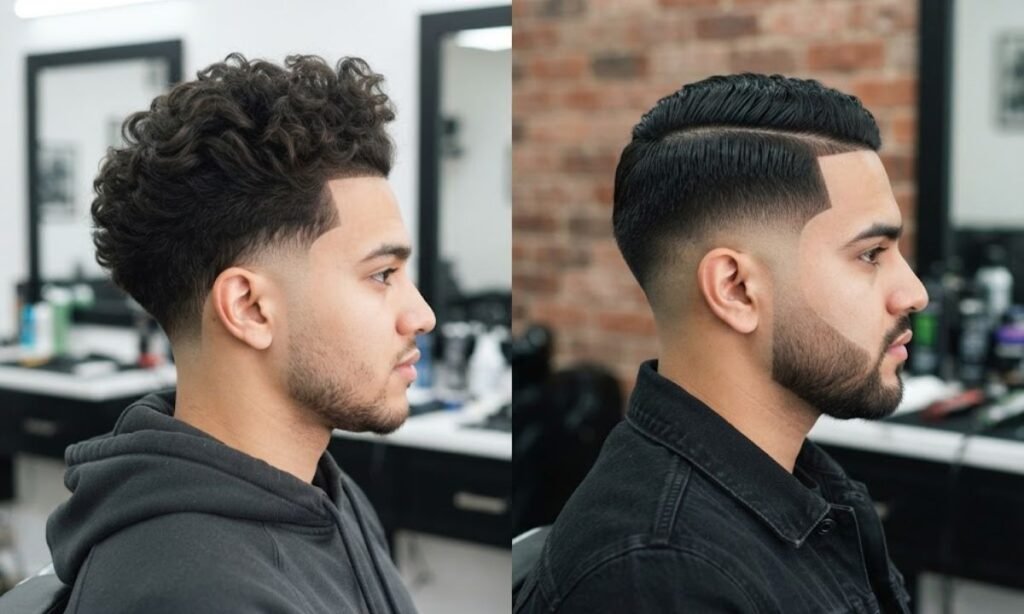
Short answer, no.
They overlap, and plenty of people use the names loosely, but they aren’t twins.
Some barbers say low taper fade blowout when they mean a fade with a blown-out top.
If you ask for that, clarify whether you want skin exposure or not.
The cleanest way to avoid a surprise is to define the taper height and the guard range.
Say “no skin pass” out loud, and the confusion mostly disappears.
There’s also a bigger picture here.
The blowout taper family includes the mid taper and high taper, which sit progressively higher and expose more skin.
The low version sits at the bottom of that ladder.
It’s the most forgiving option if you aren’t sure how far to go.
Does a Low Taper Blowout Work With Your Hair Type?
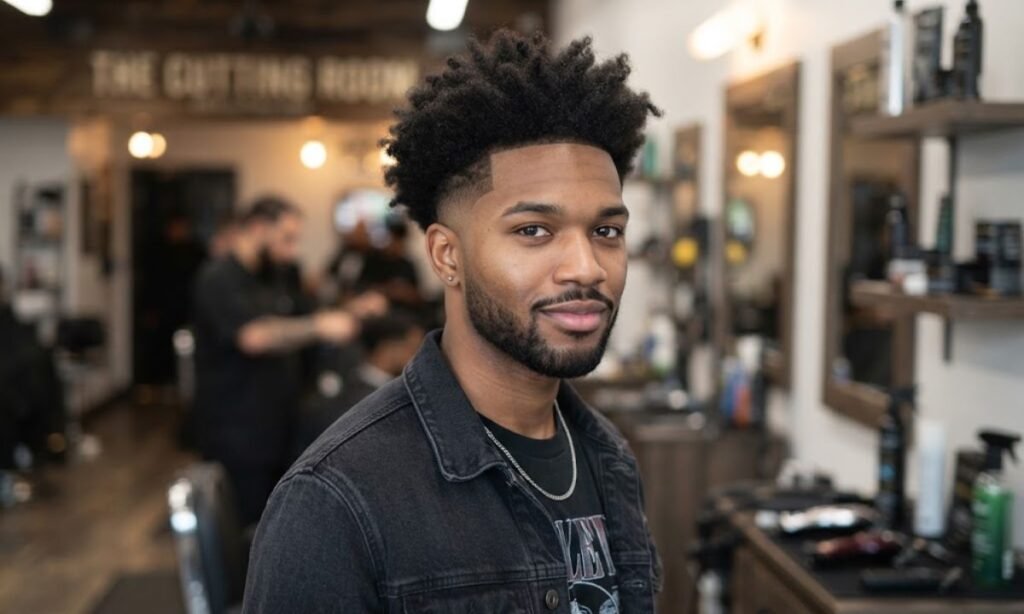
Mostly yes.
The cut works on every hair texture with the right technique adjustments, but the payoff differs.
The barber needs to check different hair densities, your natural wave pattern, and how your hair holds volume.
A bad blend technique can leave the sides puffy or the top flat.
You’ll also want to think about face shapes and maintenance preferences.
We’ll cover both below.
For now, here’s the quick version.
Straight hair needs lift, wavy hair needs control, curly hair needs definition, and coily hair needs shape.
Straight Hair: How to Get Real Volume Without the Mushroom Effect

Straight hair is the trickiest to lift.
It’s slippery, so it wants to fall flat the minute you stop drying it.
The mushroom effect happens when the sides stay bulky while the top collapses.
A proper low taper pulls some internal bulk off the sides, which keeps your head from looking like a bowl.
Your barber should take some weight out of the sides without cutting them short.
Keep the length on top and ask them to use a pre-styler or texturizing spray while drying.
At home, blow-dry upward toward the crown with a round brush.
Finish with cool air so the volume is built and stays put.
Try a light molding paste or texture clay after the dryer.
A little goes a long way on fine strands.
Wavy Hair: The Path of Least Resistance

Wavy hair is the easy mode of this haircut.
Your natural wave pattern already generates lift, so the blowout only needs to organize it.
The main enemy is frizz.
Skip the heavy product, use a leave-in cream, and dry with low to medium heat.
A barber who respects your waves will leave a bit more weight on top.
That keeps the wave defined instead of turning it into a frizzy halo.
Most wavy-haired guys need minimal touch-ups between cuts.
The growth pattern hides itself well.
If you’re after frizz control, finish with a touch of lightweight wax.
You’ll feel the difference by lunchtime.
Curly Hair: The Most Visual Payoff of Any Texture

Curls and a low taper are a great pair.
The natural curl pattern amplifies the blowout shape, so you get a defined rounded shape with less effort.
The taper acts like a frame.
A tight taper zone frames the full top, which makes the curls look intentional.
Use a curl cream on damp hair and a diffuser attachment to dry.
Stick to low to medium heat so you don’t fry the curl structure.
Sleep on a satin pillowcase or silk pillowcase to prevent knotting and frizz.
In the morning, a light mist can re-activate the curl structure.
You can also wear a satin bonnet at night.
It keeps curl definition intact and saves you from a full restyle.
Coily / Afro Hair: Volume Built In, Shape Is the Job

With afro hair, you already have natural volume.
The barber’s work is shaping existing volume into a clean intentional silhouette.
That means a controlled taper that sits below the ear only.
It keeps the curl mass on top and avoids a harsh taper that makes the head look uneven.
Blow-drying can reduce shrinkage, which gives you more visible length.
Afterward, a curl sponge or pick helps the strands clump into a cohesive shape.
Many guys searching for low taper fade styles for Black men end up here.
They want a look that is broadly wearable without losing the afro shape.
Keep the weight on top.
If the sides get too thin, the whole shape loses balance.
What Face Shapes and Lifestyles Does It Suit?

This cut is flexible, but a few face shapes get a bigger boost.
The low height and soft blend are what make it so wearable.
- Square/angular face: the cut can soften hard jaw and temple lines.
- Oval face: any top style works, so you can experiment.
- Round face: try a textured fringe and add height at the crown to lengthen the face visually.
- Oblong/long face: avoid extreme height and let the sides stay fuller.
Lifestyle counts too.
If you work in professional settings or client-facing roles, the no visible skin fade look is a safe bet.
It also fits formal dress codes because it reads as a standard, well-groomed haircut.
There’s no dramatic contrast line and no hard geometric shaping to raise eyebrows.
If you want a statement cut with maximum visual impact, a fade might suit you better.
If you prefer a longer clean window and fewer barber visits, stay low.
How Do You Ask Your Barber for a Low Taper Blowout?
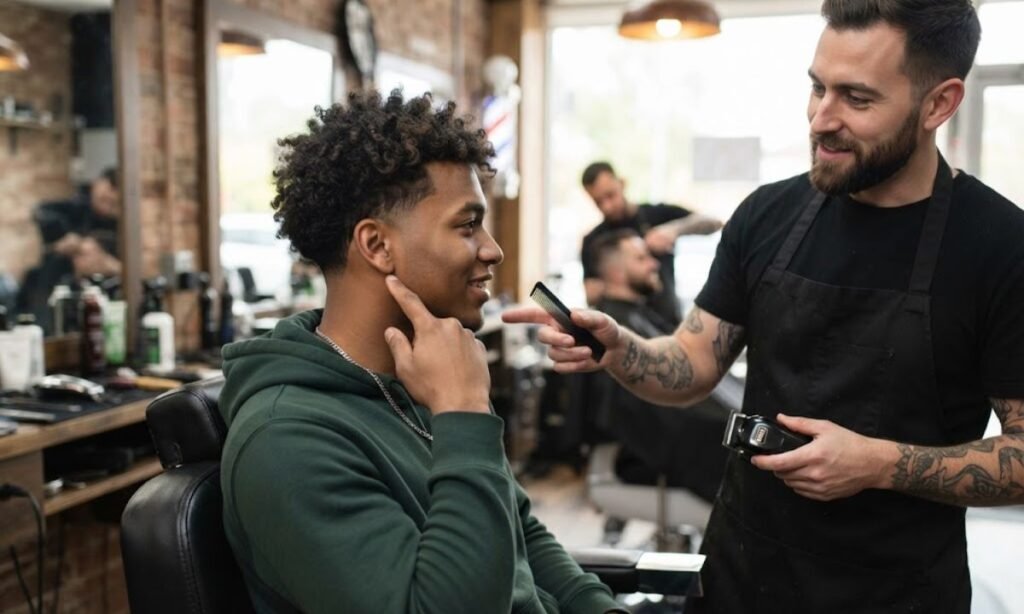
Use a simple three part barber script.
Name the taper height, describe the sides, and describe the top.
Here’s an example you can copy.
“I’d like a low taper, no skin pass, soft blend only. Keep the sides mostly full and leave the top long enough to blow-dry for volume on top.”
Then show a reference photo.
Pictures remove the guesswork, especially around the transition zone staying below the temple line.
A few extras help.
Ask the barber to take some weight out of the sides and keep the length on top.
Tell them you want the volume to go upward, not outward.
That one sentence can save you a lot of heartache.
Imagine a guy named Imran, who walked in and said “taper blowout” and nothing else.
He left with a high taper he never wanted, because the barber filled in the blanks.
Don’t be Imran.
A professional barber will thank you for clear instructions.
Guard Numbers for a Low Taper Blowout: What Do They Mean?
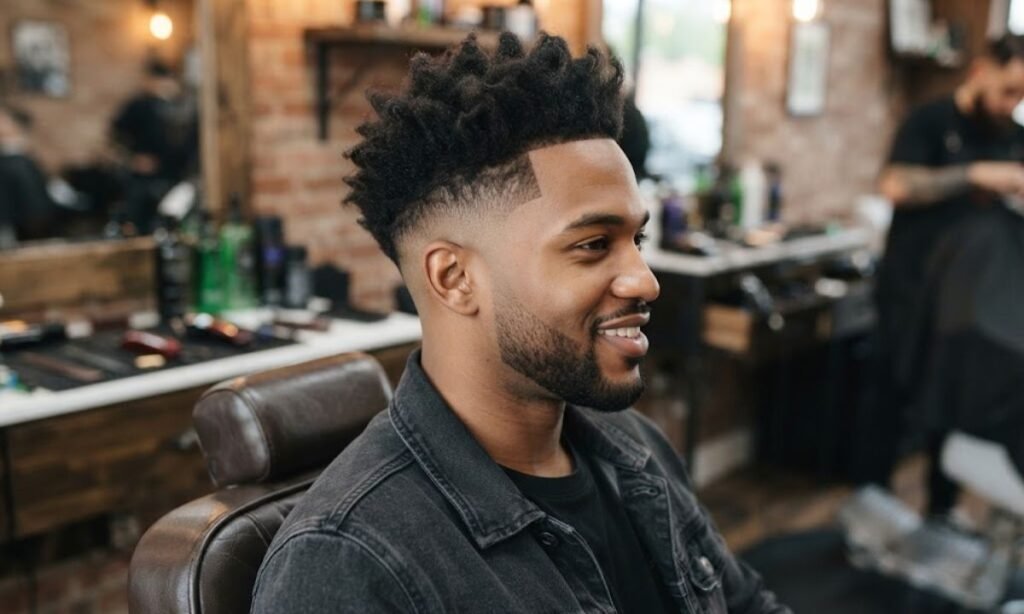
Guard numbers control how much hair the clipper leaves behind.
A #1 guard leaves about an eighth of an inch, and each number up adds roughly another eighth.
For a low taper blowout, the guard progression is gentle.
A common setup uses a #2 guard at the base, a #3 guard in the middle, and a #4 guard to blend into the sides.
The short length at the sideburn is your anchor.
A short guard there keeps things neat without a skin pass.
Here’s a simple reference.
| Zone | Typical Guard | Purpose |
|---|---|---|
| Neckline and sideburns | #1 to #2 | Standard low taper base guard |
| Mid blend | #3 | Transition guard |
| Upper edge | #4 | Soft graduation without skin exposure |
Barbers vary, so treat this as a starting point.
Your natural length and hair density might push the numbers up or down.
The best habit is to pair guard preference with low taper in your script.
Say “start at a #2 and blend up,” and you’ll avoid uneven blend lines.
How Do You Style a Low Taper Blowout at Home?
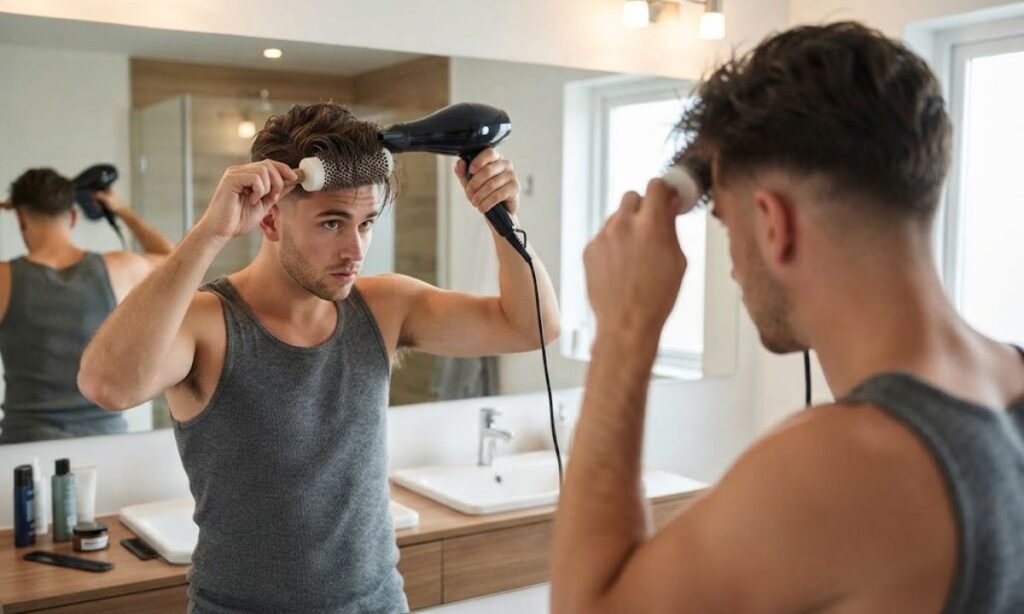
Good news first.
The DIY styling routine takes about ten minutes once you learn the steps.
Start by towel-drying until the hair is damp, not dripping.
Work in a heat protectant, because dry hair plus a hot dryer is a bad combo.
Next, section the top hair with your fingers.
Then blow-dry upward toward the crown using a round brush to build root lift.
Here’s the full routine in order.
- Towel-dry until damp.
- Apply heat protectant and a pre-styler at the roots.
- Section the top hair and dry the front first.
- Lift at the roots and pull the brush back and up.
- Style while warm, then shape with your fingers.
- Switch to cool air to lock the volume in place.
- Add a light molding paste or texture clay on dry hair.
That cool air step matters more than you’d think.
It locks the volume in place, so your shape survives the commute.
One rule saves a lot of grief.
Apply product on dry hair after styling, since heavy product before drying weighs the roots down.
Curly and coily guys can swap the brush for a diffuser.
Wavy guys can use either, depending on how much lift they want.
How Often Does a Low Taper Blowout Need a Trim?
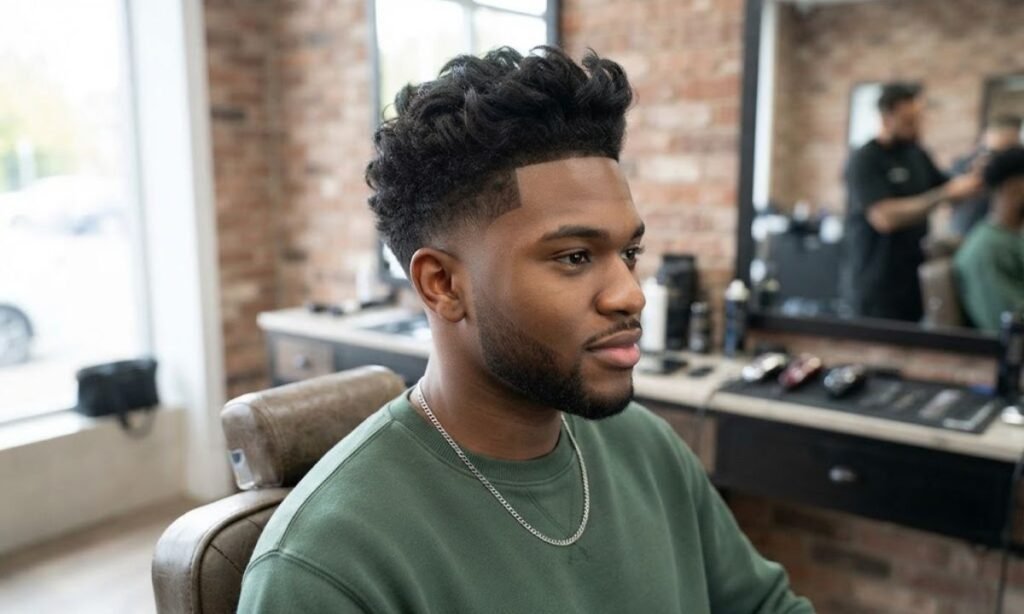
This is where the low taper earns its reputation.
Because it stays below the temple line, the growth softens the blend instead of exposing a visible growth line.
Most people do a full cut every 3 to 4 weeks.
You can stretch to five weeks if you’re happy with a bit more fuzz.
Compare that with a skin-level fade.
A hard contrast line shows fastest visible regrowth, so those cuts need a full cut every 2 to 3 weeks.
Here’s how the maintenance schedule stacks up.
| Cut | Trim Interval | Maintenance Demand |
|---|---|---|
| Low taper blowout | 3 to 4 weeks | Low to moderate |
| Mid blowout taper | 3 weeks | Moderate |
| High blowout taper | 2 to 3 weeks | Highest maintenance demand |
If you’re stretching things out, book a quick neckline cleanup at the two-week mark.
It costs less than a full appointment and keeps the back tidy.
Guys on a once-a-month barber schedule do fine with the low version.
It’s the most forgiving maintenance schedule in the whole family.
Low Taper Blowout Variations: Which Style Fits You?
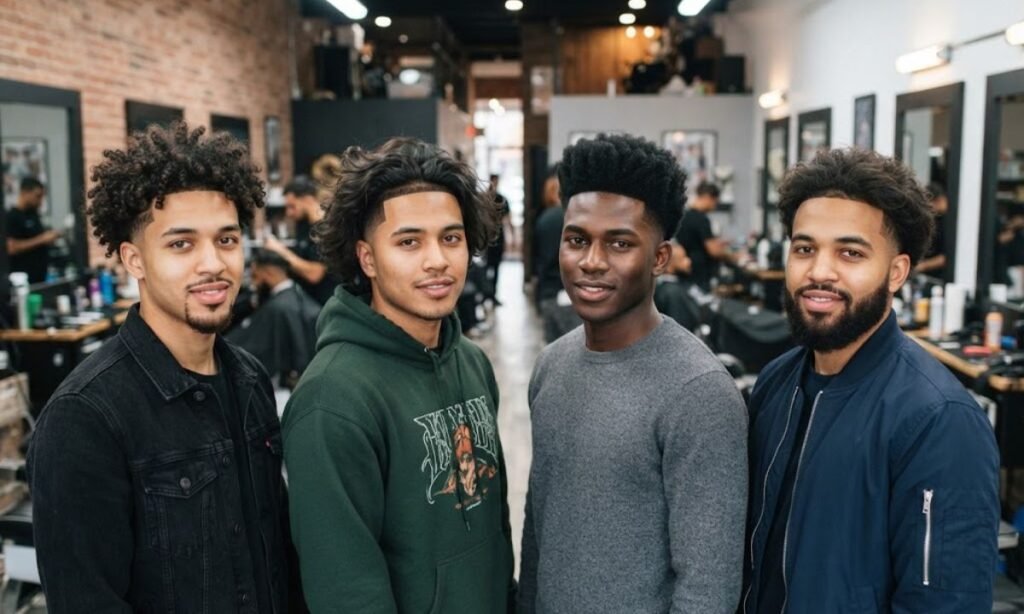
The low taper shape stays the same, but the top can change a lot.
That’s the fun part, because you can swap the vibe without touching the sides.
The five most common haircut variations are the textured fringe, the Edgar fringe, the grown-out top, the curly afro, and the perm.
Each one suits a different aesthetic preference.
If you want an easy decision rule, use this one.
Choose by your hair texture first, your face shape second, and your dress code third.
Below, each style gets its own breakdown.
Read the one that sounds like you, then show your barber a photo.
Textured Fringe Low Taper Blowout
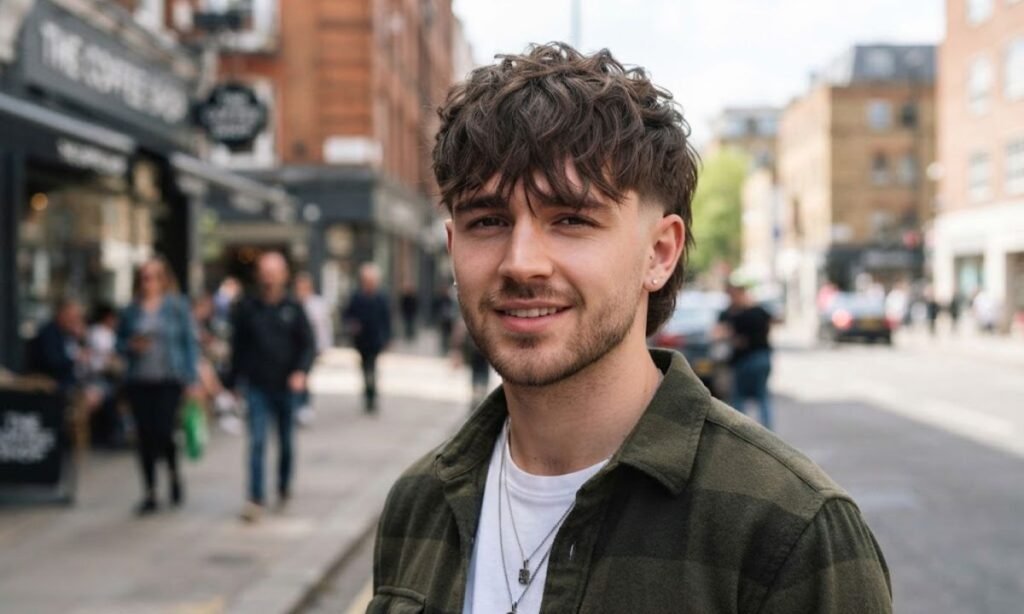
The textured fringe low taper blowout is the crowd favorite.
The fringe falls forward in a soft rounded fringe that sits just above the brow.
Your barber will remove internal bulk so the hair moves instead of clumping.
They’ll also work with your natural hairline, since a forward-falling hairline gives the fringe a head start.
Style it with texturizing spray and a lightweight wax.
Dry the roots up, then push the front forward with your fingers.
It’s a great pick for round faces because the crown height lengthens the look.
It also reads casual, which suits casual aesthetic days.
Worried it looks messy?
A natural part and a bit of molding paste keep it intentional.
Edgar / Blunt Fringe Low Taper Blowout
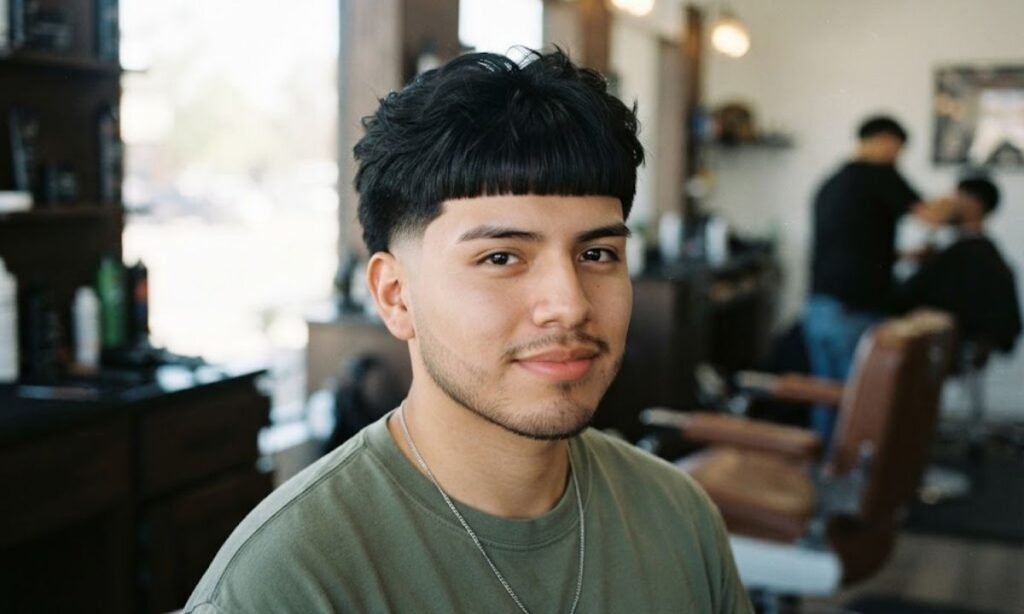
The Edgar cut is the bold cousin.
The blunt fringe has a hard horizontal cut line that creates a flat geometric edge.
The fringe usually sits at eyebrow level.
That makes it visually assertive, so people notice it right away.
It works best on a strong jaw structure.
On softer faces, the blunt line can feel heavy.
A small note on the blow-dry.
This version is usually blow-dried perfectly flat across the front, with lift only at the crown.
Barber skill matters a lot here.
A wobbly cut line is very obvious, so pick someone with proven barber experience.
Grown-Out / Longer Top Low Taper Blowout
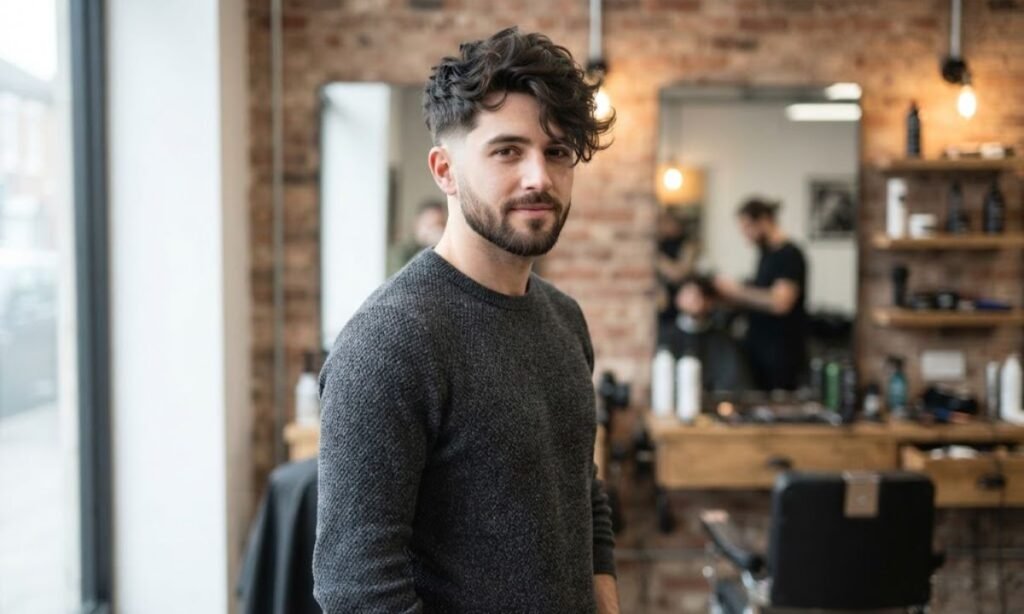
If you’ve been skipping haircuts, this one rewards you.
The grown-out version keeps a longer, more relaxed aesthetic that looks effortless.
The standard 3 to 6 inch range gives you more volume potential.
It also brings more weight, which can pull the blowout shape downward if the hair is fine.
Use a stronger pre-styler and finish with cool air.
A round brush helps you keep the lift between haircuts.
This cut pairs well with wavy hair and curly hair.
Straight hair works too, but you’ll need a little more product to hold the shape.
Picture a guy who works from home and sees clients on video.
The longer top gives him personality, and the low taper keeps the sides tidy on camera.
Curly Afro Low Taper Blowout

The curly afro version keeps the full circumference of the top.
The look is structured and unrestrained at the same time.
The taper stays tight below the ear.
That frames the curl mass without cutting into it.
Skip the harsh taper that eats into the sides.
A good barber builds a smooth afro shape that looks balanced from every angle.
To style it, use a leave-in cream and a curl sponge.
A blow-dry with a pick attachment gives extra height if you want it.
This is also a strong match for guys searching low taper fade curly hairstyles.
You get the curls plus a clean, conservative frame.
Perm Low Taper Blowout
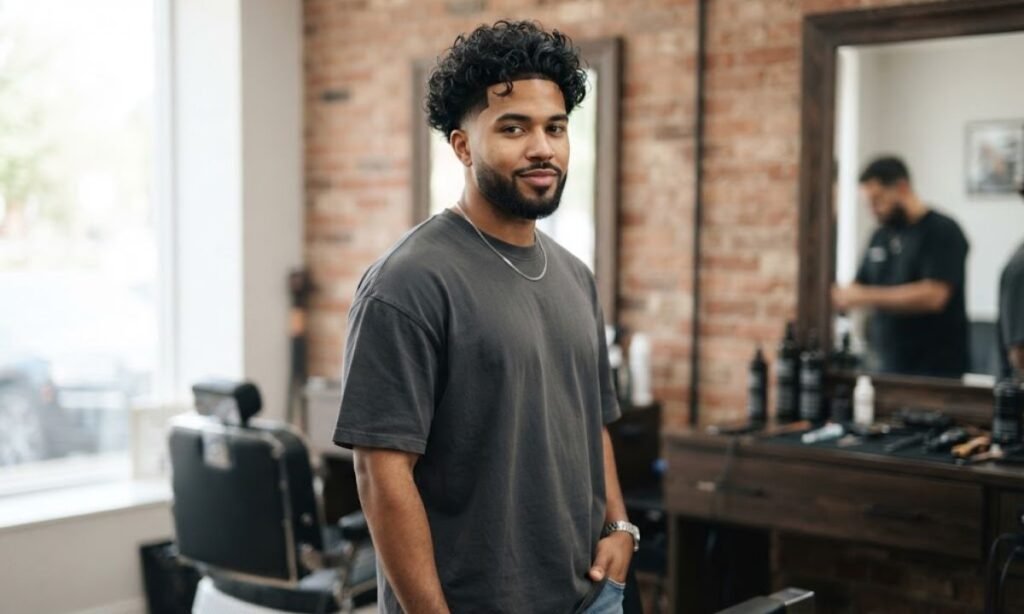
The perm low taper blowout is a growing trend.
A chemical wave treatment adds texture to straight or loosely wavy hair.
That means an induced curl pattern instead of a natural curl pattern.
The taper then gives it a clean boundary at the sides.
You’ll need a minimum 3 inches on top for the perm to take well.
The blow-dry afterward builds a blow-dried volume shape and helps the curls hold lift.
Talk to a stylist about hair health first.
A perm adds chemical stress, so fine hair or already damaged hair needs extra care.
Expect to book the perm and the cut as separate steps.
Many shops ask you to do the perm first, then taper afterward.
What You Need Before Getting a Low Taper Blowout
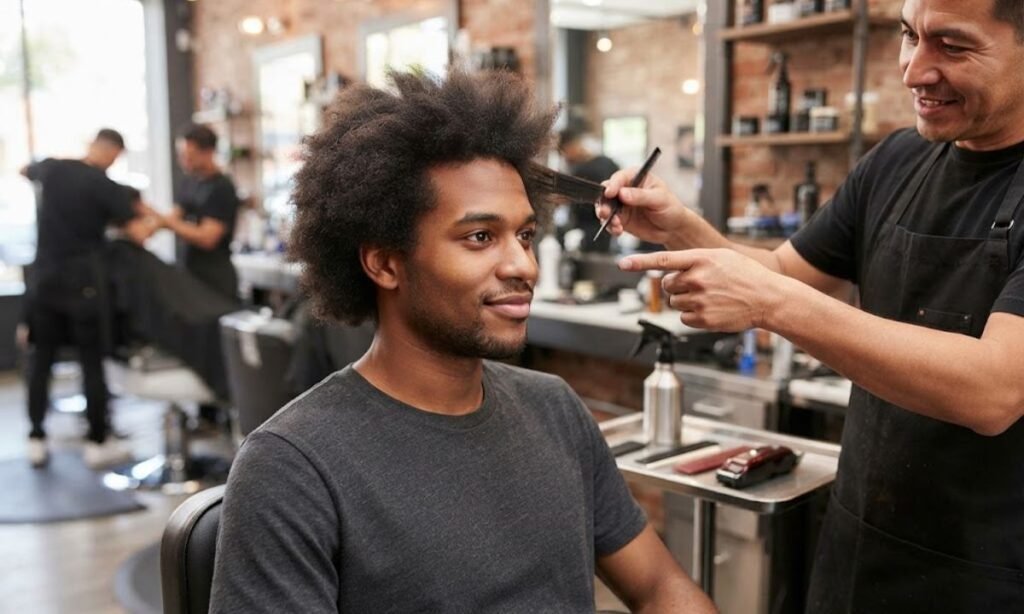
A little prep saves a lot of regret.
Check the basics before you book.
- At least 3 inches of length on top to sustain lift.
- A round brush, a dryer, and a heat protectant.
- A light molding paste or texture clay for finishing.
- A reference photo in your phone camera roll.
- About 6 to 8 weeks of top growth if you’re starting short.
Book the right barber too.
In US barbershops, prices and skill vary, so look at recent client photos before you commit.
Mention the blow-dry and styling step when you book.
Some shops charge extra, and some skip it unless you ask.
Ask about beard service if you want it matched.
A clipper taper on the beard should blend with the taper on your head.
Does a Low Taper Blowout Work for Fine or Thinning Hair?
Yes, with a few tweaks.
If you have fine or thinning hair, the low version beats high contrast fades in most cases.
Here’s why.
A soft blend leaves enough hair on the sides so your scalp is not visible, which gives a visual impression of density.
The blowout adds perceived fullness on top.
That’s the density illusion barbers rely on for sparse hair.
If you have receding hairlines, keep the recession zone in mind.
Ask your barber to respect the natural boundary and avoid cutting into the sparse zone.
A zero guard near the temple will only highlight the gap.
Stick with graduated guards and a softer finish.
Best Products for a Low Taper Blowout
You don’t need a full bathroom shelf.
A few well-chosen items will do the job.
- Heat protectant: shields strands from the dryer.
- Pre-styler: builds lift at the roots.
- Texturizing spray: adds grip for straight hair.
- Light molding paste: gives a flexible hold.
- Texture clay: adds a matte, structural definition.
- Curl cream and leave-in cream: handle curl definition and frizz.
- Satin bonnet or pillowcase: protects the shape overnight.
Start with two or three products and add more only if you need to.
Too much product is the quickest way to flatten a good shape.
If you’re not sure what to buy, ask your barber what they used on you.
They know your hair density and your curl pattern better than any label does.
Common Mistakes to Avoid
Most bad results come from small errors.
Here are the usual suspects.
- Asking for “a taper” without naming the taper height.
- Skipping the reference photo.
- Cutting the top too short to blow-dry for lift.
- Using high heat on fine hair or curly hair.
- Applying heavy product before drying.
- Waiting six weeks between cuts and blaming the barber.
The fix for most of these is simple.
Communicate clearly and keep a maintenance plan you can actually stick with.
One more thing.
If the result looks off, speak up in the chair, since fixing a blend is easier before you leave.
Mid Blowout Taper and High Blowout Taper: When to Go Higher
Some guys try the low version and want more edge.
That’s where the mid blowout taper and high blowout taper come in.
The mid taper starts around the temple.
It gives a bit more contrast while still looking neat in most formal settings.
The high taper sits above the temple and exposes more skin.
It has maximum visual impact, but it demands a frequent barber schedule.
If you’re curious, start low and move up over a few cuts.
That way you learn what works for your head shape and your job.
Also consider your taper geometry.
Higher tapers reveal more of the blend zone, so any uneven blend lines show up faster.
FAQs About the Low Taper Blowout
Can I get a low taper blowout on short hair?
Yes, but you need enough top length to dry upward.
With a short crop or buzz cut, a low taper fade on short hair is a better option until the top grows.
Is a low taper blowout good for office jobs?
Almost always.
The office compatibility is high because the low taper stays below the temple line and the look reads as a professional haircut.
How long does the style last during the day?
With proper cool air finishing and a light molding paste, most people get 8 to 10 hours.
Humid weather can drop that, so keep a pocket comb handy.
What if my barber says they don’t do blowouts?
Ask if they can cut the shape and let you dry it at home.
You can also book a stylist for the blow-dry styling step.
Is it right for coily hair?
Yes.
The low taper fade styles for Black men work well here when the barber respects the curl mass on top.
What Should You Do Next?
Pick one variation, save a photo, and book your appointment.
Then come back and tell us how it went.
Have a question about your hair type or a barber story that went sideways?
Drop it in the comments, because real stories help other readers more than any guide can.
If this helped, share it with a friend who keeps saying “just a trim.”
They’ll thank you the next time they sit down in the chair.
We update this guide as trends shift and new techniques show up.
Check back every few months for fresh tips.
You can also checkout this article as well Mid Blowout Taper: Definition, Variations & the Exact Barber Script to Get It Right
Key Takeaways
- A low taper blowout pairs a soft taper below the temple line with a blow-dried top full of lifted volume.
- It differs from a low taper fade because it avoids skin exposure and uses graduated guards.
- It works on straight, wavy, curly, and coily hair with the right technique.
- Use the three part barber script: name the height, describe the sides, describe the top, and show a photo.
- Plan a full cut every 3 to 4 weeks and a neckline cleanup around the two-week mark.
- Choose from the textured fringe, Edgar fringe, grown-out top, curly afro, or perm based on your hair and style.
- Keep at least 3 inches of length on top so the blowout shape has room to lift.
