


Last updated: October 2026. Written for anyone who wants more volume on top and a clean, tapered finish on the sides.
What is a blowout taper haircut, and who should get it?
A blowout taper haircut pairs short, gradually tapered sides and neckline with a longer top that you blow-dry upward and outward.
The result is voluminous hair on top, a clean tapered edge, and a haircut silhouette that looks styled even on a lazy morning.
Who should get it? Anyone with at least 3 to 4 inches of top length and a little patience for a daily blow-dry routine.
It suits straight hair, wavy hair, curly hair, and Afro hair, but each hair type needs a different version.
Still wondering if it fits you?
Maybe you worry your hair is too flat, too frizzy, or too thin to pull it off.
The sections below answer those worries one by one, so keep scrolling.
What Is a Blowout Taper? The Two-Part Haircut Explained

Think of this cut as two haircuts sharing one head.
The sides and back get a graduated taper, where the hair shortens slowly toward the hairline and tapered neckline.
The top gets hair length retention, which means your barber leaves enough length to lift, push, and shape.
That contrast between short sides with a long top is what makes the blowout hairstyle pop.
You’ll hear people call it a blowout taper fade too.
Strictly speaking, a taper and a fade aren’t identical, and we’ll sort that out in a moment.
For now, picture a soft gradual blending from the top down to a sharp outline around the ears and nape.
Blowout Taper vs. Other Cuts
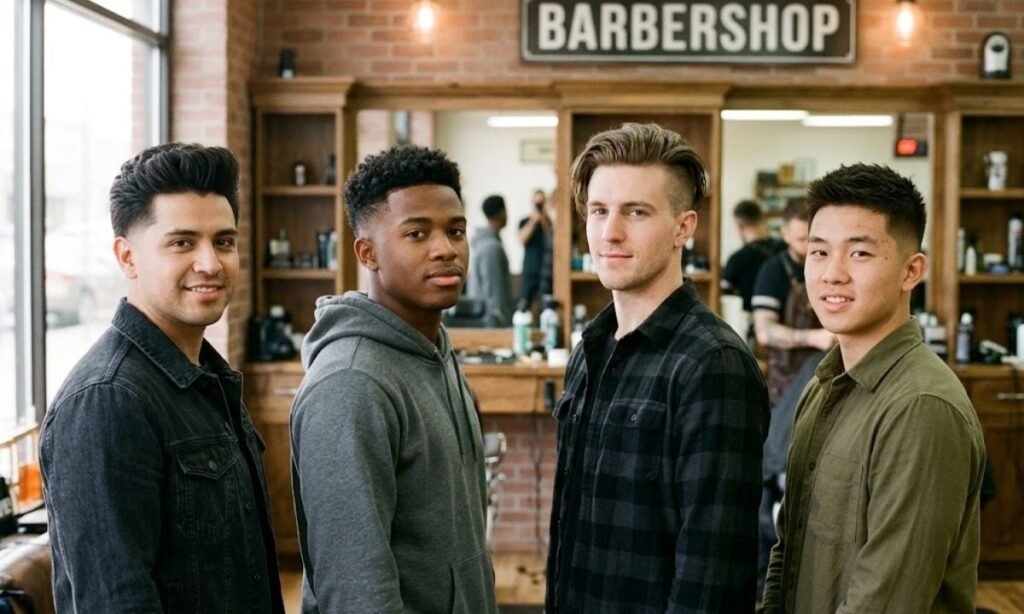
Let’s start with the question we hear most: what is the difference between a taper and a fade?
A taper shortens the hair gently and usually stops at the natural hairline, while a skin fade haircut drops all the way down to bare skin.
That difference affects skin exposure and grow-out.
A low taper fade shows a thin strip of skin, but a classic taper shows almost none, so it grows out more softly.
Here’s a quick look at how the blowout taper compares with its cousins.
Use the table to see which one matches your maintenance tolerance.
| Cut | Sides | Top | Skin exposure | Grow-out |
|---|---|---|---|---|
| Blowout taper | Gradual taper to the neckline | Long, blown upward | Low to none | Soft and forgiving |
| Low taper fade | Fades to skin near the ears | Any length | Small, visible strip | Fades fast |
| Skin fade | Drops to bare skin | Any length | High | Looks grown out within 2 weeks |
| Classic scissor cut | Scissor-over-comb | Medium | None | Very soft |
Historical Context
Blow-dried volume isn’t new.
In the 1970s and 80s, men and women alike used blow-dryers and round brushes to build top volume and side fullness.
Barbers have also tapered the nape and sideburns for generations.
The modern blowout taper blends both ideas into one modern blowout haircut.
Social media pushed it into the mainstream.
Short videos showed how a few minutes of root-lifting airflow can turn a plain cut into a trend-forward haircut.
The style keeps growing because it looks polished without needing a salon.
The 5 Main Blowout Taper Styles: Low, Mid, High, Textured Fringe & Beyond

Not every blowout taper style is built the same.
The main difference is taper height, meaning how high up the head the shortening begins.
Your barber might start the taper at the neckline, just above the ears, or near the temple area.
A fifth and sixth variation add a textured fringe or work with natural curls.
We’ll walk through each one with real situations.
Pick the one that sounds like your Monday morning, not your Instagram feed.
Low Blowout Taper: The Easiest Entry Point
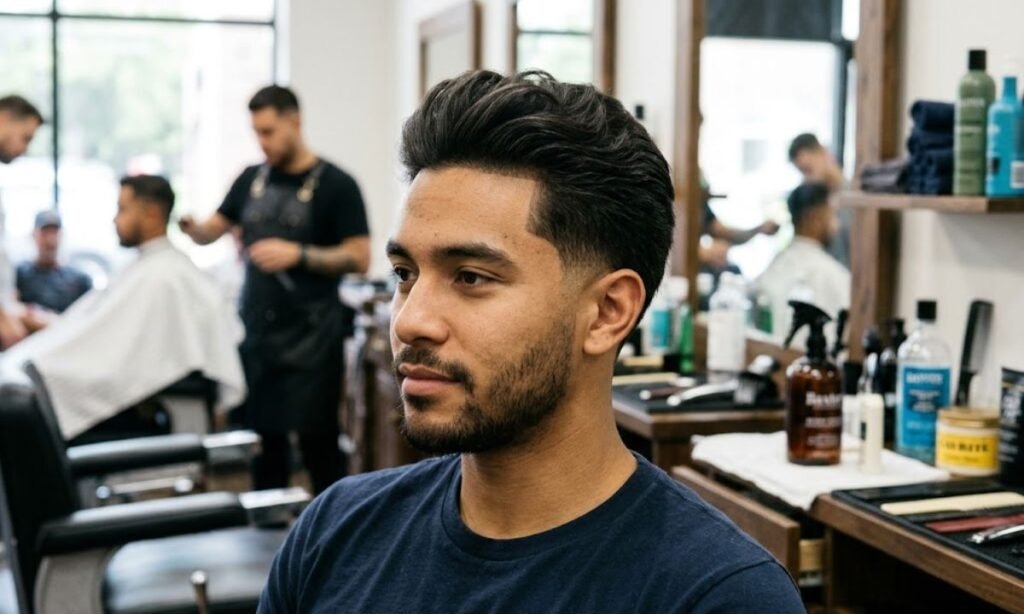
A low blowout taper starts the shortening around the sideburns and tapered neckline only.
Most of the side stays full, so it’s the gentlest way to try the look.
Picture Dan, a 28-year-old accountant who has worn the same side part for ten years.
He wants change but fears looking too edgy, so he picks a low taper and keeps side fullness.
This version suits you if you prefer a conservative workplace look.
It also grows out gracefully, which makes it a safe low-maintenance haircut to test.
Mid Blowout Taper: The Balanced Sweet Spot

The mid blowout taper begins near the middle of the sides, roughly level with the top of the ear.
It gives clear contrast without looking harsh.
This is the balanced pick for most heads.
You get visible edge definition, steady haircut proportions, and enough side width to avoid a pinched look.
Mid height works especially well if you aren’t sure where to start.
It reads as clean in an office and as stylish on a weekend.
High Blowout Taper: The Bold Statement
A high blowout taper starts close to the temple area and crown, which makes the sides very short.
The contrast with the top is dramatic.
See Priya’s brother Arjun, a 22-year-old design student who wants people to notice his hair.
He asks for a high taper because it elongates the face and shows off a tall, voluminous top.
Be honest with yourself about upkeep, though.
Higher tapers show regrowth visibility sooner, so you’ll book appointments more often.
Textured Fringe Blowout Taper: The Viral TikTok Version

This version pairs a tapered side with a choppy textured fringe that falls forward over the forehead.
Barbers use point cutting and texturizing the top to give it a piecey fringe look.
The finish feels messy on purpose.
A bit of matte paste or texture powder keeps each section separate, so the fringe looks natural instead of flat.
It looks great on straight hair and wavy hair with some hair thickness.
If your hair is very fine hair, ask your barber to keep the fringe lighter so it doesn’t clump.
Blowout Taper Perm or Curly Variant: For Natural Curl
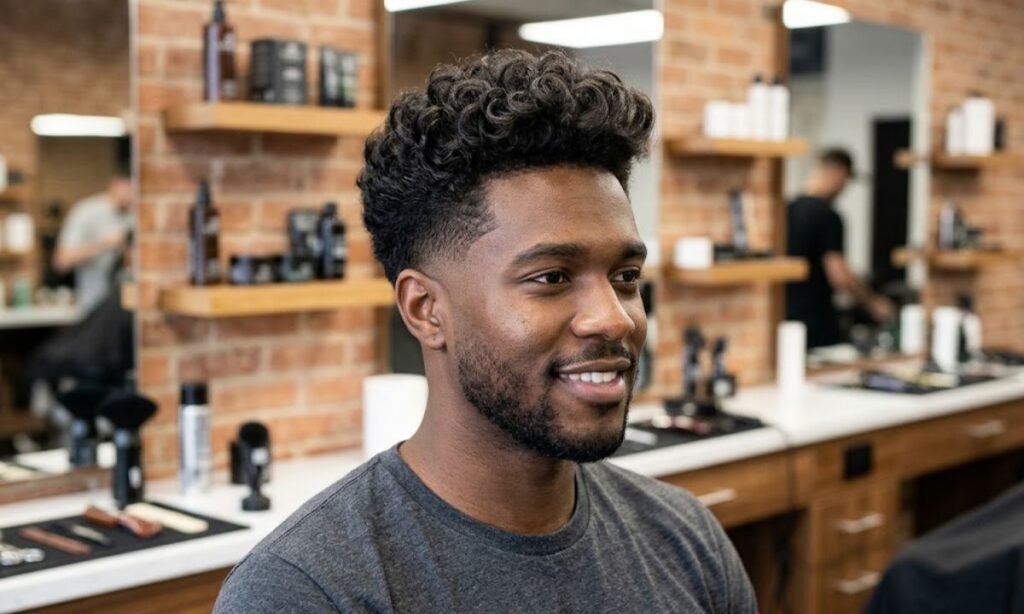
The blowout taper perm adds soft curl to hair that doesn’t curl on its own.
The curly blowout taper works with the curl you already have.
In both cases, the curly top with tapered sides creates a rounded shape.
Your natural curls give you volume distribution for free, so you won’t fight gravity.
Perms need a skilled stylist and proper aftercare.
If you want curl definition without chemicals, a curl cream and a diffuser do the job.
Variant Comparison Table
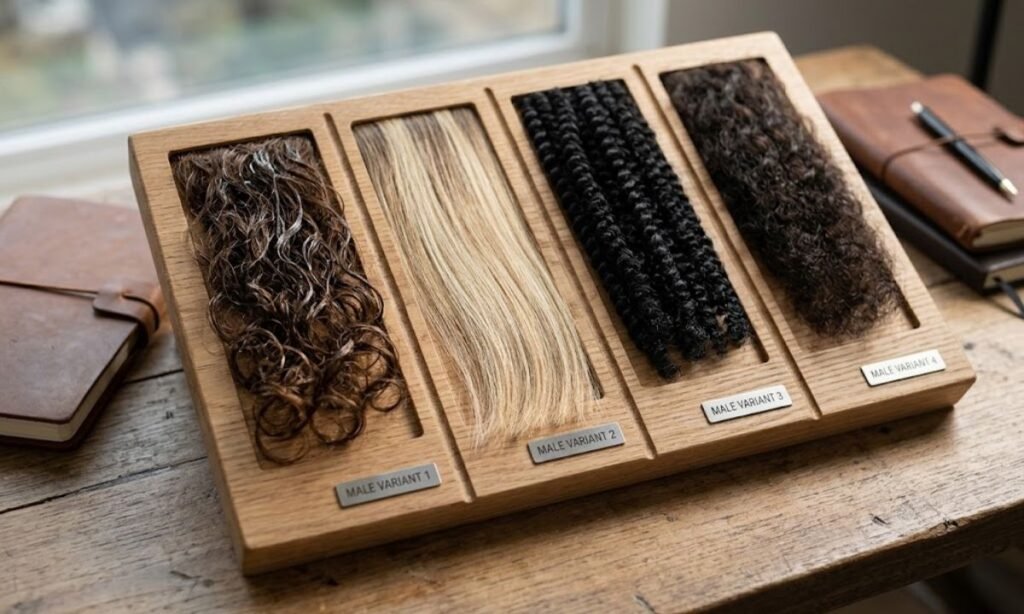
Need a fast way to compare all five?
This table sums up the taper height, vibe, and upkeep for each style.
| Variant | Taper starts | Vibe | Upkeep | Best for |
|---|---|---|---|---|
| Low blowout taper | Neckline and sideburns | Safe, professional taper haircut | Every 4 to 5 weeks | First-timers |
| Mid blowout taper | Around the ear | Balanced | Every 3 to 4 weeks | Most face shapes |
| High blowout taper | Temple and crown | Bold | Every 2 to 3 weeks | Confident styles |
| Textured fringe | Mid height | Trendy, messy fringe haircut | Every 3 to 4 weeks | Straight and wavy hair |
| Curly or perm | Low to mid | Soft, rounded | Every 3 to 4 weeks | Curly hair and coily hair |
Notice how the upkeep climbs as the taper rises.
That’s the trade-off between boldness and maintenance frequency.
Does a Blowout Taper Work for My Hair? A Guide by Hair Type

The short answer is yes, for almost everyone.
The longer answer is that your hair texture decides how much work the blowout takes.
Check your natural wave pattern, curl pattern, or coil pattern first.
Then think about hair density and hair thickness, because thick hair and fine hair behave very differently.
Here’s how each type handles the cut.
No hair type is off limits, but each one asks for different tools.
Straight Hair: This Requires the Most Styling Effort

Does a blowout taper work on straight hair?
Absolutely, but straight strands tend to fall flat, so you’ll need to build root lift every morning.
Use a blow-dryer and a round brush while your hair is damp.
A light sea salt spray adds grip, and heat protectant keeps the ends healthy.
If your hair is fine or thin, ask your barber for a low or mid taper and a textured top.
That way you fake density where it matters.
Wavy Hair: The Goldilocks Texture

Wavy hair is the easiest to style.
Your natural movement adds body, so a quick 2-minute blow-dry gives you volume without a fight.
The risk here is frizz in humid weather.
A light styling cream or leave-in conditioner smooths the surface and protects hair moisture.
Some days you can air-dry and still look sharp.
That’s the time-saving styling benefit that makes wavy hair a favorite for this cut.
Curly Hair: Maximize Natural Volume

Wondering if a blowout taper works for curly hair?
It does, and it might be the best match, because curls create top volume on their own.
The goal is preserving curl definition.
Use a diffuser attachment, scrunch with your fingers, and avoid brushing dry curls, which causes unwanted frizz.
Ask your barber to keep the tapered sides close but not razor tight.
That soft transition keeps the curl pattern looking intentional.
Afro/Coily Hair: The Confidence Cut

A blowout taper on Afro hair or coily hair is a classic.
The afro taper haircut shows off shaped natural coils on top while keeping the sides sharp.
Moisture matters most here.
A leave-in conditioner and light curl cream guard hair elasticity, while an Afro pick lifts without breaking the coil pattern.
Use edge gel and an edge brush to polish the hairline.
Do it lightly, since heavy styling product buildup weighs down the natural hair volume.
Hair-Type Styling Comparison Table
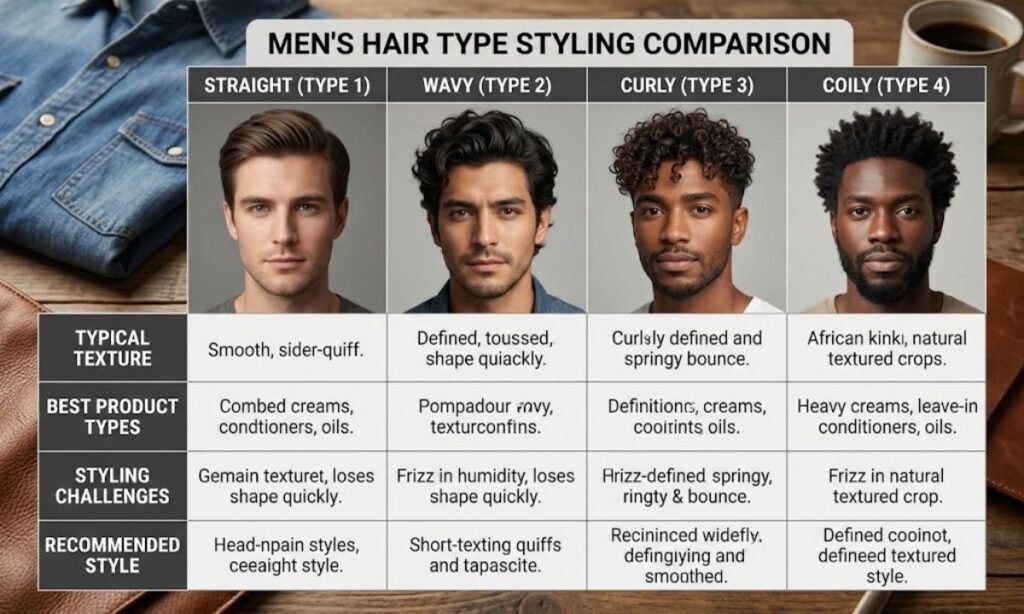
Here’s a quick cheat sheet.
Tape it to your bathroom mirror if you like.
| Hair type | Main challenge | Go-to tools | Best taper height |
|---|---|---|---|
| Straight hair | Goes flat | Blow-dryer, round brush, sea salt spray | Low or mid |
| Wavy hair | Frizz | Light styling cream, fingers | Any |
| Curly hair | Undefined curls | Diffuser, curl cream | Low or mid |
| Afro/coily hair | Dryness | Afro pick, leave-in conditioner, hair mousse | Any |
Notice how every type relies on moisture or root lift.
That’s the pattern to remember.
Which Taper Height Works Best for Your Face Shape? A Decision Framework
Your face shape sets the rules for taper height.
The goal is facial balance, which means the hair should add what your facial structure lacks.
Short sides draw the eye up.
Full sides add horizontal width, so you choose based on whether you want more vertical dimension or more side width.
Find your shape below.
If you’re between two, trust the one that matches your jawline and forehead best.
Round Faces: Go Mid or High to Add Vertical Length
A round face is about as wide as it is tall.
So you’ll want face elongation, which a mid or high blowout taper delivers.
Keep the top height generous.
Tall volume plus short sides stretches the overall silhouette and sharpens temple definition.
Avoid heavy side fullness.
It adds width and makes the round face look rounder.
Square Faces: Low or Mid Taper with Soft Texture
A square face has a strong jawline and angular facial features.
A low or mid taper respects that strength without exaggerating it.
Softness helps here.
A textured top or choppy fringe counters the hard lines of the jawline, so the look feels balanced.
Skip very high tapers.
They can make the head look boxy, which is exactly what you want to avoid.
Oval Faces: Any Height Works; Pick by Maintenance
Oval faces have the most freedom.
Facial proportions already sit in balance, so face-shape compatibility isn’t an issue.
So choose by lifestyle instead.
If you hate frequent visits, go low, and if you love a sharp outline, go high.
This is the one shape where you can experiment.
Try low for a month, then mid, and see what you enjoy.
Long Faces: Stay Low or Mid; Keep Some Width
A long face already has plenty of vertical length.
So skip very high tapers and big upward volume, which only stretch it further.
Keep side fullness and aim for forward or outward styling.
A textured fringe works nicely because it shortens the forehead visually.
Stay low or mid.
That keeps jawline balance and adds horizontal width where you need it.
What to Tell Your Barber: 5 Blowout Taper Scripts by Height & Hair Type
Most bad haircuts start with a vague sentence.
“Just clean it up” means ten different things to ten different barbers.
A clear barber script fixes that.
It takes thirty seconds and saves you six weeks of regret.
You don’t need barber slang.
You need to describe the desired taper height, the top-length instructions, and the finish you want.
Essential Communication Elements
Every good haircut consultation covers four things.
Tell your barber where the taper starts, how much hair length stays on top, how the sides should blend, and how you plan to style it.
Here’s a simple checklist to keep in your head:
- Specifying the taper starting point: low, mid, or high, ideally pointing to your ear or temple
- Top length: “about 3 to 4 inches” works better than “a bit off the top”
- Blend: ask for smooth blending and avoiding a harsh shelf
- Finish: a natural fringe, choppy fringe, or clean neckline
Also mention your hair type and daily habits.
A barber who knows you use a blow-dryer every morning will cut differently than one who thinks you air-dry.
Barber Scripts by Variant
Copy these and adjust them to your taste.
They’re short on purpose, because short scripts get followed.
- Low blowout taper: “Keep the sides full. Start the taper at my sideburns and neckline only. Leave about 4 inches on top so I can blow-dry it up.”
- Mid blowout taper: “Start the taper around the top of my ear. Blend smoothly into the top and keep about 3 to 4 inches of length.”
- High blowout taper: “Take the taper up near my temples, but blend it. I want contrast, not a hard line. Leave at least 4 inches on top.”
- Textured fringe blowout taper: “Mid taper, point cut the top, and leave a choppy fringe that sits just above my eyebrows.”
- Curly blowout taper: “Keep my curls long on top. Taper the sides without making the curl pattern look cut off. Use scissor-over-comb if you can.”
Notice how each script names a height, a top length, and a finish.
That’s the formula, so reuse it every visit.
Reference Photo Guidance
Photos beat words every time.
Bring a front-view reference, a side-profile reference, and a back-view reference if you can find one.
Pick pictures of people with a similar hair texture and hair density.
A photo of a thick, curly top won’t help if you have fine, straight hair.
Be upfront about what you like in each photo.
Point at the fringe, the taper height, or the neckline so your barber knows what to copy.
Optional Clipper Guard Reference
Some people ask, “What clipper guards are used for a blowout taper?”
There’s no fixed answer, because every barber blends differently.
Still, a rough guide helps you follow the conversation.
Guard numbers show the length left in eighths of an inch, so a #1 leaves about 1/8 inch and a #4 leaves about 1/2 inch.
| Taper height | Typical guard range (varies by barber) |
|---|---|
| Low taper | #3 or #4 fading to #1 at the neckline |
| Mid taper | #4 fading to #1 or #0.5 around the ear |
| High taper | #3 fading to #0.5 or skin near the temple |
Treat this as a conversation starter, not a rule.
A good barber also uses barber scissors and scissor-over-comb for the top of the sides, where guards leave lines.
What NOT to Say
Skip phrases that sound clear but aren’t.
Here are the usual offenders:
- “Just a trim.” It could mean an inch or four.
- “Same as last time.” Your barber may not remember.
- “Make it short on the sides.” That’s how people end up with a boxy finish.
- “Do whatever you think.” Great, until it isn’t.
Instead, describe the look and the problem you want to avoid.
Something like “I want volume on top and a soft transition on the sides” gives your barber a goal.
How to Style a Blowout Taper at Home: Step-by-Step Blow-Dry Guide
How do you style a blowout taper at home without looking like you tried too hard?
Follow the basics below and match them to your hair type.
The cut does half the work, but the daily blow-dry does the rest.
Treat it like brushing your teeth, quick and routine.
You’ll need a blow-dryer with a cool-air setting, a round brush or fingers for styling, and one or two light products.
That’s it.
General Blow-Dry Principles (All Hair Types)
Start with towel-dried hair, not dripping wet.
A microfiber towel absorbs water without roughing up the cuticle, which helps limit frizz.
Apply heat protectant while hair is still damp.
Then dry the roots first, because lifting hair at the roots creates the volume you want.
Finish with cool air.
It sets the shape, so the blowout lasts longer.
Straight Hair: 5-Step Blow-Dry for Maximum Lift
Straight strands fall quickly, so they need a clear routine.
Try these five steps:
- Towel-dry, then work in a little sea salt spray or hair mousse at the roots.
- Dry the front section by blow-drying upward with a round brush.
- Move to the crown and dry that section outward from the scalp.
- Compress the sides with your hand while drying so they stay flat and tight.
- Hit everything with cool air, then add a pinch of matte paste or texture powder.
Take your time on step two.
That front section carries the top height and defines the whole blowout hairstyle.
Wavy Hair: 2-Minute Blow-Dry (or Skip It)
Wavy hair only needs a quick pass.
Rough-dry with your fingers, aim the airflow at the roots, and shape the front upward.
In a hurry?
Air-drying with a light styling cream also works, since your natural wave pattern forms the shape for you.
If waves turn into puffiness, use a small dab of light-hold gel.
It keeps the natural movement without making hair stiff.
Curly Hair: Diffuser Technique to Preserve Definition
Curls hate rough handling.
So put a diffuser attachment on your blow-dryer and keep the heat low.
Work in curl cream or leave-in conditioner on damp hair.
Then cup sections of curls in the diffuser and hold, without moving the dryer around.
When curls are mostly dry, stop.
Dry curls with a wide-toothed comb or fingers, and avoid touching them while they set to prevent undefined curls.
Afro/Coily Hair: Pick & Mousse Method
For coily hair, start with moisture.
Apply a leave-in conditioner, then a light hair mousse or curl cream for hold.
Use an Afro pick to lift the crown area and top.
Go from the roots outward, gently, so you protect your coil pattern and hair elasticity.
After that, tidy the hairline with edge gel and an edge brush.
Keep the amount small, since too much gel looks crusty by noon.
Styling Troubleshooting Reference
Something went wrong?
Use this table to find the quick fix.
| Problem | Likely cause | Fix |
|---|---|---|
| Hair collapsing by noon | Heavy product or no cool-air finish | Switch to lightweight pomade or texture powder and finish cold |
| Flat hair at the roots | Not enough root-lifting airflow | Dry roots first, blow-drying upward |
| Excessive puffiness | Over-brushing or humidity | Use a light-hold gel and skip the brush |
| Unwanted frizz | Rough towel or dry hair | Use a microfiber towel and leave-in conditioner |
| Undefined curls | Touching curls while drying | Diffuse, then wait for them to set |
| Heat damage | High heat, no protection | Lower the heat and use heat protectant |
One fix usually solves two problems.
That’s why a short, consistent routine beats a long, complicated one.
Best Products for a Blowout Taper (and What to Skip)
Which products work best for a blowout taper?
The answer depends on your hair texture, but lighter is almost always better.
Start with these basics:
- Straight and fine hair: sea salt spray, texture powder, matte paste
- Wavy hair: light styling cream, leave-in conditioner, light-hold gel
- Curly hair: curl cream, diffuser, leave-in conditioner
- Afro and coily hair: hair mousse, edge gel, Afro pick, rich leave-in conditioner
Watch out for heavy styling products and excessive product application.
They cause styling product buildup, which weighs hair down and ruins the lift.
Wash with a clarifying shampoo once every couple of weeks if buildup shows.
Your hair will feel lighter and respond better to your blow-dry.
How Long Does a Blowout Taper Stay Fresh? The 4-Week Timeline
So, how long does a blowout taper last?
Most people see it stay sharp for about two to three weeks and need a full haircut refresh around week four.
Hair grows roughly half an inch a month on average, though it varies.
Because a taper depends on short, precise lengths, even small regrowth shows quickly.
Here’s what the four-week haircut cycle usually looks like.
Your own hair growth rate might speed it up or slow it down.
Day 1–3: Fresh & Sharp
The first few days give you the cleanest lines.
Your tapered neckline, sideburns, and edge definition all look crisp.
Style may need a small adjustment, though.
Some hair settles after a cut, so you might tweak your blow-dry to get the shape right.
Enjoy this stage.
Take a few photos, because they make perfect reference photos for next time.
Week 1: Still Sharp
By the end of week one, the cut looks great and feels familiar.
You’ve learned how your hair responds to the blowout, and the routine feels easier.
The gradual blending around the ears still looks smooth.
There’s barely any regrowth visibility yet.
If you want to keep it that way, wash and style gently.
Stay consistent with products so you don’t confuse your hair.
Week 2: Edges Start Softening
Around week two, the edges begin to soften.
The neckline loses its sharp outline, and the sideburns thicken.
This is the stage when high tapers need a two-week touch-up.
A quick edge cleanup brings back the crisp look.
Low tapers can wait longer.
Their natural regrowth pattern hides the change better.
Week 3: Visible Softening
By week three, regrowth shows around the ears and nape.
The soft transition you wanted starts looking blurry.
Your top volume may also feel heavier.
Extra length changes how the hair lifts, so you might need more product or a longer blow-dry.
This is a good time for neckline maintenance.
A three-week maintenance visit keeps everything balanced without a full cut.
Week 4: Blend-Out / Time for Full Refresh
Week four is when the taper fully blends out.
The short sides with long top contrast fades, and the haircut silhouette loses shape.
Book a full haircut refresh now.
Your barber can reset the taper height, trim the top, and clean the neckline.
Waiting longer often costs you more.
It’s harder to fix a grown-out cut than to maintain one.
Touch-Up vs Full Cut: Quick Reference
Not sure which one you need?
This table makes the decision simple.
| Situation | What to book |
|---|---|
| Sides and neckline look fuzzy, top still fine | Taper touch-up or edge cleanup |
| Top feels heavy and shape is lost | Full haircut refresh |
| You have an event in a few days | Quick neckline cleanup |
| You switched taper height | Full cut |
Many barbers charge less for touch-ups.
Ask about it when you book.
Regional & Personal Factors
Where you live and how you live both matter.
Humid climates make frizz and puffiness show faster, while dry climates strip hair moisture.
Personal factors count too.
Fast hair growth rate, thick hair, and a high taper all shorten the time between cuts.
In a hot city, you might also sweat out your style.
A cool-air setting and a lightweight pomade help the look survive the day.
Common Maintenance Mistakes
A few habits shorten the life of your cut.
Avoid them and you’ll stay fresh longer.
- Waiting until the cut looks “bad” before booking
- Trimming the neckline yourself with a razor or cheap trimmer
- Using heavy styling products daily with no clarifying wash
- Skipping leave-in conditioner and letting moisture loss ruin the shape
- Not asking for a maintenance schedule at the chair
One smart move beats all of them.
Book your next appointment before you leave the shop.
Putting It All Together: Choose Your Blowout Taper by Hair Type AND Face Shape
By now you know hair type shapes the styling and face shape shapes the height.
The trick is combining both so the haircut works on your head, not just in photos.
Think of it like ordering a coffee.
The base is your hair type, and the taper height is the size.
Use the matrix below as your shortcut.
It blends face-shape compatibility with styling effort.
Master Decision Matrix
| Face shape | Straight hair | Wavy hair | Curly hair | Afro/coily hair |
|---|---|---|---|---|
| Round face | Mid or high, blow-dried up | Mid, lots of top height | Mid, curly top | Mid or high with an Afro pick lift |
| Square face | Low or mid with textured top | Low or mid, soft fringe | Low with soft curls | Low or mid, rounded top |
| Oval face | Any, pick by upkeep | Any | Any | Any |
| Long face | Low, keep side width | Low or mid, forward fringe | Low, fuller sides | Low, rounded silhouette |
If your cell says “any,” don’t relax too soon.
Still think about maintenance frequency and work dress codes.
Example Personas: Decision Stories
Let’s look at three people.
These are example personas, not real clients, but they show how the decision plays out.
- Sam, 31, round face, straight fine hair. He chooses a mid blowout taper with a textured top. A sea salt spray gives him root lift, and the taper lengthens his face.
- Marcus, 26, square face, coily hair. He goes for a low taper and a rounded afro taper haircut. The soft top balances his strong jawline.
- Leo, 19, oval face, wavy hair. He picks a high blowout taper because he doesn’t mind frequent visits. His natural wave pattern does most of the styling.
See how each decision follows a logic?
Hair type, face shape, and lifestyle all push the choice in one direction.
Your 5-Step Decision Process
Follow these steps and you’ll never wonder again:
- Identify your hair type and hair density.
- Find your face shape and your facial proportions.
- Choose a taper height that adds what’s missing.
- Check your maintenance tolerance and work needs.
- Write your barber script and bring reference photos.
Do this once and save the notes on your phone.
Next time, you can walk in with confidence.
Is a Blowout Taper OK for Work? A Quick Guide by Variant & Industry
Can you wear a blowout taper to work?
In most places, yes, as long as you pick the right taper height and keep the styling tidy.
Offices care about professional appearance more than the exact cut.
A clean neckline, controlled volume, and neat sideburns go a long way.
Here’s how each variant holds up.
Look at your own workplace dress expectations before you decide.
Acceptability by Variant & Setting
| Variant | Conservative workplace | Creative workplace | School hairstyle | Casual hairstyle |
|---|---|---|---|---|
| Low blowout taper | Usually fine | Fine | Fine | Fine |
| Mid blowout taper | Usually fine | Fine | Usually fine | Fine |
| High blowout taper | Check first | Fine | Check the dress code | Fine |
| Textured fringe | Check first | Fine | Check the dress code | Fine |
| Curly or perm | Fine when tidy | Fine | Fine | Fine |
Rules vary by company and school.
When in doubt, ask HR or check the handbook.
Variant Assessments
The low blowout taper is the safest.
It looks like a polished professional taper haircut and rarely raises eyebrows.
The mid taper reads as modern but controlled.
The high taper and textured fringe lean bold, so keep the product light and the neckline crisp.
Curly and coily styles get unfair scrutiny in some workplaces.
If you face that, remember that a neat afro taper haircut or curly top with tapered sides is a standard, well-groomed look.
Industry-Specific Guidance
Different industries carry different expectations.
Use this as a general guide, not a promise.
- Finance, law, and corporate offices: go low or mid, keep the fringe off the eyebrows, and use a matte paste.
- Tech, design, and media: most variants work, so choose by personal style and maintenance tolerance.
- Healthcare and food service: keep hair neat and away from the face, and follow hygiene rules.
- Schools and universities: check the dress code, since some set limits on taper height.
- Retail and hospitality: a clean mid taper works well and looks fresh and polished.
One rule applies everywhere.
Good grooming matters more than the name of the cut.
5 Blowout Taper Mistakes (And How to Avoid Them)
What are the most common blowout taper mistakes?
Most come down to planning, not skill.
Avoid these five and your cut will look better and last longer.
Each one has a simple fix.
Read them now, before your next appointment.
Your future self will thank you.
Mistake 1: Not Enough Length on Top to Begin With
How much hair should be left on top?
Aim for at least 3 to 4 inches, because shorter hair can’t hold a blowout.
If your top is too short, you’ll get flat hair and poor root lift.
The taper won’t look intentional either, since there’s no contrast.
Fix it by growing your hair out first.
Ask your barber to do a gentle trim while you build hair length retention.
Mistake 2: Taper Taken Too High Without Intent
A taper cut too high is the most common regret.
The sides look bare, the harsh transition line shows, and growing it back takes weeks.
Tell your barber exactly where to stop.
Point to your ear or temple, and say “avoid a harsh shelf.”
If you’re unsure, go low first.
You can always ask for higher next time, but you can’t add hair back.
Mistake 3: Wrong Product for Your Hair Type
Heavy wax on fine hair flattens it by lunch.
Light foam on coily hair won’t give enough hold or moisture.
Match the product to your hair texture.
Straight and fine hair likes texture powder, curls like curl cream, and coils like leave-in conditioner with hair mousse.
Also watch the amount.
A pea-sized dab beats a palm-sized scoop, because excessive product application kills volume.
Mistake 4: Skipping Daily Blow-Dry and Expecting the Cut to Carry Itself
A blowout taper isn’t a wash-and-go cut for most people.
Without a few minutes of blow-drying, the top falls flat and the shape disappears.
Set aside five minutes each morning.
If your hair is wavy or curly, you can often shorten that to two.
No time at all?
Choose a low-key version, like a low blowout taper with natural movement.
Mistake 5: Not Scheduling Maintenance Ahead
Most people wait until the cut looks bad.
By then, the taper has already grown out and the haircut silhouette is gone.
Book your next visit while you’re still in the chair.
A four-week haircut cycle works for most, with a two-week touch-up for high tapers.
Add the dates to your calendar.
Set a reminder one week before, so you can adjust it if plans change.
Blowout Taper for Teens and Students
Is a blowout taper a good school hairstyle?
It can be, but check the dress code first.
Teens often love the textured fringe and mid taper looks.
They’re easy to style, and everyday wearability is high.
Parents might worry about maintenance frequency and cost.
A low taper with a simple routine keeps both under control.
What to Expect in the Barber Chair: Time, Cost, and Etiquette
A blowout taper usually takes about 30 to 45 minutes.
The time depends on your hair density, the taper height, and your barber’s pace.
Prices vary by city and shop.
Call ahead and ask if the quote includes a neckline cleanup and a wash.
A few etiquette tips help.
Arrive on time, bring reference photos, and speak up politely if something feels off during the cut.
You can also checkout this article as well High Taper Fade for Curly Hair: 25 Styles, Face-Shape Guide, and Barber Tips
Frequently Asked Questions
Q1: What’s the difference between a blowout taper and a low taper fade?
A blowout taper focuses on long, blow-dried hair on top and a gradual taper on the sides.
A low taper fade focuses on the fade itself and works with any top length.
The fade often shows a small strip of skin, while the taper usually doesn’t.
So a blowout taper looks softer and fuller.
Q2: Does a blowout taper work on straight hair?
Yes, it does.
You just need to build root lift with a blow-dryer, a round brush, and a texture powder or sea salt spray.
If your straight hair is fine or thin, ask for a mid taper and a textured top.
That adds visual density where you need it.
Q3: How often do I need to trim a blowout taper?
Plan on every three to four weeks for most variants.
High tapers often need a two-week touch-up to keep the edges sharp.
Low tapers can stretch to five weeks.
Your hair growth rate has the final say.
Q4: How do I ask my barber for a blowout taper?
Name the taper height, say how much top length you want, and ask for smooth blending.
Show reference photos from the front, side, and back.
Mention your hair type and how you plan to style it.
That helps your barber decide between scissor-over-comb and clipper guards.
Q5: Can I get a blowout taper if I have curly hair?
Yes.
A curly blowout taper puts your natural curl pattern to work, and a diffuser plus curl cream keeps curl definition crisp.
Ask for a soft transition on the sides.
That keeps the look balanced and intentional.
Q6: Is a blowout taper professional enough for an office job?
Usually, yes.
A low or mid blowout taper with tidy styling looks polished in most offices.
Higher tapers and wild fringes might need a second thought.
Check your workplace dress expectations if you aren’t sure.
Key Takeaways
Here’s the short version:
- A blowout taper haircut pairs tapered sides with voluminous hair on top.
- Pick your taper height by face shape: higher for round faces, lower for square and long faces, any for oval faces.
- Match your blow-dry and products to your hair type.
- Keep at least 3 to 4 inches on top so the blowout has something to lift.
- Use a clear barber script and bring reference photos.
- Expect to refresh the cut about every four weeks, with touch-ups for high tapers.
Now it’s your turn.
Which blowout taper are you trying first, and what’s your biggest worry?
Drop a comment, share this guide with a friend who needs a new cut, and tell us what worked for you.
We update this article regularly, so your questions help keep it fresh and useful.
