
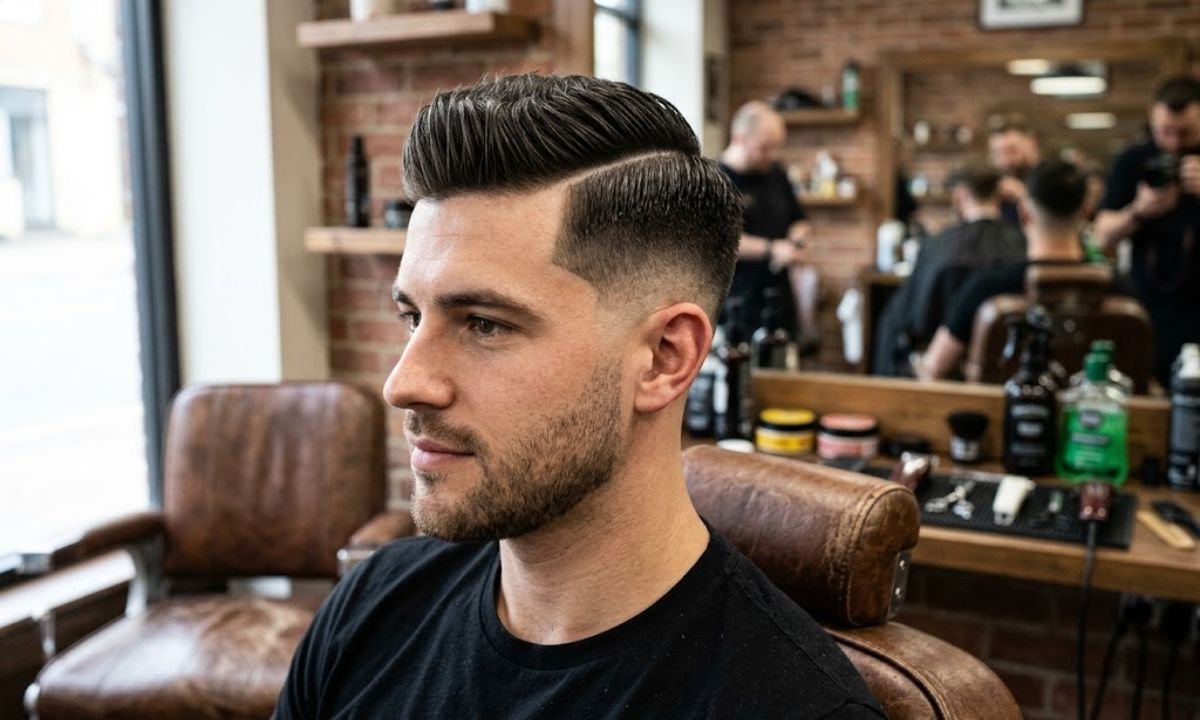
Looking for a burst fade hard part haircut that actually turns heads in 2026? You’re in the right spot.
This cut mixes a rounded burst fade around the ear with a crisp hard part line up top. The result is sharp, clean, and honestly hard to mess up once your barber gets the shape right.
Below you’ll find 19 fresh style ideas, a full tutorial, face shape tips, product picks, and the mistakes that ruin this haircut for most guys. Let’s get into it.
Whether you’re walking into a barbershop for the first time or you’ve had a men’s fade haircut for years and want to level it up, everything here is written to actually be used, not just skimmed. Save the photos you like, screenshot the comparison tables, and bring them straight to your next appointment.
What Is a Burst Fade Hard Part Haircut?
A burst fade hard part haircut blends two barber techniques into one clean package. The fade curves around your ear in a half-circle shape, and a razor-cut line separates your top hair from the sides.
Guys pick this cut because it looks sharp without needing a ton of daily effort. It works for a professional appearance at the office and still feels right for a weekend out with friends.
Understanding the Burst Fade
A burst fade is different from a regular fade because it doesn’t run in a straight line down the side of your head. Instead, it creates a rounded transition that “bursts” around the ear, giving you that smooth fade without a hard stopping point.
Barbers love this technique because it flatters almost every head shape. The fade around the ear blends shorter hair on the sides into longer hair on top, so there’s no awkward line where the two lengths meet.
What Is a Hard Part?
A hard part is a razor-cut line carved directly into the hair, usually on one side of the head. Think of it as a permanent version of the part you’d draw with a comb, except it’s shaved in and stays put all day.
This crisp line gives the whole haircut sharp definition. It’s what separates a basic fade from a styled, intentional look, and it’s the detail that makes people ask where you get your hair cut.
Why Men Love This Combination
Put the two together and you get a haircut that’s both bold and wearable. The burst fade handles the sides, the hard part handles the top, and the whole thing reads as put together without trying too hard.
It also travels well between settings. Slick it back for a formal hairstyle at a wedding, or leave it messy for a casual hairstyle on a Saturday. Few cuts flex that easily.
There’s also a confidence factor most guys don’t talk about. A precise hard part and a clean separation between top and sides make you look like you actually planned your morning, even on days you barely had time to comb it.
A Quick History of the Burst Fade Hard Part
The hard part actually has roots going back decades, popping up in barbershops long before fades got fancy names. Old school barbers used it as a way to define a side part without relying on a comb and grease alone.
The burst fade is the newer piece of the puzzle, gaining real popularity over the last several years as barbers started experimenting with rounded transition techniques instead of straight fade lines. Combining the two felt like a natural next step once both trends caught on.
By 2026, the pairing has become one of the most requested combos in barbershops worldwide. Search interest around men’s hairstyles 2026 consistently points back to this exact style, which tells you it’s not just a passing trend.
19 Stylish Burst Fade Hard Part Haircut Ideas for Every Hair Type
Not every guy wants the same fade height or top style, and that’s the beauty of this cut. Whether you’ve got curly hair, straight hair, or thick hair, there’s a version here built for you.
Bring one of these photos to your barber. Trust me, “give me a burst fade” alone leaves way too much room for guesswork.
1. Classic Burst Fade Hard Part
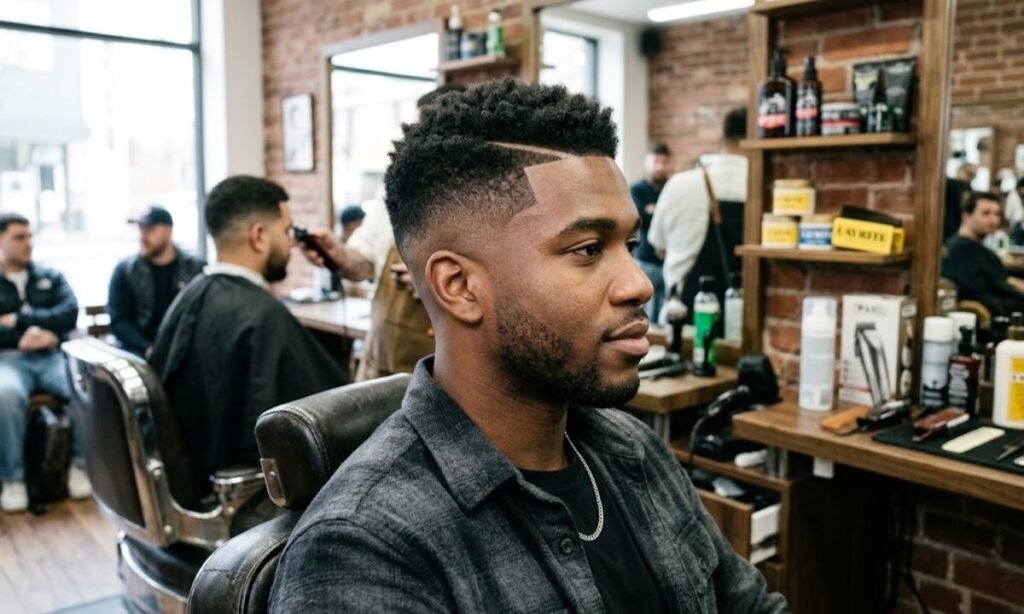
The original combo. A mid burst fade paired with a straightforward hard part and a few inches of hair on top for texture and hair movement.
It’s the safest starting point if this is your first time trying the style. Clean, balanced, and it suits almost any face shape without extra styling tricks.
Ask for this one if you’re not sure what else to try, it never really goes out of style.
2. Low Burst Fade Hard Part
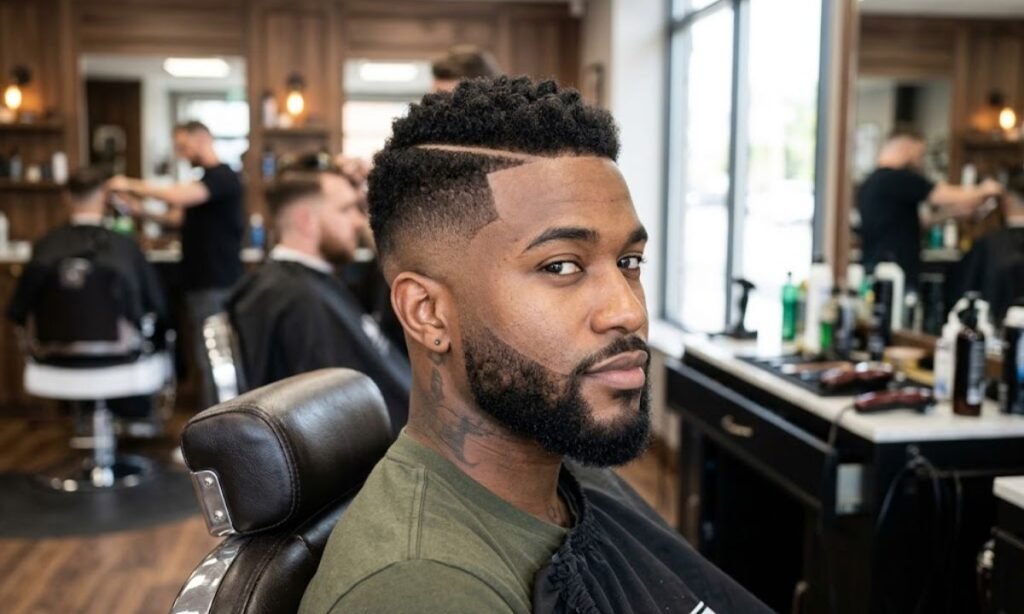
A low burst fade keeps most of your length intact, with the fade starting just above the ear. It’s a subtle option for guys who want the hard part haircut look without a dramatic change.
This version works great in office settings. The fade maintenance is easier too, since the burst sits lower and grows out slower.
Great pick if you’re still deciding whether this cut is really for you.
3. Mid Burst Fade Hard Part
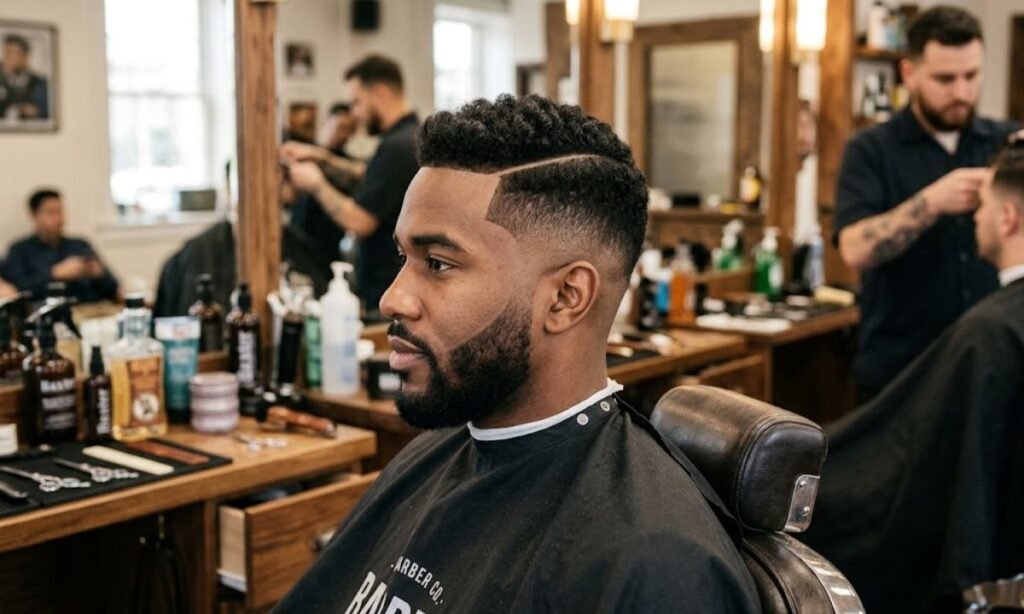
Sitting between low and high, the mid burst fade is the most requested version at most barbershops. It gives you noticeable contrast without going extreme.
The half-circle shape around the ear is more visible here, which really shows off the barber’s skill. Pair it with a natural top for an easy everyday look.
Most first time burst fade clients end up here after seeing photos of both extremes.
4. High Burst Fade Hard Part
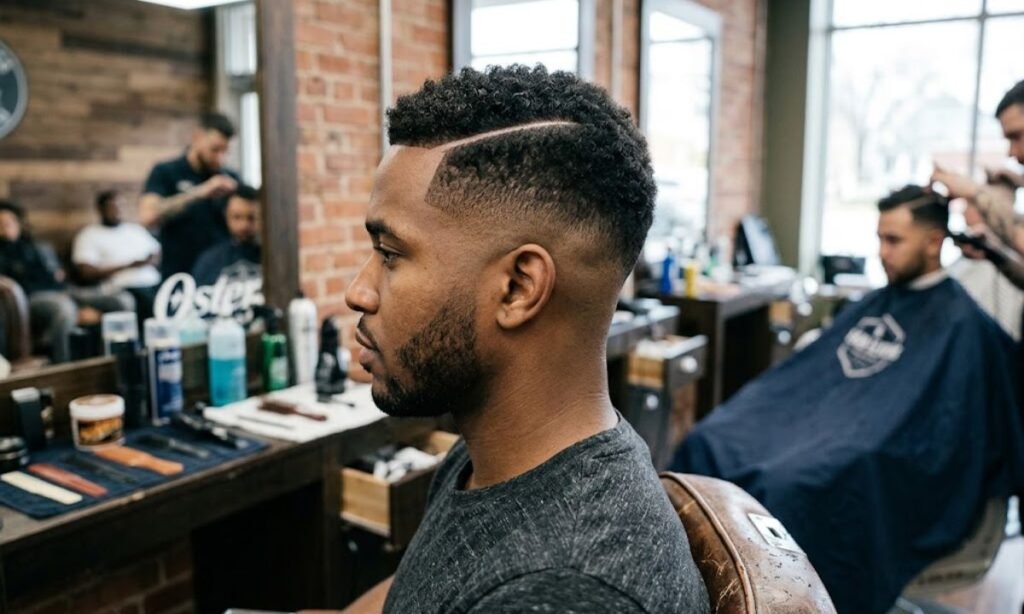
Want maximum contrast? A high burst fade takes the fade well above the ear, leaving a sharper, more dramatic clean separation between sides and top.
This one demands more frequent regular barber visits since the fade grows out faster. But the payoff is a bold, modern silhouette that stands out in a crowd.
Best suited for guys who genuinely enjoy the barbershop chair and don’t mind the extra trips.
5. Textured Crop Burst Fade Hard Part
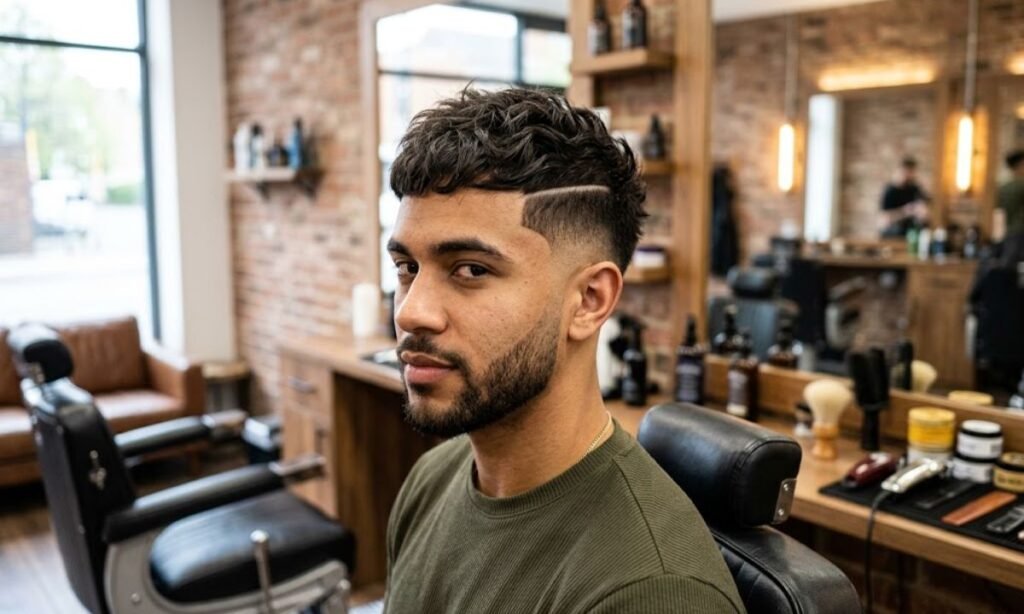
A textured crop burst fade adds choppy layers on top instead of a smooth surface. It’s a favorite among guys with naturally thick or coarse hair.
The texture gives extra hair volume without needing much product. Just a little matte clay worked through damp hair does the job.
Works especially well heading into warmer months when a heavier top starts feeling like too much.
6. Curly Burst Fade Hard Part
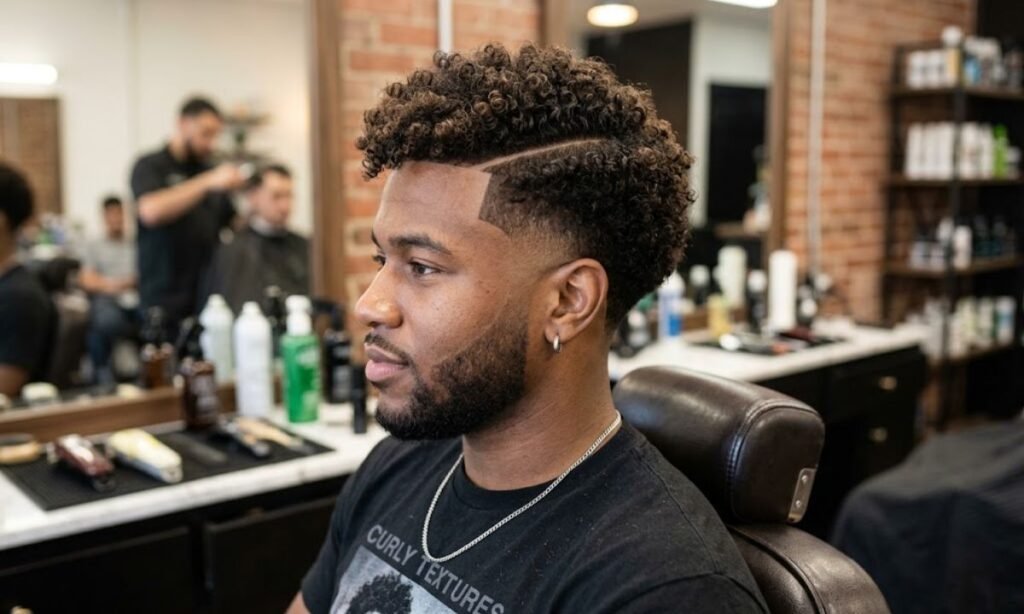
For curly hair, a burst fade for curly hair keeps your natural curls intact on top while the sides stay tight and clean. The hard part cuts through nicely even with curl density.
Ask your barber to cut with your curl pattern in mind, not against it. This keeps the shape looking intentional instead of shrinking unevenly.
One of the fastest growing requests among barbers who specialize in curl cutting techniques.
7. Wavy Burst Fade Hard Part
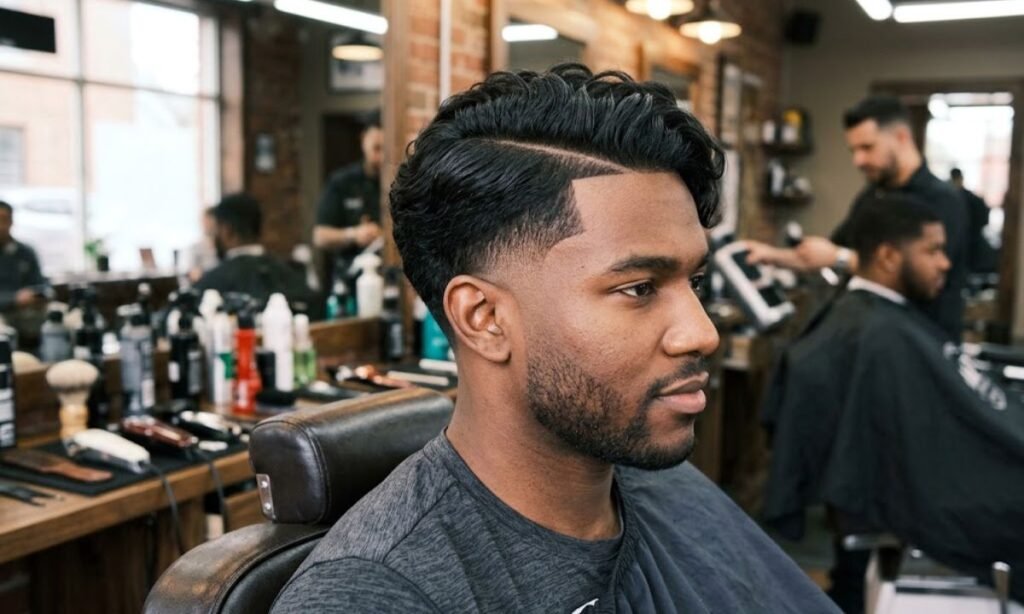
A burst fade for straight hair or wavy hair alike creates gorgeous natural movement across the top. Wavy hair especially shows off the fade’s rounded edges.
Sea salt spray is your best friend here. It enhances the waves without weighing them down or looking greasy.
A solid pick for beach trips, festivals, or anywhere you want hair that looks effortless.
8. Slick Back Burst Fade Hard Part
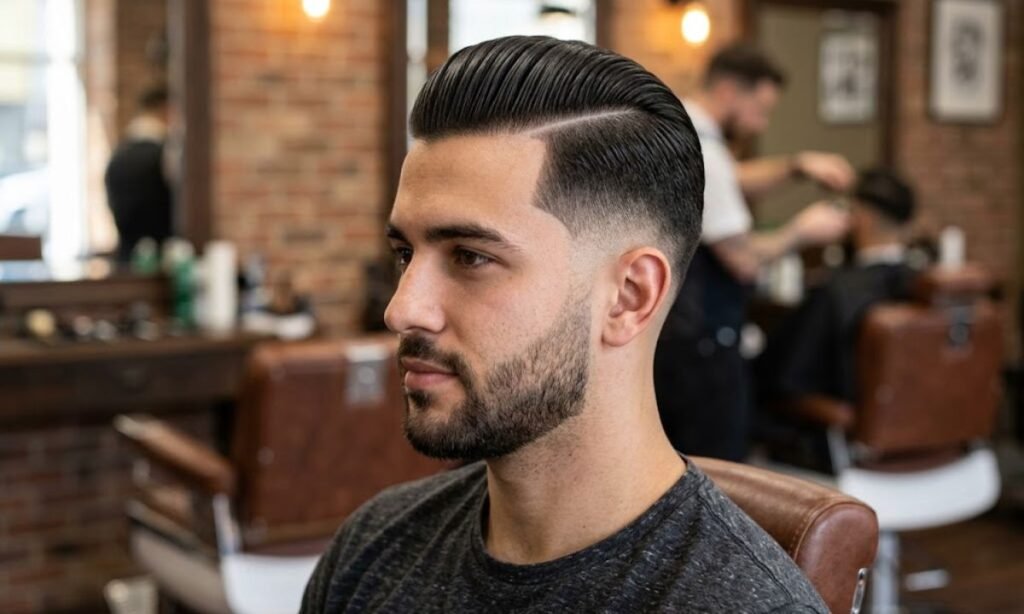
A slick back burst fade takes the top hair and pushes it straight back for a sleek appearance. It’s a go-to for guys who want a formal hairstyle option.
Pomade with strong hold is essential for this one. It keeps the slick back locked in place through a full workday.
Photographs beautifully too, which makes it a favorite for weddings and formal events.
9. Comb Over Burst Fade Hard Part
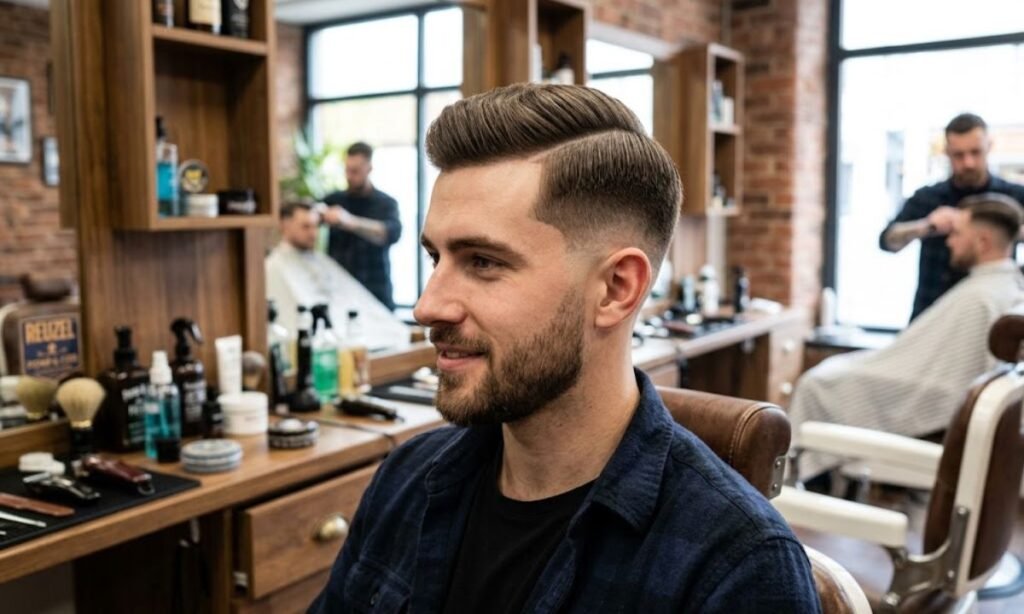
The comb over burst fade pairs perfectly with a hard part, since the part line naturally guides where the hair combs over. It’s one of the most professional appearance friendly options on this list.
This style works especially well for straight hair, where the comb over lays flat without much fuss.
A dependable choice if your workplace leans traditional but you still want personality up top.
10. Pompadour Burst Fade Hard Part
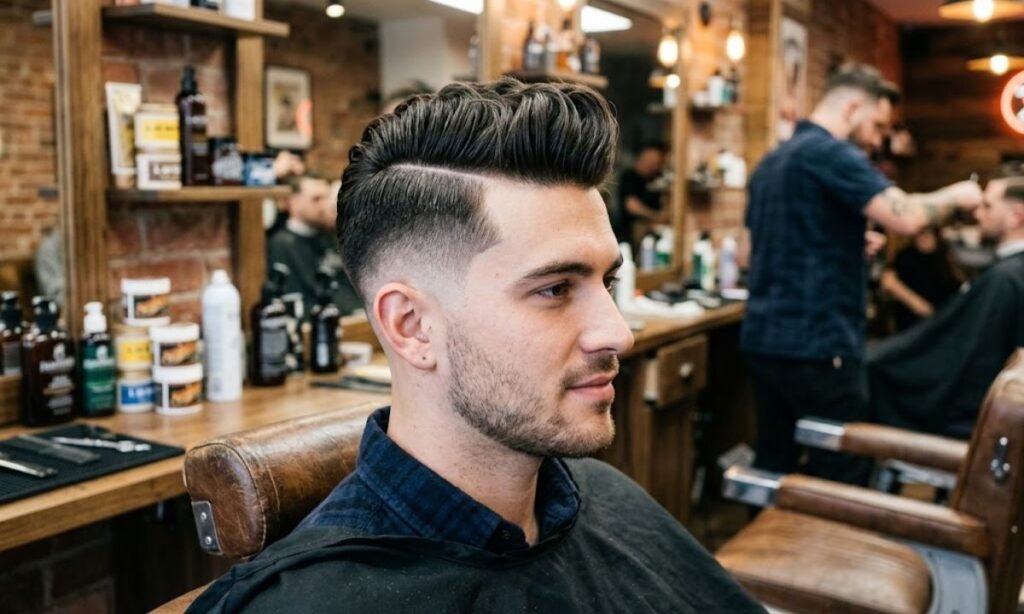
A pompadour burst fade adds height and volume at the front, creating a dramatic contrast against the tight burst fade sides. It’s bold, a little retro, and always eye catching.
You’ll need hair spray for long-lasting hold to keep that height standing through the day, especially if you’ve got fine hair.
Not for the low maintenance crowd, but unbeatable if you love a statement look.
11. Faux Hawk Burst Fade Hard Part
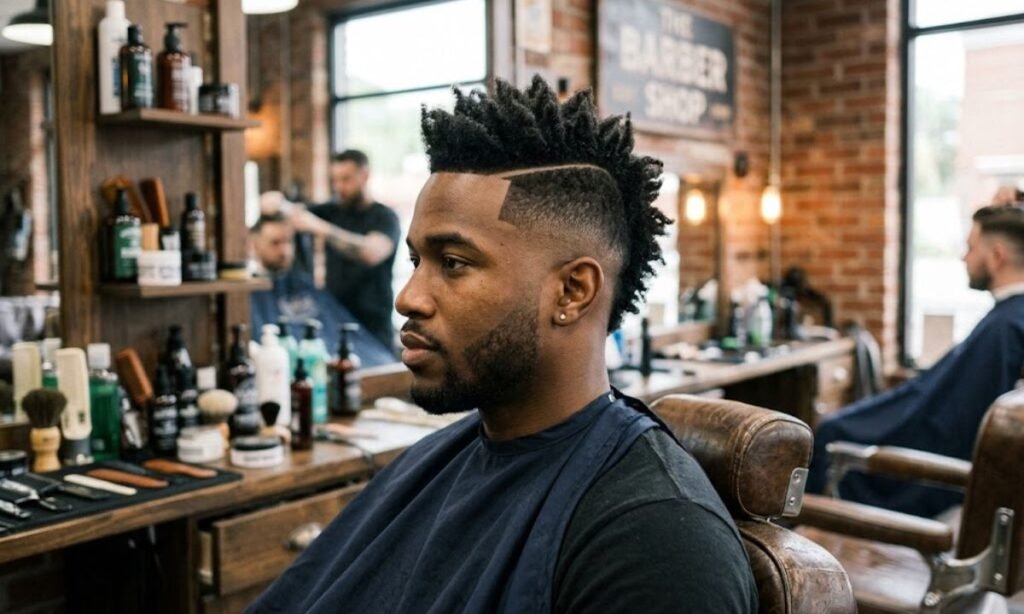
The faux hawk burst fade brings a mohawk-inspired strip of longer hair down the center, fading out on both sides into a burst fade. It’s edgy without being over the top.
This look pairs well with razor designs shaved into the sides for guys who want something truly custom.
A strong choice for concerts, nights out, or anytime you want extra edge.
12. Spiky Top Burst Fade Hard Part
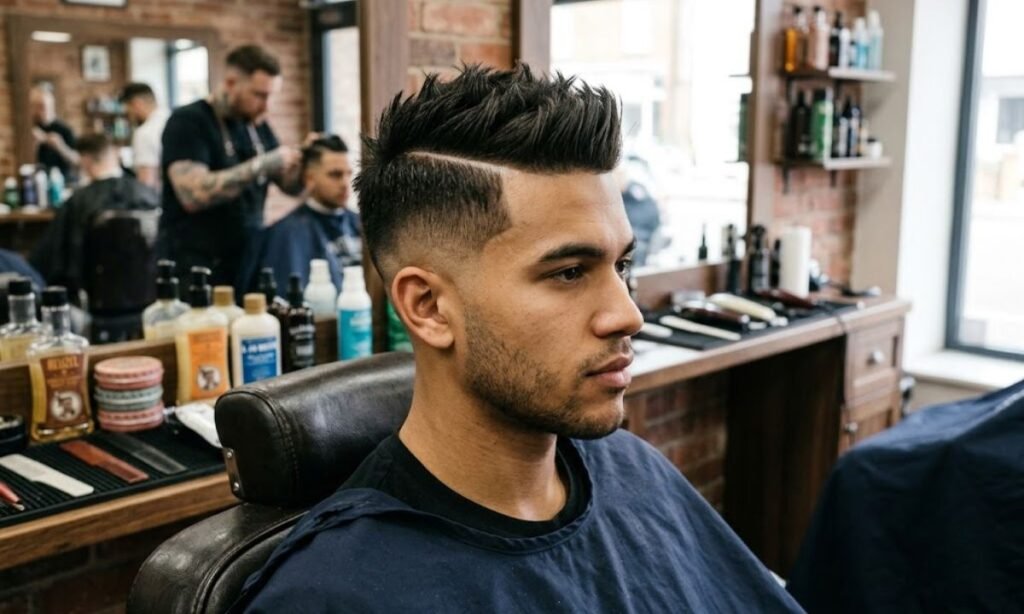
A spiky top burst fade uses texture powder to lift the top hair into defined spikes. It’s playful, youthful, and works great for a casual hairstyle.
Keep the spikes irregular rather than uniform. A messier finish actually looks more natural and less like a costume wig.
A nostalgic throwback that’s quietly making a comeback among younger guys right now.
13. Messy Fringe Burst Fade Hard Part
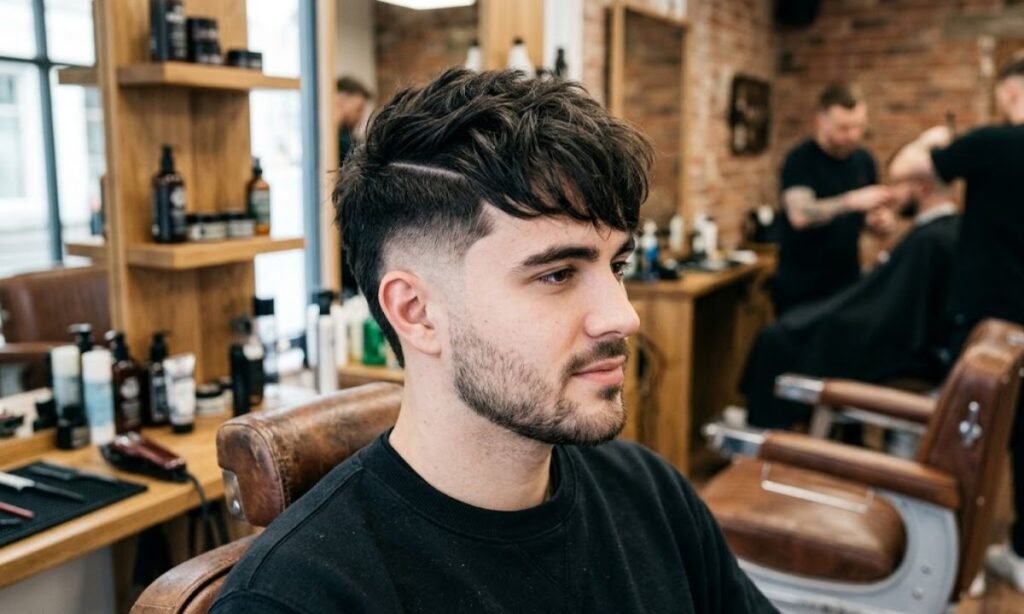
The messy fringe burst fade lets the front hair fall loosely over the forehead instead of styling it up or back. It’s low effort but still looks deliberate thanks to the sharp hard part underneath.
This style suits guys who don’t want to spend more than two minutes styling in the morning.
Perfect for students or anyone whose mornings are already tight on time.
14. Beard Blend Burst Fade Hard Part
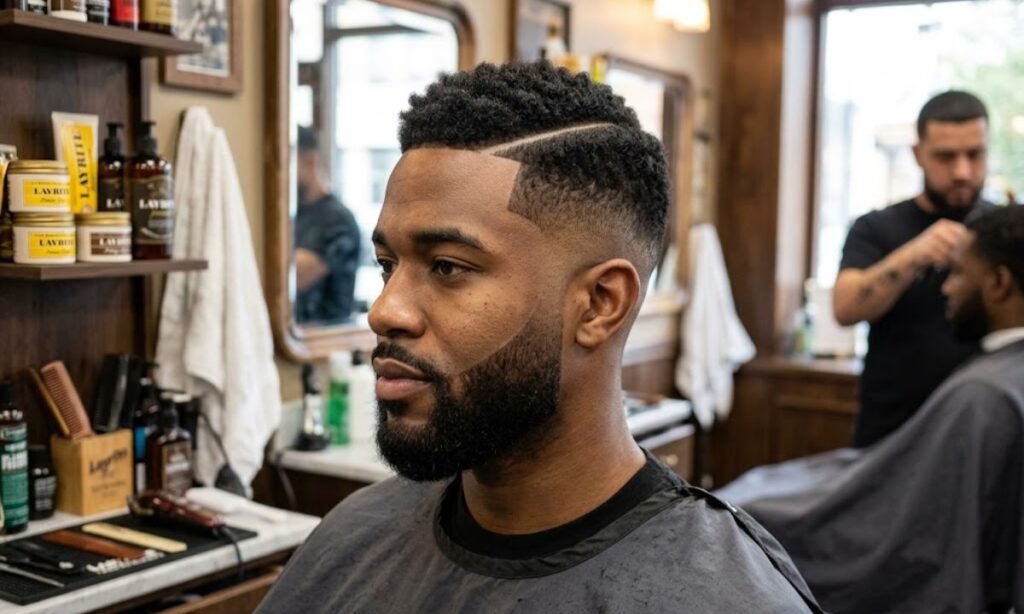
A beard blend burst fade connects the fade seamlessly into a full beard, so there’s no visible gap between hair and facial hair. It’s one of the most requested combos among bearded guys right now.
Beard oil keeps the blended area looking neat and prevents that patchy, unfinished look at the jawline.
One of the most photographed combinations on social media right now, and for good reason.
15. Razor Design Burst Fade Hard Part
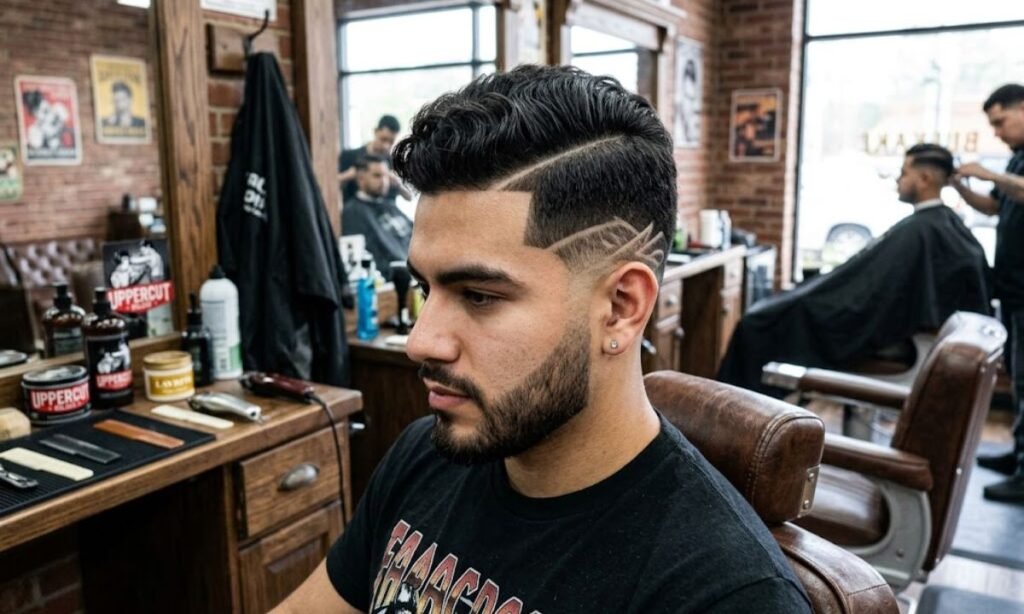
For guys who want to stand out, a razor design burst fade adds shaved patterns, lines, or lightning bolts into the fade itself. These creative fade patterns turn a simple haircut into a statement.
Talk through the design with your barber before they start cutting. Freehand razor work is permanent for weeks, so get it right the first time.
Best reserved for special occasions since intricate designs grow out faster than the rest of the cut.
16. Thick Hair Burst Fade Hard Part
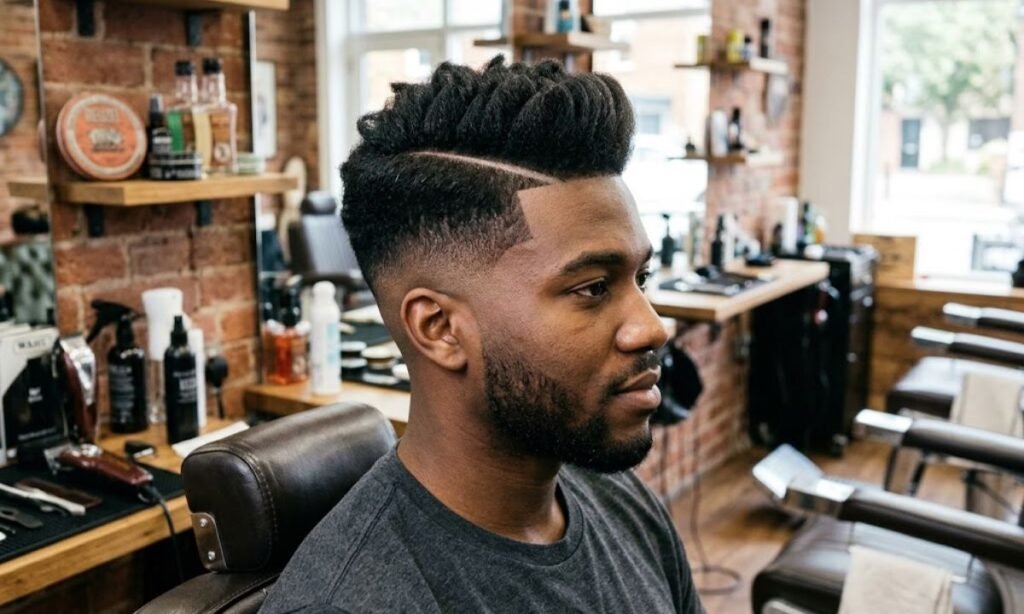
Burst fade for thick hair removes bulk from the sides while keeping enough length on top to work with the dense hair texture. It solves the “helmet head” problem thick haired guys know all too well.
Thinning shears often get used here alongside the clippers, which helps the top sit flatter and style easier.
A relief for guys who’ve struggled with bulky, unmanageable hair their whole lives.
17. Straight Hair Burst Fade Hard Part
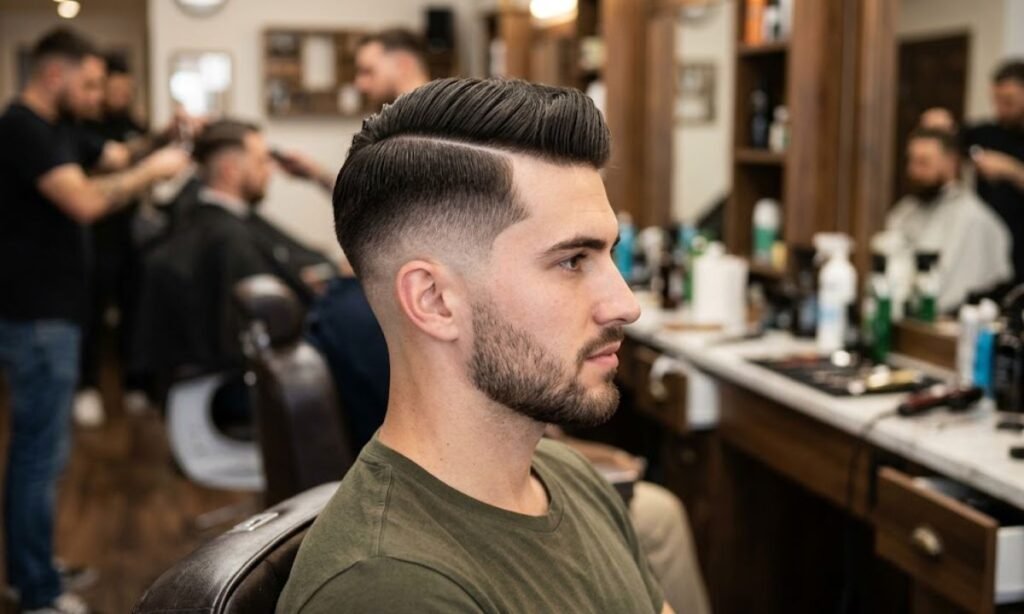
Straight hair takes a hard part especially well since there’s no curl fighting the razor line. The crisp line stays sharp for days without much upkeep.
This combo is low maintenance and a smart pick for guys new to structured haircuts.
Also one of the fastest cuts to style each morning, which counts for a lot.
18. Modern Business Burst Fade Hard Part

The modern business burst fade keeps things conservative on top while still rocking the fade underneath. It’s the perfect middle ground between corporate expectations and personal style.
Pair it with a light pomade for a subtle professional appearance that won’t raise eyebrows in the boardroom.
A safe bet before a job interview or any first impression that really matters.
19. Designer Burst Fade Hard Part
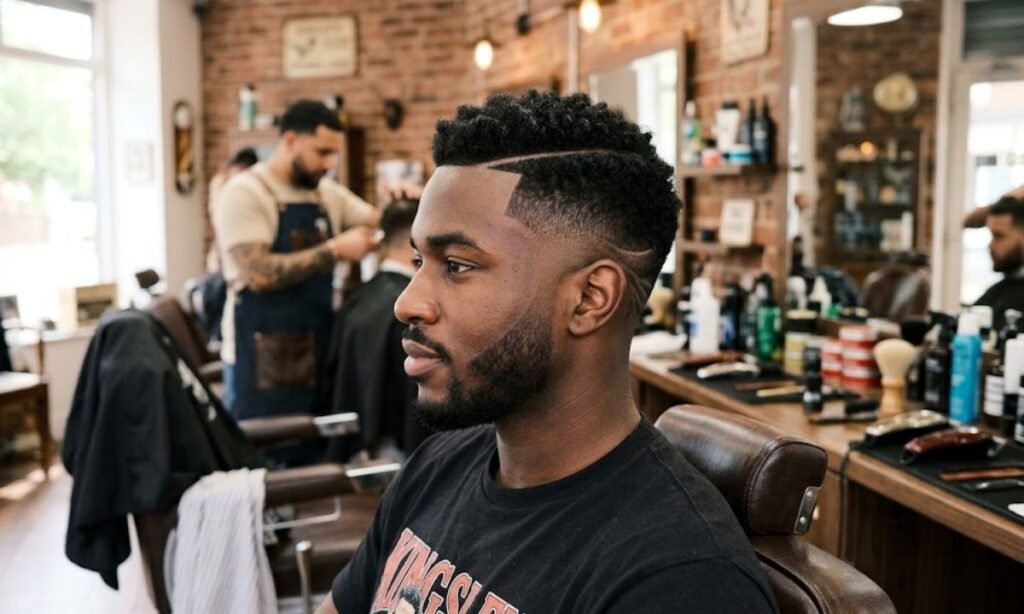
A designer burst fade takes everything up a notch with custom shaved details, dual hard parts, or color work layered on top. It’s the most personalized option on this list.
This one is best left to an experienced barber who specializes in creative fade patterns, since one wrong line ruins the whole design.
Expect to pay a premium, but the result is genuinely one of a kind.
How to Pick the Right Version for You
With 19 options staring back at you, narrowing it down can feel overwhelming. Start with your hair type first, since that limits the list faster than anything else.
From there, think about your week. If you’re in meetings daily, lean toward the modern business burst fade or comb over burst fade. If your calendar’s more relaxed, the messy fringe or spiky top versions give you more room to have fun.
Finally, factor in how often you can realistically get to the barbershop. A high burst fade looks incredible fresh but demands regular barber visits to stay that way, while a low burst fade stretches much further between trims.
Burst Fade Hard Part Comparison by Fade Height
| Fade Height | Contrast Level | Trim Frequency | Best For |
|---|---|---|---|
| Low burst fade | Subtle | Every 4 to 5 weeks | Office jobs, first timers |
| Mid burst fade | Balanced | Every 3 weeks | Most face shapes, everyday wear |
| High burst fade | Bold | Every 2 weeks | Guys who love sharp modern hairstyle looks |
Use this table as a quick gut check before your next appointment. It’s a simple way to match the cut to your actual lifestyle instead of just picking whatever looks good in a photo.
How to Choose the Right Barber for This Cut
Not every barber is equally comfortable with creative fade patterns or a precise hard part. Before booking, scroll through their portfolio and look specifically for burst fades, not just standard fades.
Ask how they handle the hard part too. Some barbers freehand it with a trimmer, others prefer a straight razor for that extra crisp line. Neither is wrong, but knowing their approach helps set expectations.
A good sign is a barber who asks you questions back, about your face shape, your natural hair texture, and how much daily styling routine you’re actually willing to commit to. That back and forth usually means you’re in good hands.
Step-by-Step Tutorial: How to Get the Perfect Burst Fade Hard Part Haircut
Curious how barbers actually build this look from scratch? Here’s the process broken into simple steps you can follow along with, whether you’re getting it done professionally or attempting it yourself.
Step 1 – Discuss Your Vision With Your Barber
Before any clippers come out, talk through the length, the fade height, and the exact hard part placement you want. Bring a reference photo if you can.
Clear communication here saves you from a haircut you’ll regret for the next three weeks.
Step 2 – Choose Your Preferred Burst Fade Height
Decide between a low burst fade, mid burst fade, or high burst fade based on how bold you want the contrast to look. Your face shape and lifestyle should guide this choice.
Remember, higher fades need more frequent touch ups to stay sharp.
Step 3 – Determine the Hard Part Placement
Your barber will find your natural part first, then decide where the razor-cut line should sit. Most guys go with the side that already grows more naturally that direction.
This step sets up the entire structure of the haircut, so it’s worth getting exact.
Step 4 – Create the Burst Fade Around the Ear
Using clippers with graduating guard sizes, your barber carves the rounded transition around your ear. This creates that signature half-circle shape the burst fade is named for.
Patience matters here. Rushing this step is the number one reason burst fades end up looking choppy instead of smooth.
Step 5 – Cut and Define the Hard Part
Once the fade’s blended, a straight razor or trimmer creates the defined top section by cutting a thin, precise hard part line. This is what gives the cut its sharp definition.
A steady hand is non negotiable here. Even a slight wobble shows once the hair grows out even a little.
Step 6 – Shape and Style the Top Hair
Now the top gets cut to your desired length and style, whether that’s a pompadour, textured crop, or something slicked back. This is where your personal style really shows.
Your barber will factor in your natural hair texture so the style actually holds once you’re styling it at home.
Step 7 – Blend the Beard (Optional)
If you’re rocking facial hair, this is when the beard blend happens. The goal is clean edges where your fade meets your beard, with zero visible gap.
Skip this step if you’re clean shaven, obviously, but it’s a game changer for bearded guys.
Barbers often work from the sideburn down, checking the mirror from multiple angles to make sure the beard blend looks even on both sides before moving on.
Step 7B – Check the Full Silhouette
Before moving to product, a good barber steps back and checks the full head from front, side, and back angles. This catches any unevenness in the rounded transition before it’s too late to fix.
It only takes thirty seconds but saves you from walking out with a lopsided fade you won’t notice until you’re home.
Step 8 – Apply Styling Products
Your barber finishes with a small amount of styling products, usually matte clay or pomade, to show you how the cut looks fully styled. Pay attention here for styling tips you can copy at home.
This is also a great moment to ask questions about your specific hair type.
Step 9 – Maintain the Hard Part Regularly
Once you leave the chair, keeping the hard part sharp is on you. Regular trims and careful daily styling keep that line looking freshly cut.
Most guys touch base with their barber every two to three weeks for upkeep.
Step 10 – Enjoy Your Fresh Burst Fade Hard Part Look
That’s it. Walk out, catch your reflection, and enjoy the confidence boost that comes with a genuinely sharp modern men’s haircut.
Burst Fade Hard Part for Different Hair Lengths
This cut isn’t locked into one top length, which is part of why it stays popular year after year. Shorter top hair gives you a cropped, low fuss version that still shows off the half-circle shape underneath.
Medium length hair on top opens the door to more hair movement and styling options, like the pompadour or faux hawk versions covered earlier. It’s the sweet spot most guys land on for versatility.
Longer top hair takes more daily effort but rewards you with dramatic styles like the slick back or messy fringe. Just know it also means more hair product buildup if you’re not washing regularly, so stay on top of your weekly care tips.
Tools and Techniques Barbers Use
Getting a precise hard part and a genuinely smooth fade isn’t just skill, it’s also about using the right tools. Most barbers rely on a combination of clippers with multiple guard sizes, a straight razor, and thinning shears depending on your hair.
Clippers handle the bulk of the rounded transition around the ear, gradually stepping down in guard size as they move upward. This is what creates that seamless half-circle shape instead of visible lines between lengths.
The straight razor comes in for the finishing touches, carving the razor-cut line itself and cleaning up edges around the ears and neckline. It’s also commonly used for any razor designs you’ve requested, since it offers more control than clippers alone.
Thinning shears get pulled out mainly for guys with thick hair or dense hair texture, removing bulk without shortening length. Without this step, thick haired guys often end up with a top section that looks bulky no matter how it’s styled.
Best Face Shapes for Burst Fade Hard Part Haircuts
Not sure if this cut suits you? Good news, the burst fade hard part flatters most face shapes with a small tweak here or there.
Oval Face Shape
If you’ve got an oval face shape, congratulations, almost every version on this list works for you. There’s no real limitation, so pick whatever height and top style you like best.
Barbers often call oval faces the easiest to cut for, and this haircut proves it.
Round Face Shape
A round face shape benefits from added height on top, like a pompadour or spiky style, paired with a high burst fade. The added length elongates your face visually.
Avoid overly rounded top shapes, since they can emphasize roundness instead of balancing it out.
Square Face Shape
Guys with a square face shape look great with softer, textured tops that break up strong jawlines. A textured crop burst fade works especially well here.
Keep the hard part slightly angled rather than perfectly straight for a softer overall effect.
Diamond Face Shape
A diamond face shape pairs nicely with a mid burst fade and moderate top volume. The goal is balancing out narrower forehead and jaw areas.
Fringe styles also work surprisingly well, since they soften the cheekbone width that diamond faces are known for.
Best Hair Types for a Burst Fade Hard Part Haircut
Your natural hair texture shapes how this haircut behaves day to day. Here’s what to expect based on what you’re working with.
Straight Hair
Straight hair holds a hard part beautifully and needs minimal product to stay in place. The crisp line stays visible for longer between trims too.
This is often considered the easiest hair type for this specific cut.
Wavy Hair
Wavy hair adds natural texture and hair movement that makes the top section look effortlessly styled. A little sea salt spray brings out those waves even more.
The fade blends especially smooth against wavy hair thanks to the natural taper in thickness.
Curly Hair
Curly hair keeps volume and personality on top, and the burst fade for curly hair approach respects your natural curls instead of forcing them flat. It’s become one of the most popular combos in recent years.
Just expect slightly more frequent trims, since curls tend to grow up rather than down.
Thick Hair
Thick hair benefits massively from this cut since the fade removes bulk while the dense hair texture stays interesting on top. Thinning is often needed for the best results.
Ask your barber about texturizing scissors if your hair feels too heavy after a standard cut.
How to Style a Burst Fade Hard Part Haircut
Getting the haircut is step one. Styling it right every morning is what keeps it looking fresh between visits.
Use Matte Clay
Matte clay gives you a natural, non shiny finish while adding light hold. Work a dime sized amount through damp hair, focusing on the top section.
It’s the most versatile product for casual, everyday styling.
Apply Texture Powder
Texture powder adds instant hair volume without any greasy residue. Sprinkle a small amount at the roots and massage it through for lift.
This works especially well on fine or thin hair that struggles to hold shape otherwise.
Finish With Light Hold Spray
A light hair spray locks your style in place without turning it stiff or crunchy. Hold the can about ten inches away and mist lightly across the top.
Skip heavy hold sprays unless you’re going for a slicked, formal finish.
Best Hair Products for a Burst Fade Hard Part Haircut
Your bathroom shelf should have a few key styling products on hand for this cut. Here’s what actually earns its spot.
Matte Clay for Natural Texture
Matte clay is the workhorse product for most burst fade styles. It’s flexible, buildable, and never looks greasy under office lighting.
Pomade for a Sleek Finish
Pomade is your go-to when you want a sleek appearance, like for slick back or comb over versions. Water based formulas rinse out easier than old school wax ones.
Texture Powder for Extra Volume
When your top hair feels flat, texture powder rescues the whole look in seconds. It’s especially handy for spiky or messy fringe styles.
Sea Salt Spray for Natural Movement
Sea salt spray brings out natural movement in wavy and curly hair without stiffness. Spritz onto damp hair before air drying for the best texture.
Hair Spray for Long-Lasting Hold
For styles that need to survive a full day, like the pompadour, hair spray gives you long-lasting hold that won’t quit by lunchtime.
Beard Oil for a Clean Beard Blend
If your fade meets a beard, beard oil softens the hair around the blend zone and keeps the transition looking intentional rather than patchy.
How to Choose Between Similar Products
Guys often get stuck picking between matte clay and pomade since both promise hold. The real difference comes down to finish, clay stays matte and textured, while pomade leans shinier and smoother.
Budget doesn’t have to mean lower quality here either. Plenty of affordable styling products perform just as well as premium ones, especially for guys with straight hair that doesn’t need much convincing to hold a shape.
If you’re unsure where to start, ask your barber what they used right after your cut. It’s usually the safest bet since they already know your specific natural hair texture.
Seasonal Care for Your Burst Fade Hard Part
Summer heat and sweat mean more frequent washing, but don’t overdo it. Stick to your usual weekly care tips and rinse with cool water when possible to keep the scalp calm and reduce product breakdown.
Winter brings dryness, both for your scalp and your styling routine. A beard oil style product, or a lightweight leave-in, can stop flakiness from showing up right along that precise hard part, which is more noticeable than most guys expect.
Humidity is the real enemy for curly hair and wavy hair types specifically. Anti-humidity sea salt spray or a light matte clay helps hold your natural movement in place without frizzing out by midday.
Maintenance and Barber Visit Schedule
A sharp cut doesn’t stay sharp on its own. Here’s how to actually keep it looking barbershop fresh.
Weekly Care Tips
Wash your hair two to three times a week max, since overwashing strips natural oils and leaves hair harder to style. Use a light conditioner to prevent hair product buildup.
Brush or comb daily to train the hard part to lay in the same direction.
How Often to Get a Trim
Regular touch-ups every two to three weeks keep the fade from growing out into a shapeless mess. Higher fades need more frequent visits than low ones.
Set a recurring reminder on your phone so you’re not caught off guard by an overgrown fade.
Keeping the Hard Part Sharp
The hard part grows out fastest of all, sometimes within a week or two. A quick touch up visit just for the part line can stretch your full haircut out longer.
Some barbers offer discounted “part only” appointments between full cuts, so it’s worth asking.
Daily Styling Routine
A solid daily styling routine takes less than five minutes once you know your products. Damp hair, product, comb the part, done.
Consistency here is what separates a great looking cut from one that just looks slept on.
Pros and Cons of Burst Fade Hard Part Haircuts
Like any haircut, this one has trade offs worth knowing before you commit.
Pros:
Sharp, modern look that suits a low-maintenance haircut lifestyle once you’ve settled into a routine.
Works across professional appearance and casual hairstyle settings, so you’re not stuck picking just one vibe.
Highly customizable haircut for nearly every hair type and face shape, from curly hair to thick hair.
Pairs naturally with beards through a clean beard blend, giving your whole look a finished feel.
Cons:
Needs regular barber visits to stay sharp, especially at higher fade heights where growth shows fast.
The hard part can look uneven or blurry if cut by an inexperienced barber, so shop around first.
Not the easiest DIY haircut for beginners at home, since the razor work takes a steady, practiced hand.
⭐ Final Verdict
For most guys chasing a sharp modern hairstyle in 2026, the trade offs are well worth it. A little extra maintenance buys you one of the most versatile cuts around.
Burst Fade Hard Part Styling for Special Occasions
Weddings, job interviews, first dates, they all call for a slightly different version of the same base cut. For anything formal, a slick back burst fade or comb over burst fade styled with pomade gives you that polished, professional appearance photos actually capture well.
Casual hangouts and weekends are where the messy fringe or spiky top versions get to shine. Skip the heavy hold products and let the natural hair texture do more of the work for an effortless finish.
Job interviews sit somewhere in the middle. A modern business burst fade with light matte clay reads as put together without looking like you tried too hard, which is exactly the balance most interviewers respond well to.
DIY at Home vs Professional Barber
It’s tempting to try this cut at home, especially with online tutorials making it look simple. Basic maintenance, like a quick touch up on the hard part between visits, is doable with the right trimmer and a steady mirror setup.
The burst fade itself is a different story. That rounded transition around the ear takes real practice to get symmetrical, and a botched attempt is nearly impossible to fix without cutting hair shorter than planned.
Our honest take is to let a professional handle the initial cut and any major fade work, then use at home touch ups only for the part line between regular barber visits. That combo keeps costs down without risking the whole style.
Signs It’s Time for a Fresh Cut
Your hard part starting to look fuzzy or overgrown is usually the first giveaway. Once that crisp line softens, the whole haircut starts looking unintentional rather than styled.
Another sign is when your fade loses its clean separation and starts blending awkwardly with the top hair. At that point, no amount of styling products will fully fix the shape until you get back in the chair.
Lastly, if your daily styling routine is suddenly taking twice as long to get the same result, that’s usually your hair telling you it’s grown past the point where the cut can hold its intended shape.
Common Mistakes to Avoid With a Burst Fade Hard Part Haircut
Even a great haircut can go wrong with the wrong follow through. Watch out for these common slip ups.
Choosing the Wrong Fade Height
Picking a high burst fade without considering your lifestyle often backfires, since it demands more frequent trims than most people realize. Match the height to how often you’re actually willing to visit the barber.
Making the Hard Part Too Wide
A wide part loses the sharp definition that makes this style work in the first place. Thin, precise lines always look more intentional than thick ones.
Skipping Regular Touch-Ups
Letting your hard part and fade grow out too long turns a sharp cut into a shapeless mess fast. Fade maintenance isn’t optional if you want the look to actually last.
Using Too Much Styling Product
Overloading on pomade or matte clay leads to greasy, weighed down hair. A little goes further than you think, especially with texture powder.
Ignoring Your Hair Type
Copying a style meant for straight hair onto curly hair rarely translates well. Always adjust the cut and styling routine to your natural hair texture instead of forcing a look that isn’t built for it.
How Much Does a Burst Fade Hard Part Haircut Cost?
Pricing varies a lot depending on your barber’s experience and your city. A basic version usually costs about the same as any standard barber fade haircut, while razor designs or a beard blend add extra to the bill.
Expect to pay more at shops specializing in creative fade patterns, since that precision takes real skill and time. It’s usually worth the extra cost if you want the design to actually look clean.
Barber Etiquette and Tipping for This Cut
Since a burst fade hard part haircut takes more precision than a basic trim, it’s worth tipping accordingly. Fifteen to twenty percent is standard, but bump it up if your barber nailed a tricky razor design or complex beard blend.
Booking ahead also helps, especially with barbers known for sharp hard part work. Walk-ins are fine for simple maintenance, but detailed styles deserve a scheduled appointment where your barber isn’t rushed.
Building a relationship with one barber pays off over time too. They’ll remember your preferred fade height, your hard part placement, and exactly how much length you like on top, which speeds up every future visit.
Cost Breakdown for Popular Versions
| Style | Typical Price Range | Extra Time Needed |
|---|---|---|
| Classic burst fade hard part | Standard haircut price | None |
| Beard blend burst fade | Standard plus beard trim fee | 10 to 15 minutes |
| Razor design burst fade | Standard plus design fee | 15 to 30 minutes |
| Designer burst fade | Premium pricing | 30 minutes or more |
Prices shift a lot by region and barber experience, so treat this as a rough guide rather than a fixed number. Shops specializing in creative fade patterns typically charge more, but the detail work usually justifies it.
Burst Fade Hard Part vs Regular Fade: What’s the Difference?
A regular men’s fade haircut transitions in a straight line down the side of the head. The burst fade instead curves around the ear in that signature half-circle shape, giving a softer, more natural blend.
Add a hard part to either style and you get extra definition, but the burst fade’s rounded transition pairs especially well with that razor line since both techniques rely on precise, curved barber work.
2026 Trends Shaping the Burst Fade Hard Part Haircut
This year, guys are leaning into creative fade patterns more than ever, mixing subtle razor designs into otherwise classic cuts. Dual hard parts are also picking up steam among younger guys wanting something a little different.
Natural texture is having a moment too. Instead of slicked, uniform tops, barbers are styling more choppy layers and undone finishes that still look deliberate thanks to that sharp hard part underneath.
Adding Color to a Burst Fade Hard Part
Color is having a real moment with this cut, especially subtle highlights that catch light along the top section. It’s a smaller commitment than a full dye job but still adds noticeable hair movement and dimension.
Bold color, like a solid bleach block on top, pairs dramatically with a high burst fade for guys who want maximum contrast. Just know that colored hair needs a bit more care to avoid dryness around the fade line.
If you’re color curious but hesitant, ask your barber about temporary color sprays first. They wash out within a few shampoos, giving you a low commitment way to test the look before going permanent.
Building a Simple Grooming Kit at Home
You don’t need a shelf full of products to maintain this cut well. A quality trimmer, a fine tooth comb, and one or two go to styling products cover most guys’ needs.
Add a small mirror you can angle behind your head, since checking the back of a hard part is nearly impossible with just a bathroom mirror. It sounds minor, but it makes touch ups far easier to get right.
Round it out with a soft bristle brush for daily upkeep. It distributes natural oils, smooths natural hair texture, and helps train your hard part to sit the same direction every day.
Why This Cut Keeps Trending Year After Year
Trends usually fade fast, but the burst fade hard part haircut keeps sticking around for a simple reason, it actually works for real life. It looks intentional on lazy days and polished on important ones, without asking you to relearn your whole routine every season.
Barbers also love it because the combination of rounded transition and precise hard part shows off technical skill in a way clients can immediately see and appreciate. That makes it a favorite to showcase on portfolios, which keeps the style visible and in demand.
For 2026 specifically, the mix of natural texture, subtle color, and sharp lines fits right into where men’s hairstyles 2026 are heading overall, less rigid, more personalized, but still clean enough for everyday wear.
Frequently Asked Questions
Is a burst fade hard part haircut hard to maintain? It needs more attention than a basic trim, but nothing extreme. Two to three weeks between regular barber visits keeps it sharp.
Can I get this haircut with curly hair? Absolutely. A burst fade for curly hair respects your natural curls while still delivering that clean, faded look on the sides.
What’s the best product for daily styling? Matte clay works for most hair types and styles. Switch to pomade if you want more shine and a sleek appearance.
Does this haircut work for a professional job? Yes, especially the modern business burst fade or comb over burst fade versions, which keep things conservative while still looking sharp.
How long does it take to grow out? The hard part usually needs touching up within one to two weeks, while the overall burst fade shape can last three to five weeks before it starts losing its sharp definition.
Can I combine a razor design with any style on this list? In most cases, yes. Razor designs can be added to nearly any of the 19 styles, though simpler tops like the classic burst fade hard part tend to show off the design best.
Is this haircut suitable for older men? Definitely. Fade height and top length are fully adjustable, so a low burst fade with a conservative comb over works just as well for older guys as the bolder versions do for younger ones.
Will a burst fade hard part work with thinning hair? Yes, and it can actually help. A low burst fade paired with texture powder on top adds the illusion of density, while the hard part draws attention away from thinning areas rather than toward them.
Grooming Habits That Keep the Cut Looking Sharp
Beyond product and trims, a few daily habits go a long way. Sleeping on a clean pillowcase reduces oil transfer that can flatten your hard part overnight.
Rinsing with cool water instead of hot also helps lock down the hair cuticle, giving you better hair movement and shine without extra product. It’s a small swap that barbers recommend more than people realize.
Lastly, resist the urge to touch your hair constantly throughout the day. Repeated touching breaks down styling products faster and can blur that crisp line you just paid for.
You can also checkout this article as well 33 Stylish Burst Fade Comb Over Haircuts for Men in 2026
Conclusion
The burst fade hard part haircut earns its popularity honestly. It’s sharp, flexible across hair types, and works for nearly every face shape out there.
Pick a style from the 19 above, bring it to your barber, and stay consistent with fade maintenance afterward. That’s really all it takes to keep this sharp modern hairstyle looking fresh through 2026 and beyond.
Whichever version you land on, remember the two things that matter most, a barber who understands creative fade patterns and a daily styling routine you’ll actually stick to. Get those right, and everything else about this haircut falls into place on its own.
Got a favorite style from the list? Drop it in the comments, share this guide with a friend who needs a fresh cut, and let us know how your next barber visit turns out.
