
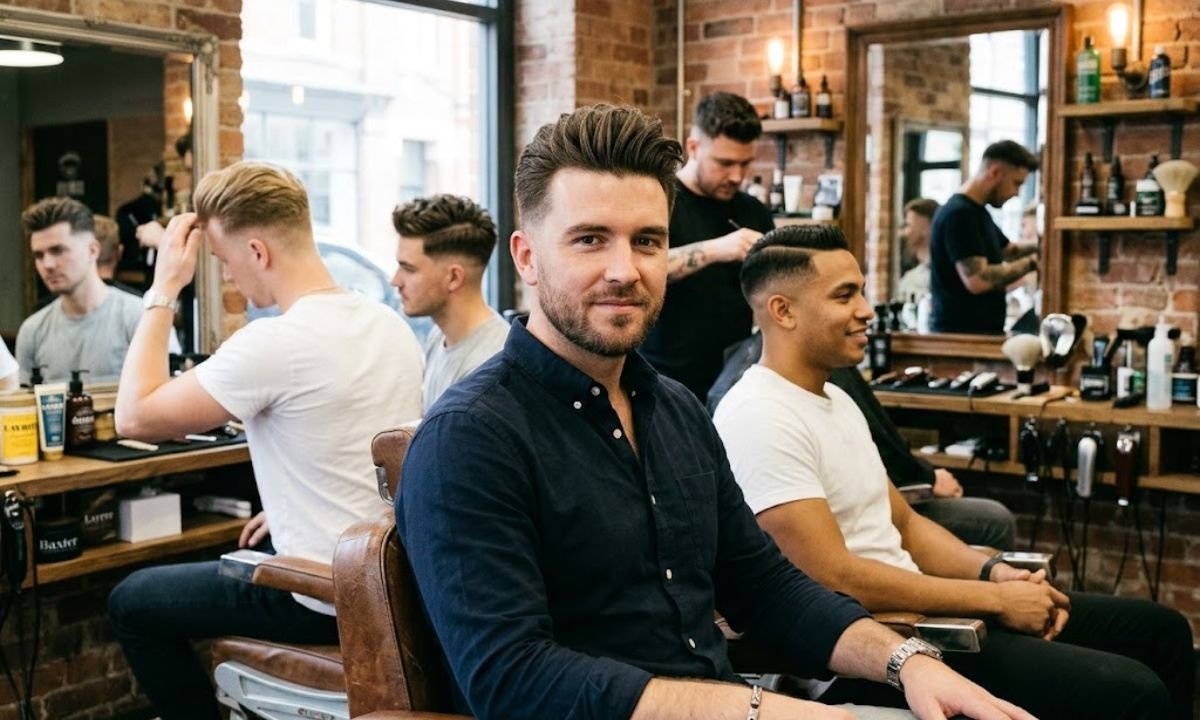
Want a haircut that looks sharp with zero effort once you get the hang of it? The quiff is your answer.
It’s hair swept upward at the front, shorter sides, and a finish that works for a wedding, a job interview, or a lazy Sunday brunch. This guide covers all 38 styles, how to ask your barber for one, how to style it at home, and the products that actually work.
Let’s get into it.
What Is a Quiff Haircut?
A quiff haircut is built around one simple idea. You take the front section of hair and push it upward and slightly back, creating height and volume right where your forehead meets your hairline. The sides stay shorter, sometimes faded, sometimes just trimmed close.
That contrast is what makes the quiff pop. You get a lifted front section paired with a clean, controlled base. It’s not as tall as a pompadour and not as flat as a standard side part. It sits right in the sweet spot between bold and wearable.
Guys everywhere wear it because it adapts. Dress it up with a structured hairstyle and slicked finish, or dress it down with a messy finish and a bit of natural texture. Either way, it still reads as a quiff.
The Origin of the Quiff Hairstyle
The quiff traces back to the 1950s rockabilly scene, where guys used heavy pomade to build hair swept backward off the forehead, inspired by early rock and roll icons. Elvis basically made it a cultural symbol before it ever had a name in mainstream fashion magazines.
It came roaring back in the 2010s, thanks to footballers and musicians who paired it with tight fades on the sides. That combo of old school volume and modern clean fade styling is exactly what powers most of 2026’s popular versions.
Today it’s less about one exact look and more a philosophy. Push the top up, keep the sides tidy, and let your hair type decide the rest.
Key Features of a Quiff Haircut
Every quiff, no matter the variation, shares a few core traits. Length on top runs longer than the sides, giving you enough hair to lift and shape. That length is what allows the volume at the top to actually hold its form throughout the day.
The sides and back are cut shorter, usually with some kind of taper or fade. This creates sharp contrast between the long top and the short base, which is the visual signature of the whole style.
Finally, there’s a directional element. The hair doesn’t just sit there. It’s brushed, blown, or combed in one clear direction, usually up and slightly back, for that natural hair movement every good quiff needs.
Why Men Love Quiff Haircuts
Guys gravitate toward the quiff because it’s genuinely low effort once you learn the routine. A few minutes with a blow dryer and the right product, and you’re done for the day. No constant fussing required.
It also flatters a wide range of face shapes and hair type combinations. Thick, thin, straight, curly, it doesn’t matter much. There’s a version of the quiff built for almost everyone, which is rare for a single haircut category.
And honestly? It just looks good in photos. The height adds a bit of confidence to your silhouette without looking like you tried too hard. That balance of effort and payoff is hard to beat.
Who Should Get a Quiff Haircut?
If you’ve got at least two to three inches of hair on top, you’re in business. The quiff needs some length to build root lift, so guys growing out a buzz cut might need a few more weeks before it looks its best.
It works especially well if you want a haircut that transitions easily between casual and formal. One product change and a different comb direction, and the same cut goes from weekend mode to boardroom ready.
That said, if you hate any kind of daily styling, you might want a lower maintenance variation, which we’ll cover later in this guide. There’s a quiff for busy schedules too.
Top 38 Quiff Haircut Styles for Men in 2026
Here’s the full lineup. Each one below brings something different to the table, whether that’s fade placement, texture, or overall vibe. Pick the one that matches your face shape, your hair type, and honestly, your personality.
1. Classic Quiff Haircut
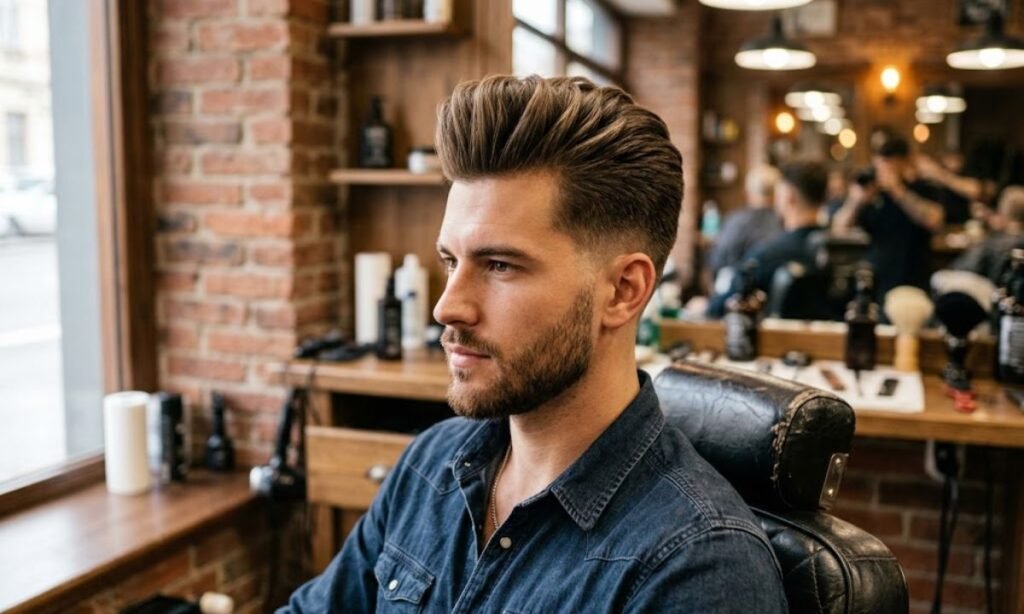
This is the original blueprint. Medium length on top, hair swept backward with a bit of lift, and sides kept neat with scissors or a light taper. No dramatic fade needed here.
It’s the version most barbers picture the moment you say “quiff.” Clean, timeless, and genuinely hard to mess up if you’re new to the style.
Pair it with a medium-hold product for a natural look that doesn’t scream “I spent an hour on this.”
2. Modern Quiff Haircut
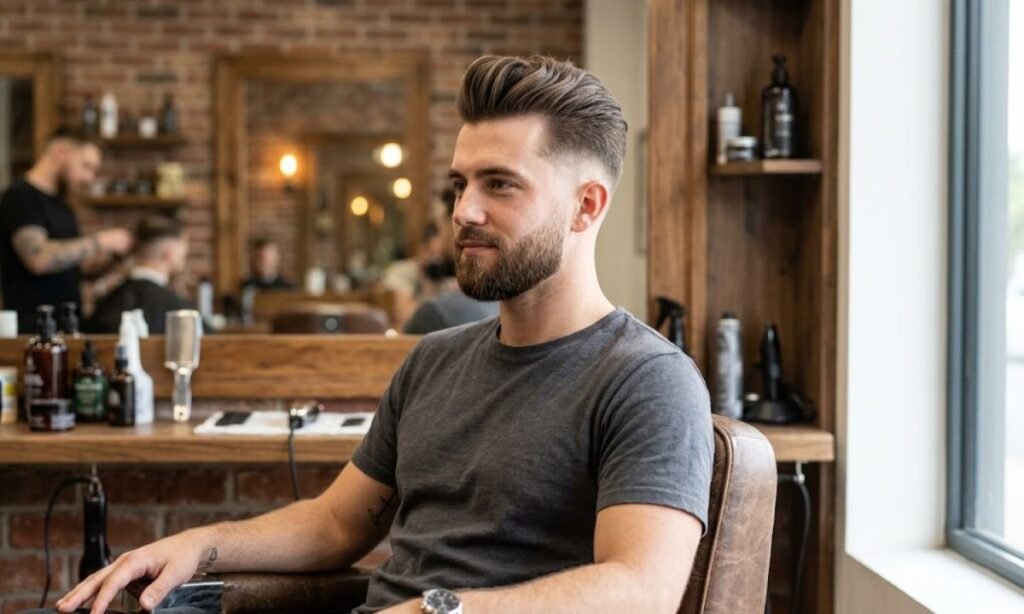
The modern take leans into sharper lines. Think a skin fade on the sides with a defined parting and a slightly more angular front section than the classic version.
It’s built for guys who want that old school silhouette but with a distinctly current finish. The contrast between shaved sides and voluminous top is turned up a notch.
Great for photos, interviews, and anywhere you want to look intentional rather than accidental.
3. Short Quiff Haircut
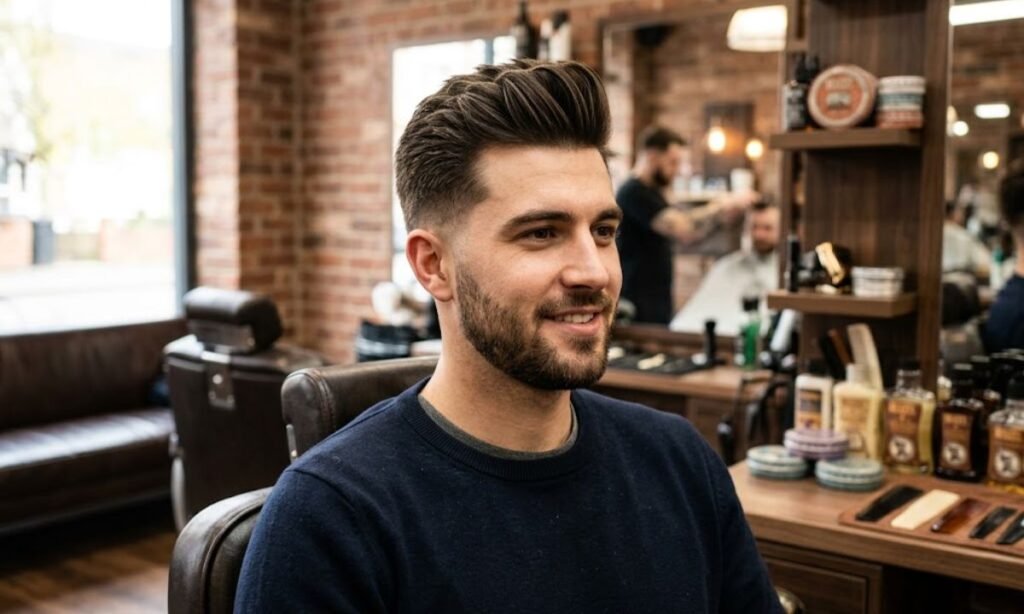
Not everyone wants a tall style, and the short quiff respects that. You still get a lifted front section, just with less overall height and a more compact shape.
It’s ideal for office environments or guys who just prefer a subtler look. The shorter sides stay tight, and the top gets just enough length to style without going big.
Maintenance is easier too, since there’s less hair to control and less time needed each morning.
4. Long Quiff Haircut
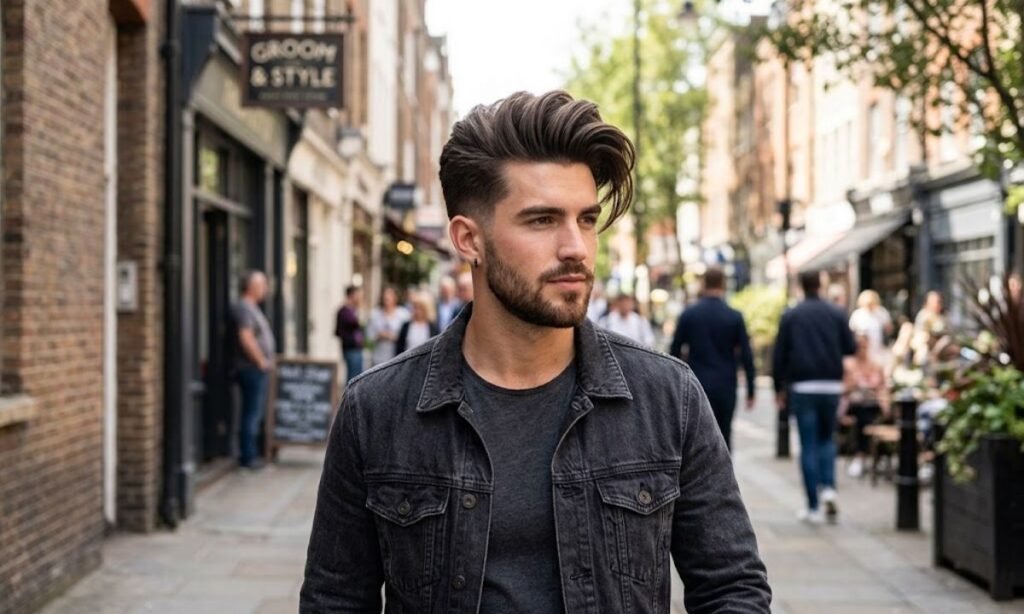
If you’ve got the patience to grow it out, the long quiff delivers serious drama. We’re talking four or more inches on top, giving you dramatic height and volume that towers above the sides.
This version needs strong product and a decent blow dryer session to hold its shape. Without that, it tends to flop rather than stand.
It’s a statement cut, best suited for guys who genuinely enjoy the daily styling process.
5. Textured Quiff Haircut
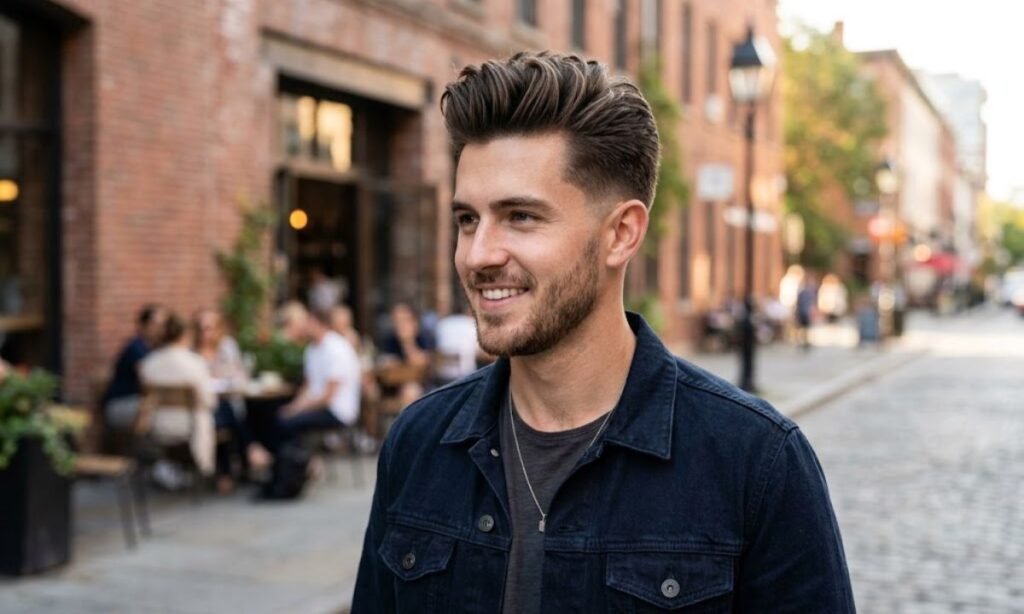
Texture changes everything. Instead of a smooth, glassy finish, this version leans into a rougher, more tactile textured finish using texture powder or a matte paste.
The result feels less styled and more effortless, even though there’s real technique behind it. It photographs beautifully under natural light thanks to all that dimension.
This is a favorite for guys with naturally wavy hair, since the texture works with what you’ve already got.
6. Messy Quiff Haircut
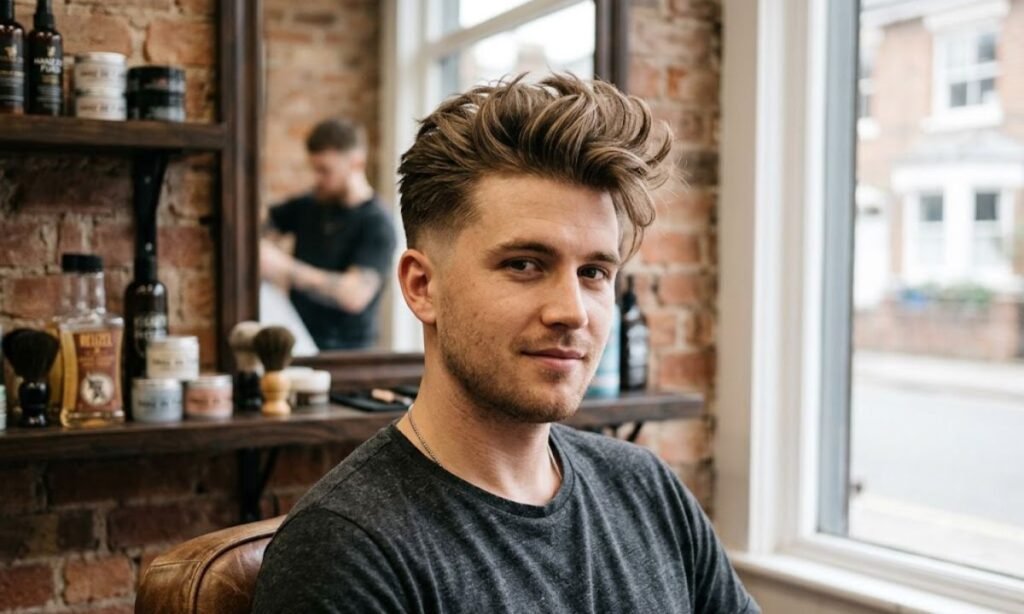
Some days you just want low key. The messy quiff takes the same basic shape but skips the precision, giving you a relaxed messy finish instead of a polished one.
Run your fingers through damp hair with a bit of sea salt spray, let it air dry a little, and you’re basically done. It’s the definition of intentional carelessness.
Surprisingly versatile too. It works for beach days just as easily as casual Fridays at the office.
7. Taper Fade Quiff
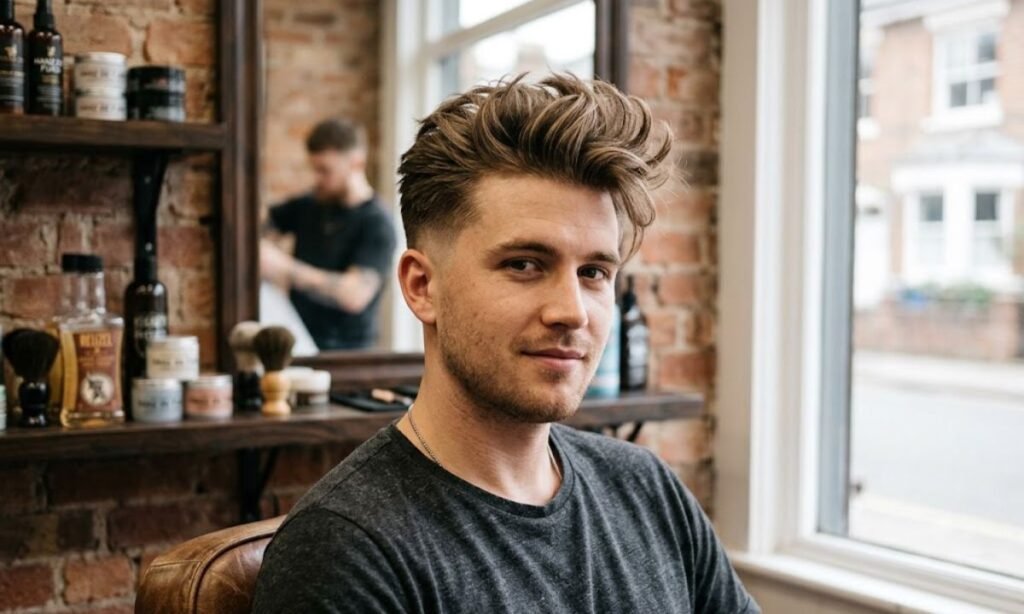
The taper fade quiff uses a gradual taper on the sides instead of a hard shave line. Hair gradually shortens as it moves down toward the ears and neckline.
This creates a softer transition than a full fade, which some guys prefer for a more subtle, professional appearance. It’s a safe bet if you’re unsure how bold you want to go.
Combine it with a natural top for a look that reads as put together without trying too hard.
8. Low Fade Quiff
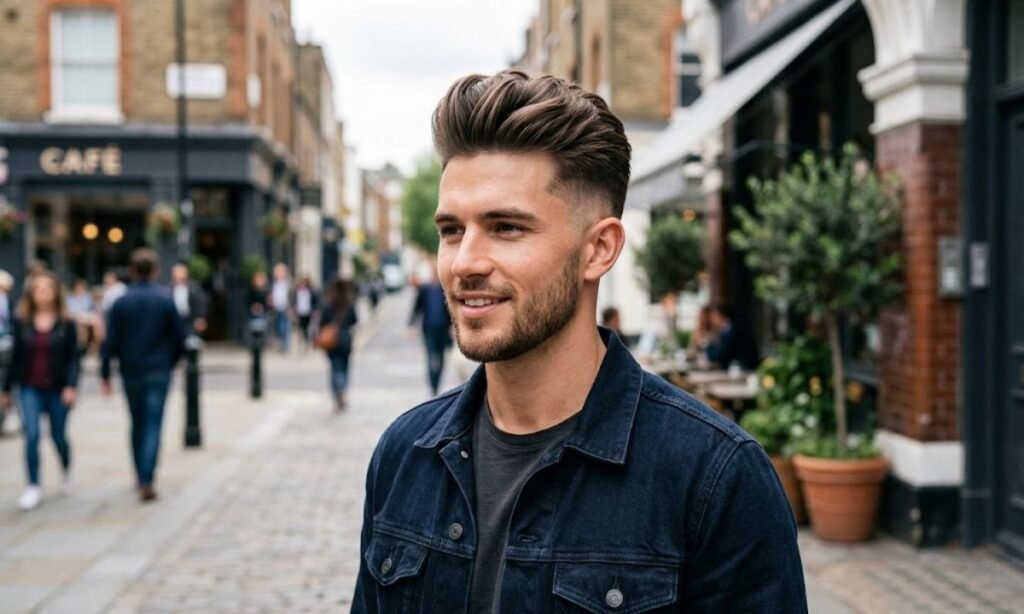
A low fade quiff keeps the fade close to the hairline, right above the ears, rather than climbing higher up the head. It’s the most conservative fade placement available.
This makes it ideal for workplaces with stricter dress codes, since it still looks like a fairly traditional haircut from a distance. The volume on top does the visual work instead.
It’s also a smart pick if you want your fade to grow out gracefully between trims.
9. Mid Fade Quiff
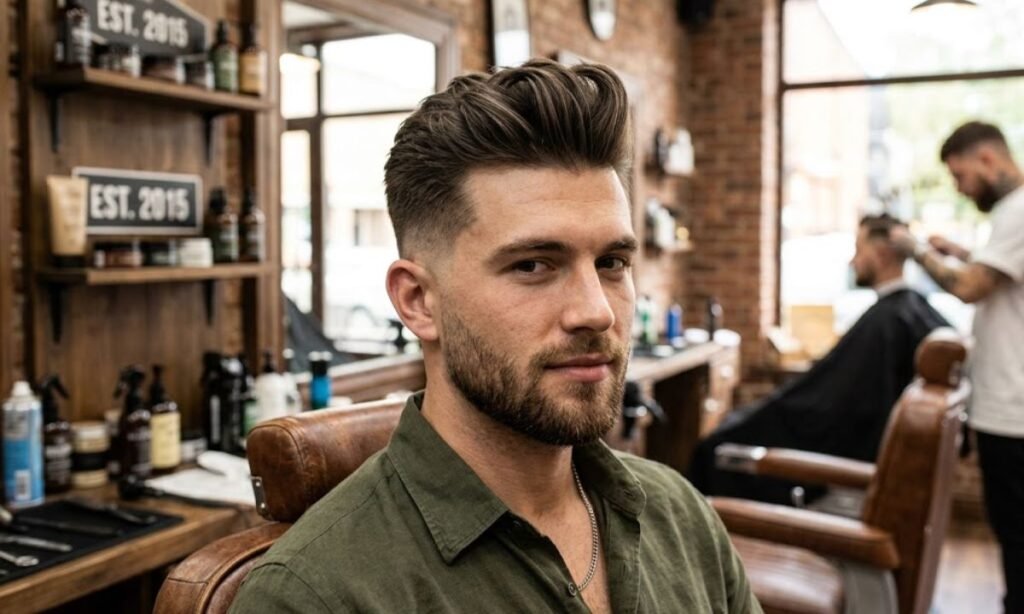
Sitting right between low and high, the mid fade quiff starts around temple level. It’s the most popular fade height for a reason: balance.
You get enough sharp contrast to look modern, without the fade climbing so high it dominates the whole cut. Most barbers default here unless you ask for something specific.
It pairs well with almost every quiff variation on this list, from classic to messy.
10. High Fade Quiff
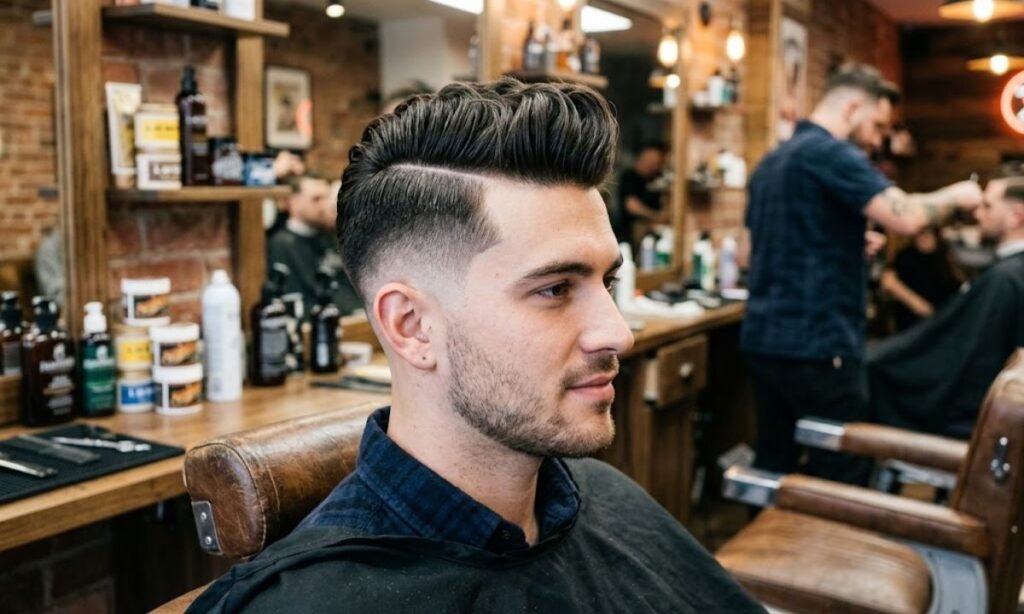
Want maximum drama? The high fade quiff starts near the top of the head, leaving a much smaller area of longer hair for the quiff itself.
This creates the boldest sharp contrast on this entire list. It’s a striking, confident look, but it does require more frequent trims to keep the fade line crisp.
Best for guys who genuinely enjoy a statement haircut and don’t mind the extra barbershop visits.
11. Skin Fade Quiff
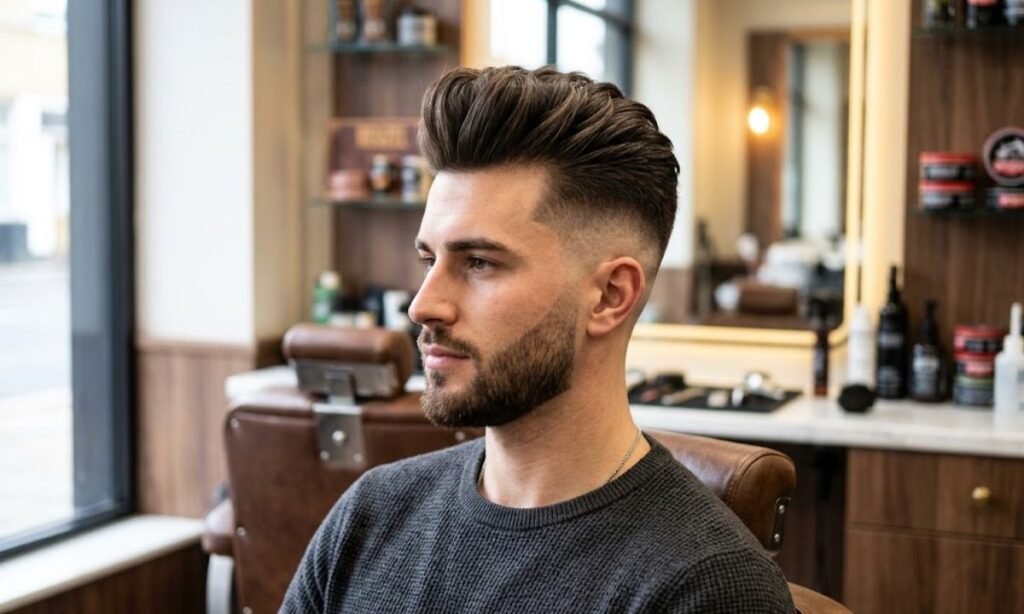
The skin fade quiff takes things down to bare skin at the sides before blending into the longer top section. It’s as sharp as fades get.
That bare skin creates an incredibly clean fade line, which some guys find addictive once they try it. It photographs sharply and holds its shape well between cuts.
Needs upkeep every couple weeks though, since skin grows out fast and fuzzy.
12. Burst Fade Quiff
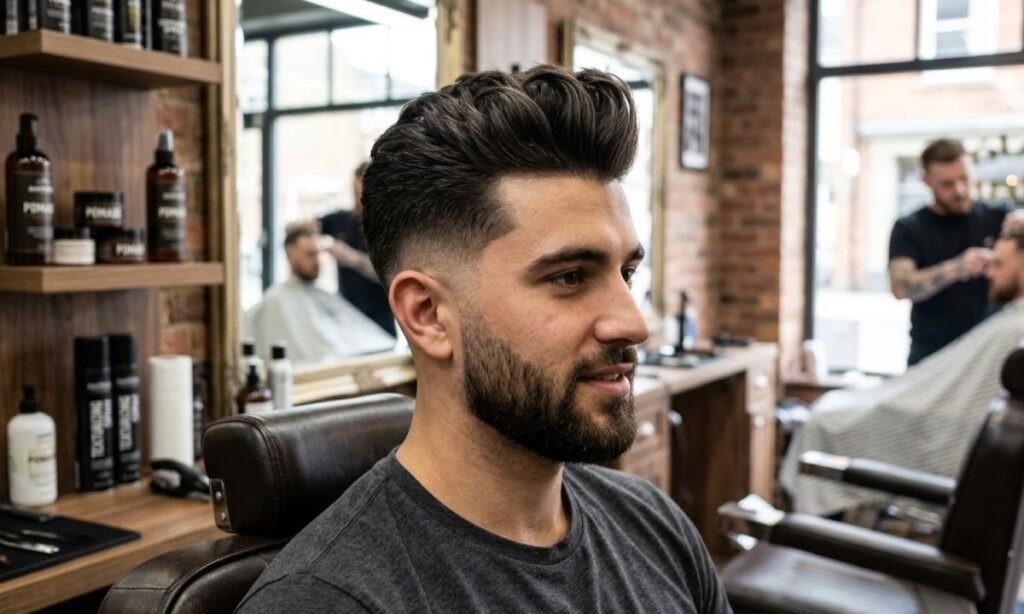
A burst fade quiff curves the fade around the ear instead of running in a straight horizontal line. It’s called a “burst” because the fade radiates outward like a small explosion.
This creates a really distinctive fade around the ear, especially when paired with slightly longer hair at the back and sides. It’s a favorite among guys who also keep some length in the back.
Great option if you want your fade to feel a little different from the standard crowd.
13. Drop Fade Quiff
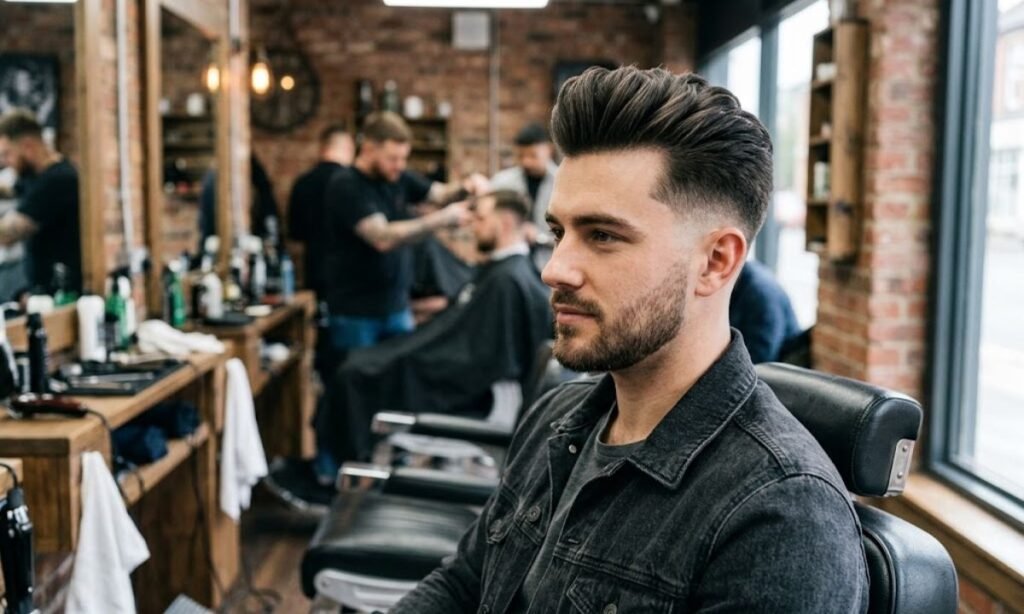
The drop fade quiff dips lower behind the ear before curving back up toward the neckline. That subtle curved fade adds visual interest without looking chaotic.
It works especially well on guys with rounder head shapes, since the drop follows the natural curve instead of cutting a harsh straight line.
Ask your barber specifically for a drop, since it’s a bit more technical than a standard fade to execute well.
14. Undercut Quiff
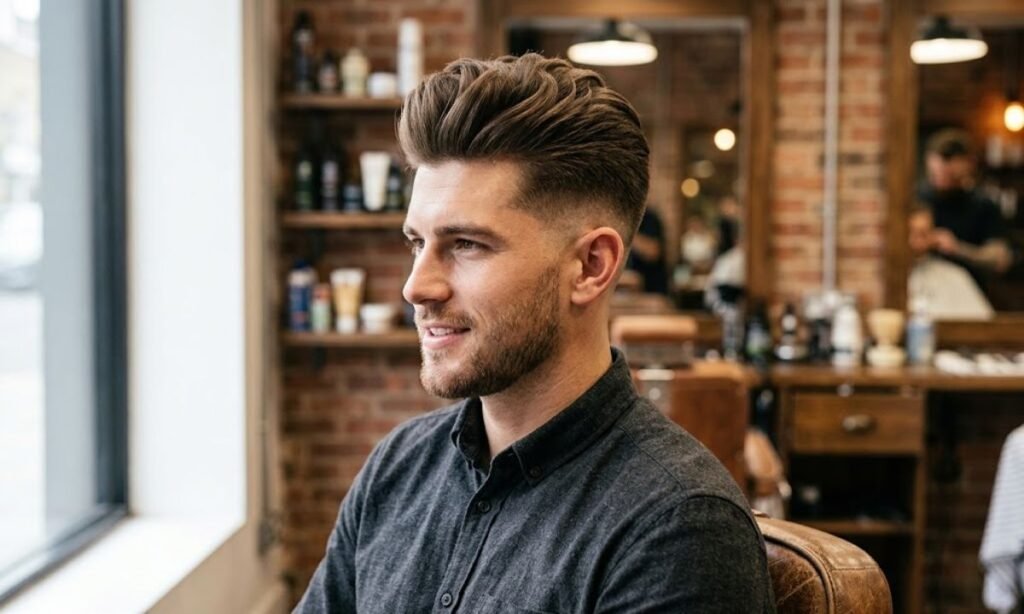
The undercut quiff goes short, sometimes even shaved, underneath a much longer top section, with a hard line separating the two. It’s a disconnected transition by design.
This is one of the boldest options here. There’s no gradual blend, just a clear jump from long to short. It demands confidence but delivers serious visual punch.
Pair it with slicked back quiff styling for maximum drama on nights out.
15. Slicked Back Quiff
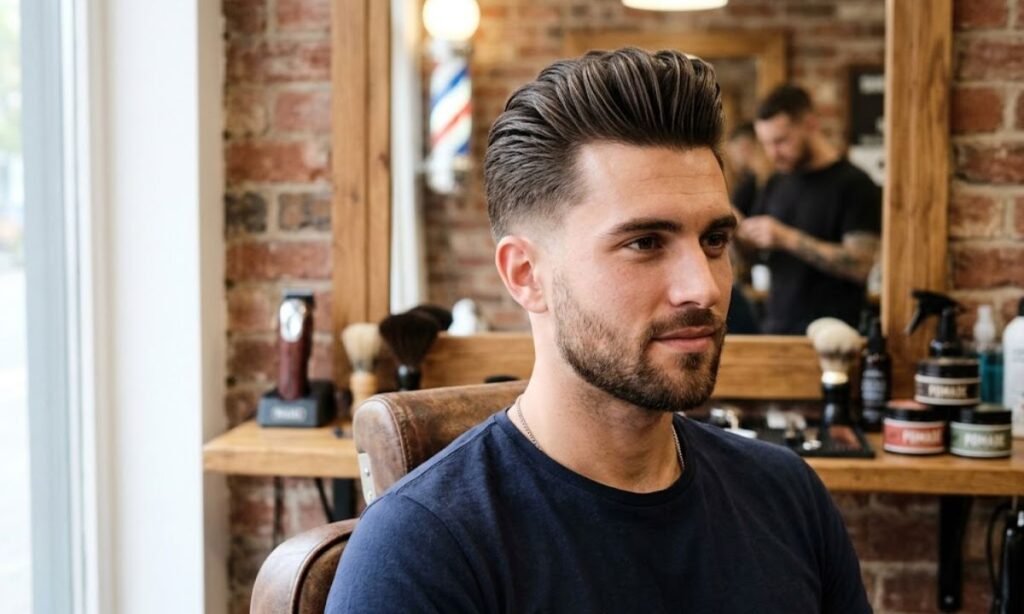
This version skips the upward lift in favor of a fully smoothed, hair swept backward finish. Think old Hollywood glamour meets modern grooming.
Pomade is basically non negotiable here. You need serious shine and hold to keep every strand tracking in the same direction without flyaways ruining the effect.
It’s the go to choice for weddings, formal events, or anytime you want a polished appearance that reads as effortlessly sophisticated.
16. Side Part Quiff
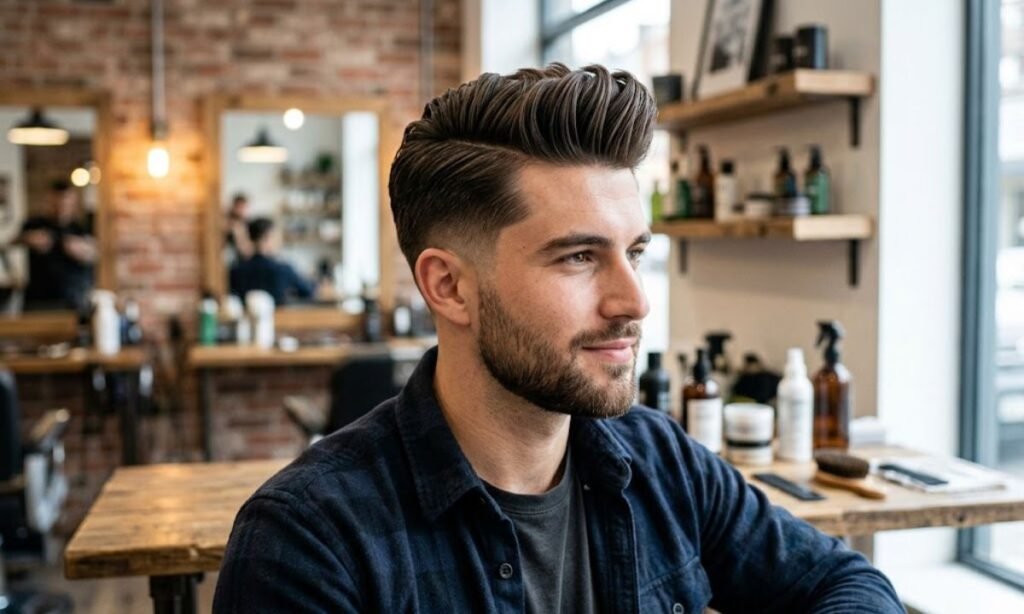
Combine a defined parting with quiff volume, and you get this hybrid. The part gives structure, while the height keeps it from looking like a plain office cut.
It’s one of the more professional entries on this list, honestly. Great for interviews, client meetings, or anywhere a bit of formality is expected but total flatness isn’t your style.
A strong-hold product helps the part stay crisp through a long workday.
17. Comb Over Quiff
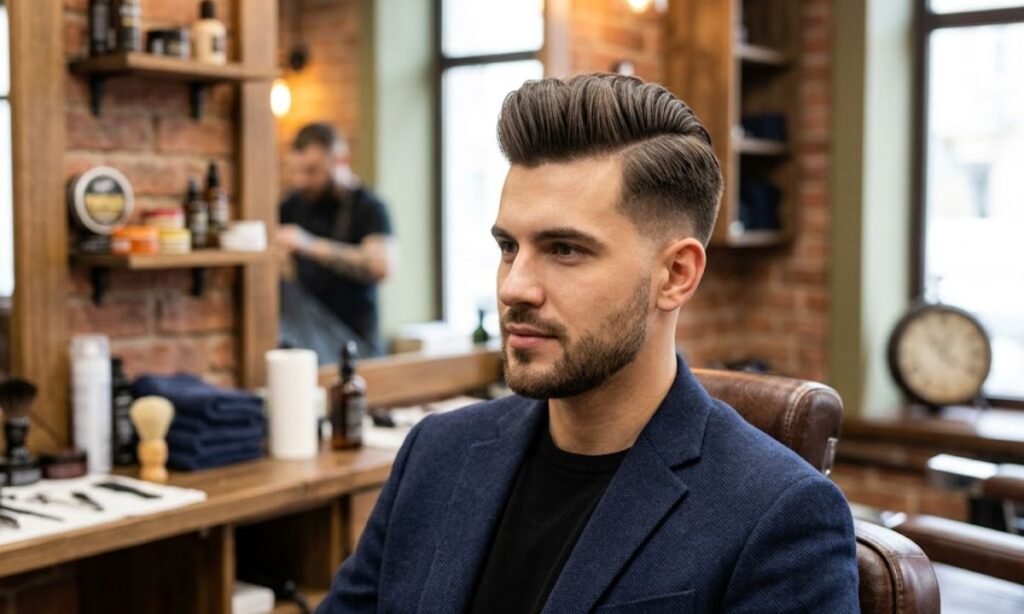
Similar to the side part but with a longer sweep across the top instead of a hard part line. It’s a structured hairstyle with a softer, more blended finish.
This one flatters guys who want coverage across the forehead along with height. The comb over quiff direction can shift the visual balance of your whole face.
Great transitional style between a strict side part and a full upward quiff.
18. Curly Quiff Haircut
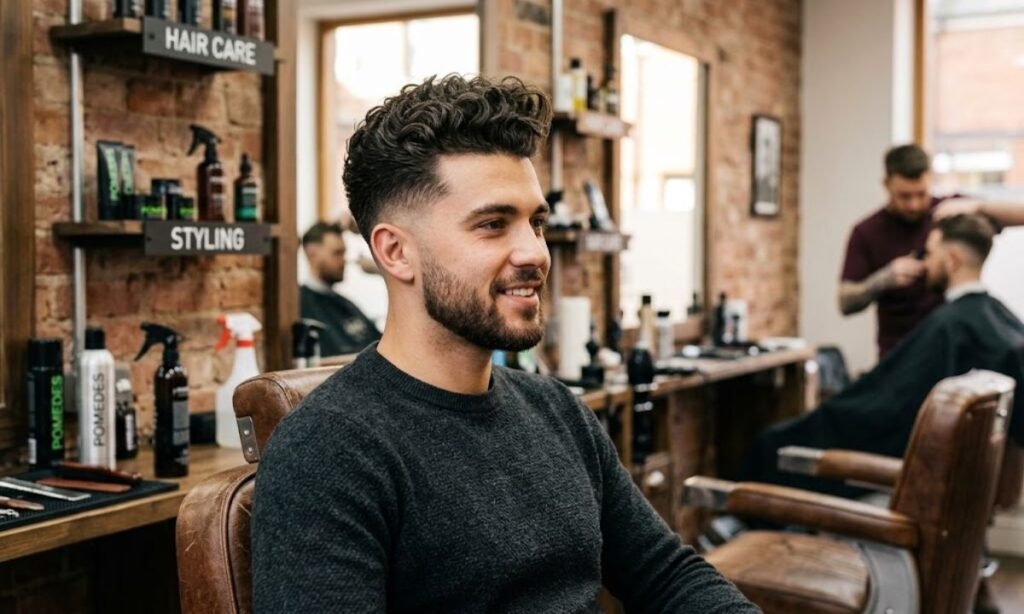
Working with curly hair? This version leans into your natural spring instead of fighting it. Curls get lifted and shaped rather than flattened into submission.
A lightweight curl cream or texture paste helps define individual curls while still building that signature front height. It genuinely looks better the less you fuss with it.
This is proof that a quiff doesn’t need pin straight hair to work beautifully.
19. Wavy Quiff Haircut
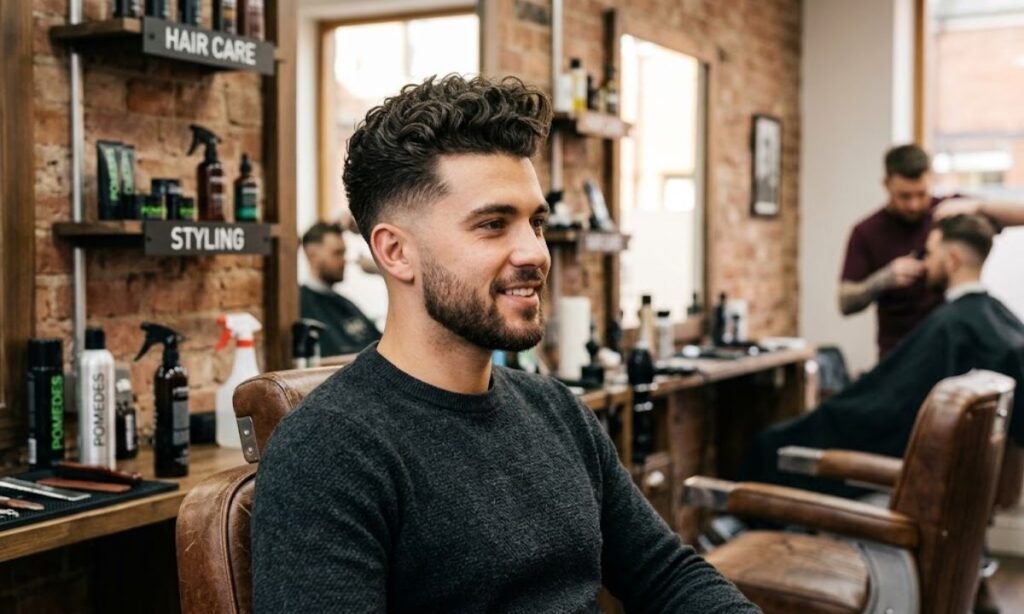
Wavy hair brings natural texture that plays perfectly into the quiff’s whole aesthetic. You get built in movement without needing much product at all.
A bit of sea salt spray enhances what’s already there, giving you that lived in, natural texture finish that straight hair takes more effort to fake.
Low maintenance and naturally photogenic. Honestly one of the easier hair types to work with here.
20. Thick Hair Quiff

Thick hair gives you plenty of raw material to build serious height and volume. The challenge is usually taming it, not creating lift in the first place.
A matte clay or firm paste helps control the density without weighing it down completely. You want structure, not a flat, compressed mess by midday.
Ask your barber to thin it slightly with thinning shears if it feels too bulky to style comfortably.
21. Thin Hair Quiff

Thin hair and fine hair need a different strategy. Volumizing mousse applied at the roots creates lift that fine strands can’t generate on their own.
Blow drying upside down for the first minute genuinely helps here, building root lift before you even reach for product. It’s a small trick with a big payoff.
Skip heavy pomades, which tend to flatten thin hair instead of lifting it.
22. Asian Quiff Haircut
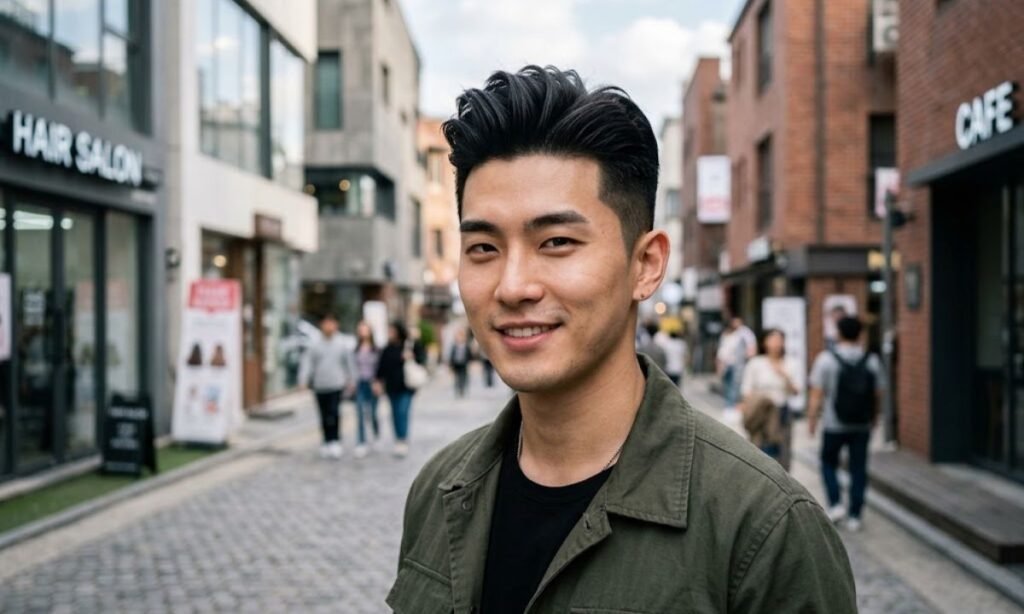
The Asian quiff typically works with straighter, denser hair, which holds shape differently than wavy or curly textures. It often pairs beautifully with a taper fade on the sides.
Texture powder helps break up the natural smoothness for a bit of grip and separation, since straight hair can otherwise look too sleek and uniform.
This version tends to favor a slightly softer front lift rather than an aggressive vertical peak.
23. Pompadour Quiff
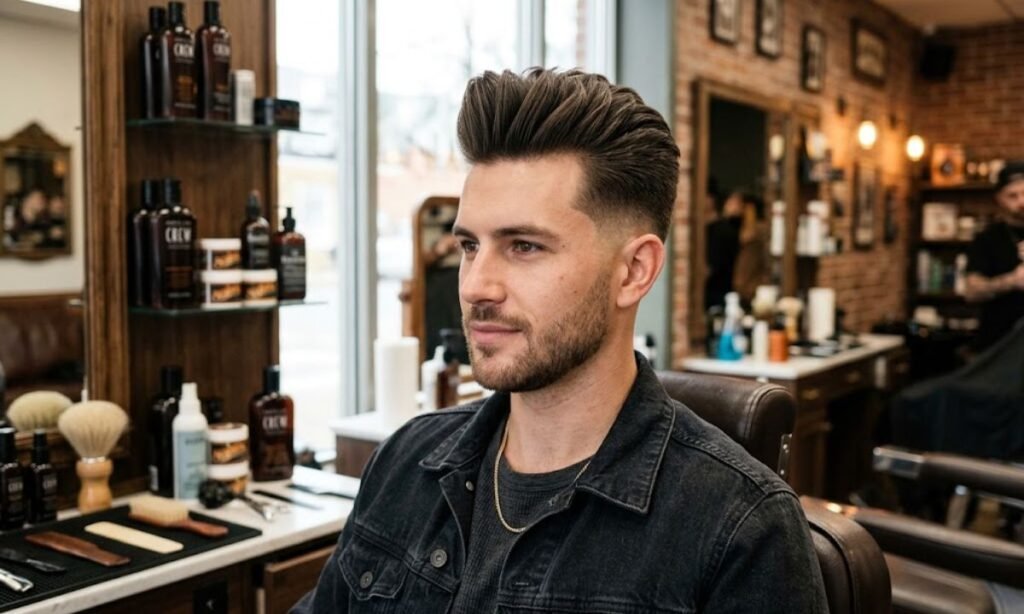
A hybrid that borrows the pompadour’s dramatic backward sweep but keeps the quiff’s more relaxed, less towering front height. Best of both classic styles in one cut.
It needs a strong-hold product and some blow dryer technique to get that rounded, swept back shape without collapsing by afternoon.
Great pick if you love the pompadour aesthetic but want something a touch more wearable day to day.
24. Beard with Quiff Haircut
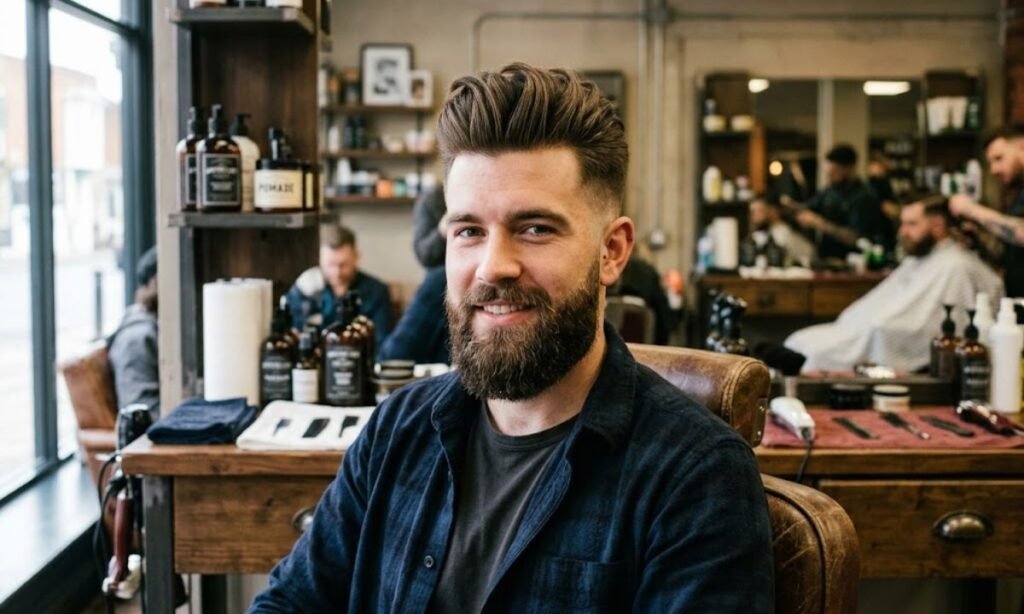
Pairing a quiff with beard growth creates serious facial balance. The height up top and fullness down below frame your whole face nicely.
This combo works especially well for square face and diamond face shapes, since the beard softens angles while the quiff adds vertical interest.
Keep both groomed regularly. An unkempt beard undercuts even the sharpest haircut sitting above it.
25. Razor Fade Quiff
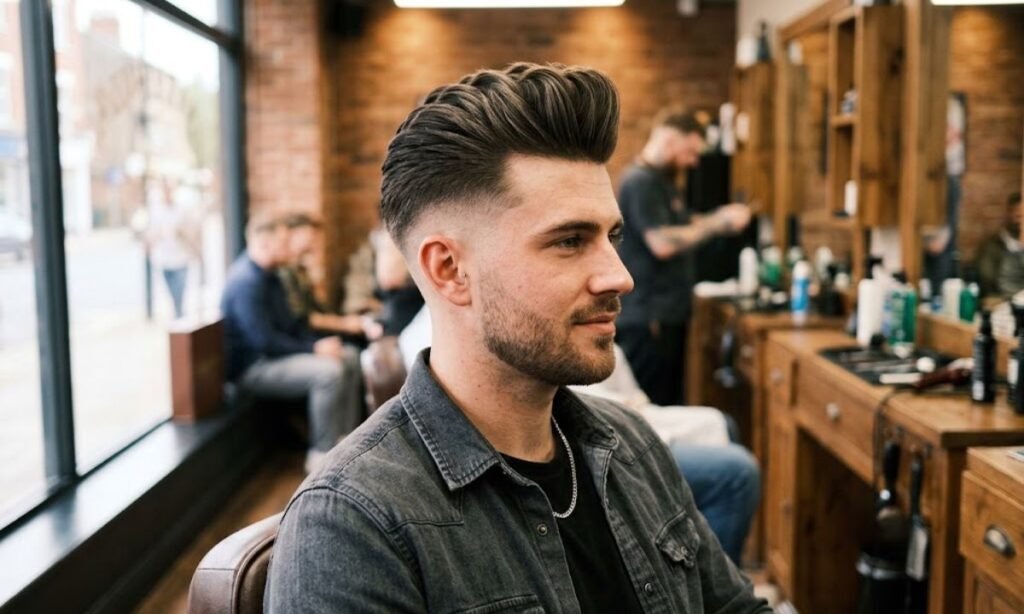
A razor fade uses an actual razor rather than clippers for the fade section, creating an ultra smooth, almost seamless blend into the skin.
The result is a genuinely razor-cut line that feels sharper and more refined than a standard clipper fade. It’s a technique thing, so find a barber who specializes in it.
Slightly higher maintenance since razor work needs more frequent touch ups to stay crisp.
26. Disconnected Quiff
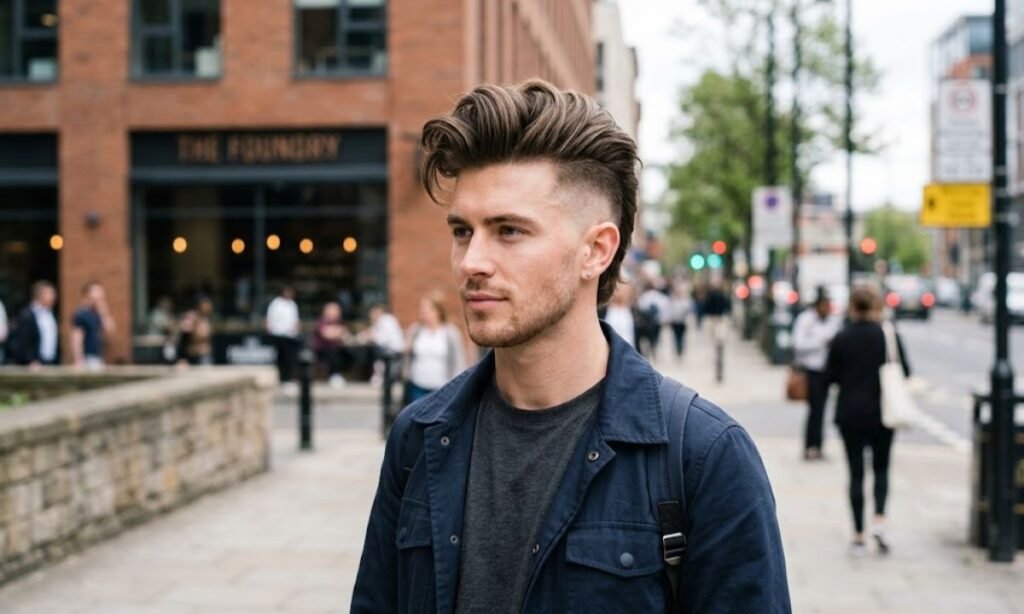
Similar to the undercut but even more dramatic. There’s a hard, visible break between the long top and the short sides, with zero blending in between.
This creates the boldest disconnected transition on the whole list. It’s a favorite among guys who want their haircut to feel unmistakably modern and a little edgy.
Not for the faint of heart, but incredibly striking when done well.
27. Quiff with Hard Part
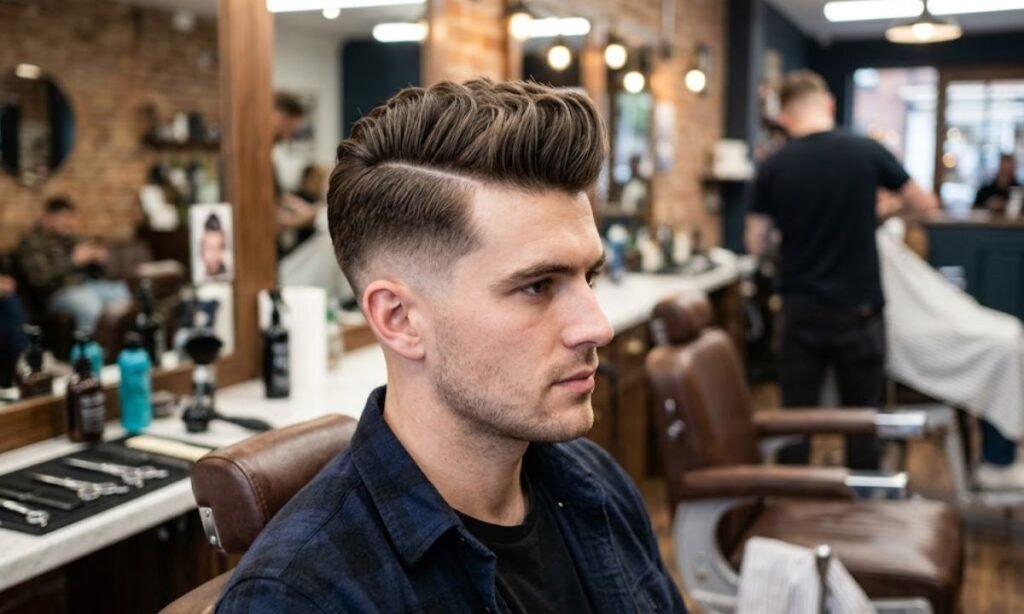
A quiff with hard part uses an actual razor line shaved into the hair to create the parting, rather than just combing one in. It’s permanent until it grows out.
That defined parting becomes a real design element instead of a subtle detail. It adds a graphic, almost architectural quality to the whole haircut.
Needs regular touch ups to keep the line sharp, roughly every two to three weeks.
28. Brushed Up Quiff
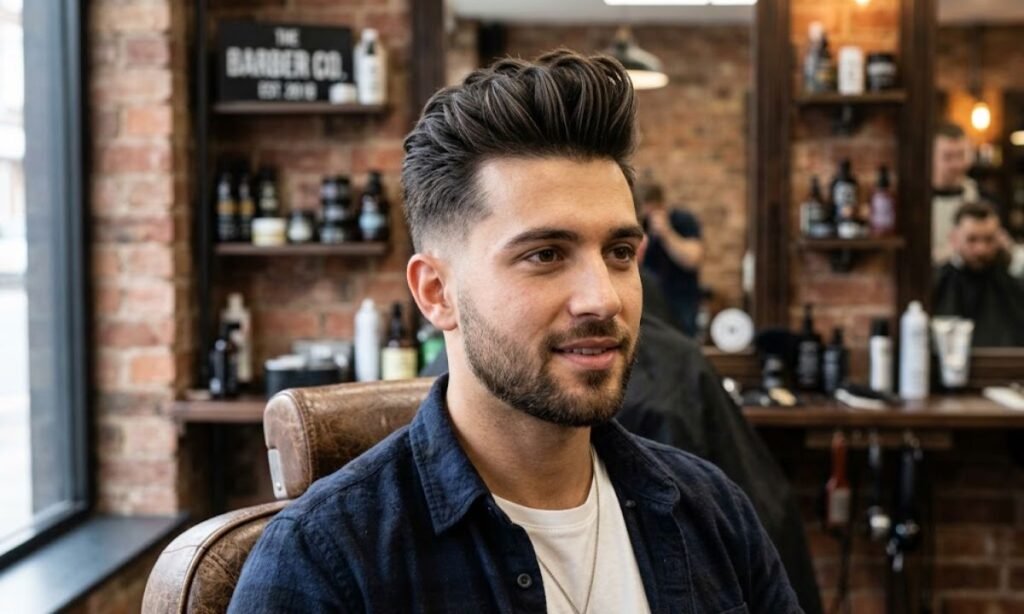
This version skips the backward sweep entirely and goes straight up instead. A round brush and blow dryer combo creates serious vertical lift right at the front.
It’s bold, energetic, and genuinely eye catching. Think less “polished businessman” and more “confident and a little playful.”
A strong-hold product is essential here, since gravity works against pure vertical height all day long.
29. Spiky Quiff Haircut
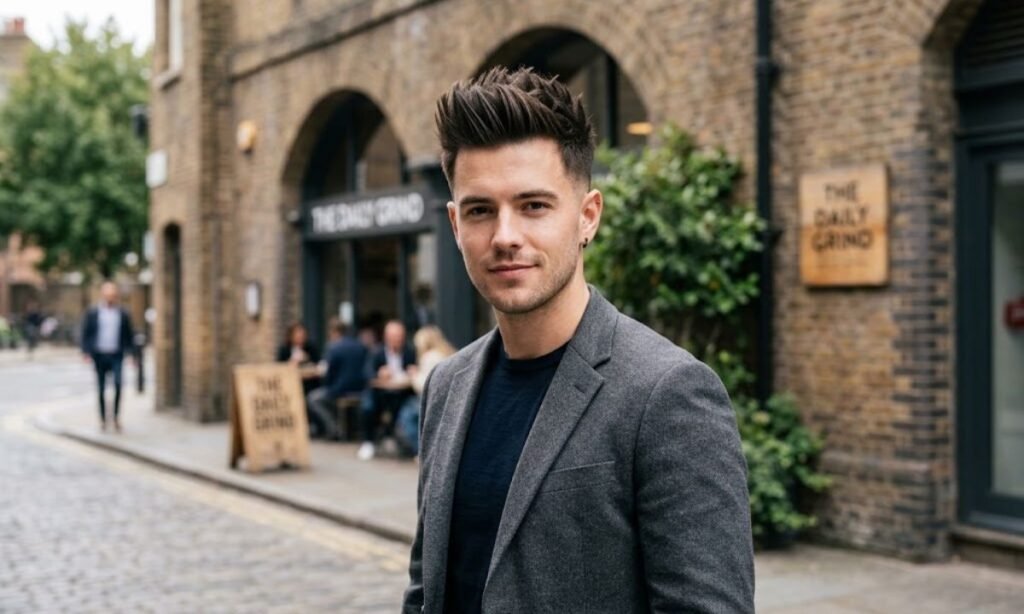
The spiky quiff breaks the front section into defined, textured pieces rather than one smooth wave. Think controlled chaos instead of a single sweeping shape.
Hair wax works best for this look, since it offers the tacky grip needed to hold individual spikes without turning crunchy or stiff.
A fun, youthful option that photographs well and works great for guys who want personality over polish.
30. Professional Business Quiff

Built specifically for corporate environments, this version keeps everything conservative. Moderate height, a low fade quiff or simple taper, and minimal texture.
It’s a polished appearance through and through, the kind of cut that works in a courtroom just as easily as a client pitch meeting.
A medium-hold product with light shine keeps it neat without looking overly done up.
31. Quiff Mullet
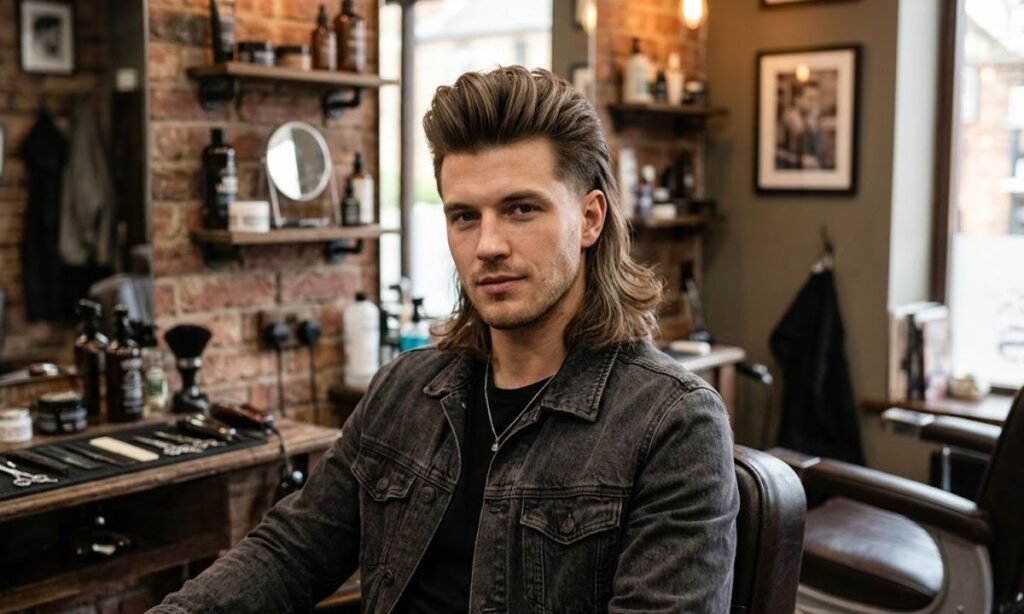
Yes, it’s exactly what it sounds like. Quiff volume up front, mullet length in the back. The quiff mullet is unapologetically bold and very much a 2026 trend.
It works best on guys who already lean into distinctive style choices. This isn’t a cut you slide into quietly, it makes a statement from every angle.
Needs regular trims to keep the front and back proportions from getting out of hand.
32. Quiff Mohawk Fade
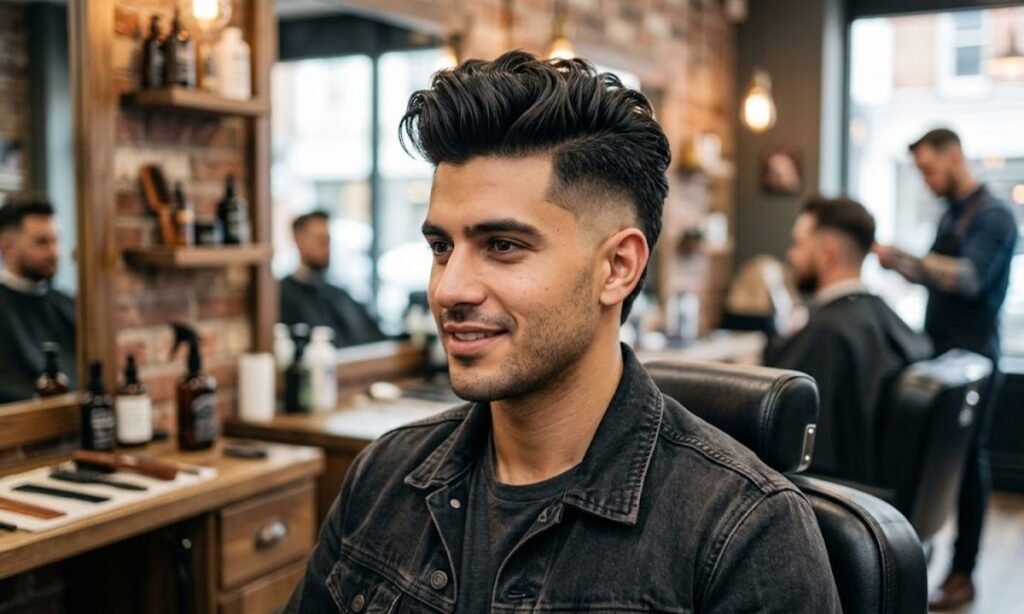
Combining quiff height with mohawk styling, this version tapers the sides down to almost nothing while keeping a strip of longer hair running front to back.
The quiff mohawk fade delivers serious edge. It’s less about everyday wearability and more about making an unmistakable visual impact.
Best suited for creative industries or anywhere personal expression through hair is genuinely welcomed.
33. Low Maintenance Quiff

Not everyone wants a daily styling ritual, and this version respects that. Shorter overall length and minimal product needs make the low maintenance quiff genuinely practical.
A quick run of matte clay through damp hair in the morning, and you’re set for the day. No blow dryer session required.
Perfect for guys who want the quiff silhouette without committing serious time to upkeep.
34. Volume Quiff Haircut
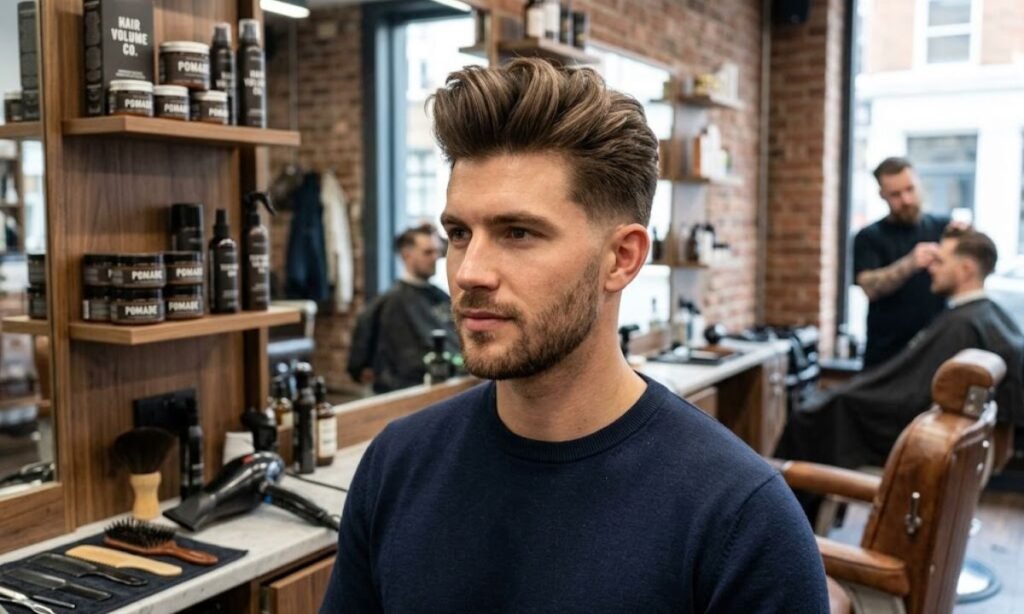
This one’s all about maximizing hair volume everywhere, not just at the front. Sides stay a bit longer too, creating fullness across the whole head.
Volumizing mousse and proper blow drying technique are essential here. Without both, the shape tends to deflate faster than you’d like.
Great option for guys whose hair naturally sits flat and needs real intervention to build presence.
35. Modern Gentleman Quiff
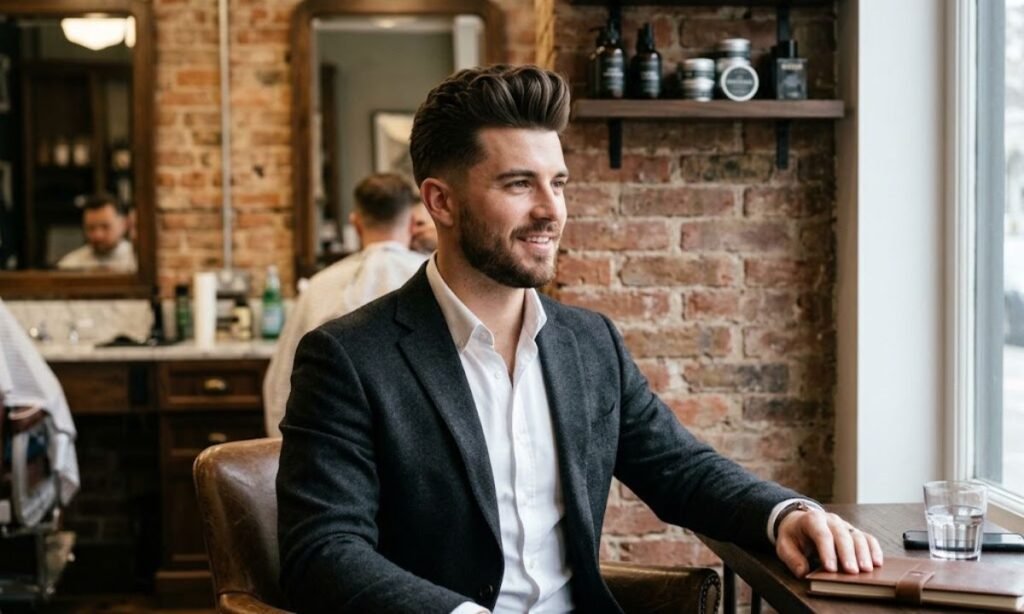
A refined, understated take that leans into natural movement rather than heavy structure. Soft height, subtle taper, and a finish that looks effortlessly put together.
This is the quiff for guys who want to look sharp without appearing like they tried too hard. It’s confidence through restraint rather than drama.
Works beautifully for date nights, dinners, and anywhere subtlety wins over spectacle.
36. Trendy Quiff Haircut
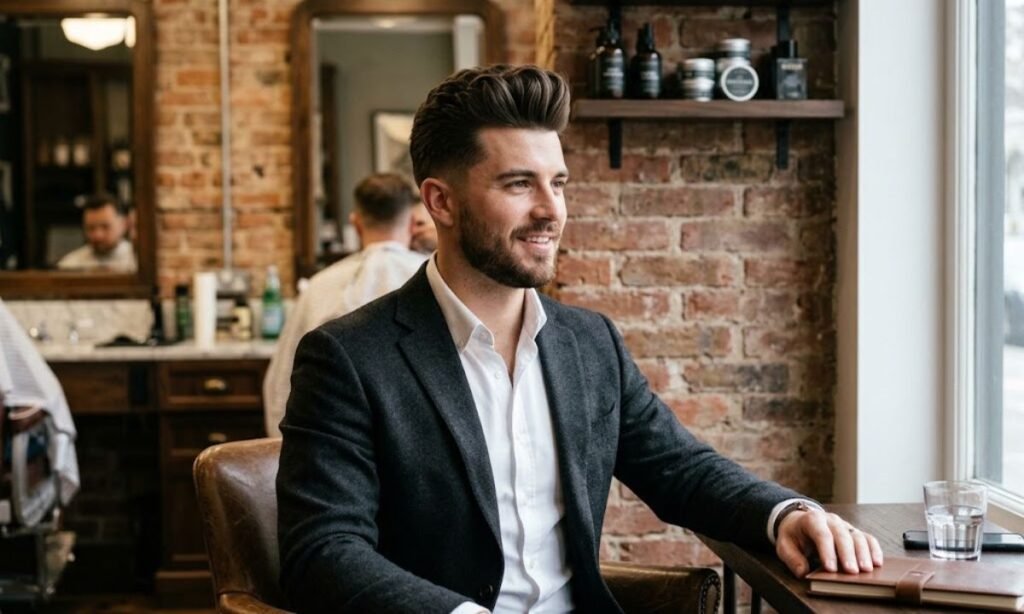
This one shifts constantly, blending whatever’s currently popular, whether that’s a specific fade height, a texture trend, or a particular product finish making the rounds online.
Right now in 2026, that means pairing a skin fade with heavily textured tops and a slightly disconnected transition for extra visual punch.
Talk to your barber about what’s trending locally, since this style evolves faster than almost any other on the list.
37. Curved Quiff Fringe
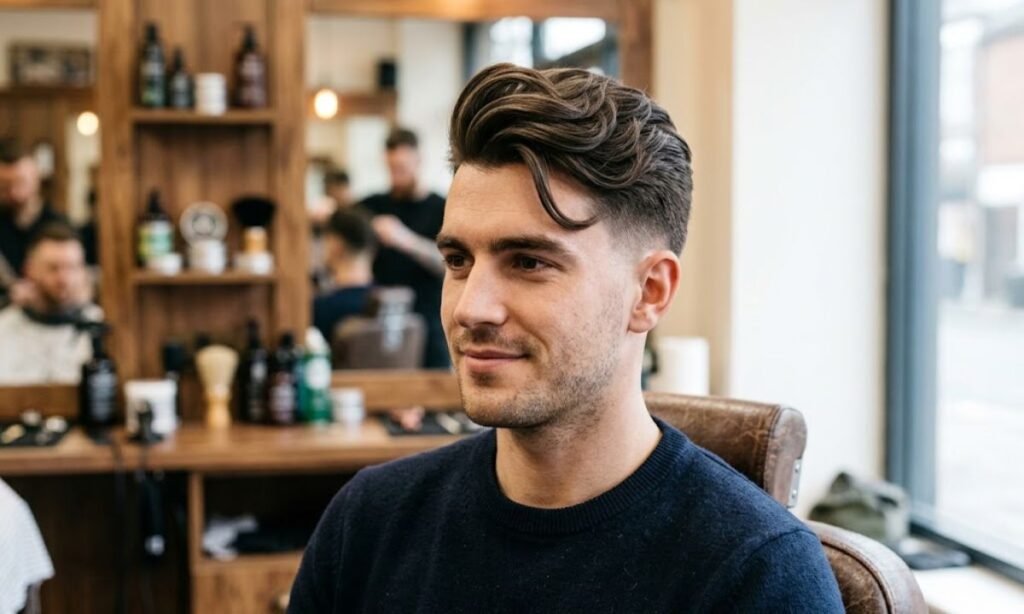
A softer variation where the front section curves gently to one side instead of standing straight up. It’s a lifted front section with a rounder, less angular finish.
This style flatters a round face particularly well, since the soft curve avoids adding harsh vertical lines that can exaggerate roundness.
A light texture paste keeps the curve looking natural rather than stiff or overly sculpted.
38. Executive Quiff
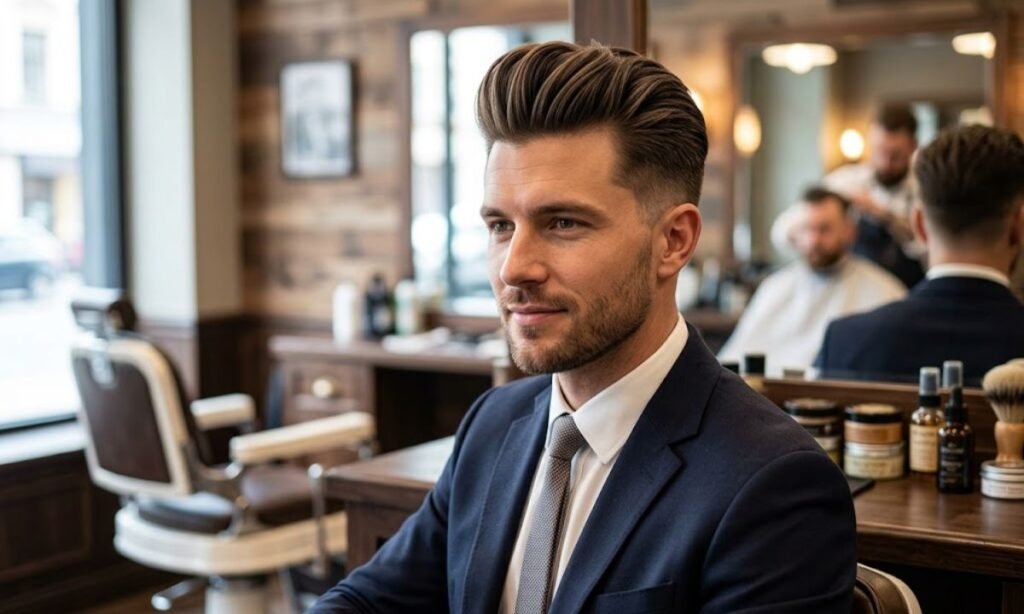
Built for boardrooms and formal settings, this version keeps height minimal and finish glassy smooth. Think slicked back quiff energy but scaled down for daily professional wear.
It’s conservative without being boring, giving you just enough personality through the front lift while everything else stays buttoned up and tidy.
A small amount of pomade for shine completes the look without tipping into flashy territory.
How to Ask Your Barber for a Quiff Haircut
Walking into a barbershop without a plan usually leads to a haircut that’s fine, not great. A few specific talking points make sure you and your barber land on the same page before the scissors even come out.
Barbers see dozens of clients a week, and vague requests like “just do something with volume” leave way too much room for interpretation. Get specific, and you’ll walk out happier.
Here’s exactly what to cover during that first conversation.
Choose Your Preferred Quiff Length
Decide roughly how much length you want on top before you sit down. Two inches gives you a subtle lift, while four or more builds serious height and volume.
Your natural hair length growth rate matters here too. If you want to maintain a longer style, ask how many weeks between trims will keep the shape intact.
Be honest with your barber about how much daily styling time you’re actually willing to commit to.
Decide on the Fade or Taper
Fade height changes the whole personality of your cut. A low fade quiff feels conservative, while a high fade quiff feels bold and modern.
If you’re unsure, ask your barber to start conservative. It’s always easier to go shorter at your next visit than to fix an overly aggressive fade too soon.
Mention whether you want a gradual taper or a hard skin fade, since those require genuinely different techniques.
Discuss Texture and Volume
Tell your barber about your natural hair type, whether that’s straight hair, wavy hair, or curly hair. This affects how they cut and layer the top section.
If you want a heavily textured finish, ask for point cutting rather than a blunt scissor cut. It creates the choppy, dimensional look that texture-focused quiffs need.
Volume goals matter too. Mention if you want maximum lift or something closer to a subtle, natural wave.
Show Reference Photos
Words only get you so far. Pull up two or three photos on your phone that capture the exact quiff for different hair types look you’re going for.
Even better, bring photos of guys with a similar face shape and hair texture to your own. It helps your barber translate the image realistically onto your specific head of hair.
Avoid bringing ten conflicting photos though. Pick your favorites and stay focused.
Mention Your Styling Routine
Be upfront about how much time you actually spend styling each morning. A five minute routine needs a different cut than one built around fifteen minutes with a round brush.
If mornings are chaos in your house, ask specifically for a low maintenance quiff variation. Your barber can adjust length and layering to match.
This honesty saves you from loving a haircut in the chair, then hating the daily upkeep once you’re home alone with a hairdryer.
How to Style a Quiff Haircut (Step-by-Step Tutorial)
Getting the technique down takes a few tries, but once it clicks, it becomes second nature. Here’s the exact routine that works for most quiff styling situations.
Think of this as your repeatable morning formula. Once your hands learn the motion, you’ll barely need to think about it.
Step 1: Wash and Towel Dry Your Hair
Start with clean, product free hair. Buildup from yesterday’s styling products makes it harder to create fresh volume at the top today.
Towel dry until hair is damp, not soaking wet. Too much moisture dilutes your styling product and slows down the whole process significantly.
This is also a good moment to apply a heat protectant if you’re about to use a blow dryer, which you almost certainly are for most quiff variations.
Step 2: Apply a Pre-Styling Product
Before blow drying, work a small amount of volumizing mousse through damp roots. This builds the foundation your final product will hold onto later.
Focus application at the roots of your front section specifically, since that’s where you need the most lift to begin with.
Skip this step and even the best styling product afterward will struggle to create real root lift.
Step 3: Blow Dry for Maximum Volume
Use a round brush to lift hair as you dry it, working from roots to ends in the direction you want your final style to sit. Usually up and back.
Keep the dryer moving constantly to avoid overheating any one section. Direct the airflow from root to tip for a smoother, more controlled finish.
This step builds most of your actual height, so don’t rush through it, especially if you’ve got fine hair that needs extra encouragement.
Step 4: Create the Quiff Shape
Once hair is mostly dry, use a comb or your fingers to push the front section upward and slightly backward, forming that signature lifted front section.
Work in small sections rather than grabbing the whole front at once. This gives you more control over exactly where the peak of your quiff sits.
Take your time here. This is genuinely the step that determines whether your quiff looks intentional or accidental.
Step 5: Apply Styling Product
Now’s when your finishing product comes in, whether that’s pomade for shine, matte clay for texture, or hair wax for stronger hold.
Rub product between your palms first to warm it up, then work it through from mid-lengths to ends rather than starting at the roots directly.
This prevents flattening the volume you just spent time building during the blow drying step.
Step 6: Lock the Style in Place
Finish with a light mist of light hairspray to hold everything in place through the day without adding stiffness or an unnatural shine.
Let it dry naturally for thirty seconds before touching your hair again. Moving it too soon can disrupt the shape you just carefully built.
That’s it. Once you’ve done this routine a handful of times, expect it to take five to seven minutes total.
Best Hair Products for a Quiff Haircut
The right product genuinely makes or breaks your quiff styling results. Here’s a breakdown of what each type does and when to reach for it.
Not every product suits every hair type, so match these to your specific situation rather than grabbing whatever’s cheapest on the shelf.
Matte Clay for Natural Texture
Matte clay delivers strong hold with a completely flat, non shiny finish. It’s ideal for guys who want that modern, natural texture look without any gloss.
Works especially well on thick hair or wavy hair, where you need control without weighing things down completely.
Apply sparingly since clay can build up fast if you use too much at once.
Pomade for Shine
Pomade gives you that classic, glossy finish associated with slicked back quiff styles. Water based versions wash out easily, while oil based ones offer stronger, longer lasting hold.
This is your go to for formal events or anytime you want a genuinely polished appearance rather than a textured or messy one.
Start with a small amount. Pomade is easy to add more of but annoying to remove once you’ve overdone it.
Hair Wax for Strong Hold
Hair wax sits somewhere between clay and pomade, offering solid hold with a slight sheen rather than full matte or full gloss.
It’s excellent for spiky quiff haircut styles or any look that needs individual pieces to hold their shape throughout a long day.
A strong-hold product like wax works particularly well if you’re dealing with thick hair that tends to fight against styling attempts.
Texture Powder for Volume
Texture powder is the secret weapon for guys with fine hair or thin hair struggling to build lasting hair volume on their own.
Sprinkle a small amount at the roots and work it in with your fingertips before styling with your regular product. It adds grip and lift almost instantly.
It’s also incredibly useful as a quick midday refresh if your style starts falling flat by the afternoon.
Sea Salt Spray for Movement
Sea salt spray creates that beachy, textured look with minimal effort. Spray onto damp hair and scrunch for instant, effortless natural movement.
It’s a perfect match for wavy hair or curly hair types that already have natural texture to enhance rather than fight against.
Skip this one if you’re going for a smooth, polished finish though, since it’s specifically designed for the opposite effect.
Choosing the Right Quiff Haircut for Your Face Shape
Not every quiff variation flatters every face equally. Matching the style to your face shape makes a genuinely noticeable difference in how balanced your whole look feels.
Here’s a rundown of what tends to work best for each shape.
Quiff for Oval Faces
Lucky you. An oval face is considered the most versatile shape, meaning almost every quiff variation on this list will suit you reasonably well.
Feel free to experiment with dramatic height, bold fades, or heavy texture, since your proportions can handle a wide range of styles without looking off balance.
This is a great starting point if you’re unsure which of the 38 styles to try first.
Quiff for Round Faces
For a round face, height is your best friend. Taller, more angular quiff styles create the illusion of length, balancing out natural roundness nicely.
Avoid overly rounded or curved front sections, since those tend to echo your face shape rather than contrast against it. Go for sharper, more defined lines instead.
A high fade quiff paired with strong vertical height works particularly well here.
Quiff for Square Faces
A square face already has strong, defined angles, so a quiff with beard or slightly softer front curve helps balance out that natural structure nicely.
Avoid overly sharp, geometric styling on top, since your jawline already provides plenty of angular contrast on its own.
Moderate height with a gradual taper tends to complement square faces better than an aggressive skin fade.
Quiff for Diamond Faces
Diamond face shapes are widest at the cheekbones, narrowing at both forehead and jaw. A quiff with some width at the front helps balance those proportions out.
Avoid styles that add too much extra height, since that can exaggerate narrowness at the forehead rather than balancing it against wider cheekbones.
A modern gentleman quiff with moderate, controlled volume tends to work particularly well for this shape.
Quiff for Heart-Shaped Faces
A heart-shaped face narrows toward the chin, so a quiff shouldn’t add excessive width or height at the very top, which can throw proportions further out of balance.
Softer, side swept variations work better here than anything overly vertical or dramatic in its lift.
Consider a side part quiff or comb over quiff for a gentler, more balanced overall silhouette.
Best Quiff Haircuts Based on Hair Type
Beyond face shape, your hair type plays an equally huge role in which quiff variation will actually work with what’s growing out of your head.
Here’s what tends to perform best for each texture.
Straight Hair Quiff
Straight hair holds a smooth, sleek shape naturally, which makes it perfect for slicked back quiff or executive quiff styles that need that glassy, controlled finish.
The tradeoff is that straight hair sometimes struggles to hold volume without help. Texture powder at the roots genuinely makes a difference here.
Regular trims also matter more with straight hair, since any unevenness shows up more visibly than it would with textured strands.
Wavy Hair Quiff
Wavy hair brings built in texture and natural movement, making it ideal for textured quiff haircut or messy quiff haircut variations that lean into that natural character.
You’ll generally need less product than straight hair types, since the waves already do a lot of the visual work on their own.
A light sea salt spray is usually all you need to enhance what’s naturally there.
Curly Hair Quiff
Curly hair offers serious volume potential, but it needs the right cutting technique to avoid looking bulky or shapeless once it grows past a certain length.
Ask your barber about layering to reduce bulk while preserving your curl pattern. A curly quiff haircut should work with your curls, not against them.
Curl specific creams help define individual curls while still building the front height a quiff needs.
Thick Hair Quiff
Thick hair provides plenty of material for dramatic height and volume, but it also needs strong products to actually hold that shape through a full day.
Matte clay or hair wax tend to outperform lighter products here, since thin formulas often get overwhelmed by dense, heavy hair.
Regular thinning during haircuts also helps keep thick hair manageable without sacrificing the overall fullness you’re going for.
Thin Hair Quiff
Thin hair and fine hair benefit most from lightweight, volumizing products rather than heavy pastes that can weigh everything down flat by midday.
Volumizing mousse applied at the roots, combined with proper blow drying technique, creates far more lasting lift than product alone ever could.
Shorter to medium lengths also tend to work better than very long tops, since thin hair often can’t support excessive length without looking limp.
Quiff Haircut vs Pompadour
These two often get confused, but they’re genuinely different once you know what to look for. Understanding the distinction helps you communicate more clearly with your barber.
Main Differences
A pompadour typically features more dramatic, rounded volume swept fully backward, while a quiff keeps the lifted front section more upright and slightly less voluminous overall.
Think of the pompadour as the bolder, more theatrical older sibling. The quiff is generally more restrained and easier to wear casually day to day.
Styling Requirements
Pompadours usually need a strong-hold product and more intensive blow drying to build that signature rounded shape. Quiffs can often get away with lighter products and quicker routines.
If mornings are tight on time, the quiff generally wins on convenience alone.
Which Style Offers More Volume?
The pompadour typically wins here, since its whole design revolves around maximum hair volume swept backward in one continuous motion.
Quiffs can absolutely build serious volume too, especially the volume quiff haircut variation, but the pompadour’s silhouette tends to read as fuller overall.
Which One Is Easier to Maintain?
The quiff generally takes the win for daily maintenance. Shorter styling time, fewer products required, and a bit more forgiveness if your technique isn’t perfect that day.
Pompadours demand more consistency and skill to execute well every single morning.
Quiff Haircut vs Comb Over
Another common comparison, and one worth understanding before your next barbershop visit.
Key Differences
A comb over quiff blends a side sweep with lifted volume, while a traditional comb over stays flatter and closer to the head throughout.
The quiff adds noticeable height at the front, whereas a standard comb over prioritizes coverage and a smoother, more conservative overall silhouette.
Best Face Shapes for Each Style
Comb overs tend to suit oval face and heart-shaped face shapes particularly well, since they add width without excessive height.
Quiffs, on the other hand, work best for round face and square face shapes that benefit from that added vertical lift and lengthening effect.
Which Haircut Looks More Modern?
The quiff generally reads as more contemporary, especially when paired with a skin fade or burst fade quiff finish on the sides.
Comb overs feel more traditional and formal, making them a safer choice for very conservative workplaces or older generational preferences.
Quiff Haircut Maintenance Tips
Keeping any quiff looking sharp requires a bit of ongoing effort. These habits make a genuine, noticeable difference over time.
Trim Every 2–4 Weeks
Regular trims keep your shape crisp, especially if you’re rocking a skin fade quiff or high fade quiff that grows out quickly and unevenly.
Even lower maintenance styles benefit from consistent trims. It prevents that awkward in between stage where your cut looks neither fresh nor intentionally grown out.
Use Quality Hair Products
Cheap products often contain heavy fillers that cause buildup and dull your hair’s natural shine over time. Investing in hair styling products genuinely pays off here.
A good matte clay or pomade lasts longer per application too, which actually balances out the higher upfront cost fairly quickly.
Avoid Excessive Heat Damage
Constant blow dryer use without protection gradually damages your hair’s structure, leading to dryness and breakage that undermines even the best haircut.
Always apply a heat protectant before styling, and try to use the lowest effective heat setting rather than maxing it out every single time.
Keep Hair Hydrated
Hair hydration affects how well your hair holds a style and how healthy it looks overall. Dry hair tends to look dull and style poorly, regardless of product quality.
A good conditioner and occasional deep treatment go a long way toward supporting whatever quiff variation you’re currently rocking.
Maintain Fade Regularly
Fade maintenance matters more than people expect. A fresh clean fade looks sharp, but it grows out fast, sometimes within just a week or two.
Schedule touch ups accordingly if you’re wearing anything from a mid fade quiff to a razor fade quiff, since these need the most frequent attention.
Common Quiff Haircut Mistakes to Avoid
Even a great haircut can look off if the daily styling goes sideways. Here are the mistakes that trip guys up most often.
Using Too Much Product
More product doesn’t equal more hold. It usually just means greasy, weighed down hair that looks the opposite of the polished appearance you were going for.
Start small. You can always add a little more, but removing excess hair product buildup mid-morning is a genuine hassle.
Skipping Blow Drying
Air drying alone rarely builds the root lift a good quiff needs. Skipping this step is probably the most common reason quiffs fall flat by midday.
Even a quick two minute session with a round brush makes a noticeable difference compared to skipping it entirely.
Choosing the Wrong Hair Length
Going too short leaves you without enough material to actually create a quiff shape. Going too long without proper product can look messy rather than intentional.
Talk length through carefully with your barber based on your specific hair type and how much daily styling you’re realistically willing to do.
Ignoring Face Shape
Picking a style purely because it looks good on someone else, without considering your own face shape, often leads to disappointing results in the mirror.
Refer back to the face shape section above before committing to your next cut. It genuinely changes the outcome.
Neglecting Regular Trims
Letting a fade grow out too long undermines the whole sharp contrast that makes a quiff work in the first place. It starts looking patchy rather than intentional.
Set a recurring reminder if you tend to forget. Consistency here matters more than most guys initially realize.
Quiff Haircut FAQs
How long does hair need to be for a quiff? Most barbers recommend at least two to three inches on top to build enough height and volume for a proper quiff shape.
Can I get a quiff with curly hair? Absolutely. A curly quiff haircut works great with the right layering and a lightweight curl cream to define shape without adding bulk.
How often should I trim a quiff haircut? Every two to four weeks generally keeps things sharp, though faded sides often need more frequent touch ups than the top section itself.
Is a quiff professional enough for work? Yes, especially the professional business quiff or executive quiff variations, which keep height moderate and finish clean and controlled.
You can also checkout this article as well 19 Best Burst Fade Hard Part Haircut Ideas for Men in 2026
Conclusion
Thirty eight styles is a lot of options, but the core idea behind every single one stays the same. Lift the front, keep the sides tidy, and let your hair type and face shape guide the details.
Start with whichever style caught your eye most while reading, show your barber a reference photo, and be upfront about how much daily styling time you’re realistically willing to spend.
The quiff has stuck around for decades because it simply works. Pick your version, get the cut, and enjoy a haircut that looks sharp with barely any daily effort once you’ve got the routine down.
